






















































Who is Chevrolet?
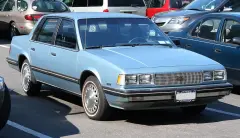
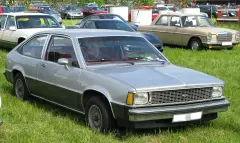
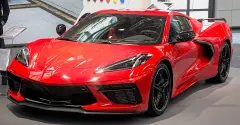
Chevrolet is an American car brand within General Motors, founded with racing driver Louis Chevrolet in 1911. It grew into a broad marque whose name is associated with everyday cars, pickups and SUVs as well as the Corvette and Camaro. That mix is clear in its model history: practical small cars sit alongside large family vehicles and long-running performance names.
What kinds of Chevrolet models are listed?
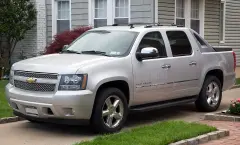
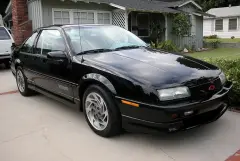
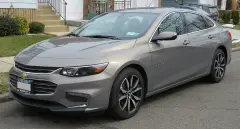
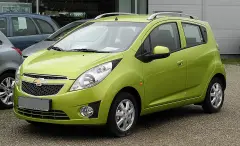
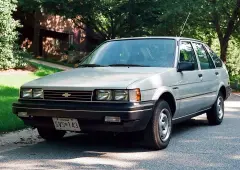
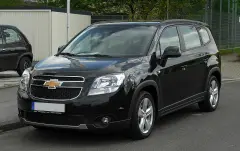
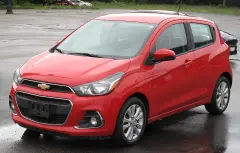
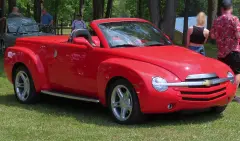
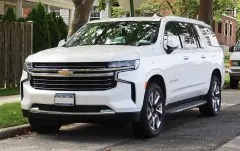
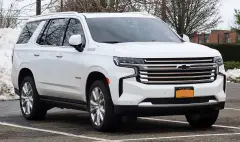
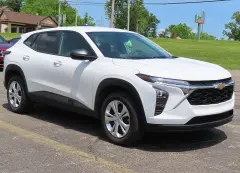
The range spans small hatchbacks such as the Spark, Matiz and Aveo; family cars including Cruze, Malibu and Impala; and crossovers and SUVs from Trax and Equinox to Tahoe and Suburban. Pickups form another substantial strand, with the Colorado and Silverado, while the Corvette and Camaro represent Chevrolet’s sports-car side. Vans and people carriers, including Express, Venture and Orlando, also appear across the years.
The mix suits very different uses. A Spark or Aveo is a compact choice for everyday journeys; a Traverse or Suburban has a more family-focused, larger-vehicle role; and Silverado is a pickup line. These names show how Chevrolet has served more than one kind of driver within the same marque.
How has the range changed over time?
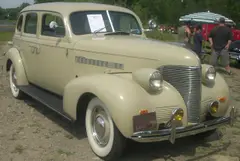
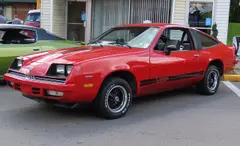
The model history runs from 1984 to 2027. Long-running names include Corvette and Suburban, both listed throughout that span, alongside Blazer through 2026, Camaro through 2025 and Impala through 2020. The range is not one continuous lineup: individual cars and trucks came and went, while new names joined as tastes and vehicle types shifted.
The European registration figures show a strong small-car and family-car presence in the years listed. Spark recorded 379,077 EU registrations from 2010 to 2016, followed by Aveo with 263,482 and Cruze with 224,559 over their respective listed periods. Captiva and Orlando also had substantial EU totals. Camaro appears in the EU figures from 2010 to 2025, linking Chevrolet’s European presence to its performance-car identity too.
Where do Chevrolet cars appear, and how is electrification represented?
Chevrolet appears in official figures for the European Union, the UK and France, as well as the United States and Canada. Figures from these markets need context: European results may use WLTP or NEDC procedures, the US uses EPA testing, and Canada uses a five-cycle test. Their consumption and emissions ratings are therefore not direct like-for-like comparisons.
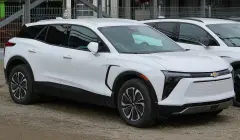
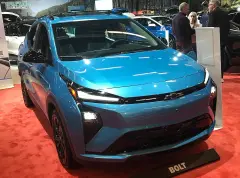
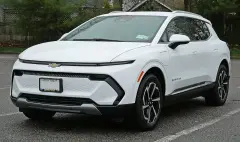
Electric and electrified models in the lineup include Bolt and Bolt EUV, the Blazer EV, Equinox EV and Silverado EV, alongside the Volt. The Volt name is listed from 2011 to 2019; Bolt from 2017 to 2027; and the newer EV nameplates begin in 2024. Together, they mark a shift from an early plug-in hybrid to battery-electric cars, SUVs and a pickup.
Questions and answers
Is Chevrolet an American brand?
Yes. Chevrolet is an American brand that belongs to General Motors.
Which Chevrolet models had the most EU registrations?
Among the models listed, Spark had the largest total, with 379,077 EU registrations from 2010 to 2016. Aveo and Cruze followed.
Does Chevrolet make electric vehicles?
The lineup includes battery-electric models such as Bolt, Blazer EV, Equinox EV and Silverado EV, as well as the Volt.
Why do official fuel-consumption figures differ by market?
Markets use different test procedures. European ratings may follow WLTP or NEDC, US figures use EPA testing, and Canadian ratings use a five-cycle procedure, so results are not directly interchangeable.