Chevrolet

Chevrolet Cobalt

Chevrolet Cobalt
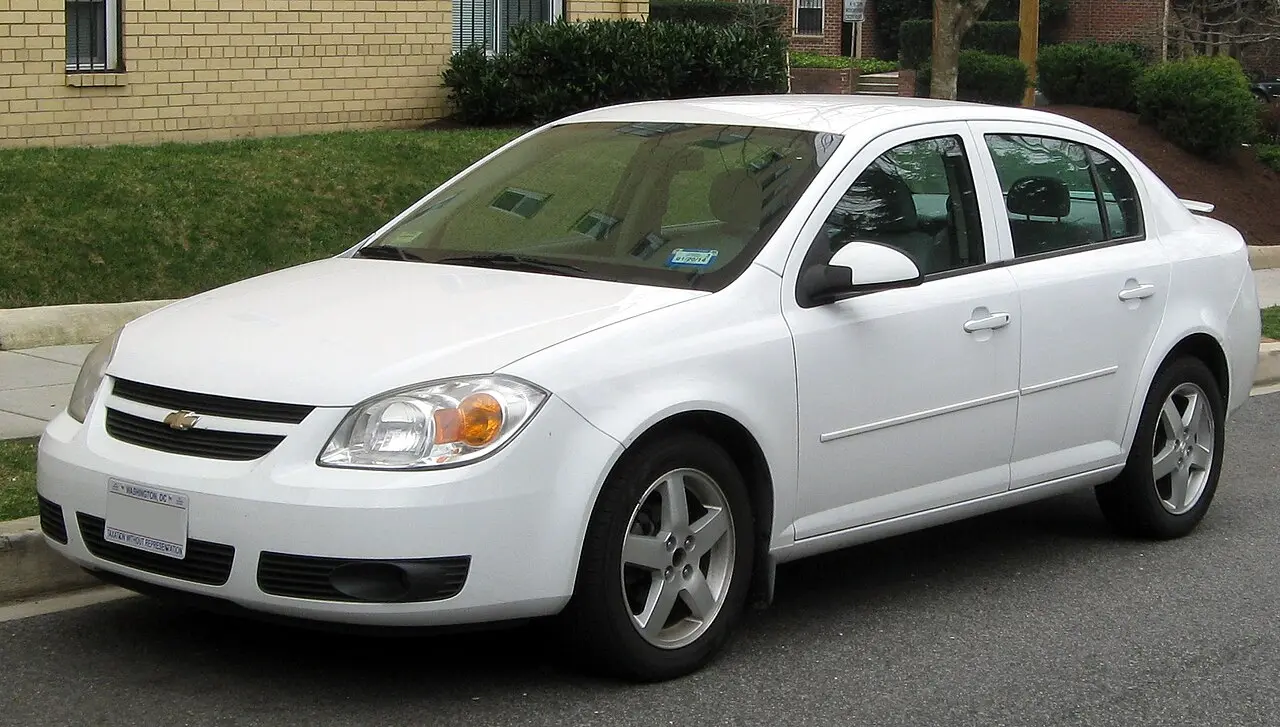
Photo: IFCAR / Wikimedia Commons · Public domain

The official data lists 35 versions of the Chevrolet Cobalt (2005–2010), in the United States and Canada. Each market publishes its own figures, measured on its own test procedure.

At a glance

Years in the data
2005–2010
Markets
United States, Canada
Engines
2.0 L to 2.4 L
Fuels
Petrol
Lowest consumption (United States)
7.8 L/100 km (EPA)
Lowest consumption (Canada)
8.0 L/100 km (5-cycle)

What is the Chevrolet Cobalt?

The Cobalt was Chevrolet’s compact car for North America, offered as a sedan and a coupe. It took over the brand’s compact-car role from the Cavalier, with the SS adding a sportier character to the range. Its smaller format made it a practical option for everyday driving.

Cobalt generation

The Cobalt had one generation, sold from 2005 to 2010. Built on GM’s Delta platform, it brought a new compact design to Chevrolet’s range. Sedan and coupe body styles gave the model two distinct shapes, while SS versions added a performance-focused option.

Engines and fuel consumption

US EPA and Canadian NRCan figures cover petrol engines from 2.0 L to 2.4 L. In the United States, the lowest listed consumption is 7.8 L/100 km, and the best combined rating is 30 MPG. Canada’s lowest listed figure is 8 L/100 km. EPA and Canadian 5-cycle ratings use different test procedures, so the results are specific to each market.

Where was the Cobalt sold?

The Cobalt appears in US and Canadian market figures from 2005 to 2010. It was offered as a sedan or coupe, with SS versions also in the range.

Questions and answers

What years was the Chevrolet Cobalt sold in the US and Canada?

It was sold from 2005 to 2010 in both countries.

What body styles were offered for the Cobalt?

The Cobalt was offered as a sedan and a coupe.

What is the best combined EPA fuel-economy rating for the Cobalt?

The best combined rating is 30 MPG.

Cobalt first generation (2005–2010)

Chevrolet Cobalt first generation
Photo: IFCAR / Wikimedia Commons · Public domain

Model codes: GMX001, Delta · Sold in: United States and Canada · References: en.wikipedia.org

United States 15 versions

Model years sold in the USA, from the EPA and the Department of Energy (fueleconomy.gov). MPG on the EPA test; litres per 100 km = 235.215 ÷ MPG.

Years and versionEngineFuelGearboxDriveConsumption (combined)CO₂
2008–20102.0 LPetrol5-speed manualFront-wheel drive25 MPG (9.4 L/100 km) EPA221 g/km
2009–2010CLKUP2.2 LPetrol4-speed automaticFront-wheel drive27 MPG (8.7 L/100 km) EPA205 g/km
2009–2010SIL2.2 LPetrol5-speed manualFront-wheel drive30 MPG (7.8 L/100 km) EPA184 g/km
2009–2010SIL2.2 LPetrol5-speed manualFront-wheel drive29 MPG (8.1 L/100 km) EPA190 g/km
2008CLKUP2.2 LPetrol4-speed automaticFront-wheel drive26 MPG (9.0 L/100 km) EPA212 g/km
2008SIL2.2 LPetrol5-speed manualFront-wheel drive27 MPG (8.7 L/100 km) EPA205 g/km
2008SIL2.2 LPetrol5-speed manualFront-wheel drive29 MPG (8.1 L/100 km) EPA190 g/km
20082.4 LPetrol5-speed manualFront-wheel drive26 MPG (9.0 L/100 km) EPA212 g/km
2008CLKUP2.4 LPetrol4-speed automaticFront-wheel drive25 MPG (9.4 L/100 km) EPA221 g/km
20072.0 LPetrol5-speed manualFront-wheel drive23 MPG (10.2 L/100 km) EPA240 g/km
2005–2007CLKUP2.2 LPetrol4-speed automaticFront-wheel drive24 MPG (9.8 L/100 km) EPA230 g/km
2005–2007SIL2.2 LPetrol5-speed manualFront-wheel drive25 MPG (9.4 L/100 km) EPA221 g/km
2006–2007CLKUP2.4 LPetrol4-speed automaticFront-wheel drive24 MPG (9.8 L/100 km) EPA230 g/km
2006–20072.4 LPetrol5-speed manualFront-wheel drive25 MPG (9.4 L/100 km) EPA221 g/km
2005–20062.0 LPetrol5-speed manualFront-wheel drive23 MPG (10.2 L/100 km) EPA240 g/km

Canada 20 versions

Model years sold in Canada, from Natural Resources Canada fuel consumption ratings (5-cycle test).

Years and versionEngineFuelGearboxConsumption (combined)CO₂
2010Subcompact2.0 LPetrol5-speed manual9.4 L/100 km 5-cycle216 g/km
2009–2010Subcompact · Compact2.2 LPetrol4-speed automatic8.7 L/100 km 5-cycle200 g/km
2009–2010Subcompact · Compact2.2 LPetrol5-speed manual8.5 L/100 km 5-cycle196 g/km
2009–2010Subcompact2.2 LPetrol5-speed manual8.0 L/100 km 5-cycle184 g/km
2009Subcompact2.0 LPetrol5-speed manual9.5 L/100 km 5-cycle219 g/km
2008Subcompact2.0 LPetrol5-speed manual9.4 L/100 km 5-cycle216 g/km
2007–2008Subcompact2.2 LPetrol5-speed manual9.0 L/100 km 5-cycle207 g/km
2008Subcompact2.2 LPetrol4-speed automatic9.2 L/100 km 5-cycle212 g/km
2008Subcompact2.4 LPetrol4-speed automatic9.4 L/100 km 5-cycle216 g/km
2008Subcompact2.4 LPetrol5-speed manual9.2 L/100 km 5-cycle212 g/km
2007Subcompact2.0 LPetrol5-speed manual10.4 L/100 km 5-cycle239 g/km
2007Subcompact2.2 LPetrol4-speed automatic9.6 L/100 km 5-cycle221 g/km
2006–2007Subcompact2.4 LPetrol5-speed manual9.3 L/100 km 5-cycle214 g/km
2007Subcompact2.4 LPetrol4-speed automatic9.5 L/100 km 5-cycle219 g/km
2006Subcompact2.0 LPetrol5-speed manual10.2 L/100 km 5-cycle235 g/km
2005–2006Subcompact2.2 LPetrol5-speed manual9.3 L/100 km 5-cycle214 g/km
2006Subcompact2.2 LPetrol4-speed automatic9.6 L/100 km 5-cycle221 g/km
2006Subcompact2.4 LPetrol4-speed automatic9.4 L/100 km 5-cycle216 g/km
2005Subcompact2.0 LPetrol5-speed manual10.3 L/100 km 5-cycle237 g/km
2005Subcompact2.2 LPetrol4-speed automatic9.8 L/100 km 5-cycle225 g/km

Official figures are measured on standard test procedures and differ between markets. Your consumption depends on how, where and in what conditions you drive.