Chevrolet

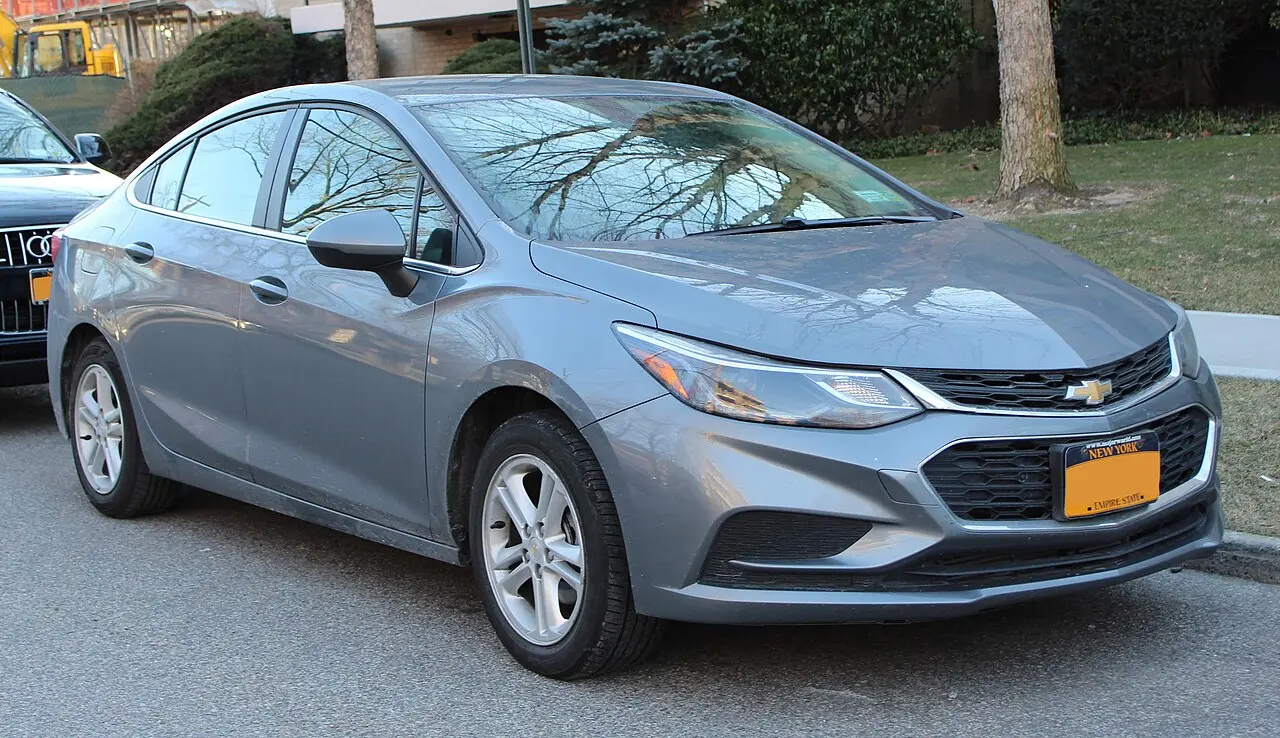
Chevrolet Cruze

Chevrolet Cruze
Photo: Kevauto / Wikimedia Commons · CC BY-SA 4.0

The official data lists 267 versions of the Chevrolet Cruze (2010–2019), in the European Union, the United Kingdom, France, the United States, and Canada. Each market publishes its own figures, measured on its own test procedure.

At a glance

Years in the data
2010–2019
Markets
European Union, United Kingdom, France, United States, Canada
Engines
1.4 L to 2.0 L
Power
81 kW (110 PS) to 120 kW (163 PS)
Fuels
Diesel, Petrol, LPG, Natural gas
Lowest consumption (France)
3.7 L/100 km (NEDC)
Lowest consumption (United Kingdom)
3.7 L/100 km (NEDC)
Lowest consumption (Canada)
6.3 L/100 km (5-cycle)
New registrations in the EU
221,622

What is the Chevrolet Cruze?

The Cruze is Chevrolet’s compact family car. Depending on market and generation, it was offered as a saloon, hatchback or estate, giving the model a practical role for everyday journeys and carrying passengers or luggage. The Cruze was part of General Motors’ effort to offer a compact car under the Chevrolet name across multiple regions.

Generations and body styles

The first generation, J300, ran from 2009 to 2016 in Europe and the UK, and from 2011 to 2016 in the United States and Canada. It arrived in these markets at different times and came in several body styles depending on region. The second generation, J400, ran from 2016 to 2019 in the United States and Canada. Its dates overlap with the J300’s European run because the model change happened at different times across markets.

Engines and fuel consumption

EU registration figures cover engines from 1.4 to 2.0 litres, with power from 74 kW (101 PS) to 120 kW (163 PS). Listed fuels include petrol, diesel, LPG and natural gas. UK and French listings cover petrol and diesel versions, with power from 81 kW (110 PS) to 120 kW (163 PS). The lowest listed consumption in both markets is 3.7 L/100 km on the NEDC test.

In the United States and Canada, listings span 1.4- to 2.0-litre petrol and diesel engines. The lowest listed consumption is 6.4 L/100 km on the EPA test and 6.3 L/100 km on Canada’s NRCan 5-cycle test. NEDC, EPA and Canadian 5-cycle results use different procedures, so they are best understood within their own markets.

Where was the Cruze sold?

The Cruze appears in EU registration figures from 2010 to 2016, totalling 221,622 registrations. UK listings run from 2010 to 2015, while French listings cover 2012 to 2014. US and Canadian listings span 2011 to 2019. Engine choices and body styles varied by region, while the Cruze retained its role as Chevrolet’s compact car.

Questions and answers

When was the first-generation Cruze sold?

The J300 ran from 2009 to 2016 in Europe and the UK, and from 2011 to 2016 in the United States and Canada.

Was the Cruze available with diesel engines?

Yes. Diesel versions appear in EU, UK, French, US and Canadian listings.

What is the lowest listed fuel consumption?

The lowest listed figures are 3.7 L/100 km on NEDC in the UK and France, 6.4 L/100 km on the EPA test, and 6.3 L/100 km on NRCan’s 5-cycle test.
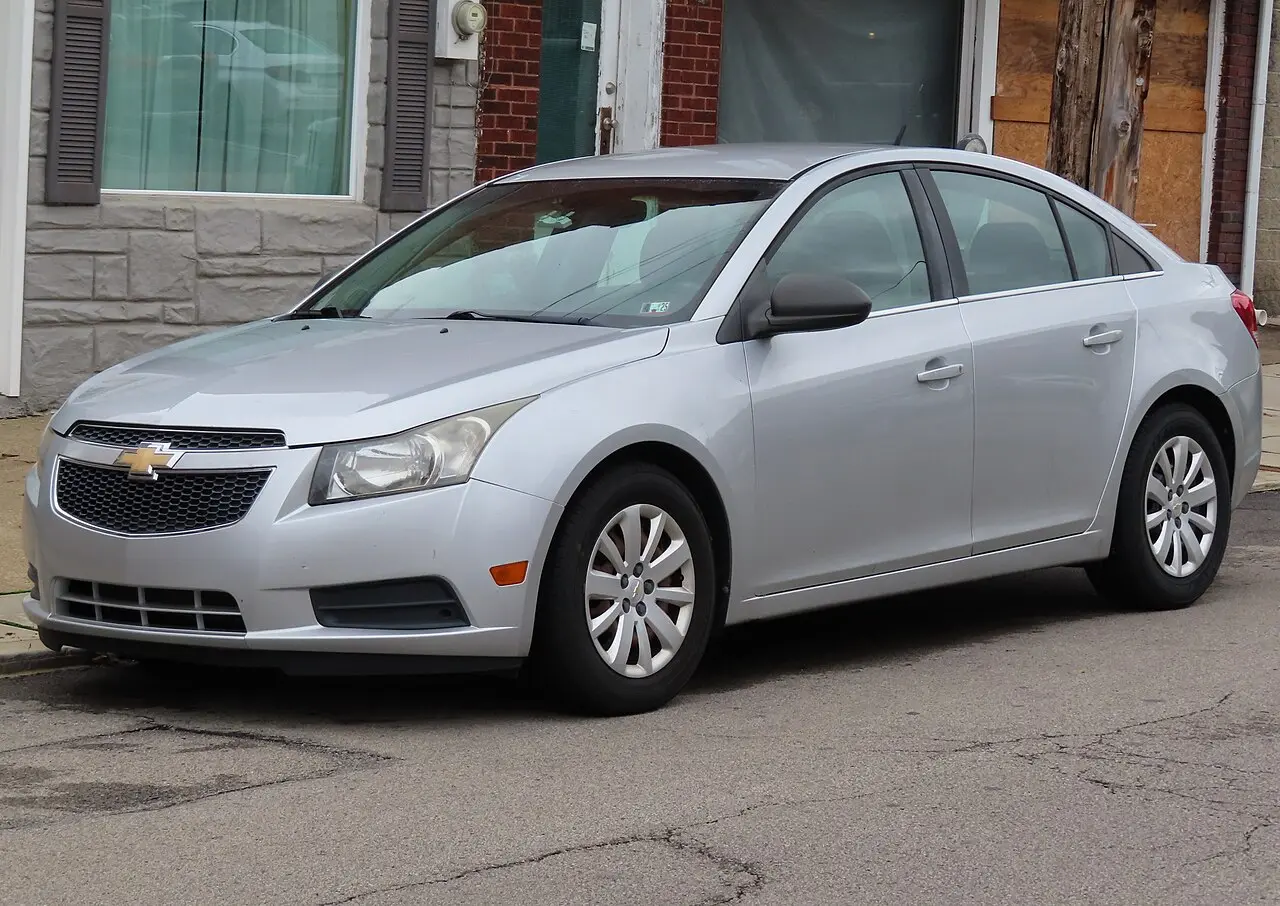
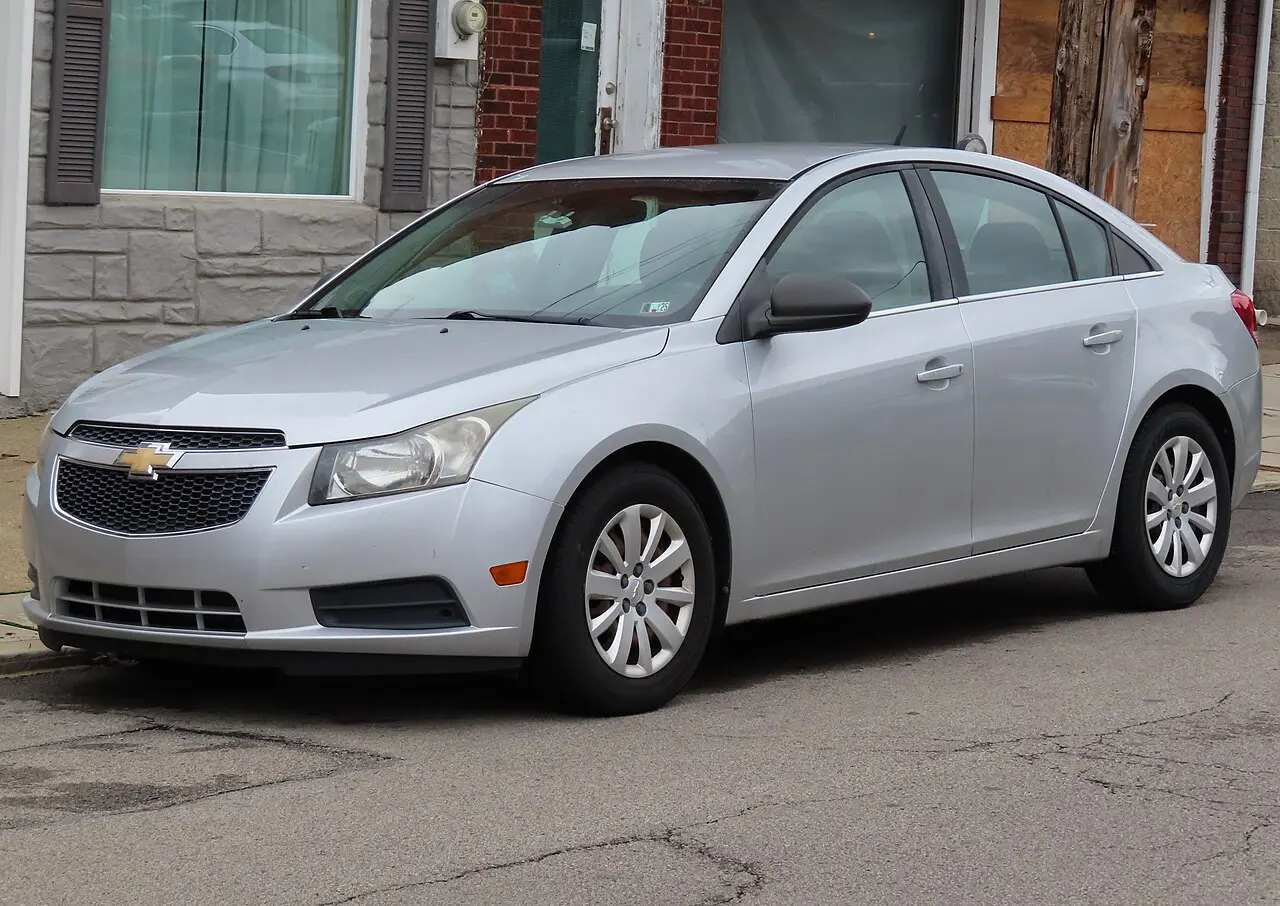
Cruze I (2009–2016)

Chevrolet Cruze I
Photo: MercurySable99 / Wikimedia Commons · CC BY-SA 4.0

Model codes: J300 · Sold in: European Union, United Kingdom, and France · References: en.wikipedia.org

Show all 184 versions

Cruze I (2011–2016)

Chevrolet Cruze I
Photo: MercurySable99 / Wikimedia Commons · CC BY-SA 4.0

Model codes: J300 · Sold in: United States and Canada · References: en.wikipedia.org

Show all 49 versions

Cruze II (2016–2019)

Chevrolet Cruze II
Photo: Kevauto / Wikimedia Commons · CC BY-SA 4.0

Model codes: J400 · Sold in: United States and Canada · References: en.wikipedia.org

United States 21 versions

Model years sold in the USA, from the EPA and the Department of Energy (fueleconomy.gov). MPG on the EPA test; litres per 100 km = 235.215 ÷ MPG.

Years and versionEngineFuelGearboxDriveConsumption (combined)CO₂
2017–2019SIDI; Stop-Start · SIDI1.4 LPetrol6-speed automaticFront-wheel drive31 MPG (7.6 L/100 km) EPA178 g/km
2019SIDI1.4 LPetrolContinuously variable (CVT)Front-wheel drive33 MPG (7.1 L/100 km) EPA166 g/km
2019SIDI1.4 LPetrol6-speed automaticFront-wheel drive32 MPG (7.4 L/100 km) EPA172 g/km
20191.6 LDiesel9-speed automaticFront-wheel drive35 MPG (6.7 L/100 km) EPA193 g/km
20191.6 LDiesel9-speed automaticFront-wheel drive37 MPG (6.4 L/100 km) EPA183 g/km
2017–2018SIDI; Stop-Start · SIDI1.4 LPetrol6-speed automaticFront-wheel drive33 MPG (7.1 L/100 km) EPA167 g/km
2017–2018SIDI; Stop-Start · SIDI1.4 LPetrol6-speed automaticFront-wheel drive32 MPG (7.4 L/100 km) EPA173 g/km
2018SIDI1.4 LPetrol6-speed automaticFront-wheel drive33 MPG (7.1 L/100 km) EPA166 g/km
2018SIDI1.4 LPetrol6-speed manualFront-wheel drive32 MPG (7.4 L/100 km) EPA172 g/km
2018SIDI1.4 LPetrol6-speed manualFront-wheel drive31 MPG (7.6 L/100 km) EPA177 g/km
2017–20181.6 LDiesel9-speed automaticFront-wheel drive37 MPG (6.4 L/100 km) EPA171 g/km
20181.6 LDiesel6-speed manualFront-wheel drive37 MPG (6.4 L/100 km) EPA170 g/km
20181.6 LDiesel9-speed automaticFront-wheel drive35 MPG (6.7 L/100 km) EPA181 g/km
20181.6 LDiesel6-speed manualFront-wheel drive35 MPG (6.7 L/100 km) EPA180 g/km
2016–2017SIDI1.4 LPetrol6-speed manualFront-wheel drive32 MPG (7.4 L/100 km) EPA170 g/km
2016–2017SIDI · SIDI; Stop-Start1.4 LPetrol6-speed automaticFront-wheel drive34 MPG (6.9 L/100 km) EPA165 g/km
2017SIDI1.4 LPetrol6-speed manualFront-wheel drive31 MPG (7.6 L/100 km) EPA178 g/km
20171.6 LDiesel6-speed manualFront-wheel drive37 MPG (6.4 L/100 km) EPA169 g/km
20161.4 LPetrol6-speed manualFront-wheel drive33 MPG (7.1 L/100 km) EPA170 g/km
2016SIDI1.4 LPetrol6-speed automaticFront-wheel drive34 MPG (6.9 L/100 km) EPA162 g/km
20161.8 LPetrol6-speed manualFront-wheel drive29 MPG (8.1 L/100 km) EPA192 g/km

Canada 27 versions

Model years sold in Canada, from Natural Resources Canada fuel consumption ratings (5-cycle test).

Years and versionEngineFuelGearboxConsumption (combined)CO₂
2019Compact · Mid-size1.4 LPetrol6-speed automatic7.3 L/100 km 5-cycle172 g/km
2019Mid-size1.4 LPetrol6-speed automatic7.5 L/100 km 5-cycle175 g/km
2018–2019Mid-size1.6 LDiesel9-speed automatic6.6 L/100 km 5-cycle178 g/km
2019Compact1.6 LDiesel9-speed automatic6.4 L/100 km 5-cycle172 g/km
2017–2018Compact1.4 LPetrol6-speed automatic7.2 L/100 km 5-cycle169 g/km
2017–2018Compact · Mid-size1.4 LPetrol6-speed automatic7.3 L/100 km 5-cycle172 g/km
2017–2018Compact · Mid-size1.4 LPetrol6-speed automatic7.5 L/100 km 5-cycle176 g/km
2018Compact1.4 LPetrol6-speed automatic7.1 L/100 km 5-cycle166 g/km
2018Compact1.4 LPetrol6-speed manual7.4 L/100 km 5-cycle172 g/km
2018Mid-size1.4 LPetrol6-speed manual7.5 L/100 km 5-cycle175 g/km
2018Compact1.6 LDiesel9-speed automatic6.5 L/100 km 5-cycle175 g/km
2018Compact1.6 LDiesel6-speed manual6.3 L/100 km 5-cycle170 g/km
2018Mid-size1.6 LDiesel6-speed manual6.7 L/100 km 5-cycle180 g/km
2017Compact1.4 LPetrol6-speed automatic7.0 L/100 km 5-cycle165 g/km
2017Compact1.4 LPetrol6-speed manual7.3 L/100 km 5-cycle170 g/km
2017Compact1.4 LPetrol6-speed manual7.4 L/100 km 5-cycle173 g/km
2017Compact1.6 LDiesel9-speed automatic6.4 L/100 km 5-cycle172 g/km
2017Compact1.6 LDiesel6-speed manual6.3 L/100 km 5-cycle169 g/km
2016Compact1.4 LPetrol6-speed automatic6.8 L/100 km 5-cycle159 g/km
2016Compact1.4 LPetrol6-speed manual7.1 L/100 km 5-cycle167 g/km
2016Compact1.4 LPetrol6-speed automatic6.9 L/100 km 5-cycle160 g/km
2016Mid-size1.4 LPetrol6-speed automatic7.8 L/100 km 5-cycle184 g/km
2016Mid-size1.4 LPetrol6-speed manual7.8 L/100 km 5-cycle182 g/km
2016Mid-size1.4 LPetrol6-speed automatic7.7 L/100 km 5-cycle181 g/km
2016Mid-size1.4 LPetrol6-speed manual7.1 L/100 km 5-cycle167 g/km
2016Mid-size1.8 LPetrol6-speed automatic8.8 L/100 km 5-cycle207 g/km
2016Mid-size1.8 LPetrol6-speed manual8.1 L/100 km 5-cycle190 g/km

Official figures are measured on standard test procedures and differ between markets. Your consumption depends on how, where and in what conditions you drive.