The official data lists 40 versions of the Chevrolet Express (1996 - 2017), in the United States and Canada. Each market publishes its own figures, measured on its own test procedure.
At a glance
Years in the data
1996 - 2017
Markets
United States, Canada
Engines
4.3 L to 6.0 L
Fuels
Petrol, Flex fuel (E85), Natural gas
Lowest consumption (United States)
13.8 L/100 km (EPA)
Lowest consumption (Canada)
14.0 L/100 km (5-cycle)
What is the Chevrolet Express?
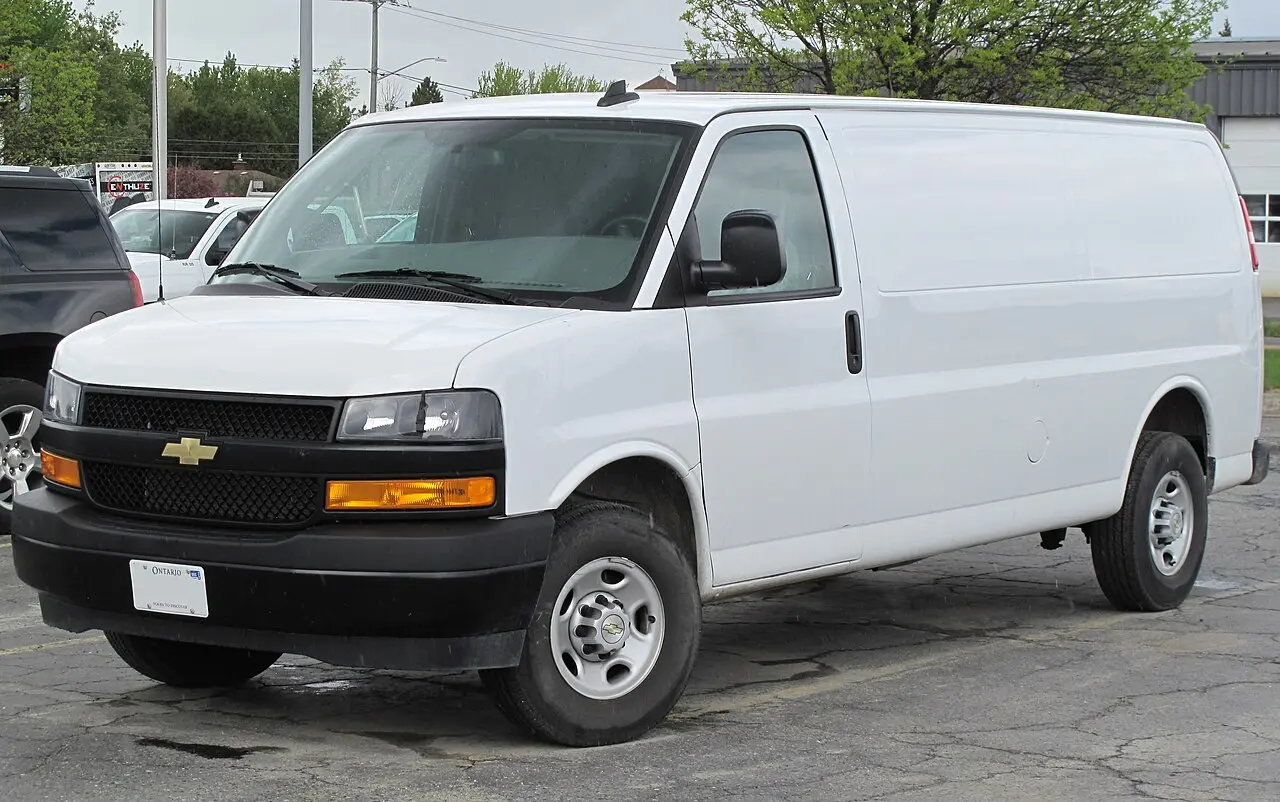
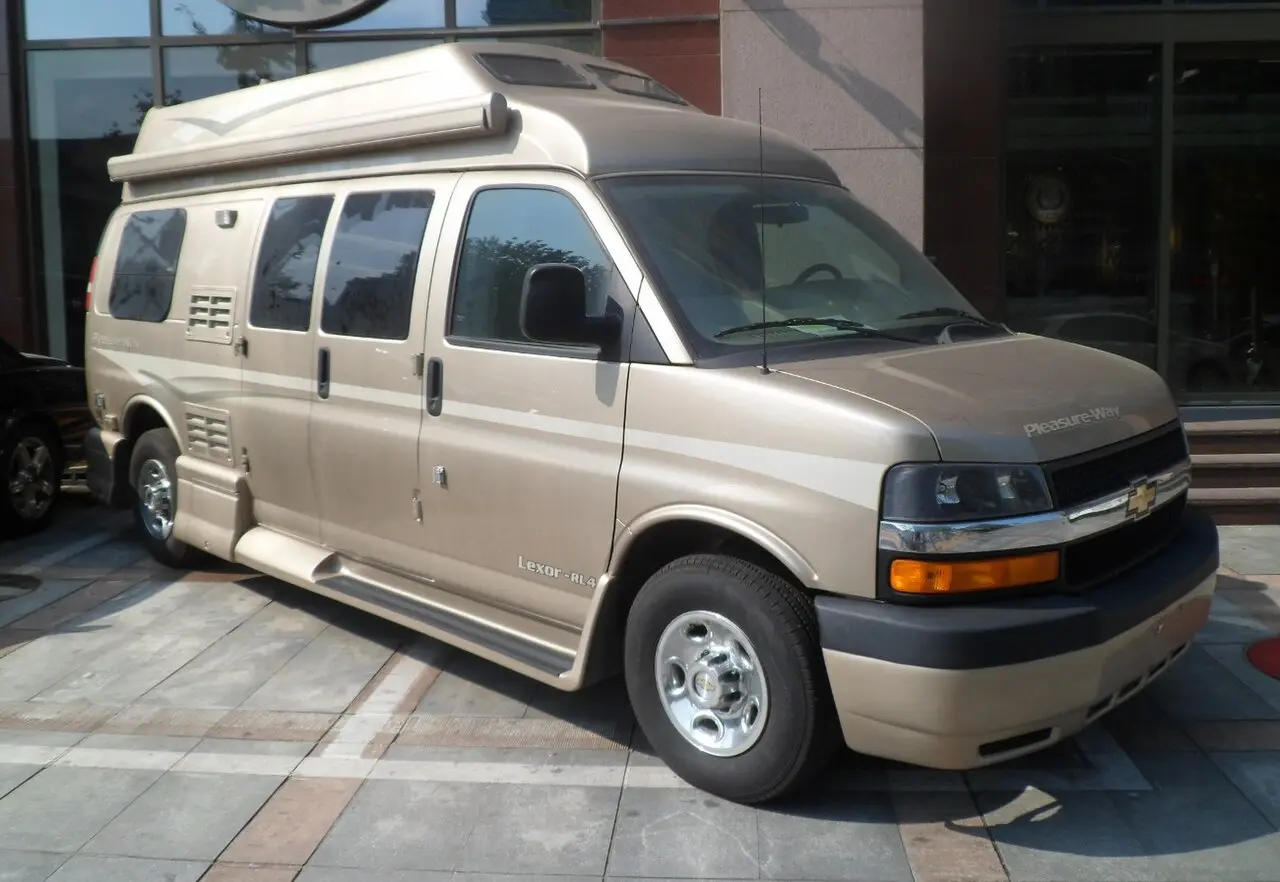
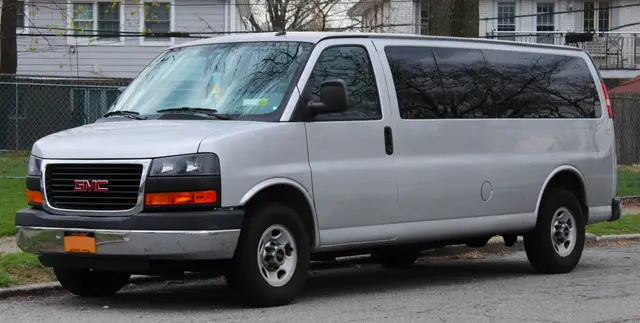
The Express is Chevrolet’s full-size van, built to carry passengers, work crews or cargo. Its van layout gives it room for people or equipment, making it part of Chevrolet’s commercial vehicle range as well as a choice for passenger transport.
Express generations
The first generation ran from 1996 to 2002. The second began in 2003 and continues in the generation references through 2017. The Express has served both passenger and cargo roles, with a long-running design focused on the needs of work and transport.
Engines and fuel consumption
US and Canadian figures cover engines from 4.3 to 6.0 litres. Listed fuel types include petrol, E85 flex fuel and natural gas, across versions intended for passenger transport and work.
The lowest listed consumption is 13.8 L/100 km in the United States, where the best combined EPA rating is 17 MPG. Canada’s lowest listed figure is 14 L/100 km on its 5-cycle test. Test procedures differ: EPA testing in the US and the 5-cycle procedure in Canada.
Where was the Express sold?
The figures cover the United States and Canada, with both markets listing Express versions from 1996 to 2017.
Questions and answers
What is the Chevrolet Express used for?
It is a full-size van used for passenger transport and commercial work.
How many Express generations are listed?
Two: the first generation ran from 1996 to 2002, and the second began in 2003.
What is the lowest listed fuel consumption?
The US EPA figure is 13.8 L/100 km, while Canada’s 5-cycle figure is 14 L/100 km. The test procedures differ.
Model years sold in the USA, from the EPA and the Department of Energy (fueleconomy.gov). MPG on the EPA test; litres per 100 km = 235.215 ÷ MPG.
Years and version
Engine
Fuel
Gearbox
Drive
Consumption (combined)
CO₂
2015 - 2017
6.0 L
Petrol
6-speed automatic
Rear-wheel drive
12 - 13 MPG (18.1 - 19.6 L/100 km) EPA
437 - 455 g/km
2014 - 2015
4.8 L
Petrol
6-speed automatic
Rear-wheel drive
13 MPG (18.1 L/100 km) EPA
416 - 418 g/km
2011 - 2015FFV
6.0 L
Flex fuel (E85)
6-speed automatic
Rear-wheel drive
12 - 13 MPG (18.1 - 19.6 L/100 km) EPA
425 - 460 g/km
2010 - 2014
4.3 L
Petrol
4-speed automatic
Rear-wheel drive
16 - 17 MPG (13.8 - 14.7 L/100 km) EPA
325 - 353 g/km
2010 - 2014FFV
5.3 L
Flex fuel (E85)
4-speed automatic
Rear-wheel drive
14 - 15 MPG (15.7 - 16.8 L/100 km) EPA
368 - 394 g/km
2010 - 2014FFV
5.3 L
Flex fuel (E85)
4-speed automatic
All-wheel drive
14 MPG (16.8 L/100 km) EPA
383 - 394 g/km
2011 - 2013FFV
4.8 L
Flex fuel (E85)
6-speed automatic
Rear-wheel drive
13 MPG (18.1 L/100 km) EPA
416 - 425 g/km
2009CLKUP
5.3 L
Flex fuel (E85)
4-speed automatic
Rear-wheel drive
14 MPG (16.8 L/100 km) EPA
394 g/km
2009CLKUP
5.3 L
Flex fuel (E85)
4-speed automatic
Four- or all-wheel drive
14 MPG (16.8 L/100 km) EPA
394 g/km
2004 - 2009CLKUP
5.3 L
Petrol
4-speed automatic
Rear-wheel drive
14 - 15 MPG (15.7 - 16.8 L/100 km) EPA
368 - 394 g/km
2004 - 2009CLKUP
5.3 L
Petrol
4-speed automatic
Four- or all-wheel drive
14 MPG (16.8 L/100 km) EPA
394 g/km
2007 - 2008460, CLKUP · 430-470, CLKUP
5.3 L
Flex fuel (E85)
4-speed automatic
Rear-wheel drive
14 MPG (16.8 L/100 km) EPA
394 g/km
2008440-470, CLKUP
5.3 L
Flex fuel (E85)
4-speed automatic
Four- or all-wheel drive
14 MPG (16.8 L/100 km) EPA
394 g/km
2007500, CLKUP
5.3 L
Flex fuel (E85)
4-speed automatic
Four- or all-wheel drive
14 MPG (16.8 L/100 km) EPA
394 g/km
2003 - 2006CLKUP
4.3 L
Petrol
4-speed automatic
Rear-wheel drive
15 MPG (15.7 L/100 km) EPA
368 g/km
2004CLKUP
6.0 L
Natural gas
4-speed automatic
Rear-wheel drive
12 MPG (19.6 L/100 km) EPA
364 - 460 g/km
2003LM7, CLKUP
5.3 L
Petrol
4-speed automatic
Rear-wheel drive
14 MPG (16.8 L/100 km) EPA
394 g/km
2003LM7, CLKUP
5.3 L
Petrol
4-speed automatic
Four- or all-wheel drive
13 MPG (18.1 L/100 km) EPA
425 g/km
Canada 15 versions
Model years sold in Canada, from Natural Resources Canada fuel consumption ratings (5-cycle test).
Years and version
Engine
Fuel
Gearbox
Consumption (combined)
CO₂
2011 - 2017Van: Passenger
6.0 L
Petrol
6-speed automatic
18.6 - 19.8 L/100 km 5-cycle
430 - 465 g/km
2011 - 2015Van: Passenger
4.8 L
Petrol
6-speed automatic
18.0 - 18.2 L/100 km 5-cycle
414 - 419 g/km
2011 - 2015Van: Passenger
6.0 L
Flex fuel (E85)
6-speed automatic
25.6 - 26.1 L/100 km 5-cycle
410 - 418 g/km
2005 - 2014Van: Cargo
4.3 L
Petrol
4-speed automatic
14.0 - 16.3 L/100 km 5-cycle
322 - 375 g/km
2003 - 2014Van: Cargo
5.3 L
Petrol
4-speed automatic
14.5 - 17.6 L/100 km 5-cycle
334 - 405 g/km
2007 - 2014Van: Cargo
5.3 L
Flex fuel (E85)
4-speed automatic
19.4 - 21.5 L/100 km 5-cycle
310 - 344 g/km
2006 - 2014Van: Cargo · Van: Passenger
5.3 L
Petrol
4-speed automatic
16.1 - 17.2 L/100 km 5-cycle
370 - 396 g/km
2007 - 2014Van: Cargo · Van: Passenger
5.3 L
Flex fuel (E85)
4-speed automatic
21.5 - 22.9 L/100 km 5-cycle
344 - 366 g/km
2011 - 2013Van: Passenger
4.8 L
Flex fuel (E85)
6-speed automatic
24.3 L/100 km 5-cycle
389 g/km
2005 - 2006Van: Passenger
4.3 L
Petrol
4-speed automatic
15.5 - 16.5 L/100 km 5-cycle
357 - 380 g/km
2004 - 2006Van: Passenger · Van: Cargo
5.3 L
Petrol
4-speed automatic
16.2 - 17.2 L/100 km 5-cycle
373 - 396 g/km
2003 - 2005Van: Passenger
5.3 L
Petrol
4-speed automatic
16.1 - 17.8 L/100 km 5-cycle
370 - 409 g/km
2003 - 2004Van: Passenger · Van: Cargo
4.3 L
Petrol
4-speed automatic
16.6 L/100 km 5-cycle
382 g/km
2003 - 2004Van: Cargo
6.0 L
Petrol
4-speed automatic
18.9 - 19.7 L/100 km 5-cycle
435 - 453 g/km
2003 - 2004Van: Cargo
6.0 L
Natural gas
4-speed automatic
18.9 - 19.5 L/100 km 5-cycle
357 - 369 g/km
Chevrolet Express recalls
71 official safety recalls for the Chevrolet Express from NHTSA (United States), DVSA (United Kingdom) and the EU Safety Gate, newest first. Recall repairs are normally free at the maker’s dealers.
Brake line may be damaged and leak fluid2013 - 2018
Unused rear HVAC wiring may overheat2003 - 2018
Overcured tires may lose air or shed tread2018
Backup camera image may be reversed2017 - 2018
Rear quarter windows may be tempered glass2016 - 2018
Official figures are measured on standard test procedures and differ between markets. Your consumption depends on how, where and in what conditions you drive.