Chevrolet

Chevrolet Venture

Chevrolet Venture
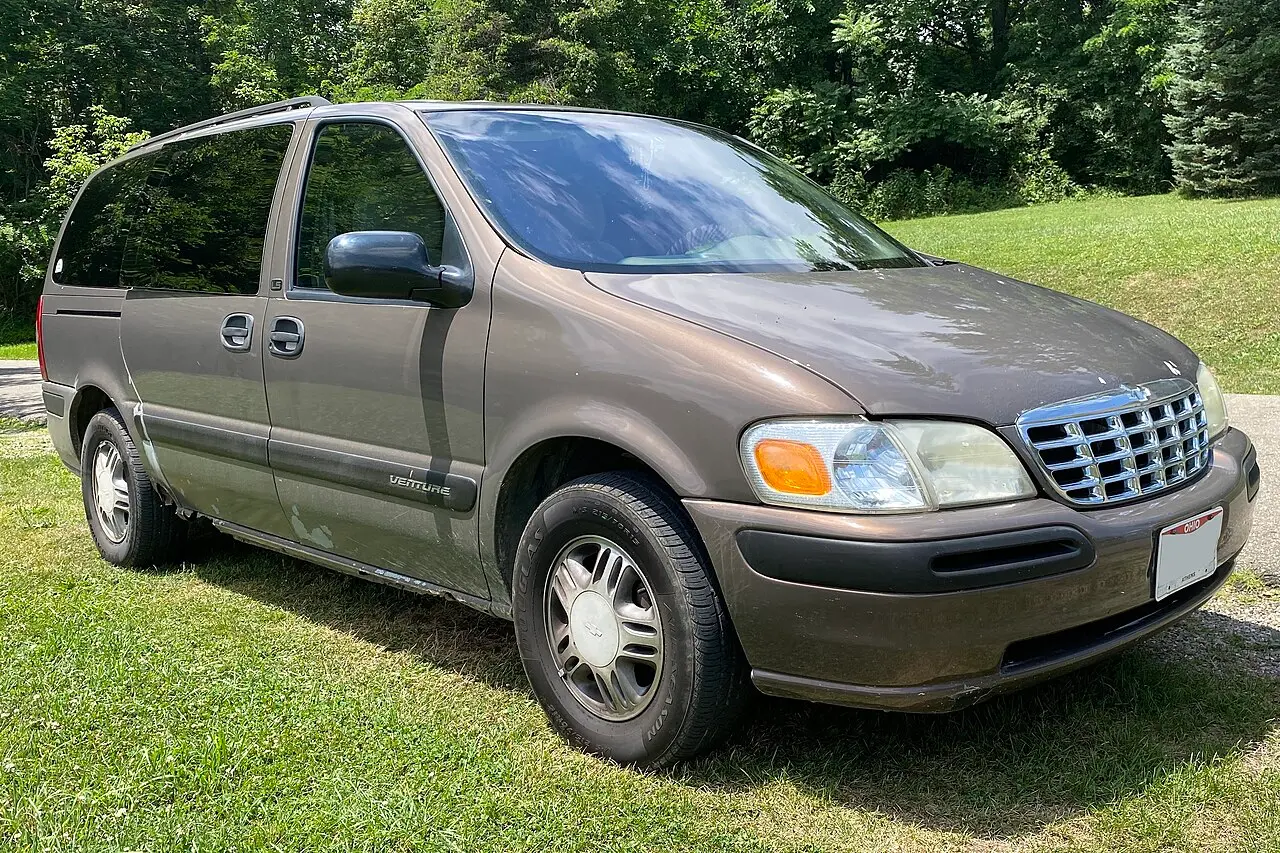
Photo: Cutlass / Wikimedia Commons · CC0

The official data lists 17 versions of the Chevrolet Venture (1997–2005), in the United States and Canada. Each market publishes its own figures, measured on its own test procedure.

At a glance

Years in the data
1997–2005
Markets
United States, Canada
Engines
3.4 L
Fuels
Petrol
Lowest consumption (Canada)
11.6 L/100 km (5-cycle)
Lowest consumption (United States)
11.8 L/100 km (EPA)

What is the Chevrolet Venture?

The Chevrolet Venture is a family minivan that Chevrolet sold in the United States and Canada from 1997 to 2005. It followed the Lumina APV, with a more conventional minivan shape and sliding doors. Its roomy cabin made it suited to family trips and everyday passenger carrying.

Generations and engines

The Venture had one generation, sold from 1997 to 2005. It used General Motors’ U-body platform, also known as GMT200. The new design gave Chevrolet a more familiar minivan layout after the Lumina APV’s distinctive shape.

The Venture used a 3.4-litre petrol engine.

How economical is the Chevrolet Venture?

In the United States, the EPA gives the Venture a best combined rating of 20 MPG and a lowest listed consumption of 11.8 L/100 km. In Canada, the lowest listed figure is 11.6 L/100 km under NRCan’s 5-cycle procedure. The EPA and Canadian results use different test procedures, so it is best to read each figure within its own market.

In official US EPA listings, the Venture spans the 1997–2005 model years and six versions. Canadian NRCan listings cover the same years and eleven versions.

Questions and answers

What kind of vehicle is the Chevrolet Venture?

It is a family minivan sold from 1997 to 2005.

What engine did the Venture use?

The Venture used a 3.4-litre petrol engine.

What is the Venture’s best official fuel economy figure?

The US EPA gives it a best combined rating of 20 MPG.

Was the Venture sold in Canada?

Yes. It was sold in Canada as well as the United States.

Venture First generation (1997–2005)

Chevrolet Venture First generation
Photo: Cutlass / Wikimedia Commons · CC0

Model codes: GMT200, U-body · Sold in: United States and Canada · References: consumerguide.com, en.wikipedia.org

United States 6 versions

Model years sold in the USA, from the EPA and the Department of Energy (fueleconomy.gov). MPG on the EPA test; litres per 100 km = 235.215 ÷ MPG.

Years and versionEngineFuelGearboxDriveConsumption (combined)CO₂
2005CLKUP3.4 LPetrol4-speed automaticFront-wheel drive19 MPG (12.4 L/100 km) EPA291 g/km
2001–2004CLKUP3.4 LPetrol4-speed automaticFront-wheel drive20 MPG (11.8 L/100 km) EPA276 g/km
2002–2004CLKUP3.4 LPetrol4-speed automaticFour- or all-wheel drive18 MPG (13.1 L/100 km) EPA307 g/km
2000CLKUP3.4 LPetrol4-speed automaticFront-wheel drive19 MPG (12.4 L/100 km) EPA291 g/km
1999CLKUP3.4 LPetrol4-speed automaticFront-wheel drive18 MPG (13.1 L/100 km) EPA307 g/km
1997–1998(FFS) (MPFI), CLKUP · CLKUP3.4 LPetrol4-speed automaticFront-wheel drive19 MPG (12.4 L/100 km) EPA291 g/km

Canada 11 versions

Model years sold in Canada, from Natural Resources Canada fuel consumption ratings (5-cycle test).

Years and versionEngineFuelGearboxConsumption (combined)CO₂
2005Minivan3.4 LPetrol4-speed automatic12.2 L/100 km 5-cycle281 g/km
2004Minivan3.4 LPetrol4-speed automatic11.6 L/100 km 5-cycle267 g/km
2004Minivan3.4 LPetrol4-speed automatic13.5 L/100 km 5-cycle311 g/km
2003Minivan3.4 LPetrol4-speed automatic11.8 L/100 km 5-cycle271 g/km
2003Minivan3.4 LPetrol4-speed automatic12.8 L/100 km 5-cycle294 g/km
2001–2002Minivan3.4 LPetrol4-speed automatic12.0 L/100 km 5-cycle276 g/km
2002Minivan3.4 LPetrol4-speed automatic12.5 L/100 km 5-cycle288 g/km
2000Minivan3.4 LPetrol4-speed automatic12.2 L/100 km 5-cycle281 g/km
1999Minivan3.4 LPetrol4-speed automatic13.2 L/100 km 5-cycle304 g/km
1998Minivan3.4 LPetrol4-speed automatic13.7 L/100 km 5-cycle315 g/km
1997Minivan3.4 LPetrol4-speed automatic13.6 L/100 km 5-cycle313 g/km

Official figures are measured on standard test procedures and differ between markets. Your consumption depends on how, where and in what conditions you drive.