Chevrolet

Chevrolet Malibu

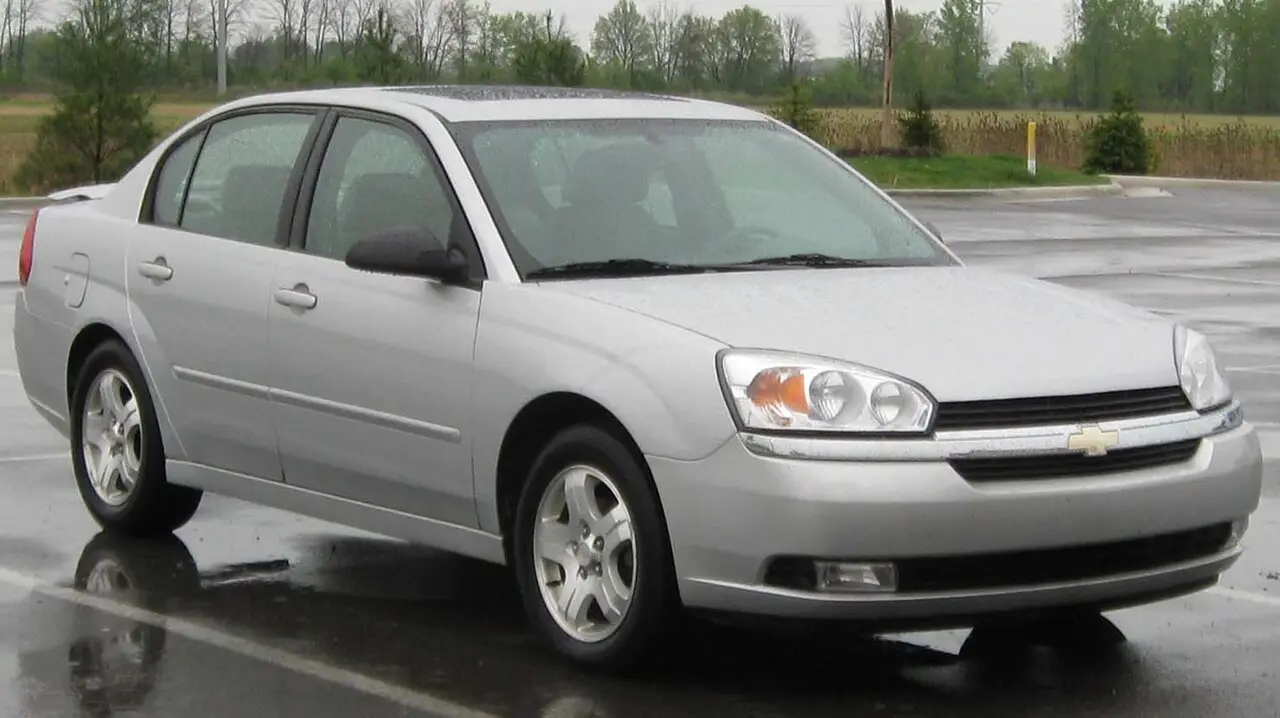
Chevrolet Malibu
Photo: Kevauto / Wikimedia Commons · CC BY-SA 4.0

The official data lists 128 versions of the Chevrolet Malibu (1997–2025), in the European Union, France, the United States, and Canada. Each market publishes its own figures, measured on its own test procedure.

At a glance

Years in the data
1997–2025
Markets
European Union, France, United States, Canada
Engines
1.5 L to 3.9 L
Power
118 kW (160 PS) to 123 kW (167 PS)
Fuels
Diesel, Petrol, Hybrid, Flex fuel (E85)
Lowest consumption (France)
4.7 L/100 km (NEDC)
Lowest consumption (United States)
5.1 L/100 km (EPA)
Lowest consumption (Canada)
5.1 L/100 km (5-cycle)
New registrations in the EU
5,800

What is the Chevrolet Malibu?

The Malibu is Chevrolet’s midsize four-door sedan, a family car with a conventional boot and a place in the brand’s mainstream range. Its modern generations began in North America, and the eighth generation also brought the name to Europe. The ninth generation was the last, ending with the 2025 model year.

Malibu generations

The fifth generation (1997–2003) revived the Malibu name for a modern midsize car. The sixth (2004–2007) and seventh (2008–2012) followed on GM’s Epsilon platform. The eighth generation (2012–2015) moved to Epsilon II and was sold in Europe as well as North America. The ninth generation (2016–2025) used the E2XX platform.

Engines and fuel consumption

Engine choices varied by market. US figures span 1.5 to 3.9 litres and include petrol, hybrid and E85 flex-fuel versions. Canadian figures cover petrol and E85 engines in the same size range. EU registration figures cover 2.0 to 2.4-litre engines, including petrol, diesel and other fuel types, with outputs from 118 kW (160 PS) to 123 kW (167 PS). France’s listed versions are diesel, rated at 118 kW (160 PS).

The lowest listed consumption is 5.1 L/100 km in the US EPA figures, where the best combined rating is 46 MPG. Canada also lists 5.1 L/100 km on its 5-cycle test, while France lists 4.7 L/100 km on NEDC. These figures use different test procedures: WLTP or NEDC in Europe, EPA testing in the US and the 5-cycle procedure in Canada. EU registrations total 5,800 from 2012 to 2014.

Where was the Malibu sold?

The Malibu was sold in the United States and Canada across the generations covered here. The eighth generation also reached Europe: EU registrations cover 2012–2014, and French figures cover 2013–2014. The ninth generation was sold in North America.

Questions and answers

What kind of car is the Chevrolet Malibu?

It is a midsize four-door family sedan.

Which Malibu generation was sold in Europe?

The eighth generation (2012–2015) was sold in Europe. EU registrations cover 2012–2014.

What is the lowest listed fuel consumption?

France lists 4.7 L/100 km on NEDC. The US EPA and Canadian 5-cycle figures each list 5.1 L/100 km; the test procedures differ.
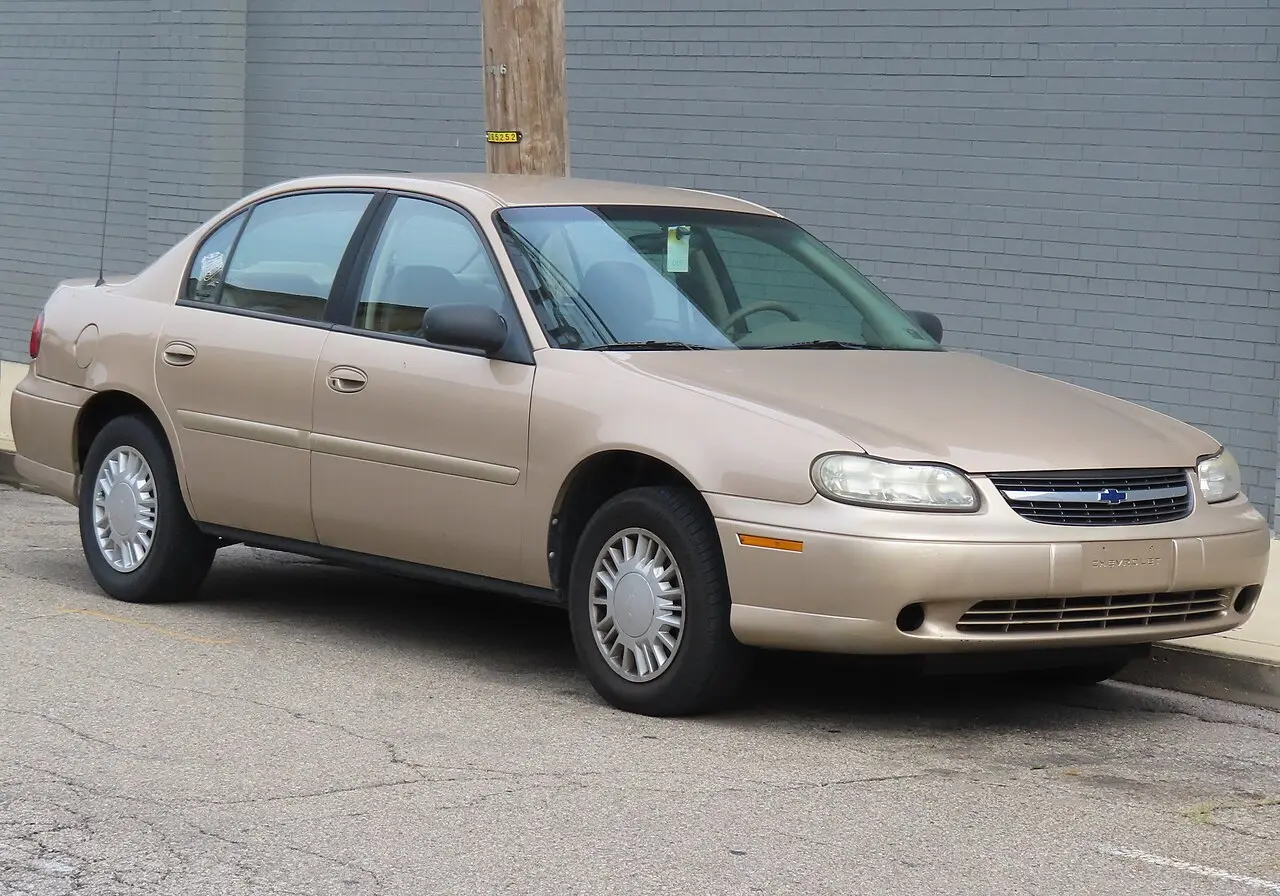
Malibu fifth generation (1997–2003)

Chevrolet Malibu fifth generation
Photo: MercurySable99 / Wikimedia Commons · CC BY-SA 4.0

Model codes: N-body · Sold in: United States and Canada · References: cars.com, en.wikipedia.org

Show all 17 versions

Malibu sixth generation (2004–2007)

Chevrolet Malibu sixth generation
Photo: IFCAR / Wikimedia Commons · Public domain

Model codes: Epsilon · Sold in: United States and Canada · References: cars.com, en.wikipedia.org

Show all 26 versions

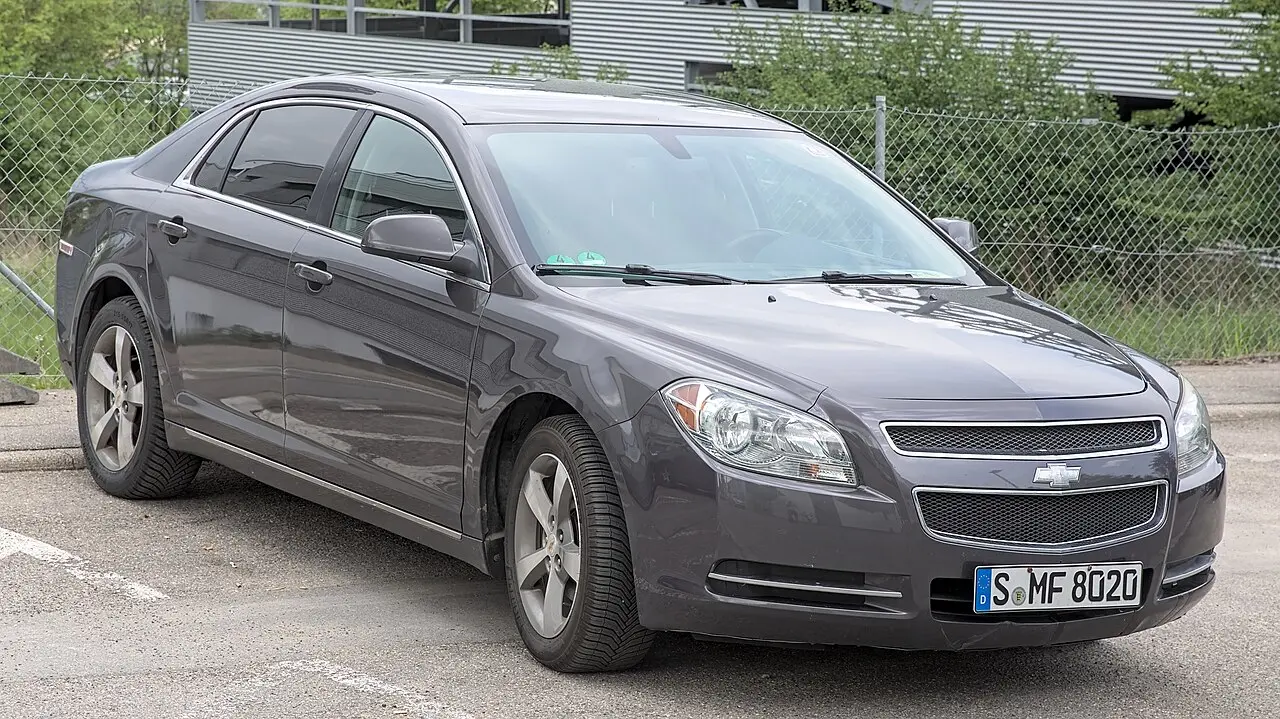
Malibu seventh generation (2008–2012)

Chevrolet Malibu seventh generation
Photo: Alexander-93 / Wikimedia Commons · CC BY-SA 4.0

Model codes: Epsilon · Sold in: United States and Canada · References: cars.com, en.wikipedia.org

Show all 26 versions

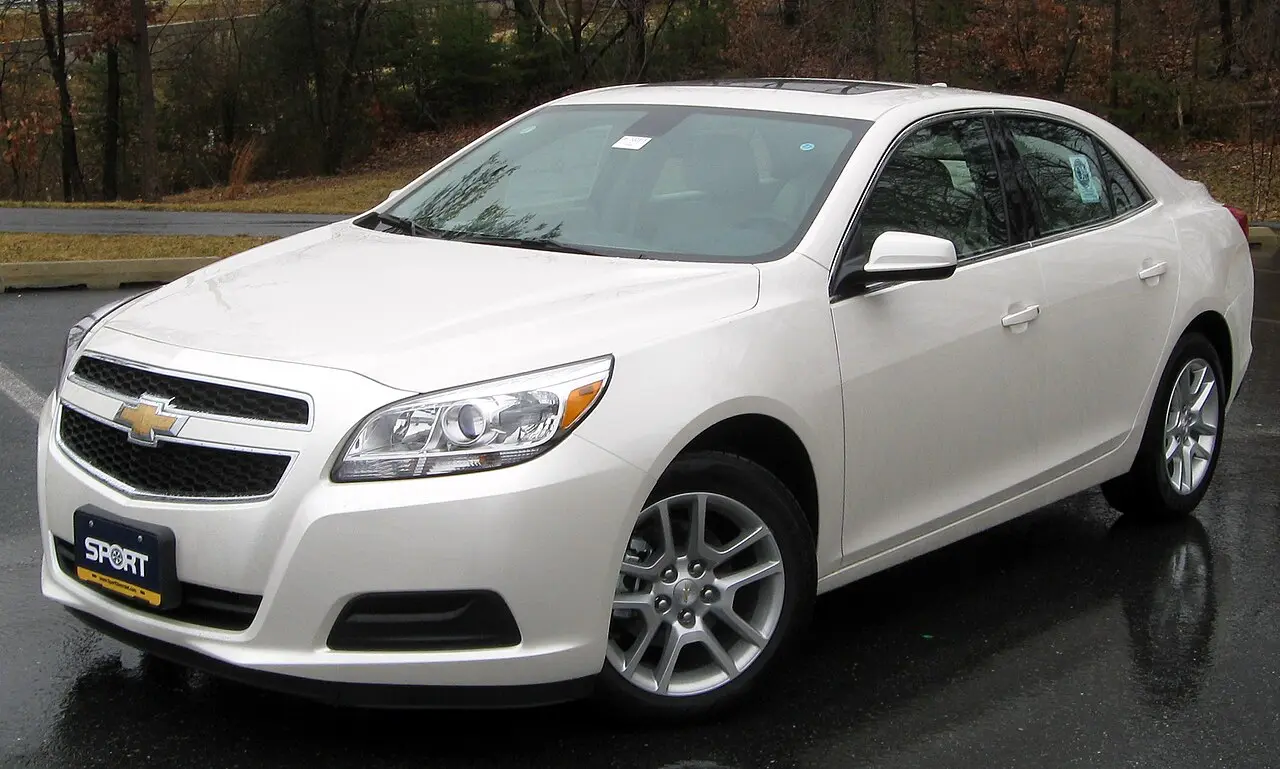
Malibu eighth generation (2012–2015)

Chevrolet Malibu eighth generation
Photo: IFCAR / Wikimedia Commons · Public domain

Model codes: Epsilon II · Sold in: United States, Canada, European Union, and France · References: cars.com, fr.wikipedia.org

Show all 27 versions

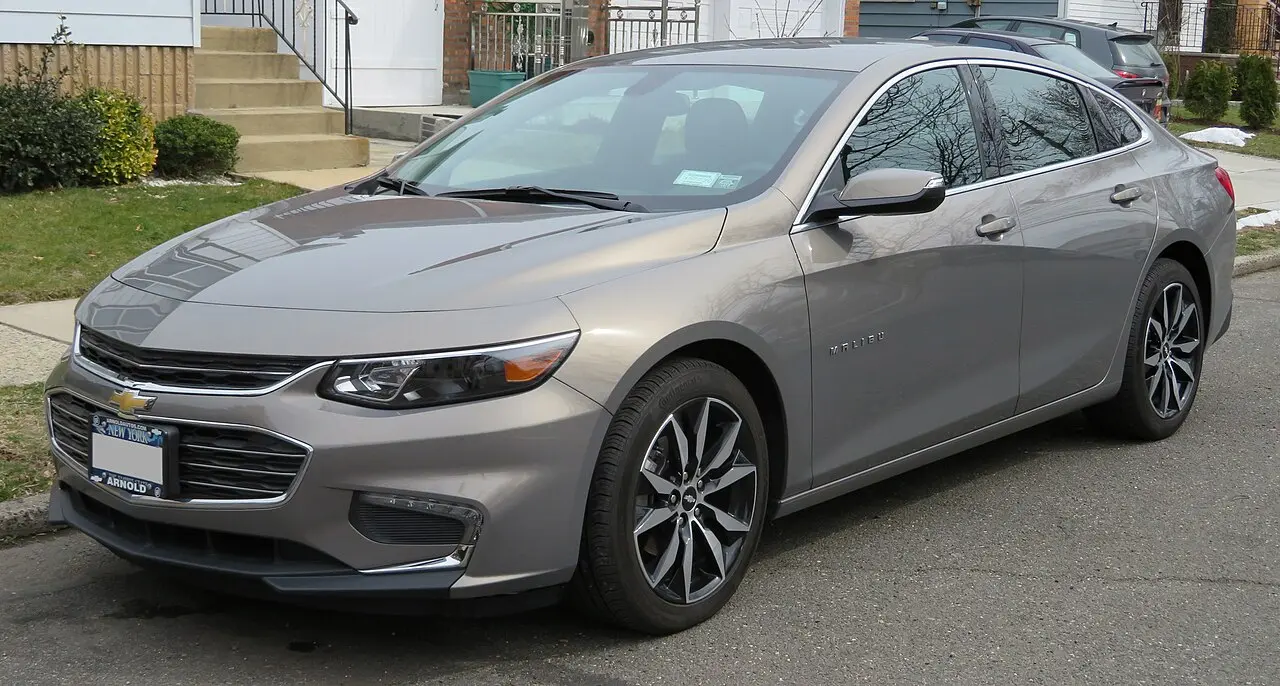
Malibu ninth generation (2016–2025)

Chevrolet Malibu ninth generation
Photo: Kevauto / Wikimedia Commons · CC BY-SA 4.0

Model codes: E2XX · Sold in: United States and Canada · References: cars.com, apnews.com

United States 16 versions

Model years sold in the USA, from the EPA and the Department of Energy (fueleconomy.gov). MPG on the EPA test; litres per 100 km = 235.215 ÷ MPG.

Years and versionEngineFuelGearboxDriveConsumption (combined)CO₂
2025SIDI1.5 LPetrolContinuously variable (CVT)Front-wheel drive31 MPG (7.6 L/100 km) EPA176 g/km
2024SIDI1.5 LPetrolContinuously variable (CVT)Front-wheel drive31 MPG (7.6 L/100 km) EPA175 g/km
2023SIDI1.5 LPetrolContinuously variable (CVT)Front-wheel drive30 MPG (7.8 L/100 km) EPA181 g/km
2022SIDI1.5 LPetrolContinuously variable (CVT)Front-wheel drive32 MPG (7.4 L/100 km) EPA171 g/km
2021–2022SIDI2.0 LPetrol9-speed automaticFront-wheel drive26 MPG (9.0 L/100 km) EPA213 g/km
2021SIDI1.5 LPetrolContinuously variable (CVT)Front-wheel drive32 MPG (7.4 L/100 km) EPA170 g/km
2020SIDI1.5 LPetrolContinuously variable (CVT)Front-wheel drive32 MPG (7.4 L/100 km) EPA185 g/km
2018–2020SIDI2.0 LPetrol9-speed automaticFront-wheel drive26 MPG (9.0 L/100 km) EPA214 g/km
2019SIDI1.5 LPetrolContinuously variable (CVT)Front-wheel drive32 MPG (7.4 L/100 km) EPA175 g/km
2017–2019SIDI; Hybrid1.8 LHybridContinuously variable (CVT)Front-wheel drive46 MPG (5.1 L/100 km) EPA121 g/km
2018SIDI1.5 LPetrol6-speed automaticFront-wheel drive30 MPG (7.8 L/100 km) EPA181 g/km
2016–2017SIDI1.5 LPetrol6-speed automaticFront-wheel drive30 MPG (7.8 L/100 km) EPA182 g/km
2017SIDI2.0 LPetrol9-speed automaticFront-wheel drive26 MPG (9.0 L/100 km) EPA213 g/km
2016SIDI1.8 LHybridContinuously variable (CVT)Front-wheel drive46 MPG (5.1 L/100 km) EPA122 g/km
2016SIDI2.0 LPetrol8-speed automaticFront-wheel drive26 MPG (9.0 L/100 km) EPA213 g/km
2016SIDI2.5 LPetrol6-speed automaticFront-wheel drive27 MPG (8.7 L/100 km) EPA204 g/km

Canada 17 versions

Model years sold in Canada, from Natural Resources Canada fuel consumption ratings (5-cycle test).

Years and versionEngineFuelGearboxConsumption (combined)CO₂
2025Mid-size1.5 LPetrolContinuously variable (CVT)7.7 L/100 km 5-cycle180 g/km
2024Mid-size1.5 LPetrolContinuously variable (CVT)7.7 L/100 km 5-cycle178 g/km
2023Mid-size1.5 LPetrolContinuously variable (CVT)7.8 L/100 km 5-cycle181 g/km
2021–2022Mid-size1.5 LPetrolContinuously variable (CVT)7.5 L/100 km 5-cycle175 g/km
2021–2022Mid-size2.0 LPetrol9-speed automatic9.1 L/100 km 5-cycle213 g/km
2020Mid-size1.5 LPetrolContinuously variable (CVT)7.5 L/100 km 5-cycle189 g/km
2019–2020Mid-size2.0 LPetrol9-speed automatic9.1 L/100 km 5-cycle214 g/km
2019Mid-size1.5 LPetrolContinuously variable (CVT)7.5 L/100 km 5-cycle174 g/km
2017–2019Mid-size1.8 LPetrolContinuously variable (CVT)5.1 L/100 km 5-cycle121 g/km
2018Mid-size1.5 LPetrol6-speed automatic7.8 L/100 km 5-cycle181 g/km
2018Mid-size2.0 LPetrol9-speed automatic9.1 L/100 km 5-cycle213 g/km
2017Mid-size1.5 LPetrol6-speed automatic7.8 L/100 km 5-cycle182 g/km
2017Mid-size2.0 LPetrol9-speed automatic9.1 L/100 km 5-cycle212 g/km
2016Mid-size1.5 LPetrol6-speed automatic7.6 L/100 km 5-cycle179 g/km
2016Mid-size1.8 LPetrolContinuously variable (CVT)5.1 L/100 km 5-cycle122 g/km
2016Mid-size2.0 LPetrol8-speed automatic9.0 L/100 km 5-cycle211 g/km
2016Mid-size2.5 LPetrol6-speed automatic8.6 L/100 km 5-cycle202 g/km

Official figures are measured on standard test procedures and differ between markets. Your consumption depends on how, where and in what conditions you drive.