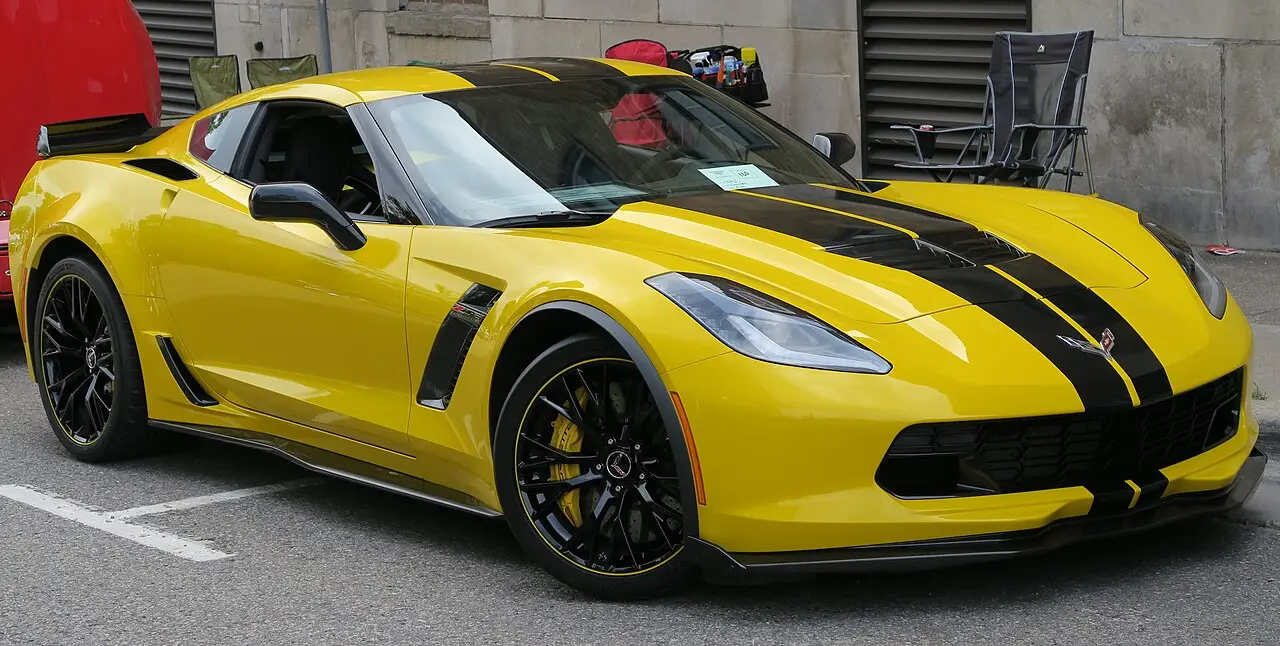
The official data lists 233 versions of the Chevrolet Corvette (1984–2027), in the European Union, the United Kingdom, France, the United States, and Canada. Each market publishes its own figures, measured on its own test procedure.
At a glance
Years in the data
1984–2027
Markets
European Union, United Kingdom, France, United States, Canada
Engines
5.5 L to 7.0 L
Power
321 kW (436 PS) to 485 kW (659 PS)
Fuels
Petrol, Hybrid
Lowest consumption (United States)
11.2 L/100 km (EPA)
Lowest consumption (Canada)
11.2 L/100 km (5-cycle)
Lowest consumption (France)
12.0 L/100 km (NEDC)
New registrations in the EU
10,664
What kind of car is the Chevrolet Corvette?
The Corvette is Chevrolet’s two-seat sports car, with a long history as one of the marque’s defining models. It sits at the performance end of the range and is offered as a coupe or convertible.
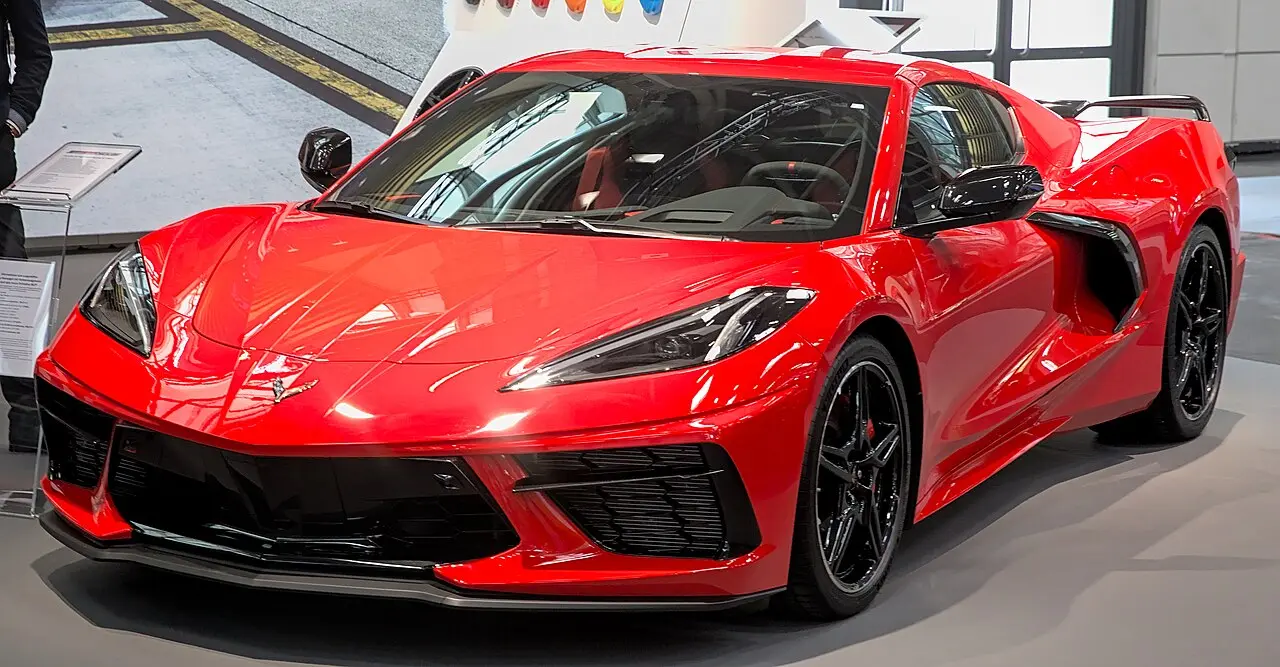
The C8, introduced in 2020, brought the biggest change in the car’s layout: its engine moved behind the cabin. Every previous generation had a front-engine design. The C8 range also includes petrol and hybrid versions.
Corvette generations
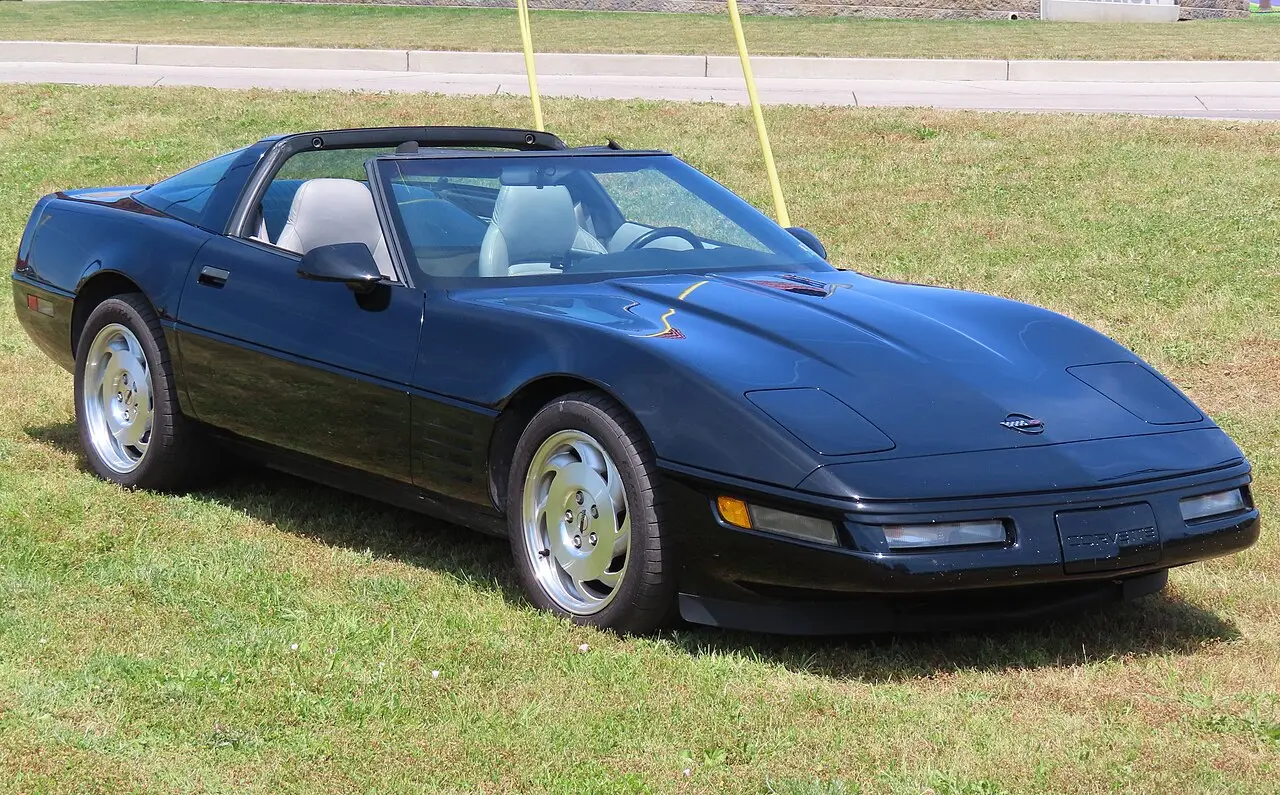
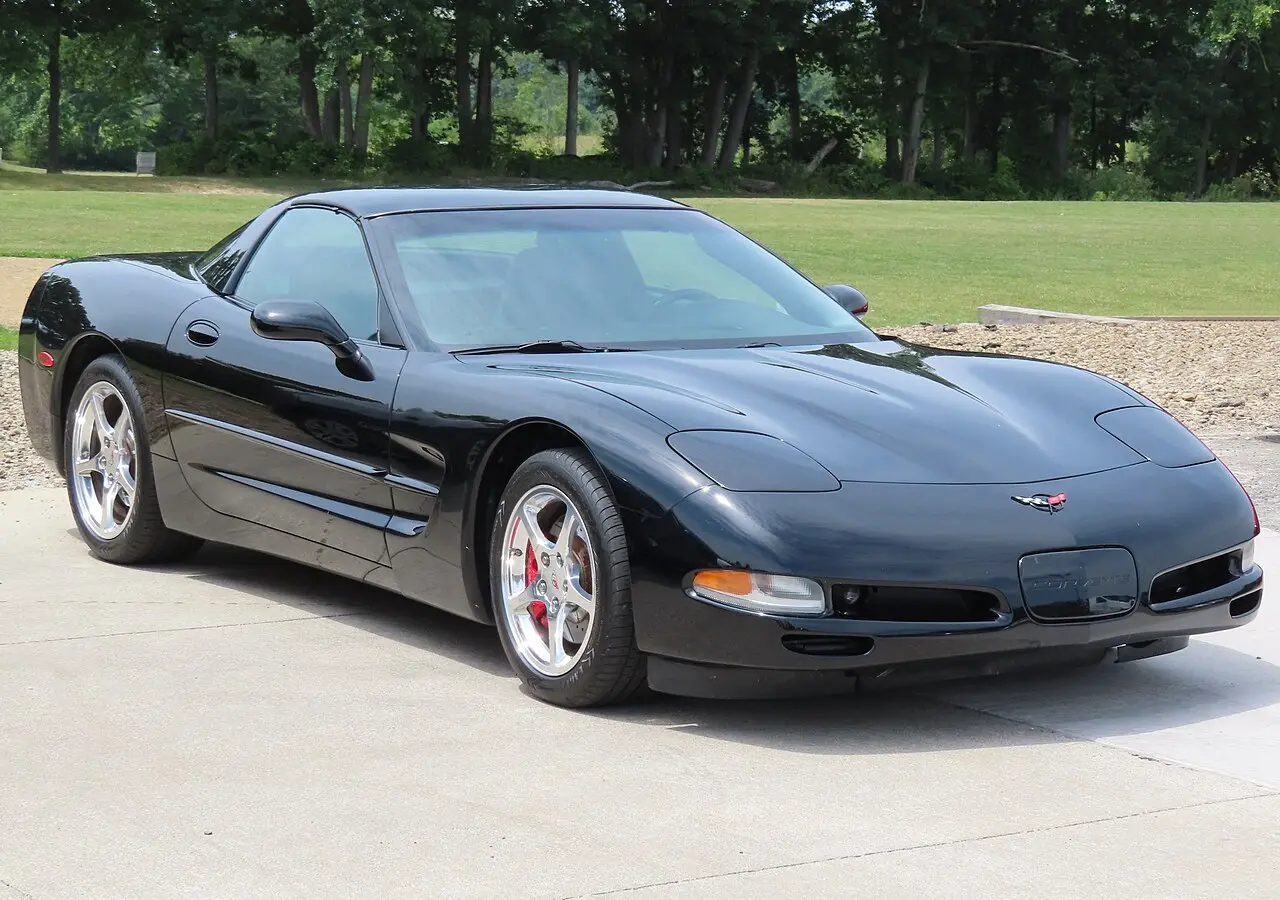
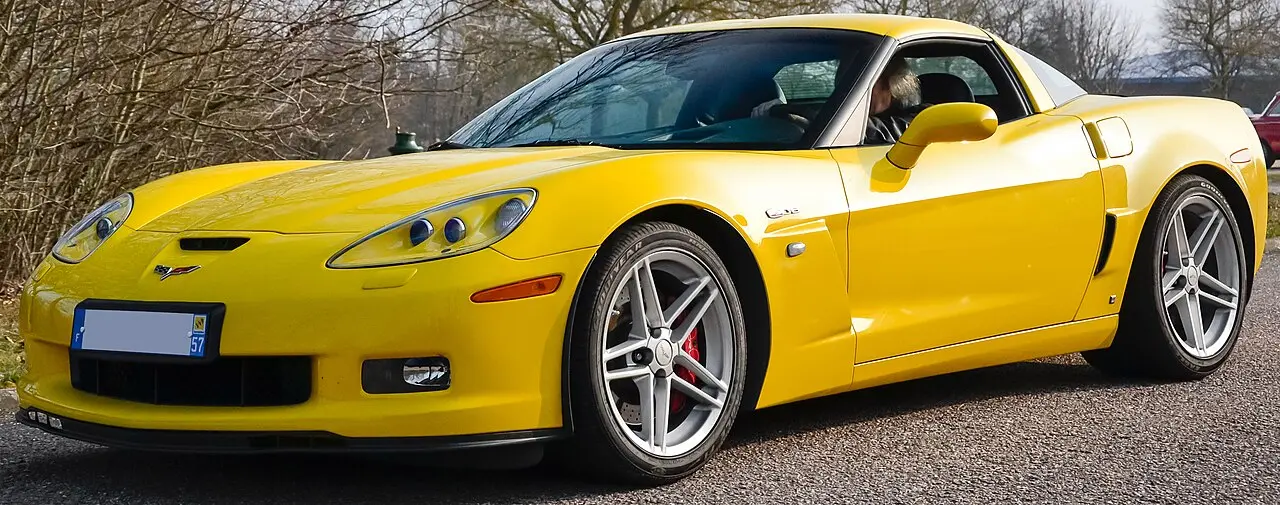
The Corvette generations are C4 (1984–1996), C5 (1997–2004), C6 (2005–2013), C7 (2014–2019) and C8 (2020–today). The C8’s mid-engine layout set it apart from the generations before it.
Engines, power and fuel consumption
Engine sizes range from 5.5 to 7.0 litres in EU, US and Canadian figures, and from 5.5 to 6.2 litres in UK figures. Listed power spans 321 kW (436 PS) to 485 kW (659 PS) in the EU, 354 kW (481 PS) to 646 kW (878 PS) in the UK, and 321 kW (436 PS) to 476 kW (647 PS) in France. Petrol and hybrid versions appear in EU, UK and US figures; France and Canada list petrol only.
The lowest listed consumption is 12.1 L/100 km on the EU WLTP test, 12 L/100 km on the UK and French NEDC tests, and 11.2 L/100 km in both US EPA and Canadian 5-cycle figures. These test procedures differ, so the results are not direct like-for-like comparisons.
Where is the Corvette sold?
The Corvette appears in figures for the European Union, the United Kingdom, France, the United States and Canada. The year spans vary by market: US figures run from 1984–2027, Canadian figures from 1995–2026, UK figures from 2000–2026, EU registrations from 2010–2025, and French figures from 2012–2015. EU registrations total 10,664 over the stated period.
Questions and answers
When did the Corvette become a mid-engine car?
The C8 generation, introduced in 2020, moved the engine behind the cabin. Earlier generations had a front-engine layout.
What is the Corvette’s lowest listed fuel consumption?
The lowest figure is 11.2 L/100 km in both US EPA and Canadian 5-cycle figures. Test procedures differ by market.
Are hybrid Corvettes included in the official figures?
Yes. Hybrid versions appear in EU, UK and US figures. France and Canada list petrol versions only.
New cars registered in the EU (plus Norway and Iceland), from the European Environment Agency. Figures on the NEDC procedure until 2020 and on WLTP from 2021; versions are grouped by engine and power, with their number of registrations.
Years and version
Engine
Power
Fuel
Consumption (combined)
CO₂
EU registrations
2025
6.2 L
354 kW (481 PS)
Petrol
12.7 L/100 km WLTP
292 g/km
547
2025
5.5 L
475 kW (646 PS)
Petrol
16.5 L/100 km WLTP
377 g/km
200
2025
6.2 L
354 kW (481 PS)
Hybrid
12.6 L/100 km WLTP
285 g/km
28
2024
6.2 L
354 kW (481 PS)
Petrol
12.2 L/100 km WLTP
280 g/km
451
2024
5.5 L
475 kW (646 PS)
Petrol
16.5 L/100 km WLTP
377 g/km
54
2023
6.2 L
354 kW (481 PS)
Petrol
12.1 L/100 km WLTP
277 g/km
976
2023
5.5 L
475 kW (646 PS)
Petrol
16.5 L/100 km WLTP
377 g/km
10
2022
6.2 L
354 kW (481 PS)
Petrol
12.1 L/100 km WLTP
277 g/km
628
2021
6.2 L
354 kW (481 PS)
Petrol
12.1 L/100 km WLTP
276 g/km
256
2021
6.2 L
369 kW (502 PS)
Petrol
–
298 g/km
44
2021
6.2 L
365 kW (496 PS)
Petrol
–
299 g/km
20
United Kingdom 7 versions
New cars on sale in the UK, from the Vehicle Certification Agency. NEDC figures until 2018 and WLTP figures after; years are the editions a version appeared in.
Model years sold in the USA, from the EPA and the Department of Energy (fueleconomy.gov). MPG on the EPA test; litres per 100 km = 235.215 ÷ MPG.
Years and version
Engine
Fuel
Gearbox
Drive
Consumption (combined)
CO₂
2026–2027SIDI
5.5 L
Petrol
8-speed automatic
Rear-wheel drive
15 MPG (15.7 L/100 km) EPA
371 g/km
2026–2027SIDI
5.5 L
Petrol
8-speed automatic
Rear-wheel drive
14 MPG (16.8 L/100 km) EPA
391 g/km
2026–2027SIDI; Hybrid · SIDI & PFI; Hybrid
5.5 L
Hybrid
8-speed automatic
All-wheel drive
14 MPG (16.8 L/100 km) EPA
381 g/km
2027SIDI
5.5 L
Petrol
8-speed automatic
Rear-wheel drive
14 MPG (16.8 L/100 km) EPA
393 g/km
2027SIDI & PFI
6.7 L
Petrol
8-speed automatic
Rear-wheel drive
18 MPG (13.1 L/100 km) EPA
301 g/km
2027SIDI & PFI
6.7 L
Petrol
8-speed automatic
Rear-wheel drive
17 MPG (13.8 L/100 km) EPA
324 g/km
2027SIDI & PFI; Hybrid
6.7 L
Hybrid
8-speed automatic
All-wheel drive
18 MPG (13.1 L/100 km) EPA
307 g/km
2023–2026SIDI
5.5 L
Petrol
8-speed automatic
Rear-wheel drive
14 MPG (16.8 L/100 km) EPA
392 g/km
2025–2026SIDI; Hybrid
6.2 L
Hybrid
8-speed automatic
All-wheel drive
19 MPG (12.4 L/100 km) EPA
296 g/km
2026SIDI
6.2 L
Petrol
8-speed automatic
Rear-wheel drive
19 MPG (12.4 L/100 km) EPA
295 g/km
2025SIDI
5.5 L
Petrol
8-speed automatic
Rear-wheel drive
14 MPG (16.8 L/100 km) EPA
382 g/km
2025SIDI
5.5 L
Petrol
8-speed automatic
Rear-wheel drive
14 MPG (16.8 L/100 km) EPA
396 g/km
2024–2025SIDI
6.2 L
Petrol
8-speed automatic
Rear-wheel drive
19 MPG (12.4 L/100 km) EPA
293 g/km
2023–2024SIDI
5.5 L
Petrol
8-speed automatic
Rear-wheel drive
15 MPG (15.7 L/100 km) EPA
371 g/km
2024SIDI; Hybrid
6.2 L
Hybrid
8-speed automatic
All-wheel drive
19 MPG (12.4 L/100 km) EPA
298 g/km
2023SIDI
6.2 L
Petrol
8-speed automatic
Rear-wheel drive
19 MPG (12.4 L/100 km) EPA
298 g/km
2022SIDI
6.2 L
Petrol
8-speed automatic
Rear-wheel drive
19 MPG (12.4 L/100 km) EPA
297 g/km
2020–2021SIDI
6.2 L
Petrol
8-speed automatic
Rear-wheel drive
19 MPG (12.4 L/100 km) EPA
290 g/km
Canada 18 versions
Model years sold in Canada, from Natural Resources Canada fuel consumption ratings (5-cycle test).
Years and version
Engine
Fuel
Gearbox
Consumption (combined)
CO₂
2026Two-seater
5.5 L
Petrol
8-speed automatic
15.8 L/100 km 5-cycle
371 g/km
2026Two-seater
5.5 L
Petrol
8-speed automatic
16.7 L/100 km 5-cycle
392 g/km
2026Two-seater
5.5 L
Petrol
8-speed automatic
16.6 L/100 km 5-cycle
390 g/km
2026Two-seater
5.5 L
Petrol
8-speed automatic
16.2 L/100 km 5-cycle
381 g/km
2026Two-seater
6.2 L
Petrol
8-speed automatic
12.7 L/100 km 5-cycle
298 g/km
2026Two-seater
6.2 L
Petrol
8-speed automatic
12.5 L/100 km 5-cycle
295 g/km
2025Two-seater
5.5 L
Petrol
8-speed automatic
16.3 L/100 km 5-cycle
382 g/km
2025Two-seater
5.5 L
Petrol
8-speed automatic
16.7 L/100 km 5-cycle
392 g/km
2025Two-seater
5.5 L
Petrol
8-speed automatic
16.9 L/100 km 5-cycle
396 g/km
2025Two-seater
6.2 L
Petrol
8-speed automatic
12.5 L/100 km 5-cycle
294 g/km
2025Two-seater
6.2 L
Petrol
8-speed automatic
12.7 L/100 km 5-cycle
298 g/km
2023–2024Two-seater
5.5 L
Petrol
8-speed automatic
15.8 L/100 km 5-cycle
371 g/km
2023–2024Two-seater
5.5 L
Petrol
8-speed automatic
16.7 L/100 km 5-cycle
392 g/km
2024Two-seater
6.2 L
Petrol
8-speed automatic
12.5 L/100 km 5-cycle
295 g/km
2024Two-seater
6.2 L
Petrol
8-speed automatic
12.7 L/100 km 5-cycle
298 g/km
2023Two-seater
6.2 L
Petrol
8-speed automatic
12.7 L/100 km 5-cycle
299 g/km
2022Two-seater
6.2 L
Petrol
8-speed automatic
12.6 L/100 km 5-cycle
297 g/km
2020–2021Two-seater
6.2 L
Petrol
8-speed automatic
12.4 L/100 km 5-cycle
290 g/km
Official figures are measured on standard test procedures and differ between markets. Your consumption depends on how, where and in what conditions you drive.