Chevrolet

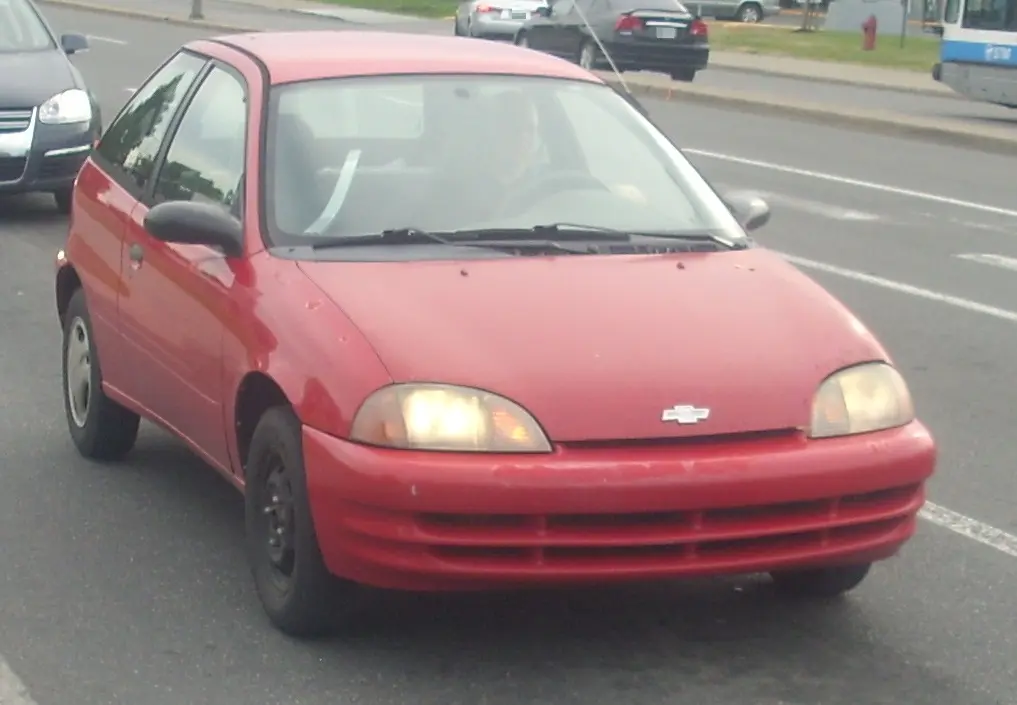
Chevrolet Metro

Chevrolet Metro
Photo: Bull-Doser / Wikimedia Commons · Public domain

The official data lists 10 versions of the Chevrolet Metro (1998–2001), in the United States and Canada. Each market publishes its own figures, measured on its own test procedure.

At a glance

Years in the data
1998–2001
Markets
United States, Canada
Engines
1.0 L to 1.3 L
Fuels
Petrol
Lowest consumption (United States)
5.9 L/100 km (EPA)
Lowest consumption (Canada)
5.9 L/100 km (5-cycle)

What is the Chevrolet Metro?

The Chevrolet Metro was a small petrol car sold in North America as a hatchback and sedan. Its compact proportions and small-engine range made it a natural fit for everyday driving, especially in town. It had previously been sold as the Geo Metro; when General Motors retired the Geo name, the car joined Chevrolet’s lineup.

The Metro grew out of General Motors’ partnership with Suzuki and the Suzuki Cultus. The North American version developed its own styling and body styles, while retaining a focus on small-car practicality.

Generation and engines

The Chevrolet-badged Metro belongs to the third generation of the North American Metro line, identified by the MR code. This generation ran from 1998 to 2001 in the United States and from 1998 to 2000 in Canada. The change from Geo to Chevrolet brought revised styling. The range included hatchback and sedan body styles; the final US year was sedan-only.

The petrol engine range ran from 1.0 L to 1.3 L. The smaller engine had three cylinders and the larger one had four. The 1.3 L engine was revised for the Chevrolet-badged years.

Fuel consumption

The lowest listed consumption is 5.9 L/100 km in both markets. The best US EPA combined rating is 40 MPG. Canada’s 5.9 L/100 km figure uses the NRCan 5-cycle procedure; EPA and 5-cycle results use different test methods and should be read in their own market context.

Where was the Metro sold?

The Chevrolet Metro was sold in the United States and Canada. US sales ran from 1998 to 2001, while Canadian sales ran from 1998 to 2000. Both markets offered petrol versions.

Questions and answers

Was the Chevrolet Metro a hatchback or a sedan?

The range included both hatchback and sedan body styles; the final US sales year was sedan-only.

What engines did the Metro use?

It had petrol engines from 1.0 L to 1.3 L, including three-cylinder and four-cylinder layouts.

What is its best EPA combined fuel economy?

The best US EPA combined rating is 40 MPG.

When was the Metro sold in Canada?

The Metro was sold in Canada from 1998 to 2000.

Metro third generation (1998–2001)

Chevrolet Metro third generation
Photo: Bull-Doser / Wikimedia Commons · Public domain

Model codes: MR · Sold in: United States and Canada · References: en.wikipedia.org, cars.com

United States 6 versions

Model years sold in the USA, from the EPA and the Department of Energy (fueleconomy.gov). MPG on the EPA test; litres per 100 km = 235.215 ÷ MPG.

Years and versionEngineFuelGearboxDriveConsumption (combined)CO₂
1998–20011.3 LPetrol3-speed automaticFront-wheel drive28 MPG (8.4 L/100 km) EPA197 g/km
2000SIL1.0 LPetrol5-speed manualFront-wheel drive36 MPG (6.5 L/100 km) EPA153 g/km
2000SIL1.3 LPetrol5-speed manualFront-wheel drive34 MPG (6.9 L/100 km) EPA162 g/km
1999SIL1.0 LPetrol5-speed manualFront-wheel drive37 MPG (6.4 L/100 km) EPA149 g/km
1998–1999SIL1.3 LPetrol5-speed manualFront-wheel drive35 MPG (6.7 L/100 km) EPA158 g/km
1998SIL1.0 LPetrol5-speed manualFront-wheel drive40 MPG (5.9 L/100 km) EPA138 g/km

Canada 4 versions

Model years sold in Canada, from Natural Resources Canada fuel consumption ratings (5-cycle test).

Years and versionEngineFuelGearboxConsumption (combined)CO₂
1999–2000Subcompact1.0 LPetrol5-speed manual6.4 L/100 km 5-cycle147 g/km
1998–2000Subcompact1.3 LPetrol3-speed automatic8.3 L/100 km 5-cycle191 g/km
1998–2000Subcompact1.3 LPetrol5-speed manual6.8 L/100 km 5-cycle156 g/km
1998Subcompact1.0 LPetrol5-speed manual5.9 L/100 km 5-cycle136 g/km

Official figures are measured on standard test procedures and differ between markets. Your consumption depends on how, where and in what conditions you drive.