The official data lists 252 versions of the Porsche Panamera (2010 - 2026), in the European Union, the United Kingdom, France, the United States, and Canada. Each market publishes its own figures, measured on its own test procedure.
At a glance
Years in the data
2010 - 2026
Markets
European Union, United Kingdom, France, United States, Canada
Engines
2.9 L to 4.8 L
Power
184 kW (250 PS) to 463 kW (630 PS)
Fuels
Plug-in hybrid, Diesel, Petrol, Hybrid, Electric
Lowest consumption (France)
6.3 L/100 km (NEDC)
Lowest consumption (United Kingdom)
6.3 L/100 km (NEDC)
Lowest consumption (Canada)
9.1 L/100 km (5-cycle)
Plug-in hybrid, weighted (France)
1.0 L/100 km (WLTP)
Plug-in hybrid, weighted (European Union)
1.2 L/100 km (WLTP)
New registrations in the EU
153,032
What is the Porsche Panamera?
The Panamera is Porsche’s four-door Gran Turismo, a low-roofed saloon with a hatchback-style tailgate. It brings together sports-car character with space for passengers and luggage, making it suited to longer journeys and everyday use. Porsche presented its first Gran Turismo in 2009, establishing a new kind of car in the company’s range.
The Panamera has been offered with petrol, diesel, hybrid and plug-in hybrid power. EU registrations also include other and electric fuel categories.
Panamera generations
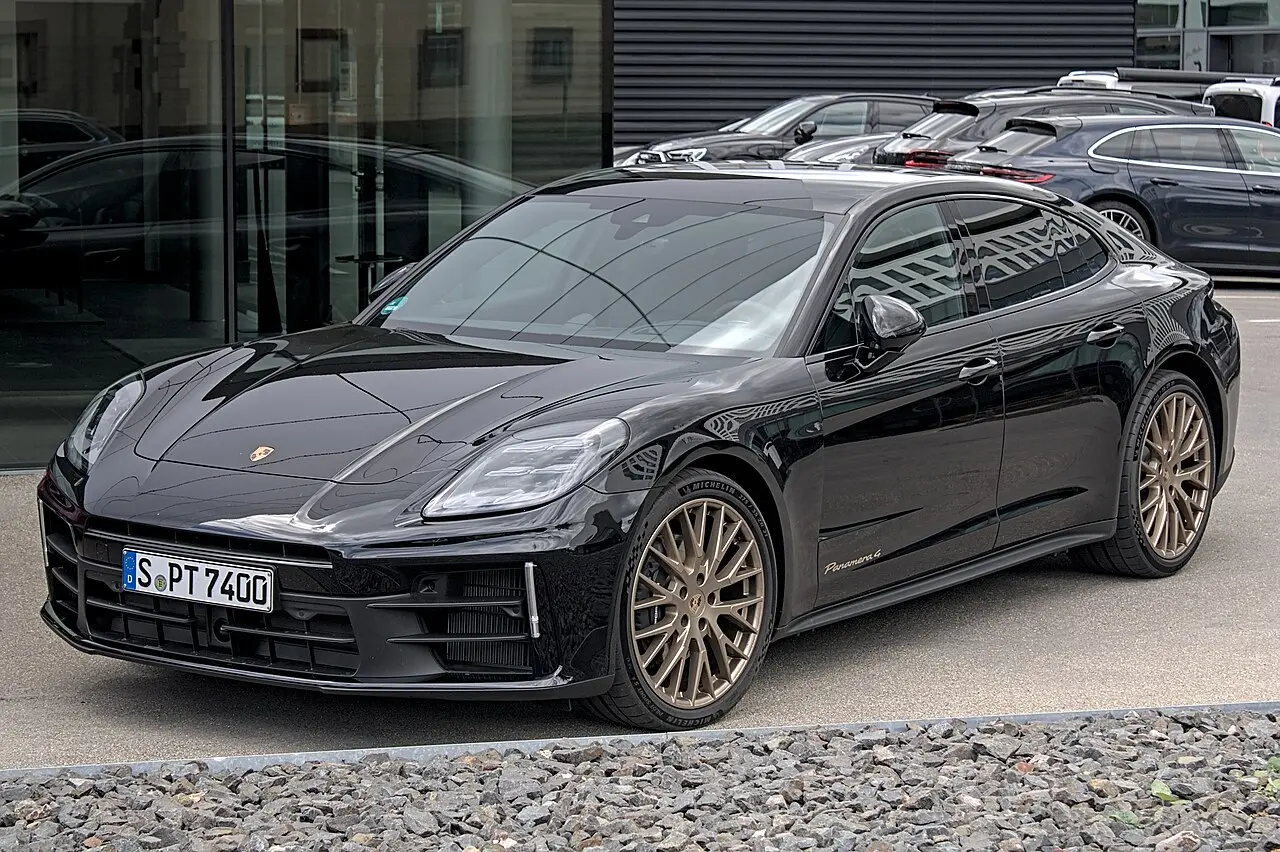
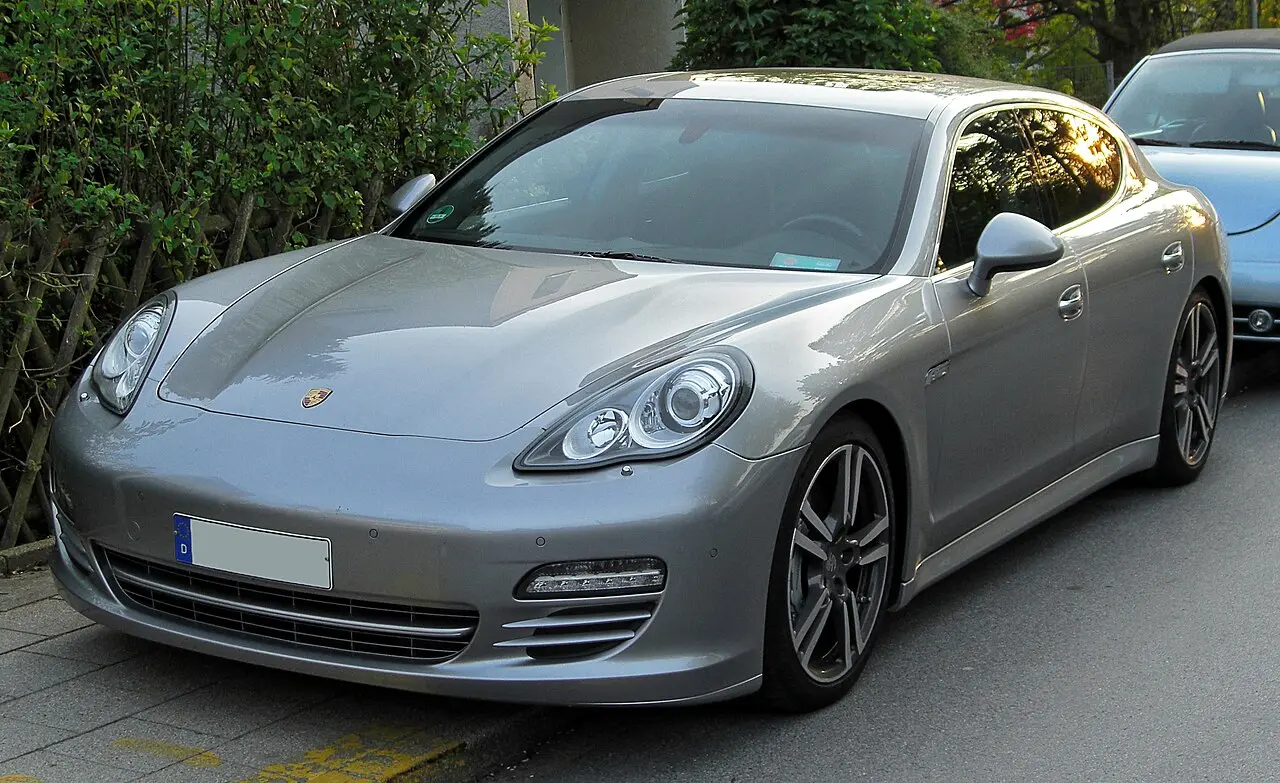
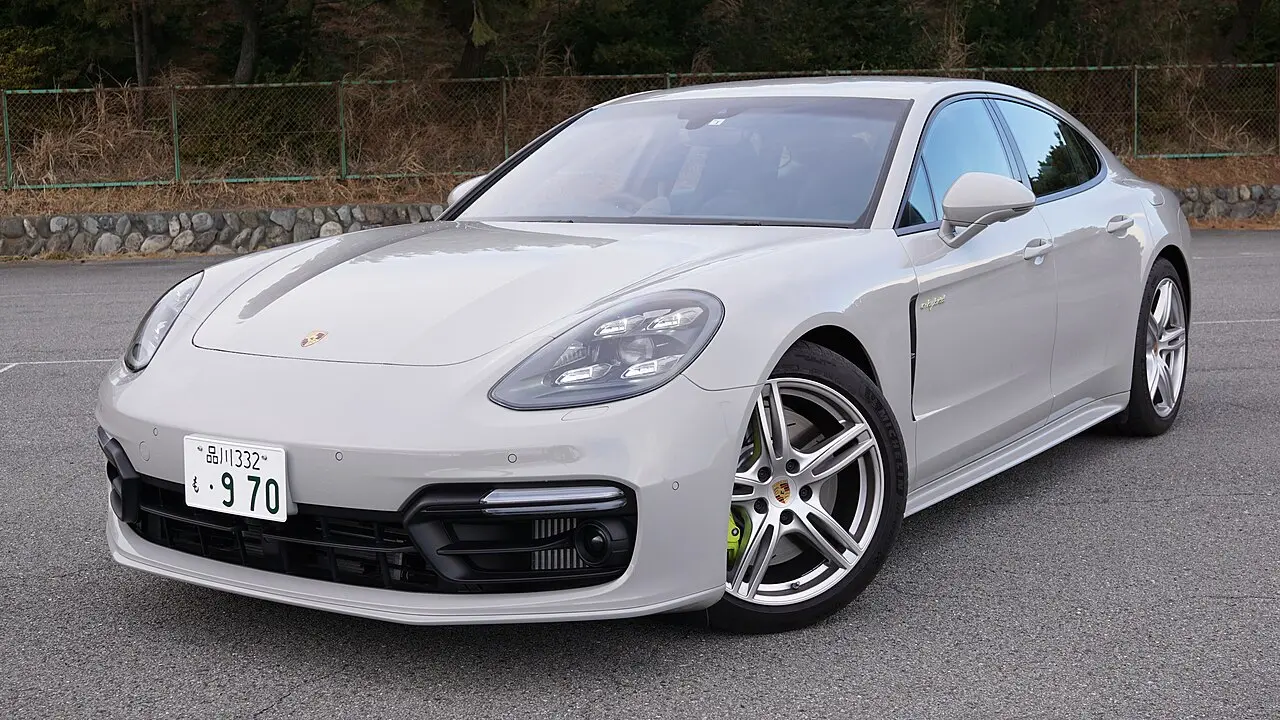
The first generation, type 970, ran from 2010-2016 and introduced Porsche’s four-door Gran Turismo in production form. The second generation, type 971, followed from 2017-2023, further developing the four-door concept and expanding the range of powertrains. The third generation, types 972 and 976, began in 2024 and continues today.
Across these generations, the Panamera has used petrol, diesel, hybrid and plug-in hybrid power. EU registrations also include other and electric fuel categories.
Engines, power and official consumption
In EU, UK and US figures, engine sizes range from 2.9 to 4.8 litres; French figures cover 2.9 to 4.0 litres. Recorded power ranges from 184 kW (250 PS) to 463 kW (630 PS) in the EU, 224 kW (305 PS) to 441 kW (600 PS) in the UK, and 184 kW (250 PS) to 420 kW (571 PS) in France. Canadian figures list engines from 2.9 to 4.8 litres.
The lowest stated non-plug-in consumption is 10.4 L/100 km on WLTP in the EU. The lowest plug-in hybrid figure there is 1.2 L/100 km on WLTP, an official weighted figure that assumes part of the driving is electric. UK figures list 6.3 L/100 km on NEDC for non-plug-in versions and 2.5 L/100 km on NEDC for plug-in hybrids. France lists 6.3 L/100 km on NEDC for non-plug-in versions and 1 L/100 km on WLTP for plug-in hybrids.
In the USA, the lowest listed figure is 9.4 L/100 km under EPA testing, including the plug-in hybrid weighted figure; the best combined rating is 25 MPG. European WLTP and NEDC procedures differ from the EPA test in the USA and the 5-cycle test in Canada, so results are best read within each market.
Questions and answers
When did the Porsche Panamera first go on sale?
Porsche presented its first Gran Turismo in 2009; the first generation ran from 2010-2016.
How many Panamera generations are there?
There are three: type 970 (2010-2016), type 971 (2017-2023) and types 972 and 976 (2024-today).
What is the lowest official Panamera consumption figure?
The lowest stated figure is 1 L/100 km for a plug-in hybrid in France on WLTP. It is a weighted figure that assumes some driving is electric.
Which markets have official Panamera figures?
EU registrations and figures are available, alongside figures for the UK, France, the USA and Canada.
At a glance: Length 4,970 - 5,020 mm · Kerb weight 1,775 - 2,070 kg · Top speed 244 - 305 km/h · MOT first-time pass at 9 - 12 years: 87.6% (UK average 77.9%) Specifications, reliability and all versions
At a glance: Length 5,050 mm · Kerb weight 1,855 - 2,300 kg · Top speed 275 - 310 km/h · MOT first-time pass at 4 - 5 years: 91.6% (UK average 91.0%) Specifications, reliability and all versions
New cars registered in the EU (plus Norway and Iceland), from the European Environment Agency. Figures on the NEDC procedure until 2020 and on WLTP from 2021; versions are grouped by engine and power, with their number of registrations.
Years and version
Engine
Power
Fuel
Consumption (combined)
CO₂
Electric range
EU registrations
2024 - 2025
2.9 L
224 kW (305 PS) (engine only)
Plug-in hybrid
1.2 - 2.0 L/100 km WLTP24.0 - 26.4 kWh/100 km WLTP
29 - 45 g/km
86 - 88 km
3,142
2024 - 2025
2.9 L
260 kW (354 PS) (engine only)
Plug-in hybrid
1.3 - 2.2 L/100 km WLTP24.2 - 26.9 kWh/100 km WLTP
32 - 49 g/km
83 - 84 km
1,684
2024 - 2025
2.9 L
260 kW (354 PS)
Petrol
10.4 - 10.5 L/100 km WLTP
237 g/km
-
1,067
2024 - 2025
4.0 L
368 kW (500 PS)
Petrol
12.1 L/100 km WLTP
274 - 275 g/km
-
899
2024 - 2025
4.0 L
382 kW (519 PS) (engine only)
Plug-in hybrid
1.3 - 1.8 L/100 km WLTP26.9 - 28.3 kWh/100 km WLTP
29 - 42 g/km
87 km
858
2024 - 2025
4.0 L
441 kW (600 PS) (engine only)
Plug-in hybrid
1.4 - 2.6 L/100 km WLTP25.5 - 27.3 kWh/100 km WLTP
36 - 57 g/km
84 km
550
2025
2.9 L
260 kW (354 PS)
Hybrid
-
220 g/km
-
245
2025
2.9 L
364 kW (495 PS)
Hybrid
-
25 g/km
-
61
2025
4.0 L
Not listed
Hybrid
5.8 L/100 km WLTP
191 g/km
-
25
2024
2.9 L
243 kW (330 PS) (engine only)
Plug-in hybrid
2.3 L/100 km WLTP23.7 kWh/100 km WLTP
53 g/km
52 km
376
2024
2.9 L
324 kW (441 PS) (engine only)
Plug-in hybrid
2.7 L/100 km WLTP23.9 kWh/100 km WLTP
60 g/km
47 km
136
2024
4.0 L
353 kW (480 PS)
Petrol
12.7 L/100 km WLTP
289 g/km
-
93
2024
2.9 L
243 kW (330 PS)
Petrol
11.0 L/100 km WLTP
248 g/km
-
36
2024
2.9 L
364 kW (495 PS) (engine only)
Plug-in hybrid
1.1 L/100 km WLTP26.2 kWh/100 km WLTP
25 g/km
89 km
36
2024
4.0 L
420 kW (571 PS) (engine only)
Plug-in hybrid
2.9 L/100 km WLTP24.3 kWh/100 km WLTP
65 g/km
48 km
24
2024
4.0 L
463 kW (630 PS)
Petrol
12.9 L/100 km WLTP
293 g/km
-
16
United Kingdom 7 versions
New cars on sale in the UK, from the Vehicle Certification Agency. NEDC figures until 2018 and WLTP figures after; years are the editions a version appeared in.
Years and version
Engine
Power
Fuel
Gearbox
Consumption (combined)
CO₂
Electric range
2025 - 2026Panamera 4 E-Hybrid
2.9 L
224 kW (305 PS)
Plug-in hybrid
8-speed automatic
2.7 kWh/100 km WLTP
-
50 km
2025 - 2026Panamera 4S E-Hybrid · Panamera 4 S E-Hybrid
2.9 L
260 kW (354 PS)
Plug-in hybrid
8-speed automatic
2.7 kWh/100 km WLTP
-
48 km
2025 - 2026Panamera
2.9 L
260 kW (354 PS)
Petrol
8-speed automatic
9.4 - 10.4 L/100 km WLTP
236 g/km
-
2025 - 2026Panamera 4
2.9 L
260 kW (354 PS)
Petrol
8-speed automatic
10.0 - 11.0 L/100 km WLTP
249 g/km
-
2025 - 2026Panamera GTS
4.0 L
368 kW (500 PS)
Petrol
8-speed automatic
10.8 - 12.4 L/100 km WLTP
283 g/km
-
2025 - 2026Panamera Turbo E-Hybrid
4.0 L
382 kW (519 PS)
Plug-in hybrid
8-speed automatic
2.8 kWh/100 km WLTP
-
47 km
2025 - 2026Panamera Turbo S E-Hybrid
4.0 L
441 kW (600 PS)
Plug-in hybrid
8-speed automatic
2.7 kWh/100 km WLTP
-
48 km
France 5 versions
New cars on sale in France, from ADEME Car Labelling. NEDC figures until 2015, WLTP figures in the current catalogue.
Years and version
Engine
Power
Fuel
Gearbox
Consumption (combined)
CO₂
Electric range
2026PANAMERA 4 E-HYBRID
2.9 L
243 kW (330 PS)
Plug-in hybrid
8-speed automatic
1.9 - 2.2 L/100 km WLTP22.3 - 23.4 kWh/100 km WLTP
44 - 51 g/km
53 - 57 km
2026PANAMERA 4E-Hybrid SPORT TURISMO
2.9 L
243 kW (330 PS)
Plug-in hybrid
8-speed automatic
1.9 - 2.2 L/100 km WLTP22.3 - 23.4 kWh/100 km WLTP
44 - 51 g/km
53 - 57 km
2026PANAMERA 4S E-Hybrid
2.9 L
324 kW (441 PS)
Plug-in hybrid
8-speed automatic
2.1 - 2.6 L/100 km WLTP22.2 - 23.7 kWh/100 km WLTP
48 - 60 g/km
47 - 55 km
2026PANAMERA 4S E-Hybrid SPORT TURISMO
2.9 L
324 kW (441 PS)
Plug-in hybrid
8-speed automatic
2.1 - 2.6 L/100 km WLTP22.2 - 23.7 kWh/100 km WLTP
48 - 60 g/km
47 - 55 km
2026PANAMERA TURBO S E-HYBRID
4.0 L
420 kW (571 PS)
Plug-in hybrid
8-speed automatic
1.0 L/100 km WLTP23.7 kWh/100 km WLTP
58 g/km
52 km
United States 4 versions
Model years sold in the USA, from the EPA and the Department of Energy (fueleconomy.gov). MPG on the EPA test; litres per 100 km = 235.215 ÷ MPG.
Years and version
Engine
Fuel
Gearbox
Drive
Consumption (combined)
CO₂
2024 - 2026SIDI
2.9 L
Petrol
8-speed automated manual
All-wheel drive
21 MPG (11.2 L/100 km) EPA
264 g/km
2024 - 2026SIDI
2.9 L
Petrol
8-speed automated manual
Rear-wheel drive
21 MPG (11.2 L/100 km) EPA
268 g/km
2025SIDI; PHEV
2.9 L
Plug-in hybrid
8-speed automated manual
All-wheel drive
21 MPG (11.2 L/100 km) EPA
115 - 116 g/km
2025SIDI
4.0 L
Petrol
8-speed automated manual
All-wheel drive
18 MPG (13.1 L/100 km) EPA
308 g/km
Canada 2 versions
Model years sold in Canada, from Natural Resources Canada fuel consumption ratings (5-cycle test).
Years and version
Engine
Fuel
Gearbox
Consumption (combined)
CO₂
2024 - 2026Full-size
2.9 L
Petrol
8-speed automated manual
10.9 - 11.4 L/100 km 5-cycle
258 - 268 g/km
2025 - 2026Full-size
4.0 L
Petrol
8-speed automated manual
12.5 L/100 km 5-cycle
295 g/km
Porsche Panamera recalls
46 official safety recalls for the Porsche Panamera from NHTSA (United States), DVSA (United Kingdom) and the EU Safety Gate, newest first. Recall repairs are normally free at the maker’s dealers.
Rearview camera image may not display in reverse2024 - 2025
Incorrect sensor wiring may delay side airbag deployment2022 - 2025
Fuel pump fasteners may loosen and cause a leak2024 - 2026
Suspension strut retaining ring may come loose2025 - 2026
Front air-spring locking ring may loosen2024 - 2025
Official figures are measured on standard test procedures and differ between markets. Your consumption depends on how, where and in what conditions you drive.