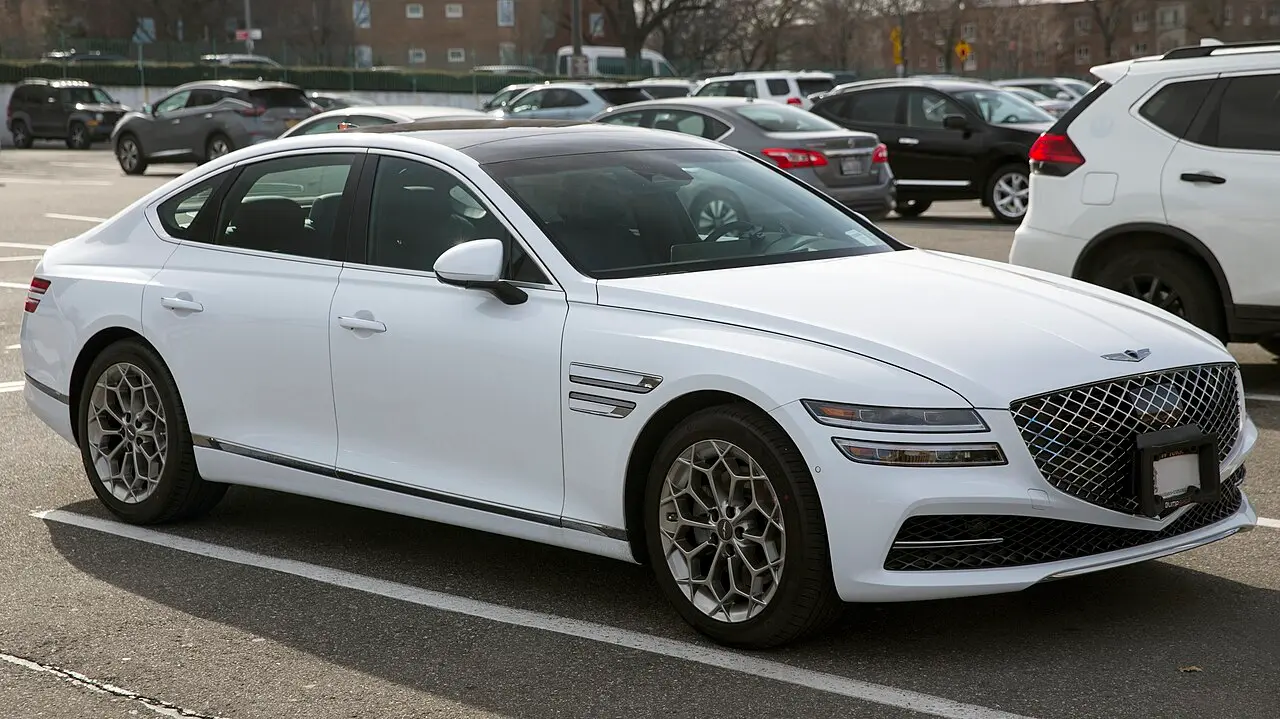
Genesis

Genesis G80

Genesis G80
Photo: Mr.choppers / Wikimedia Commons · CC BY-SA 3.0

The official data lists 53 versions of the Genesis G80 (2017–2027), in the United Kingdom, the United States, and Canada. Each market publishes its own figures, measured on its own test procedure.

At a glance

Years in the data
2017–2027
Markets
United Kingdom, United States, Canada
Engines
2.2 L to 5.0 L
Power
154 kW (209 PS) to 370 kW (503 PS)
Fuels
Petrol, Electric, Diesel
Lowest consumption (United Kingdom)
6.5 L/100 km (WLTP)
Lowest consumption (United States)
9.0 L/100 km (EPA)
Lowest consumption (Canada)
9.5 L/100 km (5-cycle)

What is the Genesis G80?

The G80 is a large luxury sedan at the heart of Genesis’s saloon range, between the smaller G70 and flagship G90. Its four-door cabin gives it a more spacious, comfort-focused character. Genesis became a standalone brand in 2015, with a design identity shaped by details such as the crest grille and two-line lamps inspired by its winged emblem.

G80 generations and engines

The first generation listed as G80, code DH, ran from 2017 to 2020. The second generation, code RG3, began in 2021 and continues today. The later car brought a fresh interpretation of Genesis design, including the crest grille and two-line lamps.

Powertrains vary by market. In the UK, listed engines run from 2.2 to 2.5 litres, with petrol and diesel choices; electric versions are also listed. Listed power ranges from 154 kW (209 PS) to 370 kW (503 PS). In the United States and Canada, the listed engine range is 2.5 to 5.0 litres, alongside electric versions. The Canadian listing gives 272 kW (370 PS).

How economical is the Genesis G80?

The lowest listed UK consumption is 6.5 L/100 km on the WLTP test. The United States listing gives a lowest figure of 9 L/100 km and a best combined EPA rating of 26 MPG. In Canada, the lowest figure is 9.5 L/100 km on the NRCan 5-cycle test. WLTP, EPA and Canada’s 5-cycle procedure differ, so results are best read within each market’s method.

Where is the G80 sold?

The G80 is listed in the UK, the United States and Canada. The listed years are 2021–2026 in the UK, 2017–2027 in the US and 2017–2026 in Canada. As the central model in Genesis’s sedan range, it carries the brand’s focus on elegant design and a spacious cabin.

Questions and answers

What are the G80 generations?

The first generation, code DH, ran from 2017 to 2020. The second generation, code RG3, began in 2021 and continues today.

Does the G80 have an electric version?

Yes. Electric versions are listed in the UK, US and Canadian markets.

What is the G80’s lowest listed fuel consumption?

The UK WLTP figure is 6.5 L/100 km; the US EPA figure is 9 L/100 km; and Canada’s NRCan 5-cycle figure is 9.5 L/100 km.
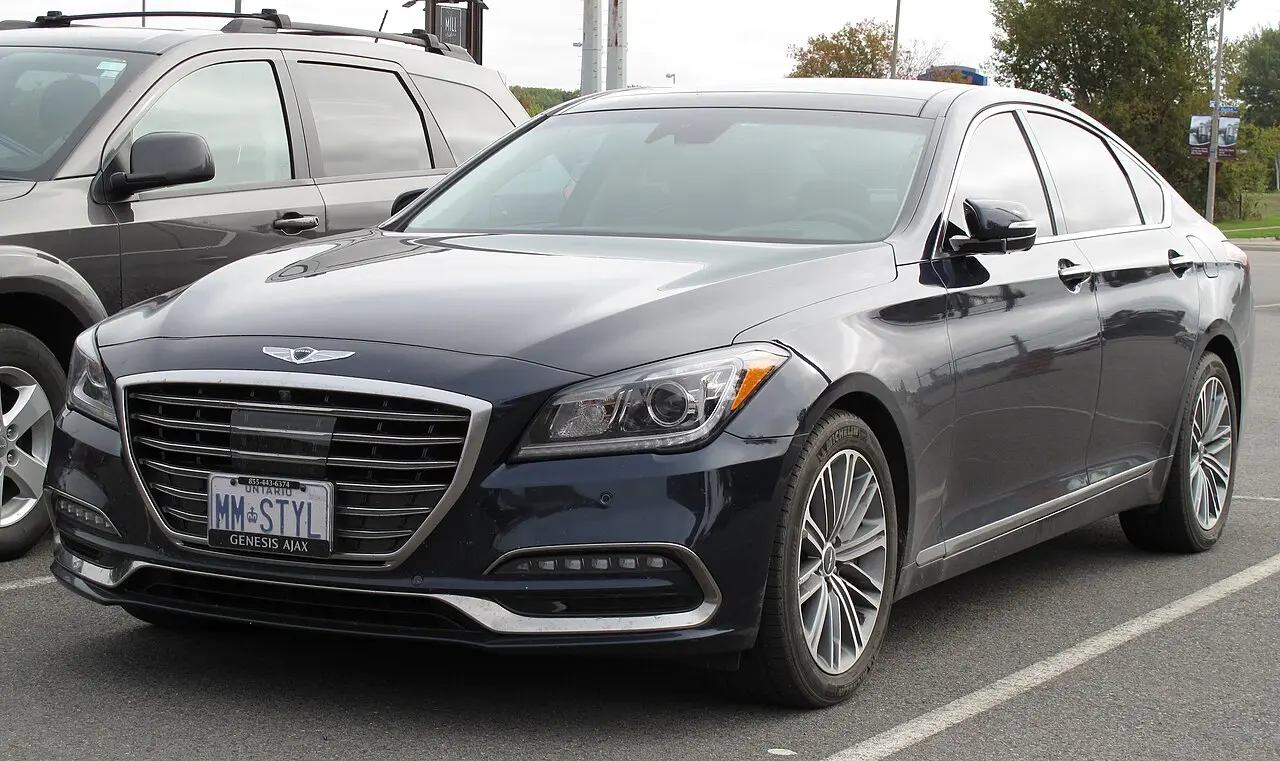
G80 first generation (2017–2020)

Genesis G80 first generation
Photo: Elise240SX / Wikimedia Commons · CC BY-SA 4.0

Model codes: DH · References: cars.com, en.wikipedia.org

Show all 16 versions

G80 second generation (since 2021)

Genesis G80 second generation
Photo: Mr.choppers / Wikimedia Commons · CC BY-SA 3.0

Model codes: RG3 · References: cars.com, iseecars.com

United Kingdom 13 versions

New cars on sale in the UK, from the Vehicle Certification Agency. NEDC figures until 2018 and WLTP figures after; years are the editions a version appeared in.

Years and versionEnginePowerFuelGearboxConsumption (combined)CO₂Electric range
2025–2026Electrified G80 LuxuryElectric motor272 kW (370 PS)Electric–19.1 kWh/100 km WLTP0 g/km520 km
2025–2026Electrified G80 Entry · Electrified G80 MidElectric motor272 kW (370 PS)Electric–18.1 kWh/100 km WLTP0 g/km570 km
2025–2026Luxury 2.2D · Premium 2.2D2.2 L154 kW (209 PS)Diesel8-speed automatic6.5 L/100 km WLTP169 g/km–
2025–2026Luxury 2.5T AWD · Premium 2.5T AWD · Sport 2.5T AWD2.5 L224 kW (305 PS)Petrol8-speed automatic9.3 L/100 km WLTP210 g/km–
2025–2026Luxury 2.5T RWD · Premium 2.5T RWD · Sport 2.5T RWD2.5 L224 kW (305 PS)Petrol8-speed automatic8.6 L/100 km WLTP210 g/km–
2024Luxury AWDElectric motor370 kW (503 PS)Electric–19.1 kWh/100 km WLTP0 g/km520 km
2024Luxury 2.2D · Premium 2.2D2.2 L210 kW (286 PS)Diesel8-speed automatic6.5 L/100 km WLTP169 g/km–
2024Luxury 2.5T AWD · Premium 2.5T AWD · Sport 2.5T AWD2.5 L304 kW (413 PS)Petrol8-speed automatic9.3 L/100 km WLTP210 g/km–
2024Luxury 2.5T RWD · Premium 2.5T RWD · Sport 2.5T RWD2.5 L304 kW (413 PS)Petrol8-speed automatic8.6 L/100 km WLTP210 g/km–
2023Luxury AWDElectric motor272 kW (370 PS)Electric–19.1 kWh/100 km WLTP0 g/km520 km
2021–2023Luxury Line 2.2D RWD · Premium Line 2.2D RWD · Luxury 2.2D and 1 more trim2.2 L154 kW (209 PS)Diesel8-speed automatic6.5 L/100 km WLTP169 g/km–
2021–2023Luxury Line 2.5T AWD · Premium Line 2.5T AWD · Luxury 2.5T AWD and 2 more trims2.5 L224 kW (305 PS)Petrol8-speed automatic9.3 L/100 km WLTP210 g/km–
2023Luxury 2.5T RWD · Premium 2.5T RWD · Sport 2.5T RWD2.5 L224 kW (305 PS)Petrol8-speed automatic8.6 L/100 km WLTP210 g/km–

United States 16 versions

Model years sold in the USA, from the EPA and the Department of Energy (fueleconomy.gov). MPG on the EPA test; litres per 100 km = 235.215 ÷ MPG.

Years and versionEngineFuelGearboxDriveConsumption (combined)CO₂Electric range
2027SIDI & PFI2.5 LPetrol8-speed automaticAll-wheel drive23 MPG (10.2 L/100 km) EPA236 g/km–
2027SIDI & PFI3.5 LPetrol8-speed automaticAll-wheel drive18 MPG (13.1 L/100 km) EPA300 g/km–
2026Electric motorElectricAutomaticAll-wheel drive96 MPGe EPA0 g/km483 km
2026SIDI & PFI2.5 LPetrol8-speed automaticAll-wheel drive23 MPG (10.2 L/100 km) EPA237 g/km–
2026SIDI & PFI3.5 LPetrol8-speed automaticAll-wheel drive18 MPG (13.1 L/100 km) EPA301 g/km–
2023–2025Electric motorElectricAutomaticAll-wheel drive97 MPGe EPA0 g/km454 km
2025SIDI & PFI2.5 LPetrol8-speed automaticAll-wheel drive24 MPG (9.8 L/100 km) EPA234 g/km–
2025SIDI & PFI3.5 LPetrol8-speed automaticAll-wheel drive19 MPG (12.4 L/100 km) EPA295 g/km–
2021–2024SIDI & PFI2.5 LPetrol8-speed automaticAll-wheel drive25 MPG (9.4 L/100 km) EPA224 g/km–
2024SIDI & PFI3.5 LPetrol8-speed automaticAll-wheel drive19 MPG (12.4 L/100 km) EPA286 g/km–
2023SIDI & PFI2.5 LPetrol8-speed automaticRear-wheel drive26 MPG (9.0 L/100 km) EPA215 g/km–
2023SIDI & PFI3.5 LPetrol8-speed automaticAll-wheel drive19 MPG (12.4 L/100 km) EPA289 g/km–
2021–2022SIDI & PFI2.5 LPetrol8-speed automaticRear-wheel drive26 MPG (9.0 L/100 km) EPA214 g/km–
2022SIDI & PFI3.5 LPetrol8-speed automaticAll-wheel drive20 MPG (11.8 L/100 km) EPA273 g/km–
2021SIDI & PFI3.5 LPetrol8-speed automaticAll-wheel drive21 MPG (11.2 L/100 km) EPA262 g/km–
2021SIDI & PFI3.5 LPetrol8-speed automaticRear-wheel drive22 MPG (10.7 L/100 km) EPA255 g/km–

Canada 8 versions

Model years sold in Canada, from Natural Resources Canada fuel consumption ratings (5-cycle test).

Years and versionEnginePowerFuelGearboxConsumption (combined)CO₂Electric range
2026Full-size2.5 L–Petrol8-speed automatic10.4 L/100 km 5-cycle245 g/km–
2026Full-size3.5 L–Petrol8-speed automatic12.9 L/100 km 5-cycle303 g/km–
2023–2025Full-sizeElectric motor272 kW (370 PS)ElectricAutomatic21.7 kWh/100 km 5-cycle0 g/km454 km
2025Full-size2.5 L–Petrol8-speed automatic10.0 L/100 km 5-cycle235 g/km–
2025Full-size3.5 L–Petrol8-speed automatic13.1 L/100 km 5-cycle308 g/km–
2021–2024Full-size2.5 L–Petrol8-speed automatic9.5 L/100 km 5-cycle225 g/km–
2022–2024Full-size3.5 L–Petrol8-speed automatic12.6 L/100 km 5-cycle298 g/km–
2021Full-size3.5 L–Petrol8-speed automatic11.2 L/100 km 5-cycle262 g/km–

Official figures are measured on standard test procedures and differ between markets. Your consumption depends on how, where and in what conditions you drive.