Hyundai

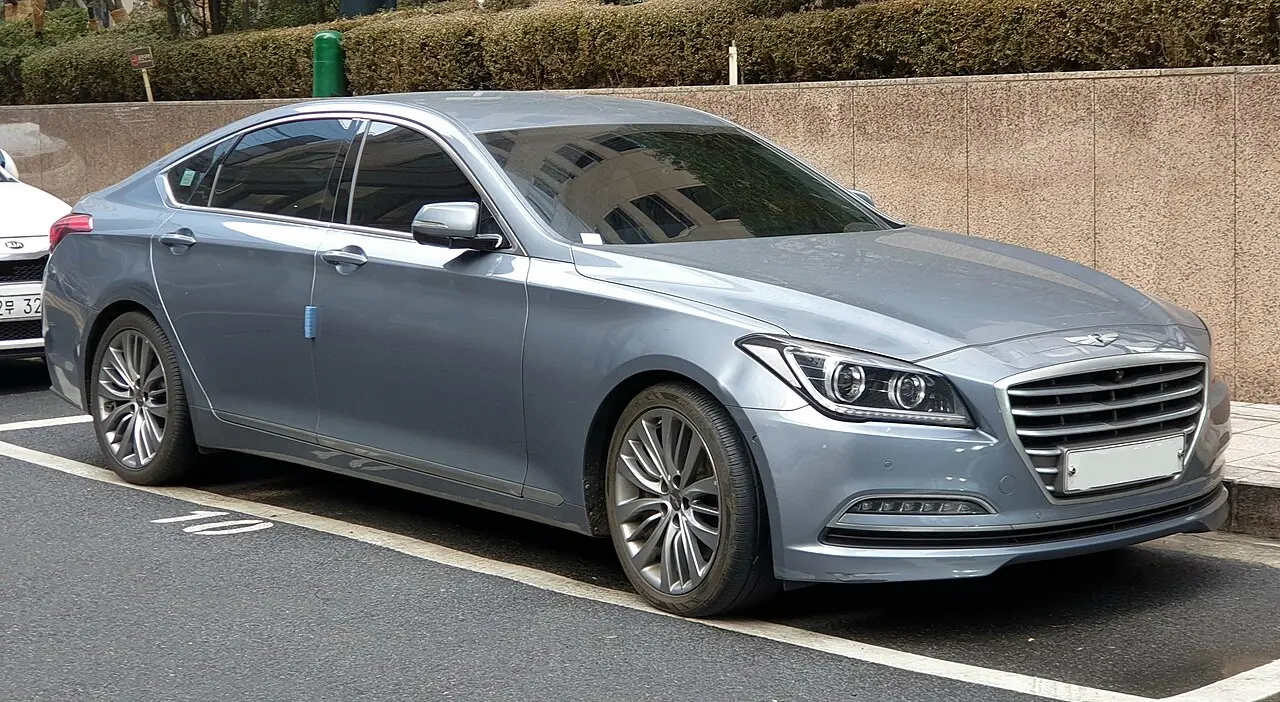
Hyundai Genesis

Hyundai Genesis
Photo: Damian B Oh / Wikimedia Commons · CC BY-SA 4.0

The official data lists 44 versions of the Hyundai Genesis (2009–2019), in the European Union, the United Kingdom, France, the United States, and Canada. Each market publishes its own figures, measured on its own test procedure.

At a glance

Years in the data
2009–2019
Markets
European Union, United Kingdom, France, United States, Canada
Engines
2.0 L to 5.0 L
Power
157 kW (213 PS) to 255 kW (347 PS)
Fuels
Petrol
Lowest consumption (France)
10.0 L/100 km (NEDC)
Lowest consumption (United States)
10.7 L/100 km (EPA)
Lowest consumption (United Kingdom)
10.8 L/100 km (NEDC)
New registrations in the EU
1,843

What is the Hyundai Genesis?

The Hyundai Genesis was a large, premium-oriented four-door saloon that marked the company’s move into luxury cars. It arrived as a rear-wheel-drive flagship, with a more formal character than Hyundai’s mainstream models. In the second generation, the car gained a redesigned body and, in some versions, Hyundai’s HTRAC all-wheel-drive system.

The Genesis name later became the identity of Hyundai’s standalone luxury marque. In its second generation, the saloon was still sold as a Hyundai in the markets listed here.

Generations, engines and power

The first generation, code BH, ran from 2009 to 2014 in the US and Canada. The second generation, code DH, ran from 2014 to 2016 across the EU, UK, France, US and Canada, bringing a fresh design and the option of HTRAC all-wheel drive.

EU petrol versions ranged from 2.0 to 3.8 litres, with power from 157 kW (213 PS) to 255 kW (347 PS). US and Canadian listings also include 5.0-litre engines. UK figures cover 3.8-litre versions, while French figures show 3.8-litre versions rated at 232 kW (315 PS) to 255 kW (347 PS).

How economical is the Hyundai Genesis?

Official ratings vary by market and test procedure. The lowest listed UK consumption is 10.8 L/100 km on NEDC; in France, it is 10 L/100 km, also on NEDC. The US EPA lists a best combined rating of 22 MPG and a lowest consumption of 10.7 L/100 km. Canada’s five-cycle figure for the lowest listed consumption is 10.9 L/100 km. Europe’s WLTP and NEDC tests, the US EPA test and Canada’s five-cycle procedure use different methods, so results are best read within their own markets.

EU registration figures run from 2010 to 2019, with 1,843 cars registered. The leading listed version was the 3.8-litre petrol rated at 232 kW (315 PS).

Where was the Hyundai Genesis sold?

The Genesis appears in EU registration figures from 2010 to 2019, UK figures from 2014 to 2017 and French figures from 2012 to 2015. US and Canadian figures run from 2009 to 2016, spanning both generations.

Questions and answers

What engines did the Hyundai Genesis have?

EU versions had petrol engines from 2.0 to 3.8 litres; US and Canadian listings also include 5.0-litre engines.

How many generations did the Hyundai Genesis have?

Two: the BH generation, from 2009 to 2014, and the DH generation, from 2014 to 2016.

What is the best combined EPA rating?

The best combined EPA rating is 22 MPG. The lowest listed US consumption is 10.7 L/100 km.
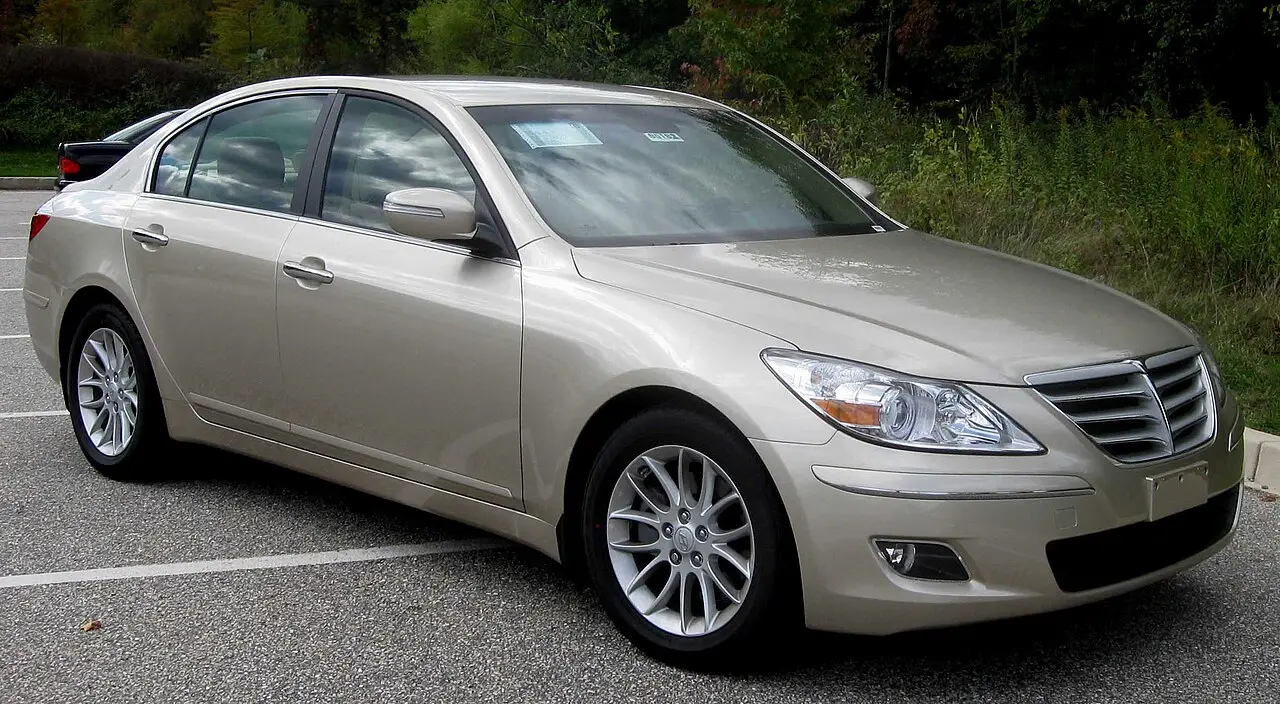
Genesis first generation (2009–2014)

Hyundai Genesis first generation
Photo: IFCAR / Wikimedia Commons · Public domain

Model codes: BH · Sold in: United States and Canada · References: en.wikipedia.org

Show all 17 versions

Genesis second generation (2014–2016)

Hyundai Genesis second generation
Photo: Damian B Oh / Wikimedia Commons · CC BY-SA 4.0

Model codes: DH · Sold in: European Union, United Kingdom, France, United States, and Canada · References: en.wikipedia.org

European Union 3 versions

New cars registered in the EU (plus Norway and Iceland), from the European Environment Agency. Figures on the NEDC procedure until 2020 and on WLTP from 2021; versions are grouped by engine and power, with their number of registrations.

Years and versionEnginePowerFuelCO₂EU registrations
20163.8 L232 kW (315 PS)Petrol274 g/km256
20153.8 L232 kW (315 PS)Petrol271 g/km418
20143.8 L232 kW (315 PS)Petrol270 g/km274

United Kingdom 3 versions

New cars on sale in the UK, from the Vehicle Certification Agency. NEDC figures until 2018 and WLTP figures after; years are the editions a version appeared in.

Years and versionEngineFuelGearboxConsumption (combined)CO₂
20163.8l V63.8 LPetrol8-speed automatic11.2 L/100 km NEDC261 g/km
20153.8l V63.8 LPetrol8-speed automatic11.2 L/100 km NEDC261 g/km
20143.8l V63.8 LPetrolAutomatic11.2 L/100 km NEDC261 g/km

France 1 version

New cars on sale in France, from ADEME Car Labelling. NEDC figures until 2015, WLTP figures in the current catalogue.

Years and versionEnginePowerFuelGearboxConsumption (combined)CO₂
2015Genesis 3.8 V6 GDI (315ch) HTRAC–232 kW (315 PS)Petrol8-speed automatic11.6 L/100 km NEDC270 g/km

United States 5 versions

Model years sold in the USA, from the EPA and the Department of Energy (fueleconomy.gov). MPG on the EPA test; litres per 100 km = 235.215 ÷ MPG.

Years and versionEngineFuelGearboxDriveConsumption (combined)CO₂
2015–2016SIDI3.8 LPetrol8-speed automaticRear-wheel drive22 MPG (10.7 L/100 km) EPA255 g/km
2015–2016SIDI3.8 LPetrol8-speed automaticAll-wheel drive19 MPG (12.4 L/100 km) EPA286 g/km
2015–2016SIDI5.0 LPetrol8-speed automaticRear-wheel drive18 MPG (13.1 L/100 km) EPA312 g/km
2014SIDI3.8 LPetrol8-speed automaticRear-wheel drive21 MPG (11.2 L/100 km) EPA256 g/km
2014SIDI5.0 LPetrol8-speed automaticRear-wheel drive18 MPG (13.1 L/100 km) EPA308 g/km

Canada 5 versions

Model years sold in Canada, from Natural Resources Canada fuel consumption ratings (5-cycle test).

Years and versionEngineFuelGearboxConsumption (combined)CO₂
2016Full-size3.8 LPetrol8-speed automatic12.1 L/100 km 5-cycle285 g/km
2016Full-size5.0 LPetrol8-speed automatic14.2 L/100 km 5-cycle332 g/km
2015Full-size3.8 LPetrol8-speed automatic12.1 L/100 km 5-cycle278 g/km
2015Full-size5.0 LPetrol8-speed automatic14.2 L/100 km 5-cycle327 g/km
2014Full-size3.8 LPetrol8-speed automatic11.1 L/100 km 5-cycle255 g/km

Versions outside these generations

European Union 11 versions

New cars registered in the EU (plus Norway and Iceland), from the European Environment Agency. Figures on the NEDC procedure until 2020 and on WLTP from 2021; versions are grouped by engine and power, with their number of registrations.

Years and versionEnginePowerFuelCO₂EU registrations
20193.8 L232 kW (315 PS)Petrol262 g/km12
20183.8 L232 kW (315 PS)Petrol263 g/km46
20173.8 L232 kW (315 PS)Petrol271 g/km62
20133.8 L246 kW (334 PS)Petrol232 g/km22
20133.8 L255 kW (347 PS)Petrol235 g/km16
2011–20122.0 L157 kW (213 PS)Petrol220 g/km335
20123.8 L255 kW (347 PS)Petrol242 g/km50
20123.8 L246 kW (334 PS)Petrol232 g/km24
20123.8 L223 kW (303 PS)Petrol235 g/km12
20113.8 L223 kW (303 PS)Petrol241 g/km294
20103.8 L–Petrol235 g/km22

United Kingdom 1 version

New cars on sale in the UK, from the Vehicle Certification Agency. NEDC figures until 2018 and WLTP figures after; years are the editions a version appeared in.

Years and versionEngineFuelGearboxConsumption (combined)CO₂
20173.8l V63.8 LPetrol8-speed automatic10.8 L/100 km NEDC247 g/km

France 1 version

New cars on sale in France, from ADEME Car Labelling. NEDC figures until 2015, WLTP figures in the current catalogue.

Years and versionEnginePowerFuelGearboxConsumption (combined)CO₂
2012–2013Nouveau GENESIS Coupe 3.8 V6 GDI 350 PACK Premium · Nouveau GENESIS Coupe 3.8 V6 GDI (350ch) PACK Premium–255 kW (347 PS)Petrol8-speed automatic10.0 L/100 km NEDC235 g/km

Official figures are measured on standard test procedures and differ between markets. Your consumption depends on how, where and in what conditions you drive.