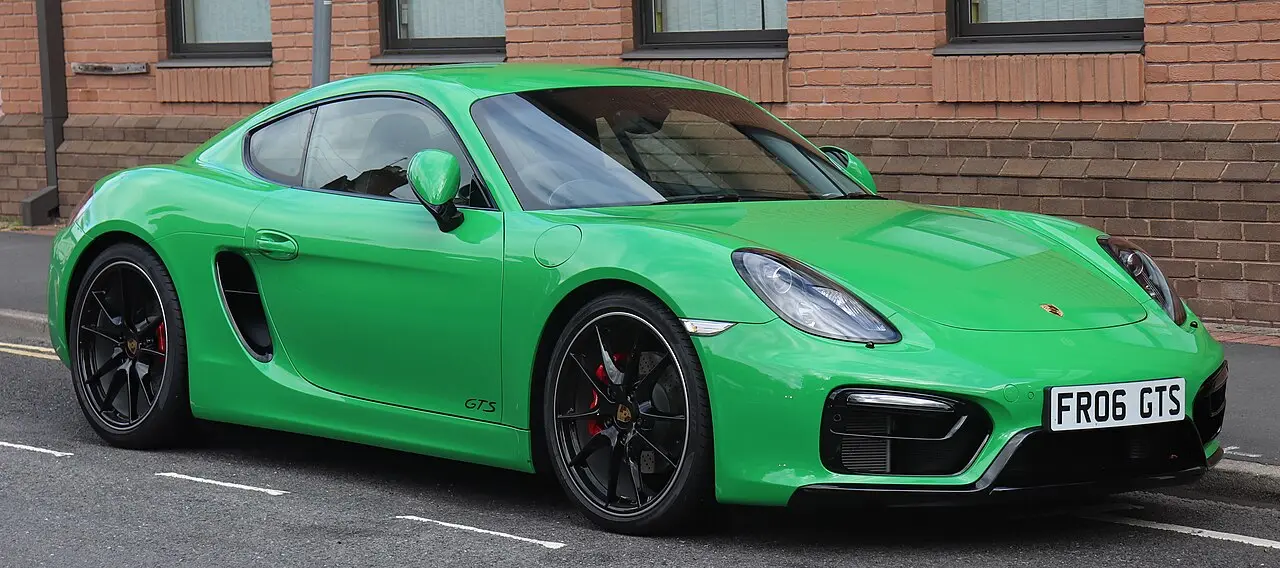
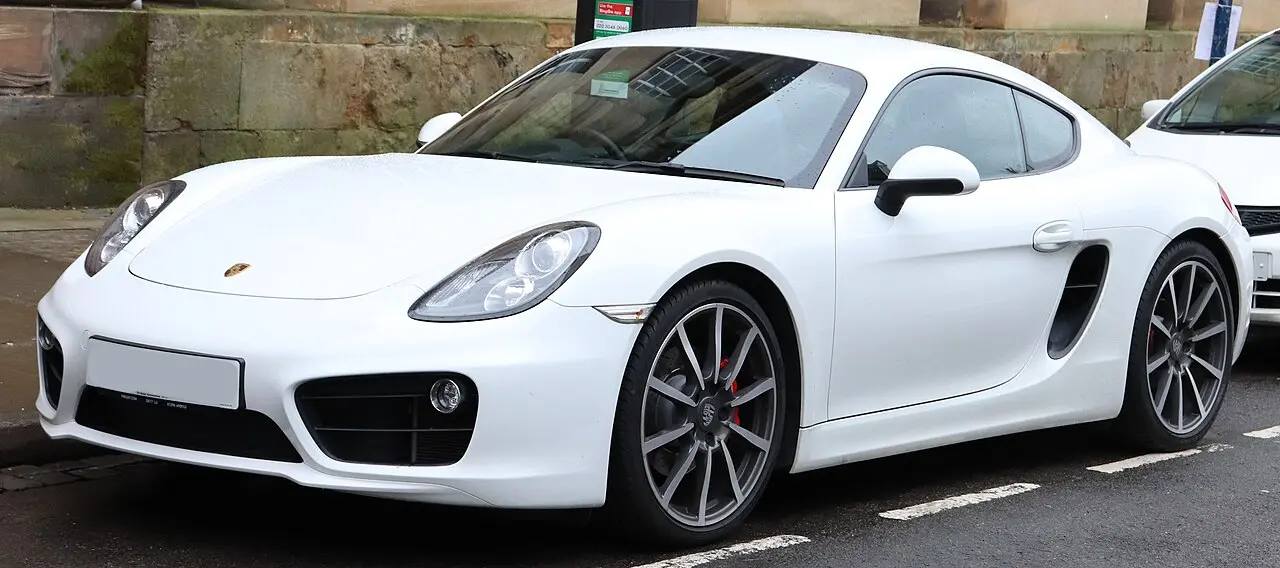
The official data lists 160 versions of the Porsche Cayman (2006–2025), in the European Union, the United Kingdom, France, the United States, and Canada. Each market publishes its own figures, measured on its own test procedure.
At a glance
Years in the data
2006–2025
Markets
European Union, United Kingdom, France, United States, Canada
Engines
2.0 L to 3.8 L
Power
195 kW (265 PS) to 283 kW (385 PS)
Fuels
Petrol, Electric
Lowest consumption (France)
7.7 L/100 km (NEDC)
Lowest consumption (United Kingdom)
7.7 L/100 km (NEDC)
Lowest consumption (Canada)
9.2 L/100 km (5-cycle)
New registrations in the EU
33,171
What is the Porsche Cayman?
The Cayman is Porsche’s two-seat sports coupé, with a fixed roof and an engine behind the cabin. It brings a mid-engine layout to Porsche’s sports-car range. The Cayman name is also part of a family that includes the open-top Boxster and the later 718-badged models.
Porsche introduced the Cayman as the coupé partner to the Boxster. The model’s mid-engine layout connects with the marque’s history in sports-car engineering and competition. Later, the 718 name linked the Cayman and Boxster to Porsche’s 718 racing cars.
Cayman generations
The 987 generation ran from 2006 to 2012, followed by the 981 from 2013 to 2016. Porsche introduced the 718 Cayman for the 2016 model changeover, and it is listed separately as generation 982. The 718 launched with turbocharged flat-four engines; the earlier Cayman generations used petrol engines across the ranges shown here.
Engines and fuel consumption
In European Union registration figures, the Cayman’s engines range from 2.0 L to 3.8 L, with power from 195 kW (265 PS) to 283 kW (385 PS). EU figures cover 2010–2025 and record 33,171 registrations. The most registered listed configuration was the 3.8 L petrol rated at 283 kW (385 PS).
Test procedures differ by market. UK VCA figures show a lowest consumption of 7.7 L/100 km on NEDC. France’s ADEME figures list power from 202 kW (275 PS) to 250 kW (340 PS) and the same lowest NEDC consumption. In the United States, the EPA figure is 9.4 L/100 km, or 25 MPG combined. Canada’s NRCan 5-cycle figure is 9.2 L/100 km. The US figures cover 2006–2020; the Canadian figures cover 2007–2019.
Where was the Cayman sold?
The Cayman appears in official figures for the European Union, the UK, France, the United States and Canada. The years shown are 2010–2025 in the EU, 2006–2016 in the UK, 2013–2015 in France, 2006–2020 in the US and 2007–2019 in Canada.
Questions and answers
What type of car is the Porsche Cayman?
It is a two-seat sports coupé with a mid-mounted engine and a fixed roof.
Which Cayman generations are listed?
The 987 ran from 2006 to 2012, and the 981 from 2013 to 2016. The 718 Cayman is known as generation 982.
What is the lowest stated Cayman consumption in the UK?
The lowest stated UK figure is 7.7 L/100 km on the NEDC test.
How do the US and Canadian figures compare?
The lowest listed figure is 9.4 L/100 km on the US EPA test and 9.2 L/100 km on Canada’s NRCan 5-cycle test. The procedures differ.
New cars registered in the EU (plus Norway and Iceland), from the European Environment Agency. Figures on the NEDC procedure until 2020 and on WLTP from 2021; versions are grouped by engine and power, with their number of registrations.
Years and version
Engine
Power
Fuel
CO₂
EU registrations
2016
3.8 L
283 kW (385 PS)
Petrol
237 g/km
3,392
2016
2.7 L
202 kW (275 PS)
Petrol
186 g/km
1,396
2016
3.4 L
250 kW (340 PS)
Petrol
195 g/km
1,008
2016
3.4 L
239 kW (325 PS)
Petrol
195 g/km
160
2016
2.5 L
257 kW (349 PS)
Petrol
173 g/km
108
2016
2.0 L
220 kW (299 PS)
Petrol
179 g/km
88
2016
2.7 L
155 kW (211 PS)
Petrol
183 g/km
18
2015
2.7 L
202 kW (275 PS)
Petrol
186 g/km
2,230
2015
3.4 L
250 kW (340 PS)
Petrol
196 g/km
2,022
2015
3.8 L
283 kW (385 PS)
Petrol
238 g/km
1,660
2015
3.4 L
239 kW (325 PS)
Petrol
193 g/km
374
2015
2.7 L
155 kW (211 PS)
Petrol
189 g/km
24
2014
2.7 L
202 kW (275 PS)
Petrol
185 g/km
3,332
2014
3.4 L
239 kW (325 PS)
Petrol
191 g/km
2,276
2014
3.4 L
250 kW (340 PS)
Petrol
196 g/km
560
2014
2.7 L
155 kW (211 PS)
Petrol
185 g/km
28
2013
2.7 L
202 kW (275 PS)
Petrol
184 g/km
3,320
2013
3.4 L
239 kW (325 PS)
Petrol
195 g/km
2,920
2013
2.7 L
–
Other fuel
186 g/km
62
2013
3.4 L
–
Other fuel
214 g/km
46
2013
2.7 L
155 kW (211 PS)
Petrol
188 g/km
36
2013
3.4 L
243 kW (330 PS)
Petrol
222 g/km
22
United Kingdom 16 versions
New cars on sale in the UK, from the Vehicle Certification Agency. NEDC figures until 2018 and WLTP figures after; years are the editions a version appeared in.
Years and version
Engine
Fuel
Gearbox
Consumption (combined)
CO₂
2014–20162.7 Euro 6 · Black Edition
2.7 L
Petrol
6-speed manual
8.4 L/100 km NEDC
195 g/km
2014–20162.7 PDK Euro 6 · Black Edition PDK
2.7 L
Petrol
7-speed automatic
7.9 L/100 km NEDC
183 g/km
2014–2016GTS PDK · S PDK Euro 6
3.4 L
Petrol
7-speed automatic
8.2 L/100 km NEDC
190 g/km
2014–2016S Euro 6 · GTS
3.4 L
Petrol
6-speed manual
9.0 L/100 km NEDC
211 g/km
2015–2016GT4
3.8 L
Petrol
6-speed manual
10.3 L/100 km NEDC
238 g/km
2013–20142.7 (981) · 2.7
2.7 L
Petrol
Manual
8.2 L/100 km NEDC
192 g/km
2013–20142.7 PDK (981) · 2.7 PDK
2.7 L
Petrol
Automatic
7.7 L/100 km NEDC
180 g/km
2013–20143.4 (981) · S
3.4 L
Petrol
Manual
8.8 L/100 km NEDC
206 g/km
2013–20143.4 PDK (981) · S PDK
3.4 L
Petrol
Automatic
8.0 L/100 km NEDC
188 g/km
2014GTS
3.4 L
Petrol
Manual
9.0 L/100 km NEDC
211 g/km
20132.9
2.9 L
Petrol
Manual
9.4 L/100 km NEDC
221 g/km
20132.9 PDK
2.9 L
Petrol
Automatic
9.1 L/100 km NEDC
214 g/km
2013Manual
3.4 L
Petrol
Manual
9.4 L/100 km NEDC
221 g/km
2013PDK
3.4 L
Petrol
Automatic
9.3 L/100 km NEDC
218 g/km
20133.4
3.4 L
Petrol
Manual
9.5 L/100 km NEDC
223 g/km
20133.4 PDK
3.4 L
Petrol
Automatic
9.4 L/100 km NEDC
221 g/km
France 16 versions
New cars on sale in France, from ADEME Car Labelling. NEDC figures until 2015, WLTP figures in the current catalogue.
Years and version
Engine
Power
Fuel
Gearbox
Consumption (combined)
CO₂
2015CAYMAN
–
202 kW (275 PS)
Petrol
6-speed manual
8.2 L/100 km NEDC
192 g/km
2015CAYMAN PDK
–
202 kW (275 PS)
Petrol
7-speed automatic
7.7 L/100 km NEDC
180 g/km
2015CAYMAN (EURO6)
–
202 kW (275 PS)
Petrol
6-speed manual
8.4 L/100 km NEDC
195 g/km
2015CAYMAN PDK (EURO6)
–
202 kW (275 PS)
Petrol
7-speed automatic
7.9 L/100 km NEDC
183 g/km
2015CAYMAN S
–
239 kW (325 PS)
Petrol
6-speed manual
9.0 L/100 km NEDC
211 g/km
2015CAYMAN S PDK (EURO6)
–
239 kW (325 PS)
Petrol
7-speed automatic
8.2 L/100 km NEDC
190 g/km
2015CAYMAN GTS
–
250 kW (340 PS)
Petrol
6-speed manual
9.0 L/100 km NEDC
211 g/km
2015CAYMAN GTS PDK
–
250 kW (340 PS)
Petrol
7-speed automatic
8.2 L/100 km NEDC
190 g/km
2014CAYMAN
–
202 kW (275 PS)
Petrol
6-speed manual
8.2 L/100 km NEDC
192 g/km
2014CAYMAN PDK
–
202 kW (275 PS)
Petrol
7-speed automatic
7.7 L/100 km NEDC
180 g/km
2014CAYMAN S
–
239 kW (325 PS)
Petrol
6-speed manual
8.8 L/100 km NEDC
206 g/km
2014CAYMAN S PDK
–
239 kW (325 PS)
Petrol
7-speed automatic
8.0 L/100 km NEDC
188 g/km
2013CAYMAN
–
202 kW (275 PS)
Petrol
6-speed manual
8.2 L/100 km NEDC
192 g/km
2013CAYMAN BOITE AUTOMATIQUE
–
202 kW (275 PS)
Petrol
7-speed automatic
7.7 L/100 km NEDC
180 g/km
2013CAYMAN S
–
239 kW (325 PS)
Petrol
6-speed manual
8.8 L/100 km NEDC
206 g/km
2013CAYMAN S BOITE AUTOMATIQUE
–
239 kW (325 PS)
Petrol
7-speed automatic
8.0 L/100 km NEDC
188 g/km
United States 7 versions
Model years sold in the USA, from the EPA and the Department of Energy (fueleconomy.gov). MPG on the EPA test; litres per 100 km = 235.215 ÷ MPG.
Years and version
Engine
Fuel
Gearbox
Drive
Consumption (combined)
CO₂
2014–2016SIDI
2.7 L
Petrol
6-speed manual
Rear-wheel drive
24 MPG (9.8 L/100 km) EPA
234 g/km
2014–2016SIDI
2.7 L
Petrol
7-speed automated manual
Rear-wheel drive
25 MPG (9.4 L/100 km) EPA
219 g/km
2015–2016SIDI
3.4 L
Petrol
6-speed manual
Rear-wheel drive
22 MPG (10.7 L/100 km) EPA
251 g/km
2014–2016SIDI
3.4 L
Petrol
6-speed manual
Rear-wheel drive
22 MPG (10.7 L/100 km) EPA
247 g/km
2014–2016SIDI
3.4 L
Petrol
7-speed automated manual
Rear-wheel drive
24 MPG (9.8 L/100 km) EPA
231 g/km
2015–2016SIDI
3.4 L
Petrol
7-speed automated manual
Rear-wheel drive
25 MPG (9.4 L/100 km) EPA
223 g/km
2016SIDI
3.8 L
Petrol
6-speed manual
Rear-wheel drive
20 MPG (11.8 L/100 km) EPA
277 g/km
Canada 13 versions
Model years sold in Canada, from Natural Resources Canada fuel consumption ratings (5-cycle test).
Years and version
Engine
Fuel
Gearbox
Consumption (combined)
CO₂
2016Two-seater
2.7 L
Petrol
7-speed automated manual
9.2 L/100 km 5-cycle
217 g/km
2016Two-seater
2.7 L
Petrol
6-speed manual
9.9 L/100 km 5-cycle
232 g/km
2016Two-seater
3.4 L
Petrol
7-speed automated manual
9.8 L/100 km 5-cycle
230 g/km
2016Two-seater
3.4 L
Petrol
6-speed manual
10.4 L/100 km 5-cycle
245 g/km
2016Two-seater
3.4 L
Petrol
7-speed automated manual
9.5 L/100 km 5-cycle
222 g/km
2016Two-seater
3.4 L
Petrol
6-speed manual
10.7 L/100 km 5-cycle
250 g/km
2016Two-seater
3.8 L
Petrol
6-speed manual
11.8 L/100 km 5-cycle
277 g/km
2014–2015Two-seater
2.7 L
Petrol
7-speed automated manual
9.2 L/100 km 5-cycle
212 g/km
2014–2015Two-seater
2.7 L
Petrol
6-speed manual
9.9 L/100 km 5-cycle
228 g/km
2014–2015Two-seater
3.4 L
Petrol
7-speed automated manual
9.8 L/100 km 5-cycle
225 g/km
2014–2015Two-seater
3.4 L
Petrol
6-speed manual
10.4 L/100 km 5-cycle
239 g/km
2015Two-seater
3.4 L
Petrol
7-speed automated manual
9.5 L/100 km 5-cycle
218 g/km
2015Two-seater
3.4 L
Petrol
6-speed manual
10.7 L/100 km 5-cycle
246 g/km
Versions outside these generations
European Union 11 versions
New cars registered in the EU (plus Norway and Iceland), from the European Environment Agency. Figures on the NEDC procedure until 2020 and on WLTP from 2021; versions are grouped by engine and power, with their number of registrations.
Years and version
Engine
Power
Fuel
Consumption (combined)
CO₂
EU registrations
2025
Electric motor
120 kW (163 PS)
Electric
16.6 kWh/100 km WLTP
0 g/km
14
2025
4.0 L
368 kW (500 PS)
Petrol
13.0 L/100 km WLTP
295 g/km
10
2023
4.0 L
368 kW (500 PS)
Petrol
13.2 L/100 km WLTP
299 g/km
13
2020
4.0 L
294 kW (400 PS)
Petrol
–
246 g/km
22
2020
2.0 L
220 kW (299 PS)
Petrol
–
178 g/km
18
2019
2.0 L
220 kW (299 PS)
Petrol
–
182 g/km
44
2019
2.5 L
257 kW (349 PS)
Petrol
–
191 g/km
24
2019
4.0 L
294 kW (400 PS)
Petrol
–
231 g/km
18
2019
4.0 L
294 kW (400 PS)
Petrol
–
231 g/km
10
2017–2018
3.8 L
283 kW (385 PS)
Petrol
–
238 g/km
126
2017
2.7 L
202 kW (275 PS)
Petrol
–
182 g/km
12
United States 11 versions
Model years sold in the USA, from the EPA and the Department of Energy (fueleconomy.gov). MPG on the EPA test; litres per 100 km = 235.215 ÷ MPG.
Years and version
Engine
Fuel
Gearbox
Drive
Consumption (combined)
CO₂
2020SIDI
2.0 L
Petrol
6-speed manual
Rear-wheel drive
22 MPG (10.7 L/100 km) EPA
245 g/km
2020SIDI
2.0 L
Petrol
7-speed automated manual
Rear-wheel drive
24 MPG (9.8 L/100 km) EPA
233 g/km
2020SIDI
2.0 L
Petrol
7-speed automated manual
Rear-wheel drive
23 MPG (10.2 L/100 km) EPA
236 g/km
2020SIDI
2.5 L
Petrol
6-speed manual
Rear-wheel drive
21 MPG (11.2 L/100 km) EPA
263 g/km
2020SIDI
2.5 L
Petrol
7-speed automated manual
Rear-wheel drive
22 MPG (10.7 L/100 km) EPA
255 g/km
2017–2019SIDI
2.0 L
Petrol
6-speed manual
Rear-wheel drive
24 MPG (9.8 L/100 km) EPA
229 g/km
2017–2019SIDI
2.0 L
Petrol
7-speed automated manual
Rear-wheel drive
25 MPG (9.4 L/100 km) EPA
219 g/km
2017–2019SIDI
2.5 L
Petrol
6-speed manual
Rear-wheel drive
22 MPG (10.7 L/100 km) EPA
249 g/km
2017–2019SIDI
2.5 L
Petrol
7-speed automated manual
Rear-wheel drive
24 MPG (9.8 L/100 km) EPA
231 g/km
2018–2019SIDI
2.5 L
Petrol
6-speed manual
Rear-wheel drive
21 MPG (11.2 L/100 km) EPA
257 g/km
2018–2019SIDI
2.5 L
Petrol
7-speed automated manual
Rear-wheel drive
22 MPG (10.7 L/100 km) EPA
249 g/km
Canada 7 versions
Model years sold in Canada, from Natural Resources Canada fuel consumption ratings (5-cycle test).
Years and version
Engine
Fuel
Gearbox
Consumption (combined)
CO₂
2017–2019Two-seater
2.0 L
Petrol
7-speed automated manual
9.4 L/100 km 5-cycle
219 g/km
2017–2019Two-seater
2.0 L
Petrol
6-speed manual
9.8 L/100 km 5-cycle
229 g/km
2017–2019Two-seater
2.5 L
Petrol
6-speed manual
10.7 L/100 km 5-cycle
249 g/km
2018–2019Two-seater
2.5 L
Petrol
7-speed automated manual
10.6 L/100 km 5-cycle
249 g/km
2018–2019Two-seater
2.5 L
Petrol
6-speed manual
11.0 L/100 km 5-cycle
257 g/km
2019Two-seater
2.5 L
Petrol
7-speed automated manual
9.9 L/100 km 5-cycle
231 g/km
2017–2018Two-seater
2.5 L
Petrol
7-speed automated manual
9.9 L/100 km 5-cycle
230 g/km
Official figures are measured on standard test procedures and differ between markets. Your consumption depends on how, where and in what conditions you drive.