The official data lists 217 versions of the Porsche Macan (2014–2026), in the European Union, the United Kingdom, France, the United States, and Canada. Each market publishes its own figures, measured on its own test procedure.
At a glance
Years in the data
2014–2026
Markets
European Union, United Kingdom, France, United States, Canada
Engines
2.0 L to 3.6 L
Power
120 kW (163 PS) to 441 kW (600 PS)
Fuels
Petrol, Diesel, Electric
Lowest consumption (France)
6.1 L/100 km (NEDC)
Lowest consumption (United Kingdom)
6.1 L/100 km (NEDC)
Lowest consumption (European Union)
9.3 L/100 km (WLTP)
New registrations in the EU
378,228
What is the Porsche Macan?
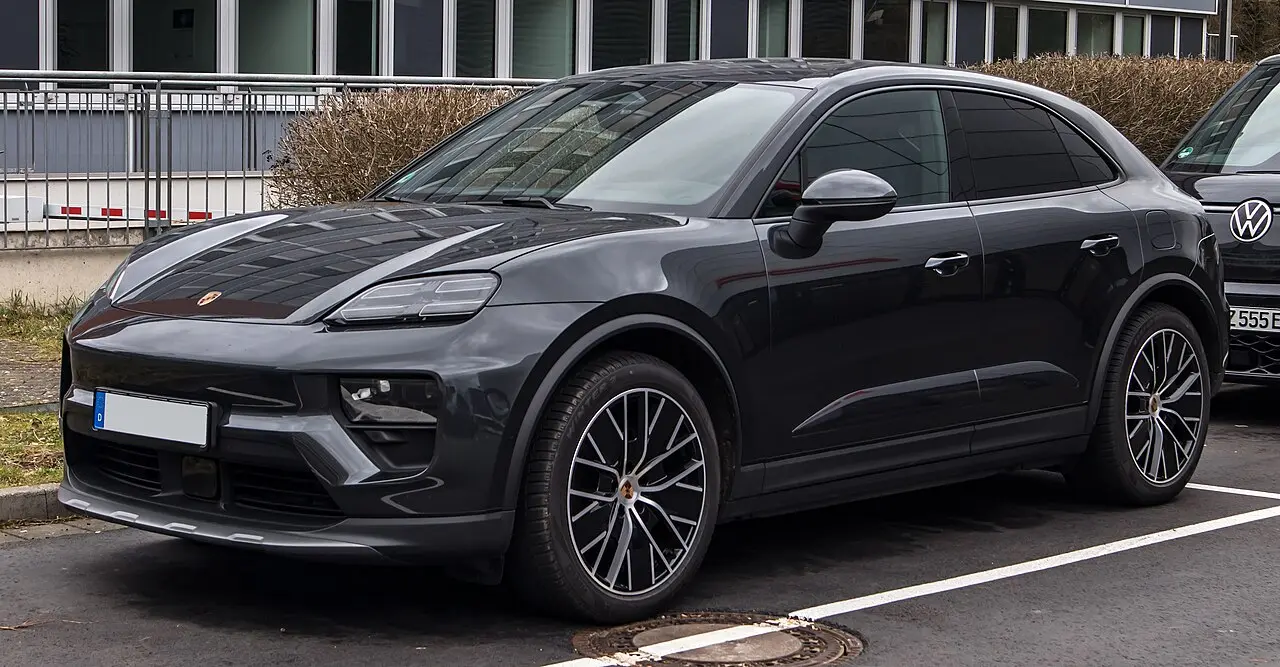
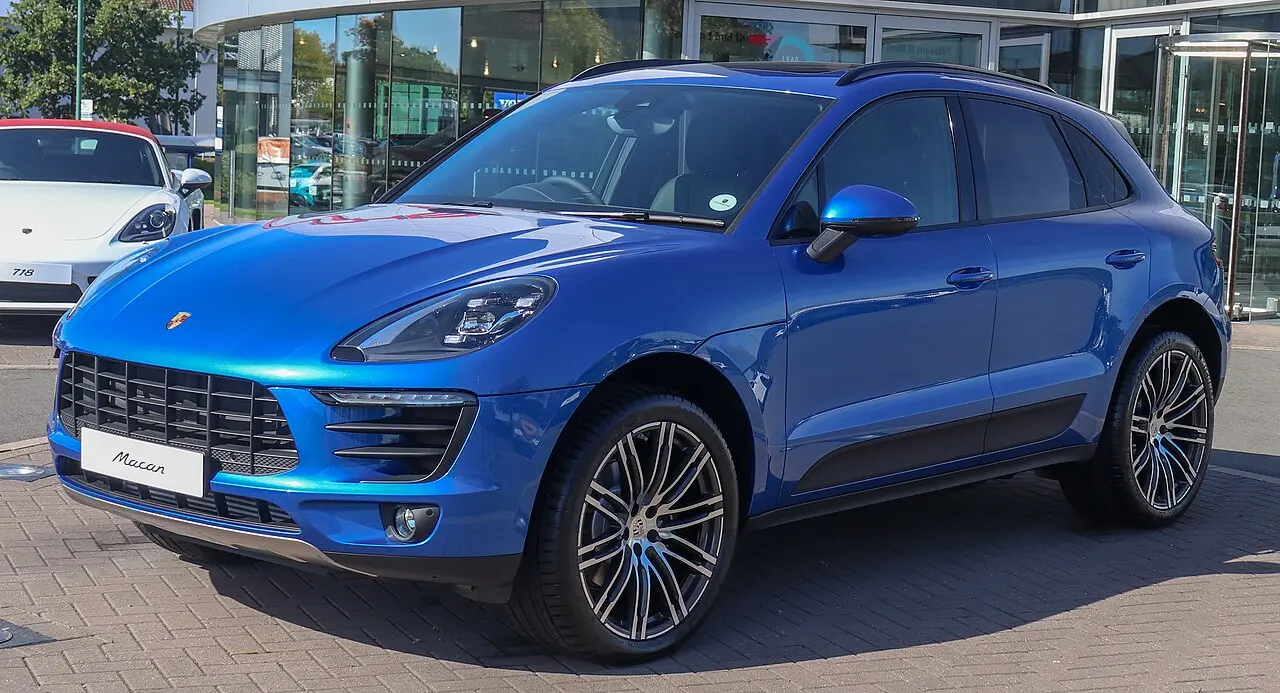
The Macan is Porsche’s smaller SUV, positioned below the Cayenne. Its raised driving position and practical shape suit everyday driving, while its styling gives it a clear place in Porsche’s line-up. The first generation came with petrol and diesel engines; the second generation is fully electric.
The electric Macan uses Porsche’s Premium Platform Electric architecture and keeps the SUV body style. Its familiar design cues connect it to the first generation, while the electric powertrain marks a significant change for the model.
Porsche Macan generations
The first generation, code 95B, is listed as 2014–2024 in the EU, UK and France, and 2015–2026 in North American figures. The second generation, codes XAB and PPE, is listed from 2024–today. It is fully electric, a major change from the petrol and diesel engines associated with the first generation. The two generations overlap in the market listings, and availability differs by country.
Engines, power and official economy
EU registration figures cover 2.0- to 3.6-litre engines, with power from 120 kW (163 PS) to 430 kW (585 PS), alongside electric versions. The lowest stated fuel consumption for non-electric versions is 9.3 L/100 km on WLTP. The UK and France each list 6.1 L/100 km on NEDC for combustion-engine versions.
The USA’s lowest stated figure is 10.7 L/100 km on the EPA test, with a best combined rating of 22 MPG. Canada lists 10.6 L/100 km on its 5-cycle test. WLTP and NEDC are European procedures; EPA and Canada’s 5-cycle method use different tests, so their results are not directly comparable.
Where is the Macan sold?
Official figures cover the European Union, the United Kingdom, France, the United States and Canada. EU registrations run from 2014 to 2025, while date ranges differ across national figures. The market summaries include petrol, diesel and electric versions, though the powertrain mix varies by country. The second generation is electric; first-generation Macans also appear in the market figures.
Questions and answers
Is the second-generation Macan electric?
Yes. The second generation, listed from 2024–today, is fully electric.
What is the Macan’s lowest stated EU fuel consumption?
The lowest listed figure for non-electric versions is 9.3 L/100 km on WLTP.
What engines are listed for the Macan?
EU figures show 2.0- to 3.6-litre engines, alongside electric versions.
Which markets have official Macan figures?
The European Union, the United Kingdom, France, the United States and Canada.
New cars registered in the EU (plus Norway and Iceland), from the European Environment Agency. Figures on the NEDC procedure until 2020 and on WLTP from 2021; versions are grouped by engine and power, with their number of registrations.
Years and version
Engine
Power
Fuel
Consumption (combined)
CO₂
Electric range
EU registrations
2025
Electric motor
285 kW (387 PS)
Electric
19.0 kWh/100 km WLTP
0 g/km
579 km
8,321
2025
Electric motor
330 kW (449 PS)
Electric
18.8 kWh/100 km WLTP
0 g/km
571 km
3,624
2025
Electric motor
250 kW (340 PS)
Electric
17.7 kWh/100 km WLTP
0 g/km
617 km
2,648
2025
Electric motor
430 kW (585 PS)
Electric
19.7 kWh/100 km WLTP
0 g/km
557 km
2,235
2025
Electric motor
145 kW (197 PS)
Electric
19.4 kWh/100 km WLTP
0 g/km
578 km
1,706
2025
Electric motor
120 kW (163 PS)
Electric
18.3 kWh/100 km WLTP
0 g/km
627 km
222
2025
Electric motor
175 kW (238 PS)
Electric
21.1 kWh/100 km WLTP
0 g/km
513 km
168
2025
2.0 L
195 kW (265 PS)
Petrol
10.2 L/100 km WLTP
231 g/km
–
71
2025
2.9 L
324 kW (441 PS)
Petrol
11.3 L/100 km WLTP
311 g/km
–
12
2024
Electric motor
285 kW (387 PS)
Electric
19.1 kWh/100 km WLTP
0 g/km
576 km
6,096
2024
2.0 L
195 kW (265 PS)
Petrol
10.2 L/100 km WLTP
230 g/km
–
5,884
2024
2.9 L
280 kW (381 PS)
Petrol
11.0 L/100 km WLTP
251 g/km
–
2,080
2024
Electric motor
145 kW (197 PS)
Electric
19.3 kWh/100 km WLTP
0 g/km
568 km
1,790
2024
Electric motor
430 kW (585 PS)
Electric
19.6 kWh/100 km WLTP
0 g/km
559 km
1,338
2024
Electric motor
330 kW (449 PS)
Electric
18.7 kWh/100 km WLTP
0 g/km
573 km
600
2024
Electric motor
120 kW (163 PS)
Electric
22.7 kWh/100 km WLTP
0 g/km
614 km
337
2024
Electric motor
250 kW (340 PS)
Electric
17.6 kWh/100 km WLTP
0 g/km
619 km
287
2024
Electric motor
175 kW (238 PS)
Electric
18.7 kWh/100 km WLTP
0 g/km
588 km
182
2024
Electric motor
200 kW (272 PS)
Electric
18.4 kWh/100 km WLTP
0 g/km
–
62
2024
Electric motor
155 kW (211 PS)
Electric
27.5 kWh/100 km WLTP
0 g/km
–
28
United Kingdom 8 versions
New cars on sale in the UK, from the Vehicle Certification Agency. NEDC figures until 2018 and WLTP figures after; years are the editions a version appeared in.
Years and version
Engine
Power
Fuel
Gearbox
Consumption (combined)
CO₂
Electric range
2025–2026Macan Electric
Electric motor
265 kW (360 PS)
Electric
–
17.0 kWh/100 km WLTP
0 g/km
641 km
2025–2026Macan 4 Electric
Electric motor
300 kW (408 PS)
Electric
–
17.8 kWh/100 km WLTP
0 g/km
612 km
2025–2026Macan 4S Electric
Electric motor
380 kW (517 PS)
Electric
–
17.7 kWh/100 km WLTP
0 g/km
607 km
2025–2026Macan Electric GTS
Electric motor
380 kW (517 PS)
Electric
–
18.5 kWh/100 km WLTP
0 g/km
584 km
2025–2026Macan Turbo Electric
Electric motor
470 kW (639 PS)
Electric
–
18.3 kWh/100 km WLTP
0 g/km
591 km
2025–2026Macan · Macan T
2.0 L
195 kW (265 PS)
Petrol
7-speed automatic
10.5 L/100 km WLTP
238 g/km
–
2025–2026Macan S
2.9 L
279 kW (379 PS)
Petrol
7-speed automatic
11.5 L/100 km WLTP
260 g/km
–
2025–2026Macan GTS
2.9 L
324 kW (441 PS)
Petrol
7-speed automatic
11.5 L/100 km WLTP
261 g/km
–
France 4 versions
New cars on sale in France, from ADEME Car Labelling. NEDC figures until 2015, WLTP figures in the current catalogue.
Years and version
Engine
Power
Fuel
Gearbox
Consumption (combined)
CO₂
2026MACAN T II
2.0 L
195 kW (265 PS)
Petrol
7-speed automatic
9.7 L/100 km WLTP
219 g/km
2026MACAN II
2.0 L
195 kW (265 PS)
Petrol
7-speed automatic
9.7 L/100 km WLTP
219 g/km
2026MACAN S II
2.9 L
280 kW (381 PS)
Petrol
7-speed automatic
10.6 L/100 km WLTP
240 g/km
2026MACAN GTS II
2.9 L
324 kW (441 PS)
Petrol
7-speed automatic
11.1 L/100 km WLTP
251 g/km
United States 12 versions
Model years sold in the USA, from the EPA and the Department of Energy (fueleconomy.gov). MPG on the EPA test; litres per 100 km = 235.215 ÷ MPG.
Years and version
Engine
Fuel
Gearbox
Drive
Consumption (combined)
CO₂
Electric range
2026
Electric motor
Electric
Automatic
All-wheel drive
95 MPGe EPA
0 g/km
489 km
2026
Electric motor
Electric
Automatic
All-wheel drive
92 MPGe EPA
0 g/km
467 km
2026
Electric motor
Electric
Automatic
Rear-wheel drive
97 MPGe EPA
0 g/km
497 km
2026
Electric motor
Electric
Automatic
All-wheel drive
92 MPGe EPA
0 g/km
473 km
2026
Electric motor
Electric
Automatic
All-wheel drive
91 MPGe EPA
0 g/km
472 km
2026
Electric motor
Electric
Automatic
Rear-wheel drive
105 MPGe EPA
0 g/km
534 km
2026
Electric motor
Electric
Automatic
All-wheel drive
102 MPGe EPA
0 g/km
521 km
2026SIDI
2.9 L
Petrol
7-speed automated manual
All-wheel drive
19 MPG (12.4 L/100 km) EPA
289 g/km
–
2024–2025
Electric motor
Electric
Automatic
All-wheel drive
98 MPGe EPA
0 g/km
496 km
2025
Electric motor
Electric
Automatic
All-wheel drive
91 MPGe EPA
0 g/km
463 km
2024–2025
Electric motor
Electric
Automatic
All-wheel drive
91 MPGe EPA
0 g/km
463 km
2025
Electric motor
Electric
Automatic
Rear-wheel drive
99 MPGe EPA
0 g/km
507 km
Canada 9 versions
Model years sold in Canada, from Natural Resources Canada fuel consumption ratings (5-cycle test).
Years and version
Engine
Power
Fuel
Gearbox
Consumption (combined)
CO₂
Electric range
2024–2026Sport utility vehicle: Small
2.0 L
–
Petrol
7-speed automated manual
11.0 L/100 km 5-cycle
263 g/km
–
2024–2026Sport utility vehicle: Small
2.9 L
–
Petrol
7-speed automated manual
12.2 L/100 km 5-cycle
289 g/km
–
2024–2026Sport utility vehicle: Small
2.9 L
–
Petrol
7-speed automated manual
12.2 L/100 km 5-cycle
290 g/km
–
2025Sport utility vehicle: Small
Electric motor
250 kW (340 PS)
Electric
Automatic
21.2 kWh/100 km 5-cycle
0 g/km
507 km
2025Sport utility vehicle: Small
Electric motor
285 kW (387 PS)
Electric
Automatic
21.4 kWh/100 km 5-cycle
0 g/km
496 km
2025Sport utility vehicle: Small
Electric motor
330 kW (449 PS)
Electric
Automatic
23.1 kWh/100 km 5-cycle
0 g/km
463 km
2025Sport utility vehicle: Small
Electric motor
430 kW (585 PS)
Electric
Automatic
22.9 kWh/100 km 5-cycle
0 g/km
463 km
2024Sport utility vehicle: Small
Electric motor
265 kW (360 PS)
Electric
Automatic
21.4 kWh/100 km 5-cycle
0 g/km
496 km
2024Sport utility vehicle: Small
Electric motor
470 kW (639 PS)
Electric
Automatic
22.9 kWh/100 km 5-cycle
0 g/km
463 km
Official figures are measured on standard test procedures and differ between markets. Your consumption depends on how, where and in what conditions you drive.