The official data lists 213 versions of the Toyota RAV4 (1996 - 2026), in the European Union, the United Kingdom, France, the United States, and Canada. Each market publishes its own figures, measured on its own test procedure.
At a glance
Years in the data
1996 - 2026
Markets
European Union, United Kingdom, France, United States, Canada
Engines
1.8 L to 3.5 L
Power
72 kW (98 PS) to 227 kW (309 PS)
Fuels
Diesel, Petrol, Hybrid, Plug-in hybrid, LPG, Electric
Lowest consumption (United Kingdom)
4.7 L/100 km (NEDC)
Lowest consumption (France)
4.9 L/100 km (NEDC)
Lowest consumption (European Union)
5.3 L/100 km (WLTP)
Plug-in hybrid, weighted (European Union)
0.8 L/100 km (WLTP)
New registrations in the EU
1,725,789
What is the Toyota RAV4?
The RAV4 is Toyota’s compact SUV, combining a raised driving position and versatile cabin for everyday use. Toyota created it as a compact take on the traditional four-wheel-drive vehicle. Its early design used a monocoque body and independent suspension, bringing car-like packaging and handling to an SUV shape. Over time, the RAV4 grew into a roomier family vehicle, with hybrid and plug-in hybrid options joining the range.
RAV4 generations
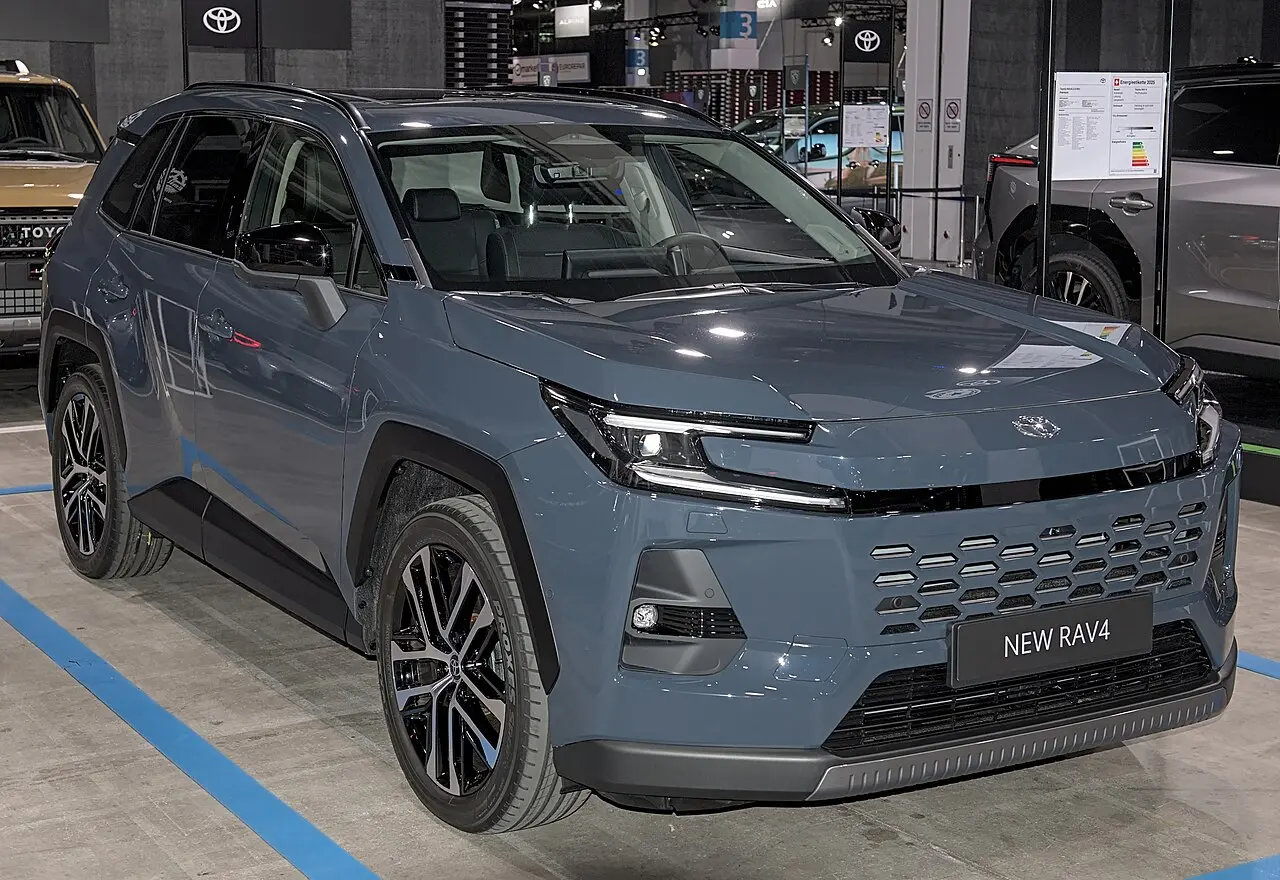
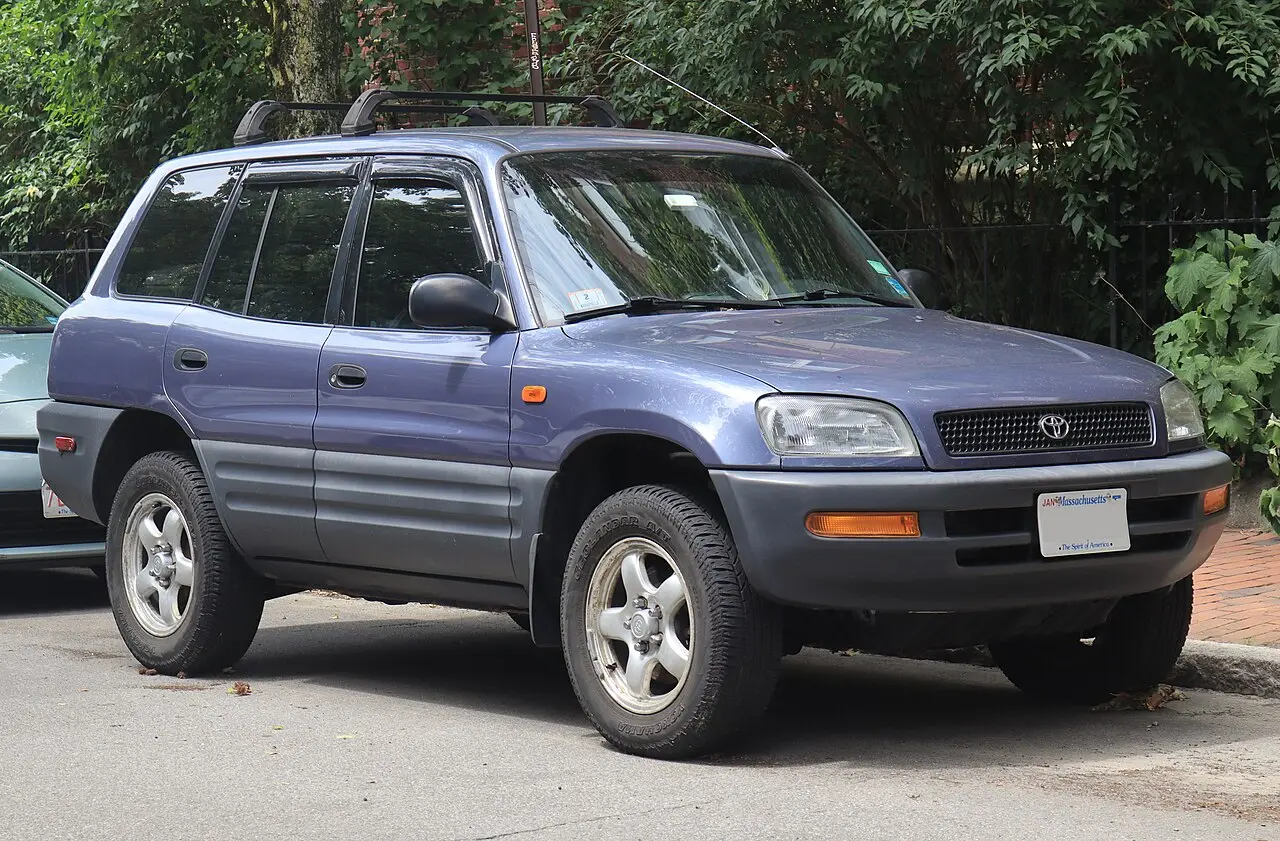
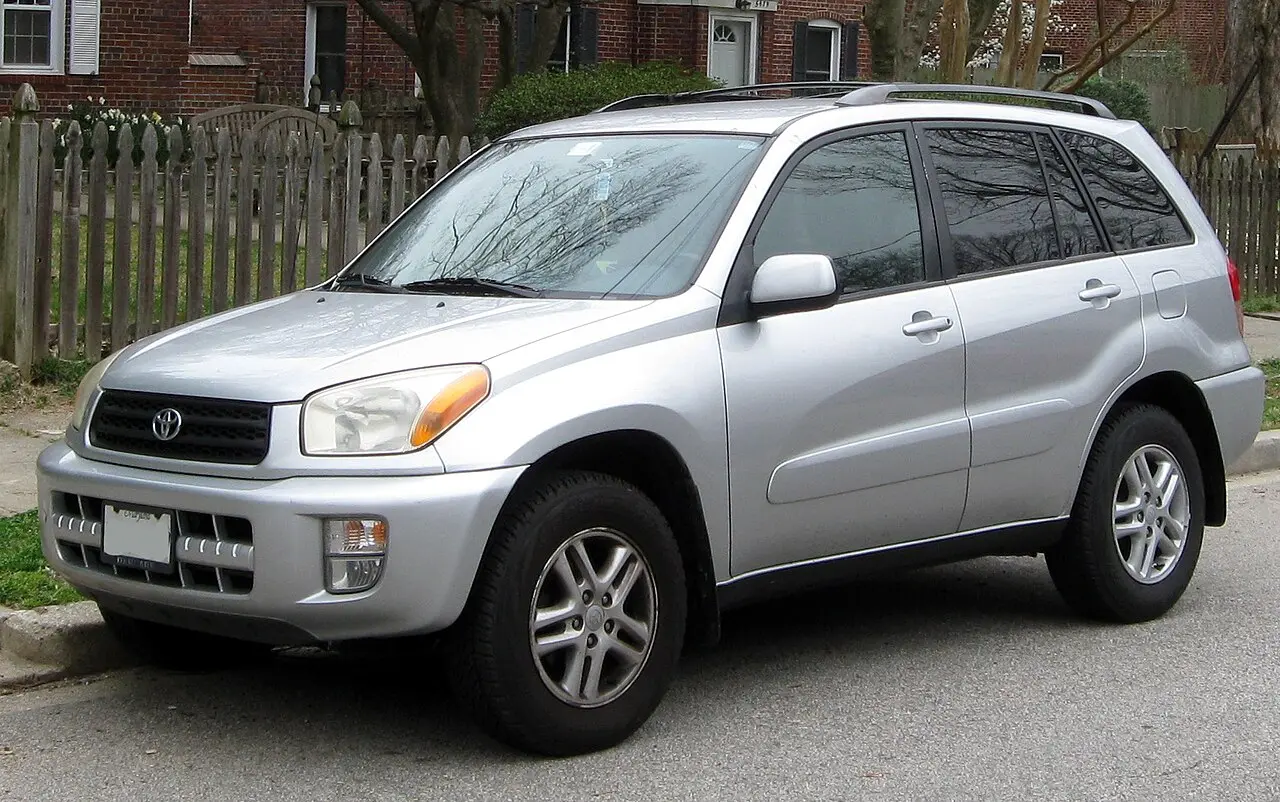
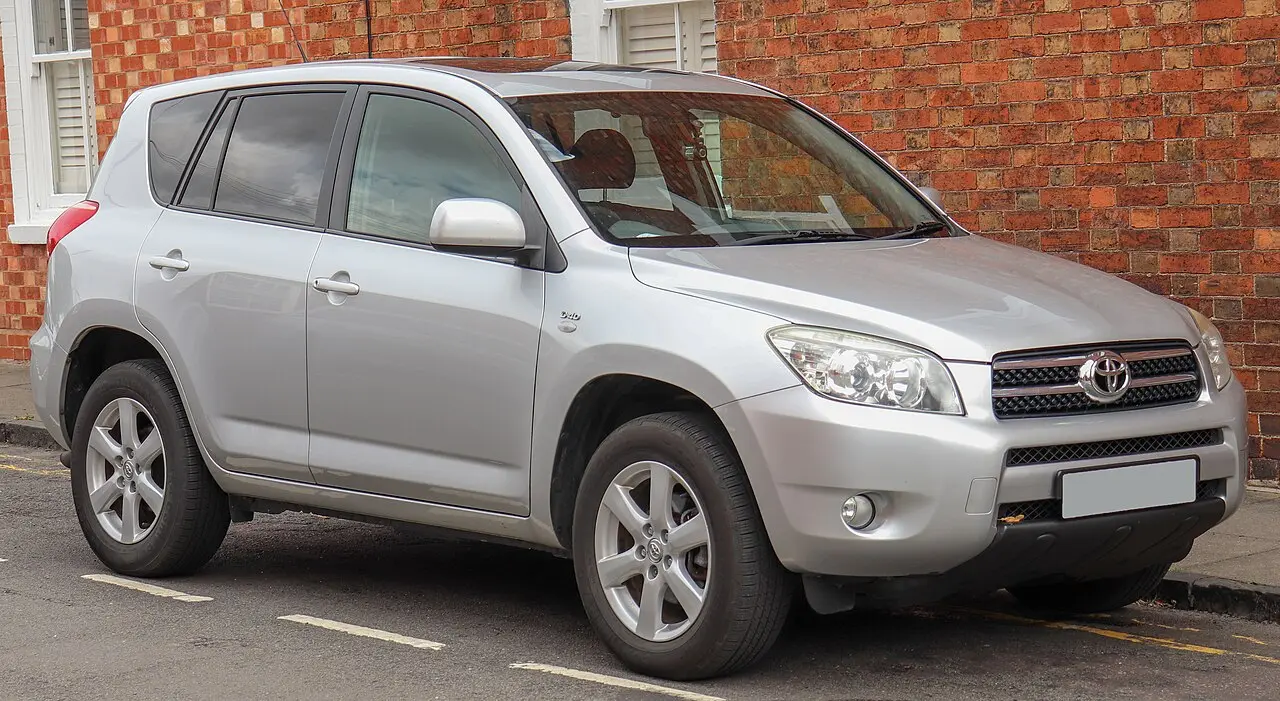
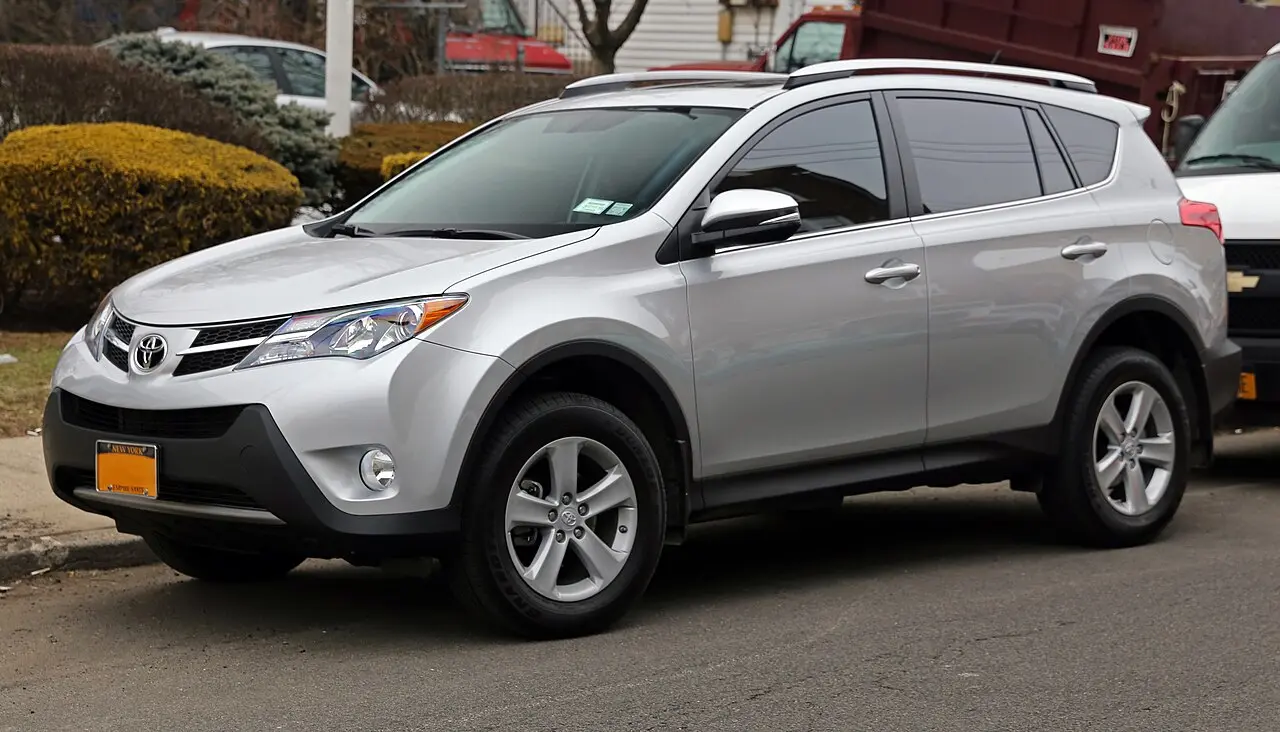
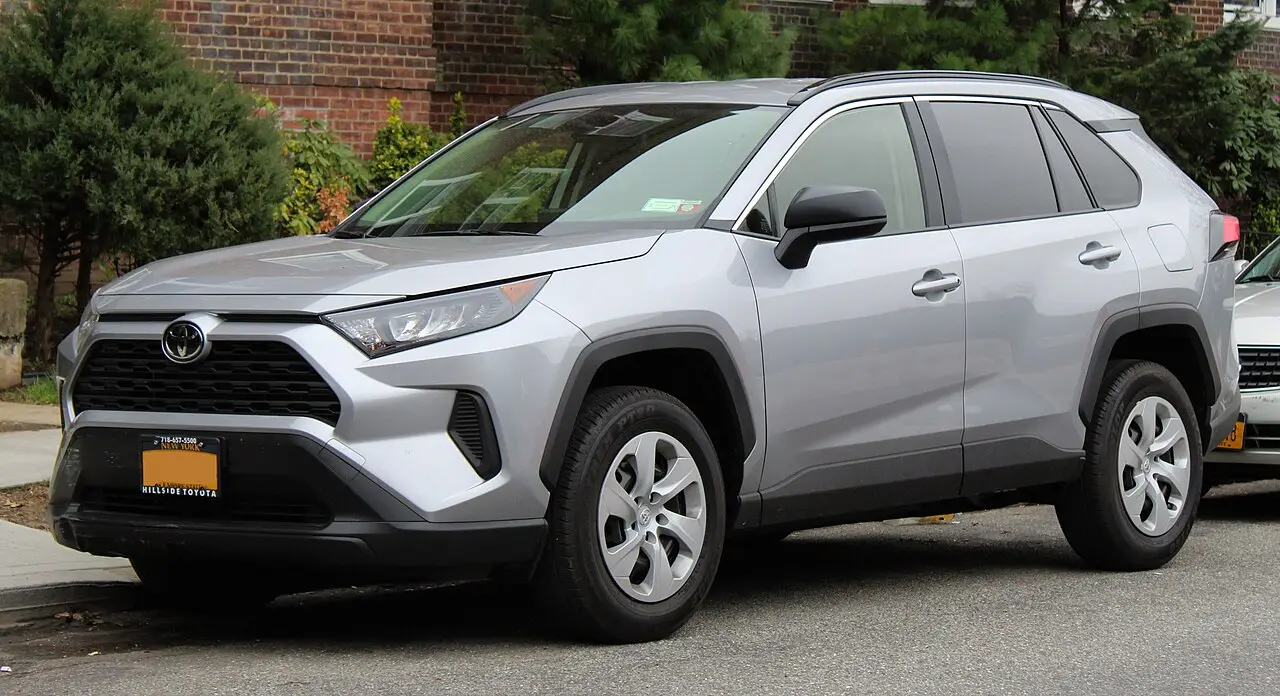
The first generation ran from 1996-2000 in the model timeline, followed by the second generation (2001-2005), third (2006-2012), fourth (2013-2018) and fifth (since 2019). Across those generations, the RAV4 evolved from a compact SUV into a roomier model, adapting its design and technology as the range developed.
Hybrid power joined the RAV4 range in 2016, followed by a plug-in hybrid in 2020. Earlier generations also explored battery-electric drive in selected markets.
Engines, power and fuel consumption
EU registrations cover 2.0 L to 2.5 L engines and power from 72 kW (98 PS) to 206 kW (280 PS), including petrol, diesel, hybrid and plug-in hybrid versions. UK figures span 2.0 L to 2.5 L and 131 kW (178 PS) to 227 kW (309 PS). In the United States and Canada, the listed engine range is 2.0 L to 3.5 L.
The lowest listed EU consumption for petrol and hybrid versions is 5.3 L/100 km on WLTP; the plug-in hybrid reaches a weighted 0.8 L/100 km WLTP, assuming some driving is electric. The UK listings reach 4.7 L/100 km on NEDC, while France’s lowest listed figure is 4.9 L/100 km on NEDC.
In the US, the EPA combined rating reaches 43 MPG, with a lowest listed consumption of 5.5 L/100 km. European figures use WLTP or NEDC, the US uses EPA, and Canada uses its 5-cycle procedure. These methods differ, so results are best read within their own market.
Where was the RAV4 sold?
The RAV4 has been sold across Europe, the UK, France, the United States and Canada. EU registration figures total 1,725,789 for 2010-2025. Available engines and powertrains differ by market: North American listings include larger petrol engines, while European listings include diesel and hybrid choices.
Questions and answers
When did the Toyota RAV4 first appear?
The first generation in the model timeline is listed as 1996-2000.
When did the RAV4 become a hybrid?
Hybrid power joined the RAV4 range in 2016, during its third generation. A plug-in hybrid followed in 2020.
Why can a RAV4 plug-in hybrid have a very low official fuel figure?
Its weighted WLTP figure assumes that part of the driving is electric, so it is not a like-for-like measure of fuel use with a conventional petrol model.
How do RAV4 economy tests differ by market?
European figures use WLTP or NEDC, the US uses EPA, and Canada uses the 5-cycle procedure. Their test methods differ, so results should not be compared as if measured identically.
Model codes: XA10 · Sold in: United States, Canada, European Union, United Kingdom, and France · References: media.toyota.co.uk, en.wikipedia.org
At a glance: Length 3,720 - 4,140 mm · Kerb weight 1,125 - 1,240 kg · Top speed 170 km/h · MOT first-time pass at 13 years and older: 65.6% (UK average 69.2%) Specifications, reliability and all versions
At a glance: Length 4,200 - 4,270 mm · Kerb weight 1,095 - 1,285 kg · Top speed 175 - 185 km/h · MOT first-time pass at 13 years and older: 72.2% (UK average 69.2%) Specifications, reliability and all versions
At a glance: Length 4,340 mm · Kerb weight 1,400 - 1,565 kg · Top speed 180 - 200 km/h · MOT first-time pass at 13 years and older: 72.3% (UK average 69.2%) Specifications, reliability and all versions
At a glance: Length 4,570 - 4,610 mm · Kerb weight 1,465 - 1,665 kg · Top speed 180 - 185 km/h · MOT first-time pass at 6 - 8 years: 90.6% (UK average 86.4%) Specifications, reliability and all versions
At a glance: Length 4,600 - 4,620 mm · Kerb weight 1,460 - 1,905 kg · Top speed 180 - 190 km/h · MOT first-time pass at 3 years: 96.6% (UK average 92.2%) Specifications, reliability and all versions
New cars on sale in the UK, from the Vehicle Certification Agency. NEDC figures until 2018 and WLTP figures after; years are the editions a version appeared in.
Years and version
Engine
Power
Fuel
Gearbox
Consumption (combined)
CO₂
Electric range
2026Icon
2.5 L
200 kW (272 PS)
Plug-in hybrid
Continuously variable (CVT)
5.2 L/100 km WLTP15.5 kWh/100 km WLTP
117 g/km
137 km
2026Design
2.5 L
200 kW (272 PS)
Plug-in hybrid
Continuously variable (CVT)
5.6 L/100 km WLTP16.8 kWh/100 km WLTP
126 g/km
128 km
2026Design Pan Roof
2.5 L
200 kW (272 PS)
Plug-in hybrid
Continuously variable (CVT)
5.6 L/100 km WLTP17.0 kWh/100 km WLTP
128 g/km
126 km
2026Excel FWD 2.5L PHEV
2.5 L
200 kW (272 PS)
Plug-in hybrid
Continuously variable (CVT)
5.6 L/100 km WLTP16.9 kWh/100 km WLTP
127 g/km
126 km
2026Excel FWD Pan Roof 2.5L PHEV
2.5 L
200 kW (272 PS)
Plug-in hybrid
Continuously variable (CVT)
5.7 L/100 km WLTP17.1 kWh/100 km WLTP
129 g/km
125 km
2026Excel AWD 2.5L PHEV
2.5 L
227 kW (309 PS)
Plug-in hybrid
Continuously variable (CVT)
5.7 L/100 km WLTP17.4 kWh/100 km WLTP
130 g/km
122 km
2026Excel AWD Pan Roof 2.5L PHEV · GR SPORT AWD Moon Roof 2.5L PHEV
2.5 L
227 kW (309 PS)
Plug-in hybrid
Continuously variable (CVT)
5.8 L/100 km WLTP17.7 kWh/100 km WLTP
131 g/km
121 km
2026GR SPORT AWD 2.5L PHEV
2.5 L
227 kW (309 PS)
Plug-in hybrid
Continuously variable (CVT)
5.8 L/100 km WLTP17.6 kWh/100 km WLTP
131 g/km
121 km
United States 2 versions
Model years sold in the USA, from the EPA and the Department of Energy (fueleconomy.gov). MPG on the EPA test; litres per 100 km = 235.215 ÷ MPG.
Years and version
Engine
Fuel
Gearbox
Drive
Consumption (combined)
CO₂
2026SIDI & PFI; Hybrid
2.5 L
Hybrid
Continuously variable (CVT)
All-wheel drive
38 - 42 MPG (5.6 - 6.2 L/100 km) EPA
130 - 144 g/km
2026SIDI & PFI; Hybrid
2.5 L
Hybrid
Continuously variable (CVT)
Front-wheel drive
43 MPG (5.5 L/100 km) EPA
127 g/km
Canada 2 versions
Model years sold in Canada, from Natural Resources Canada fuel consumption ratings (5-cycle test).
Years and version
Engine
Fuel
Gearbox
Consumption (combined)
CO₂
Electric range
2026Sport utility vehicle: Small
2.5 L
Plug-in hybrid
Continuously variable (CVT)
5.7 - 6.4 L/100 km 5-cycle
31 - 40 g/km
79 - 89 km
2026Sport utility vehicle: Small
2.5 L
Petrol
Continuously variable (CVT)
5.5 - 6.2 L/100 km 5-cycle
129 - 143 g/km
-
Toyota RAV4 recalls
83 official safety recalls for the Toyota RAV4 from NHTSA (United States), DVSA (United Kingdom) and the EU Safety Gate, newest first. Recall repairs are normally free at the maker’s dealers.
Load capacity label may show incorrect weight2026
Front seat brackets may be improperly welded2025
Load capacity label may show incorrect weight2024 - 2025
Rear view image may freeze or fail to display2022 - 2025
Combination meter display may fail at start-up2022 - 2025
Official figures are measured on standard test procedures and differ between markets. Your consumption depends on how, where and in what conditions you drive.