The official data lists 321 versions of the Jeep Compass (2007–2026), in the European Union, the United Kingdom, France, the United States, and Canada. Each market publishes its own figures, measured on its own test procedure.
At a glance
Years in the data
2007–2026
Markets
European Union, United Kingdom, France, United States, Canada
The Compass is Jeep’s compact crossover SUV, with a practical shape for everyday family use. It is part of the brand’s broader SUV range and carries familiar Jeep design cues.
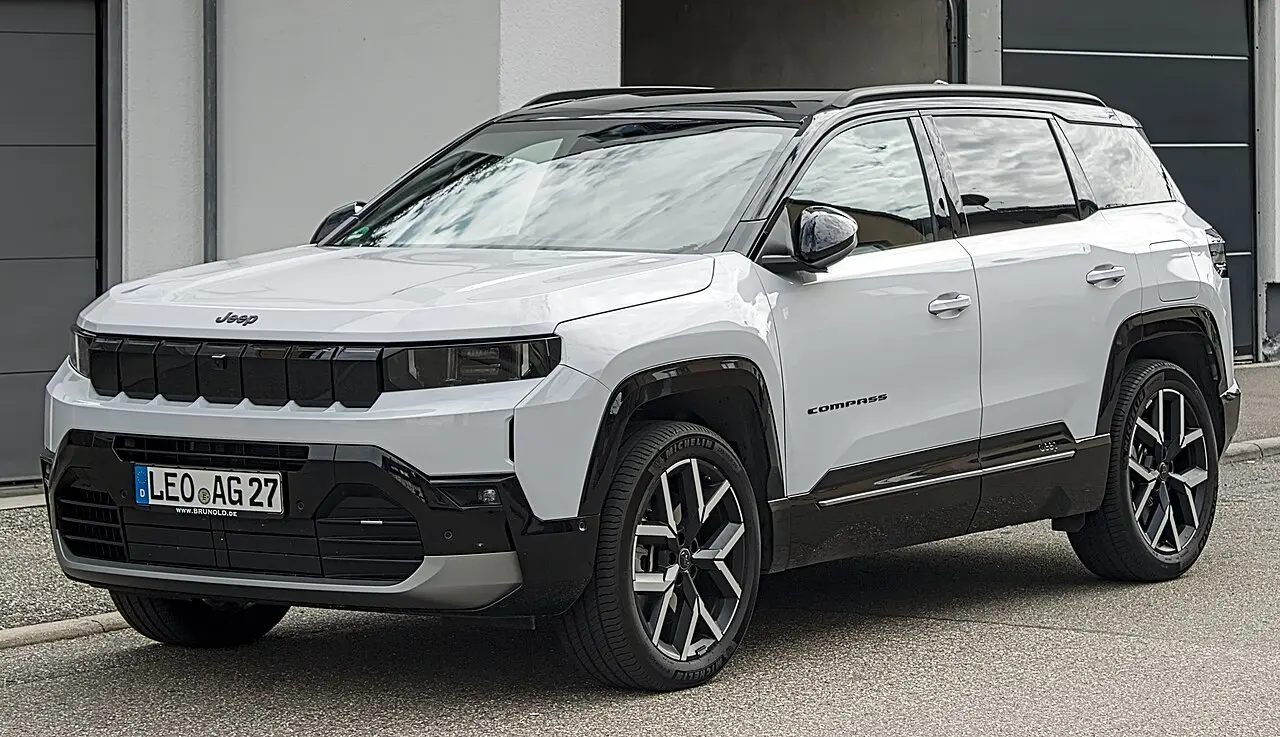
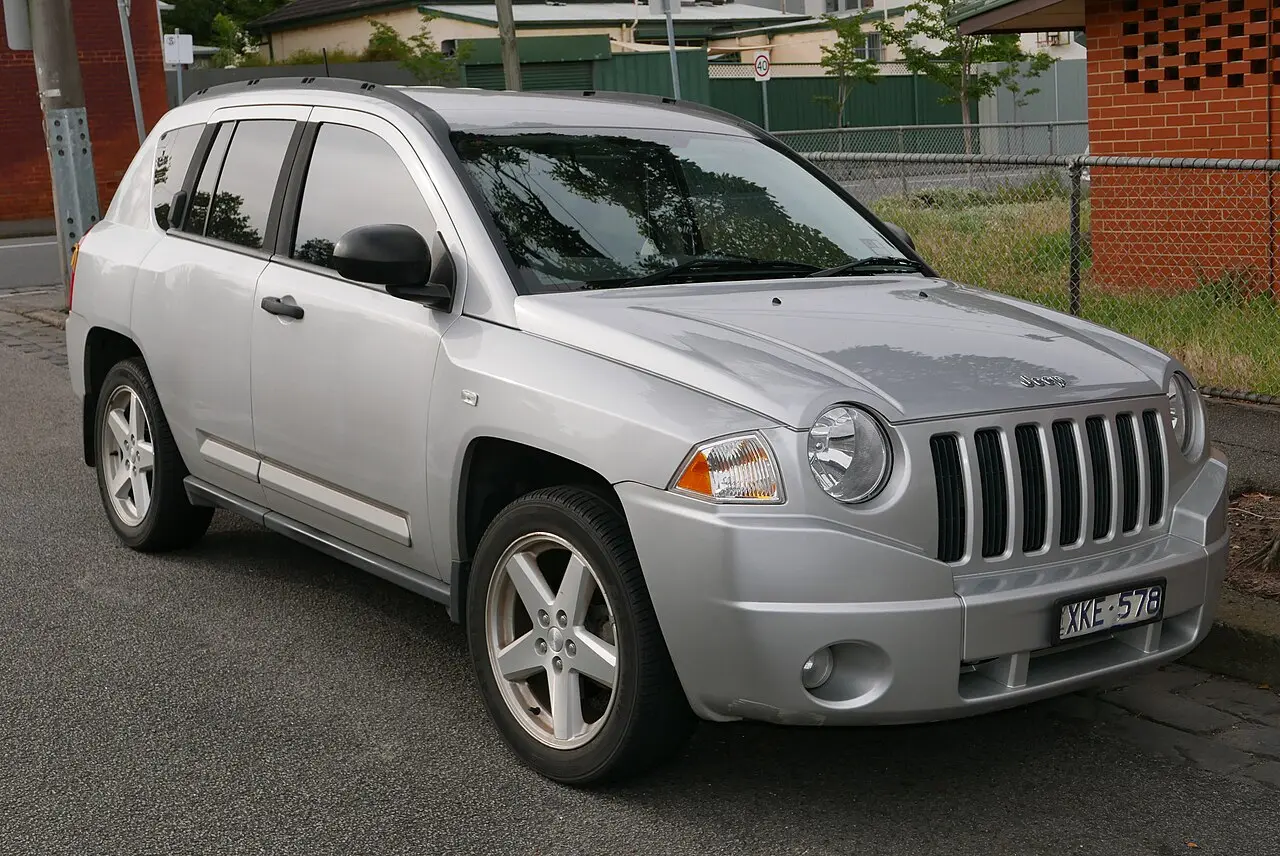
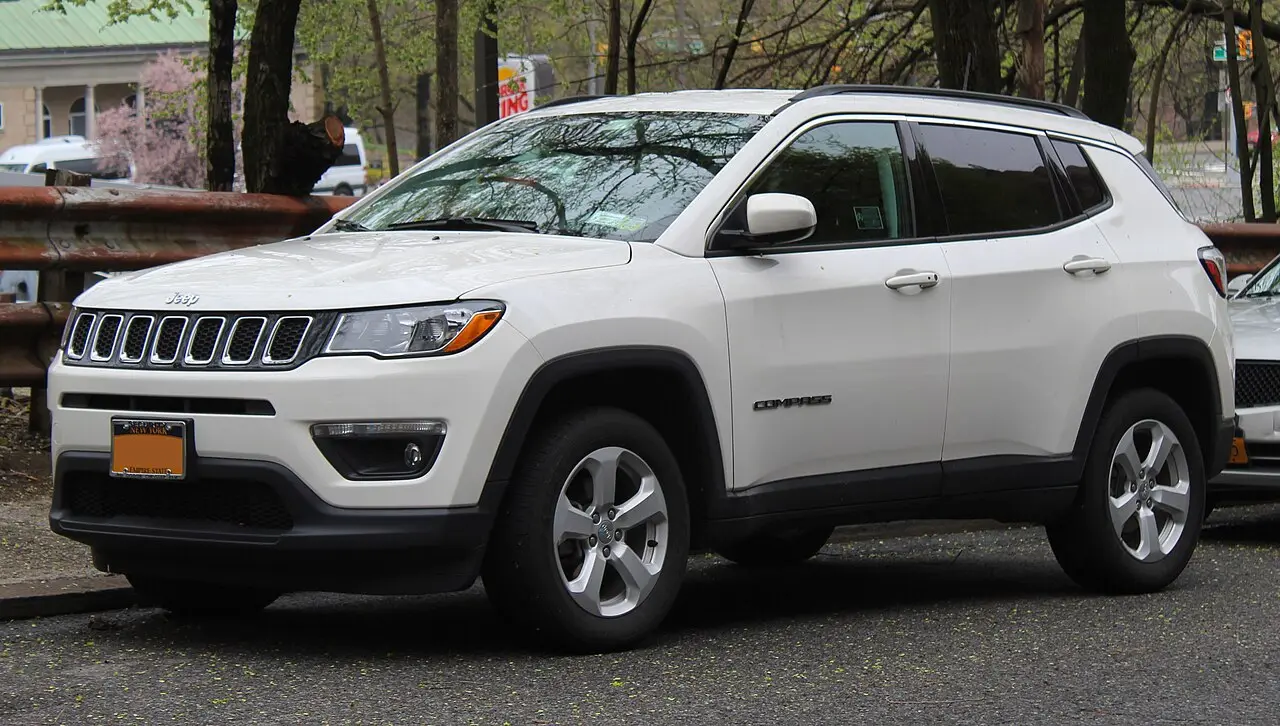
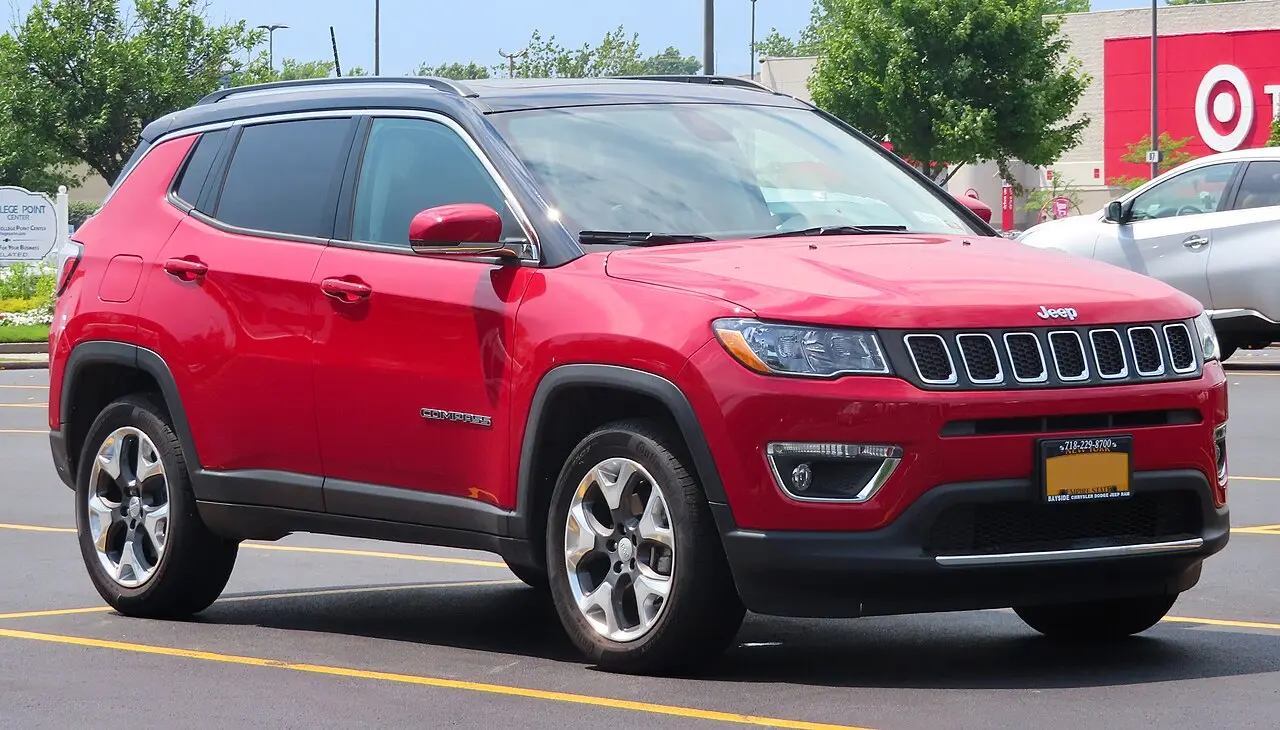
The first generation, code MK, ran from 2007 to 2017. The second generation followed in 2017 and is identified as MP or 552 in the listed markets. A third generation began in Europe, the UK and France in 2025. Over its generations, the Compass has been offered with a changing mix of powertrains, including plug-in hybrid and, in some markets, electric versions.
Engines and power
Across EU versions, engine sizes range from 1.3 to 2.4 litres, with power from 88 kW (120 PS) to 157 kW (213 PS). The European range has included petrol and diesel engines, hybrids, plug-in hybrids, LPG and other fuel types. The UK range stretches from 1.2 to 2.4 litres and reaches 288 kW (392 PS); it also includes electric versions.
The US and Canadian Compass ranges are listed with petrol engines from 2.0 to 2.4 litres. Available engines and generations vary by market.
Fuel consumption
For EU versions, the lowest listed consumption is 1.9 L/100 km WLTP, including a plug-in hybrid weighted figure. That plug-in hybrid result assumes some journeys are completed on electric power, so fuel use depends on charging and driving. In France, the lowest listed figure for petrol, diesel or hybrid versions is 5.7 L/100 km WLTP; the weighted plug-in hybrid figure is 1.8 L/100 km WLTP.
The UK’s lowest listed figure is 4.4 L/100 km under NEDC, with a weighted plug-in hybrid figure of 5.9 L/100 km WLTP. In the US, the EPA best combined rating is 27 MPG. Canada’s NRCan 5-cycle figure is 8.8 L/100 km. WLTP and NEDC in Europe, EPA in the US and the 5-cycle procedure in Canada use different test methods, so figures are best considered within their own market.
Where was the Compass sold?
The Compass has been sold in the EU, the UK, France, the US and Canada. EU registration figures cover 2007 to 2025 and total 575,587 cars. Among the leading listed EU versions were the 1.6-litre diesel at 88 kW (120 PS) and the 1.4-litre petrol at 103 kW (140 PS).
Questions and answers
When did the Jeep Compass first go on sale?
The first generation began in 2007 and ran through 2017.
How many generations of Jeep Compass are there?
Three: the first generation from 2007 to 2017, the second from 2017, and a third generation introduced in Europe in 2025.
What is the lowest official EU Compass consumption figure?
The lowest listed figure is 1.9 L/100 km WLTP. It includes the weighted plug-in hybrid result, which assumes that part of the driving is electric.
New cars registered in the EU (plus Norway and Iceland), from the European Environment Agency. Figures on the NEDC procedure until 2020 and on WLTP from 2021; versions are grouped by engine and power, with their number of registrations.
Years and version
Engine
Power
Fuel
Consumption (combined)
CO₂
Electric range
EU registrations
2025
1.5 L
96 kW (131 PS)
Hybrid
5.6 L/100 km WLTP
127 g/km
–
10,619
2025
1.3 L
132 kW (179 PS)
Plug-in hybrid
2.0 L/100 km WLTP17.6 kWh/100 km WLTP
48 g/km
38 km
3,021
2025
1.3 L
96 kW (131 PS)
Plug-in hybrid
2.2 L/100 km WLTP17.8 kWh/100 km WLTP
50 g/km
39 km
469
2025
1.5 L
96 kW (131 PS)
Petrol
5.6 L/100 km WLTP
127 g/km
–
288
2025
1.2 L
100 kW (136 PS)
Hybrid
5.7 L/100 km WLTP
130 g/km
–
256
2025
Electric motor
157 kW (213 PS)
Electric
18.4 kWh/100 km WLTP
0 g/km
471 km
116
2025
1.5 L
96 kW (131 PS)
Plug-in hybrid
–
129 g/km
–
75
2025
1.3 L
96 kW (131 PS)
Hybrid
7.4 L/100 km WLTP
168 g/km
–
49
United Kingdom 15 versions
New cars on sale in the UK, from the Vehicle Certification Agency. NEDC figures until 2018 and WLTP figures after; years are the editions a version appeared in.
Years and version
Engine
Power
Fuel
Gearbox
Consumption (combined)
CO₂
Electric range
2025–202674 KWH 213HP FWD
Electric motor
157 kW (213 PS)
Electric
Automatic
15.6 kWh/100 km WLTP
0 g/km
563 km
2025–202674 KWH 213HP FWD · 74 KWH 213HP FWD (VH)
Electric motor
157 kW (213 PS)
Electric
Automatic
19.3 kWh/100 km WLTP
0 g/km
446 km
202674 KWH 213HP FWD (VL)
Electric motor
157 kW (213 PS)
Electric
Automatic
15.3 kWh/100 km WLTP
0 g/km
563 km
202696 KWH 375HP eAWD (VL)
Electric motor
288 kW (392 PS)
Electric
Automatic
16.9 kWh/100 km WLTP
0 g/km
686 km
202696 KWH 375HP eAWD (VH)
Electric motor
288 kW (392 PS)
Electric
Automatic
22.2 kWh/100 km WLTP
0 g/km
523 km
2025–20261.2 145HP DCT6 FWD
1.2 L
100 kW (136 PS)
Hybrid
6-speed automatic
5.4 L/100 km WLTP
122 g/km
–
2025–20261.2 145HP DCT6 FWD
1.2 L
100 kW (136 PS)
Hybrid
6-speed automatic
6.1 L/100 km WLTP
138 g/km
–
20261.2 145HP DCT6 FWD (VL)
1.2 L
107 kW (145 PS)
Hybrid
6-speed automatic
5.4 L/100 km WLTP
122 g/km
–
20261.2 145HP DCT6 FWD (VH)
1.2 L
107 kW (145 PS)
Hybrid
6-speed automatic
6.1 L/100 km WLTP
138 g/km
–
2025–20261.3 GSE T4 4xe 240hp AT eAWD
1.3 L
132 kW (179 PS)
Plug-in hybrid
6-speed automatic
6.9 L/100 km WLTP17.2 kWh/100 km WLTP
155 g/km
36 km
2025–20261.3 GSE T4 4xe 240hp AT eAWD
1.3 L
132 kW (179 PS)
Plug-in hybrid
6-speed automatic
7.6 L/100 km WLTP19.3 kWh/100 km WLTP
172 g/km
36 km
2025–2026Altitute 1.5 MHEV GSE T4 130hp DCT FWD
1.5 L
96 kW (131 PS)
Hybrid
7-speed automatic
5.4 L/100 km WLTP
122 g/km
–
2025–2026Altitute 1.5 MHEV GSE T4 130hp DCT FWD
1.5 L
96 kW (131 PS)
Hybrid
7-speed automatic
6.1 L/100 km WLTP
137 g/km
–
20261.6 225HP DCT7 FWD (VL)
1.6 L
165 kW (224 PS)
Plug-in hybrid
7-speed automatic
5.9 L/100 km WLTP17.1 kWh/100 km WLTP
134 g/km
82 km
20261.6 225HP DCT7 FWD (VH)
1.6 L
165 kW (224 PS)
Plug-in hybrid
7-speed automatic
7.2 L/100 km WLTP27.4 kWh/100 km WLTP
164 g/km
70 km
France 3 versions
New cars on sale in France, from ADEME Car Labelling. NEDC figures until 2015, WLTP figures in the current catalogue.
Official figures are measured on standard test procedures and differ between markets. Your consumption depends on how, where and in what conditions you drive.