The official data lists 360 versions of the Honda CR-V (1997–2027), in the European Union, the United Kingdom, France, the United States, and Canada. Each market publishes its own figures, measured on its own test procedure.
At a glance
Years in the data
1997–2027
Markets
European Union, United Kingdom, France, United States, Canada
Engines
1.5 L to 2.4 L
Power
88 kW (120 PS) to 142 kW (193 PS)
Fuels
Hybrid, Diesel, Petrol, Plug-in hybrid, LPG
Lowest consumption (United Kingdom)
4.4 L/100 km (NEDC)
Lowest consumption (France)
4.5 L/100 km (NEDC)
Lowest consumption (United States)
5.9 L/100 km (EPA)
Plug-in hybrid, weighted (European Union)
0.8 L/100 km (WLTP)
New registrations in the EU
807,127
What is the Honda CR-V?
The CR-V is Honda’s family-sized SUV, with a raised driving position and space for passengers and luggage. Honda has described its approach as an urban SUV, combining SUV styling with car-like drivability and a roomy cabin. It is a larger, more spacious option in Honda’s range than the Jazz.
Across successive generations, the CR-V has kept its focus on practical space while its design and powertrain choices have evolved. Newer market ranges include hybrid and plug-in hybrid versions.
CR-V generations
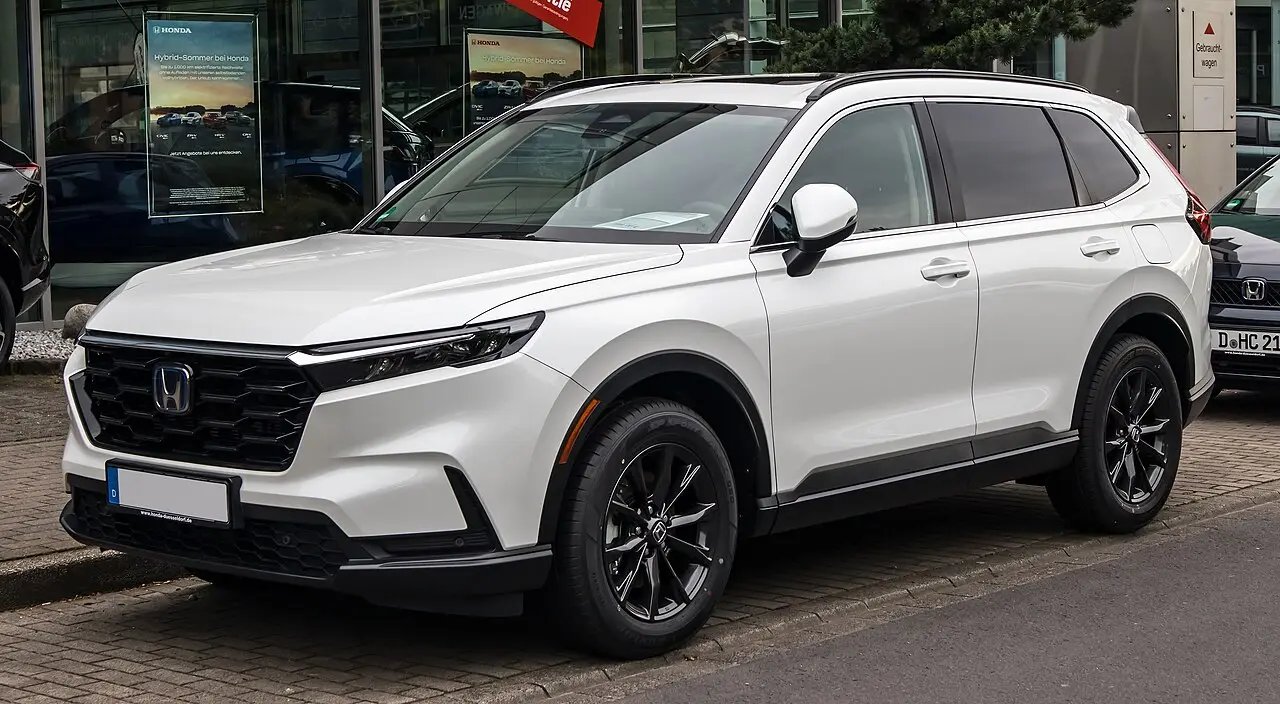
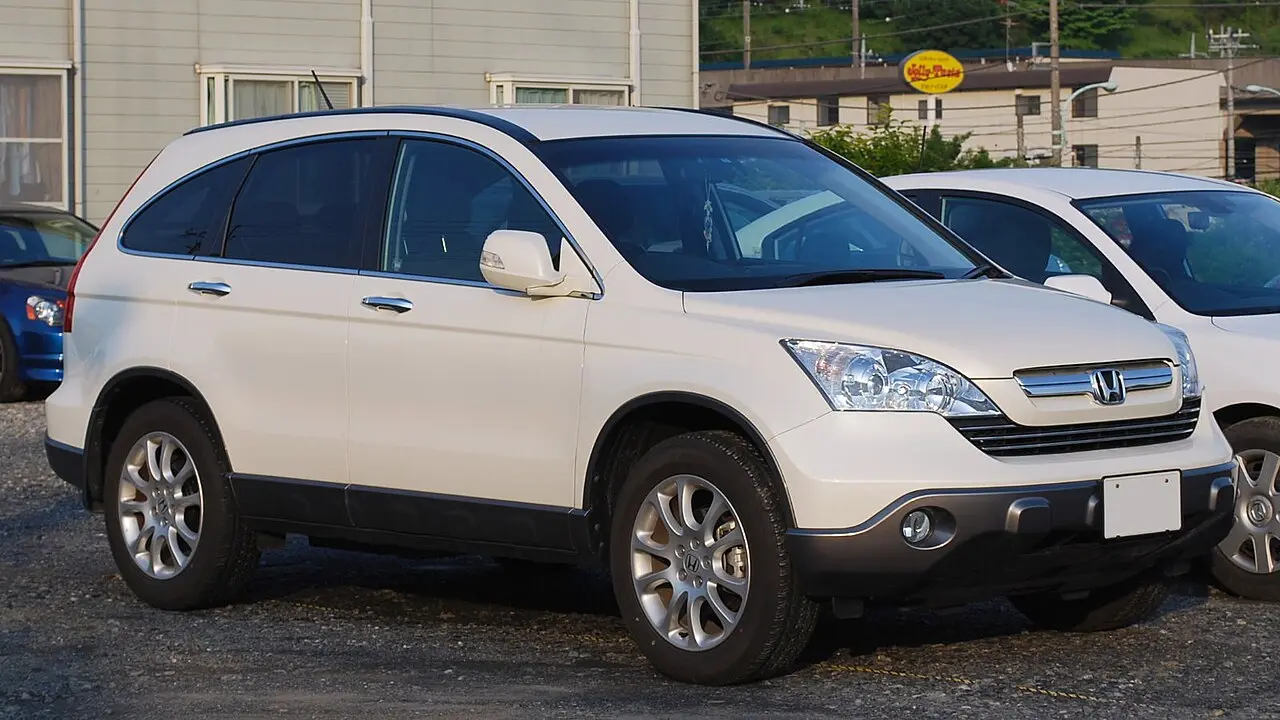
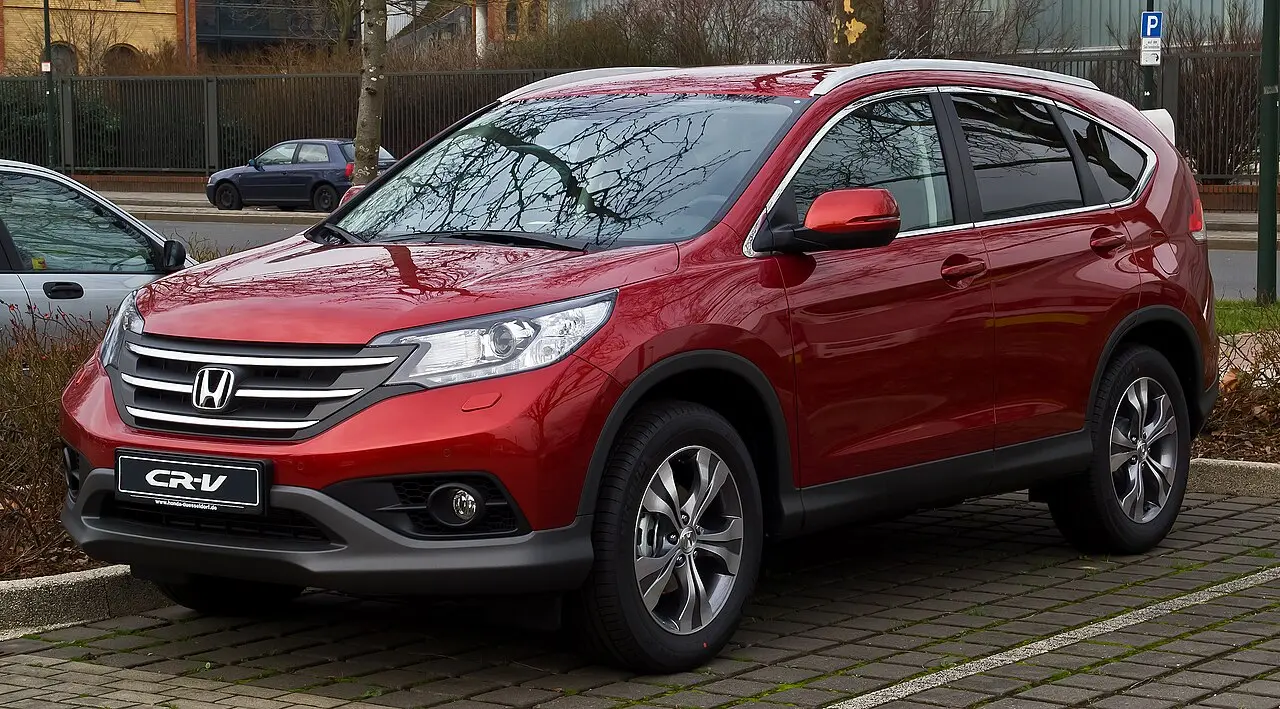
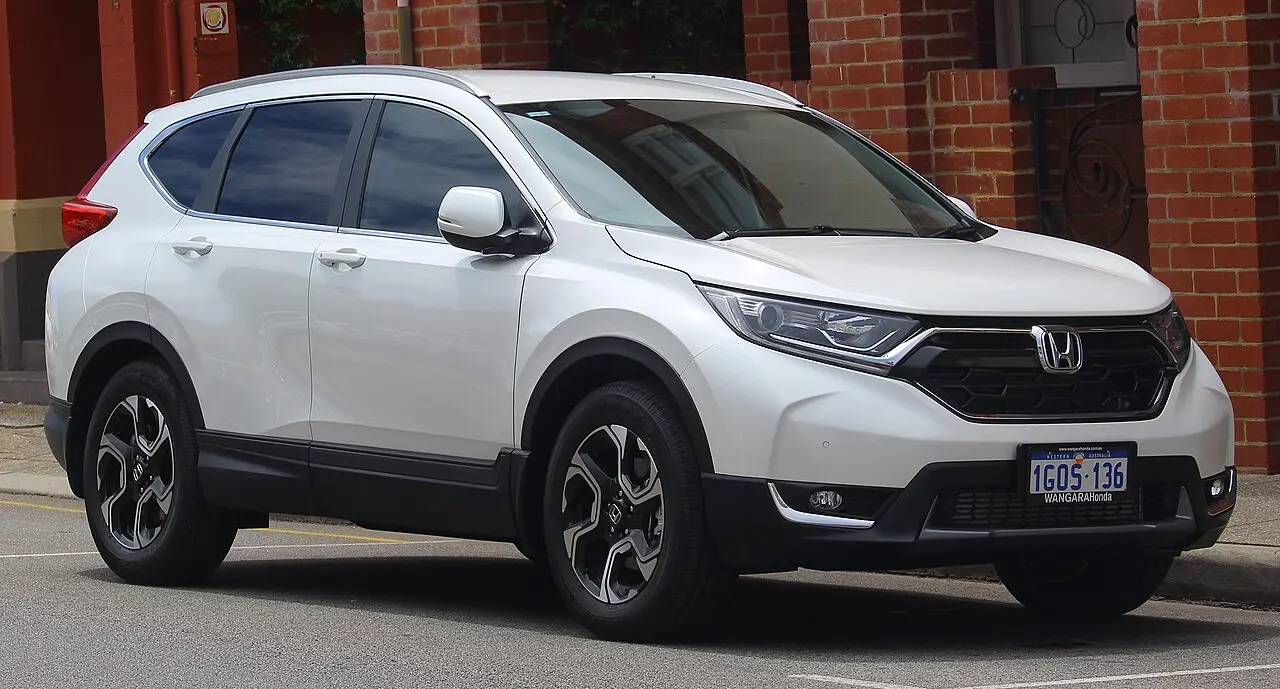
The generations listed are III (2007–2011), IV (2012–2016), V (2017–2022) and VI (2023–today). The third generation moved away from the earlier boxy look toward a more refined urban SUV design. Later generations continued to develop the styling and cabin, with hybrid and plug-in hybrid options in newer market ranges.
Honda introduced the first CR-V in Japan in 1995, with sales later expanding to North America and Europe. The generations listed here begin with the third.
Engines, power and official economy
In the EU, CR-V engines range from 1.5 L to 2.2 L, with power from 88 kW (120 PS) to 171 kW (232 PS). Fuel types include petrol, diesel, hybrid, plug-in hybrid and LPG. UK versions span 1.5 L to 2.2 L and 107 kW (145 PS) to 142 kW (193 PS). The French range listed here has 2.0 L engines and power from 88 kW (120 PS) to 114 kW (155 PS).
The lowest EU figure for petrol, diesel and hybrid versions is 6.1 L/100 km on WLTP. The lowest plug-in hybrid figure is 0.8 L/100 km on WLTP, a weighted figure that assumes some driving is electric. The UK and French lows are 4.4 and 4.5 L/100 km respectively on NEDC. The EPA low in the United States is 5.9 L/100 km, or 40 MPG combined; Canada’s NRCan 5-cycle low is 6.4 L/100 km. WLTP, NEDC, EPA and 5-cycle procedures differ, so figures across markets are not directly comparable.
Where was the CR-V sold?
The CR-V appears in official figures for the EU, UK, France, the United States and Canada. EU registrations total 807,127. Among the leading EU entries are 1.6 L diesels rated at 118 kW (160 PS), and a 2.2 L diesel rated at 110 kW (150 PS).
Questions and answers
What is the lowest official CR-V consumption figure?
The lowest EU figure for petrol, diesel or hybrid versions is 6.1 L/100 km on WLTP. The lowest plug-in hybrid figure is 0.8 L/100 km on WLTP, assuming some driving is electric.
How much power does the CR-V make?
EU versions range from 88 kW (120 PS) to 171 kW (232 PS). UK versions range from 107 kW (145 PS) to 142 kW (193 PS).
Which CR-V generations are represented?
The generations listed are III (2007–2011), IV (2012–2016), V (2017–2022) and VI (2023–today).
Which official test procedures are used across these markets?
European figures use WLTP or NEDC, US figures use EPA, and Canadian figures use the NRCan 5-cycle test. These procedures differ.
New cars registered in the EU (plus Norway and Iceland), from the European Environment Agency. Figures on the NEDC procedure until 2020 and on WLTP from 2021; versions are grouped by engine and power, with their number of registrations.
Years and version
Engine
Power
Fuel
Consumption (combined)
CO₂
Electric range
EU registrations
2025
2.0 L
109 kW (148 PS)
Hybrid
6.5 L/100 km WLTP
145 g/km
–
3,990
2025
2.0 L
109 kW (148 PS)
Plug-in hybrid
1.4 L/100 km WLTP15.4 kWh/100 km WLTP
28 g/km
88 km
2,197
2025
2.0 L
106 kW (144 PS)
Hybrid
6.6 L/100 km WLTP
145 g/km
–
1,065
2025
2.0 L
135 kW (184 PS)
Plug-in hybrid
0.8 L/100 km WLTP16.0 kWh/100 km WLTP
19 g/km
80 km
186
2025
2.0 L
135 kW (184 PS)
Hybrid
6.3 L/100 km WLTP
144 g/km
–
114
2025
2.0 L
106 kW (144 PS)
Plug-in hybrid
5.7 L/100 km WLTP11.6 kWh/100 km WLTP
128 g/km
78 km
50
2024
2.0 L
109 kW (148 PS)
Hybrid
6.5 L/100 km WLTP
146 g/km
–
6,119
2023–2024
2.0 L
107 kW (145 PS)
Hybrid
6.9 L/100 km WLTP
157 g/km
–
3,915
2023–2024
2.0 L
109 kW (148 PS)
Plug-in hybrid
0.8 L/100 km WLTP15.6 kWh/100 km WLTP
18 g/km
81 km
2,236
2023–2024
2.0 L
135 kW (184 PS)
Plug-in hybrid
0.8 L/100 km WLTP15.6 kWh/100 km WLTP
18 g/km
81 km
121
2024
2.0 L
135 kW (184 PS)
Hybrid
6.2 L/100 km WLTP
141 g/km
–
113
2023
2.0 L
109 kW (148 PS)
Hybrid
6.6 L/100 km WLTP
150 g/km
–
1,244
2023
2.0 L
135 kW (184 PS)
Hybrid
6.7 L/100 km WLTP
153 g/km
–
67
2023
2.0 L
67 kW (91 PS)
Hybrid
6.9 L/100 km WLTP
159 g/km
–
64
2023
2.0 L
110 kW (150 PS)
Hybrid
7.0 L/100 km WLTP
160 g/km
–
46
2023
2.0 L
81 kW (110 PS)
Hybrid
7.0 L/100 km WLTP
159 g/km
–
25
2023
2.0 L
84 kW (114 PS)
Hybrid
7.0 L/100 km WLTP
159 g/km
–
20
2023
2.0 L
95 kW (129 PS)
Hybrid
6.8 L/100 km WLTP
155 g/km
–
17
2023
2.0 L
96 kW (131 PS)
Hybrid
6.7 L/100 km WLTP
154 g/km
–
10
United Kingdom 4 versions
New cars on sale in the UK, from the Vehicle Certification Agency. NEDC figures until 2018 and WLTP figures after; years are the editions a version appeared in.
Years and version
Engine
Power
Fuel
Gearbox
Consumption (combined)
CO₂
Electric range
2026CR-V HYBRID 2.0 i-MMD Advance 5 door (Standard) · CR-V HYBRID 2.0 i-MMD Elegance (sensing) 5 door (Standard) · CR-V HYBRID 2.0 i-MMD Elegance (360 sensing) 5 door (Standard)
2.0 L
135 kW (184 PS)
Hybrid
Automatic
6.7 L/100 km WLTP
151 g/km
–
2026CR-V HYBRID 2.0 i-MMD Advance Tech e:PHEV 5 door (Standard)
2.0 L
135 kW (184 PS)
Plug-in hybrid
Automatic
17.2 kWh/100 km WLTP
–
79 km
2025CR-V HYBRID 2.0 i-MMD Advance Tech e:PHEV 5 door (Standard)
2.0 L
135 kW (184 PS)
Plug-in hybrid
–
17.2 kWh/100 km WLTP
–
79 km
2025CR-V HYBRID 2.0 i-MMD Elegance (sensing) 5 door (Standard) · CR-V HYBRID 2.0 i-MMD Elegance (360 sensing) 5 door (Standard) · CR-V HYBRID 2.0 i-MMD Advance 5 door (Standard)
2.0 L
135 kW (184 PS)
Hybrid
–
6.7 L/100 km WLTP
151 g/km
–
France 1 version
New cars on sale in France, from ADEME Car Labelling. NEDC figures until 2015, WLTP figures in the current catalogue.
Years and version
Engine
Power
Fuel
Gearbox
Consumption (combined)
CO₂
2026CR-V (145ch+65Kw)
2.0 L
107 kW (145 PS)
Hybrid
Automatic
6.6 L/100 km WLTP
150 g/km
United States 8 versions
Model years sold in the USA, from the EPA and the Department of Energy (fueleconomy.gov). MPG on the EPA test; litres per 100 km = 235.215 ÷ MPG.
Years and version
Engine
Fuel
Gearbox
Drive
Consumption (combined)
CO₂
2026–2027SIDI
1.5 L
Petrol
Continuously variable (CVT)
Front-wheel drive
30 MPG (7.8 L/100 km) EPA
184 g/km
2026–2027SIDI
1.5 L
Petrol
Continuously variable (CVT)
All-wheel drive
29 MPG (8.1 L/100 km) EPA
193 g/km
2023–2027SIDI; Hybrid · SIDI; Hybrid;
2.0 L
Hybrid
Continuously variable (CVT)
Front-wheel drive
40 MPG (5.9 L/100 km) EPA
139 g/km
2023–2027SIDI; Hybrid
2.0 L
Hybrid
Continuously variable (CVT)
All-wheel drive
37 MPG (6.4 L/100 km) EPA
147 g/km
2026–2027SIDI; Hybrid
2.0 L
Hybrid
Continuously variable (CVT)
All-wheel drive
35 MPG (6.7 L/100 km) EPA
157 g/km
2025–2026
–
Petrol
Automatic
Front-wheel drive
39 MPG (6.0 L/100 km) EPA
0 g/km
2023–2025SIDI
1.5 L
Petrol
Continuously variable (CVT)
Front-wheel drive
30 MPG (7.8 L/100 km) EPA
180 g/km
2025SIDI
1.5 L
Petrol
Continuously variable (CVT)
All-wheel drive
28 MPG (8.4 L/100 km) EPA
194 g/km
Canada 5 versions
Model years sold in Canada, from Natural Resources Canada fuel consumption ratings (5-cycle test).
Years and version
Engine
Fuel
Gearbox
Consumption (combined)
CO₂
2023–2026Sport utility vehicle: Small
1.5 L
Petrol
Continuously variable (CVT)
8.4 L/100 km 5-cycle
197 g/km
2026Station wagon: Mid-size
1.5 L
Petrol
Continuously variable (CVT)
7.8 L/100 km 5-cycle
183 g/km
2023–2026Sport utility vehicle: Small
2.0 L
Petrol
Continuously variable (CVT)
6.4 L/100 km 5-cycle
151 g/km
2026Sport utility vehicle: Small
2.0 L
Petrol
Continuously variable (CVT)
6.7 L/100 km 5-cycle
158 g/km
2023–2025Sport utility vehicle: Small
1.5 L
Petrol
Continuously variable (CVT)
7.8 L/100 km 5-cycle
181 g/km
Versions outside these generations
United Kingdom 7 versions
New cars on sale in the UK, from the Vehicle Certification Agency. NEDC figures until 2018 and WLTP figures after; years are the editions a version appeared in.
Years and version
Engine
Fuel
Gearbox
Consumption (combined)
CO₂
20062.0 i-VTEC SE · 2.0 i-VTEC Sport · 2.0 i-VTEC Executive
2.0 L
Petrol
5-speed manual
9.0 L/100 km NEDC
215 g/km
20062.0 i-VTEC SE · 2.0 i-VTEC Sport · 2.0 i-VTEC Executive
2.0 L
Petrol
4-speed automatic
9.3 L/100 km NEDC
221 g/km
20062.2 i-CTDi Sport · 2.2 i-CTDi SE · 2.2 i-CTDi Executive
2.2 L
Diesel
6-speed manual
6.7 L/100 km NEDC
177 g/km
2002–20042.0 i-VTEC SE · 2.0 i-VTEC SE Sport · 2.0 i-VTEC SE Sport (with Satellite Navigation) and 1 more trim
2.0 L
Petrol
5-speed manual
9.1 L/100 km NEDC
216 g/km
2002–20042.0 i-VTEC SE · 2.0 i-VTEC SE Sport · 2.0 i-VTEC SE Sport (with Satellite Navigation) and 1 more trim
2.0 L
Petrol
4-speed automatic
9.3 L/100 km NEDC
220 g/km
2000–20032.0i LS · 2.0i ES
2.0 L
Petrol
5-speed manual
9.7 L/100 km NEDC
229 g/km
2000–20032.0i LS · 2.0i ES
2.0 L
Petrol
4-speed automatic
9.9 L/100 km NEDC
235 g/km
United States 16 versions
Model years sold in the USA, from the EPA and the Department of Energy (fueleconomy.gov). MPG on the EPA test; litres per 100 km = 235.215 ÷ MPG.
Years and version
Engine
Fuel
Gearbox
Drive
Consumption (combined)
CO₂
2005–2006CLKUP
2.4 L
Petrol
5-speed automatic
Front-wheel drive
23 MPG (10.2 L/100 km) EPA
240 g/km
2005–2006CLKUP
2.4 L
Petrol
5-speed automatic
Four- or all-wheel drive
22 MPG (10.7 L/100 km) EPA
251 g/km
2005–2006
2.4 L
Petrol
5-speed manual
Four- or all-wheel drive
21 MPG (11.2 L/100 km) EPA
263 g/km
2002–2004
2.4 L
Petrol
5-speed manual
Four- or all-wheel drive
21 MPG (11.2 L/100 km) EPA
263 g/km
2003–2004CLKUP
2.4 L
Petrol
4-speed automatic
Front-wheel drive
22 MPG (10.7 L/100 km) EPA
251 g/km
2003–2004CLKUP
2.4 L
Petrol
4-speed automatic
Four- or all-wheel drive
21 MPG (11.2 L/100 km) EPA
263 g/km
2002CLKUP
2.4 L
Petrol
4-speed automatic
Front-wheel drive
23 MPG (10.2 L/100 km) EPA
240 g/km
2002CLKUP
2.4 L
Petrol
4-speed automatic
Four- or all-wheel drive
21 MPG (11.2 L/100 km) EPA
263 g/km
1999–2001CLKUP
2.0 L
Petrol
4-speed automatic
Front-wheel drive
21 MPG (11.2 L/100 km) EPA
263 g/km
1999–2001CLKUP · FFS
2.0 L
Petrol
4-speed automatic
Four- or all-wheel drive
21 MPG (11.2 L/100 km) EPA
263 g/km
1999–2001FFS
2.0 L
Petrol
5-speed manual
Four- or all-wheel drive
21 MPG (11.2 L/100 km) EPA
263 g/km
1999FFS
2.0 L
Petrol
4-speed automatic
–
21 MPG (11.2 L/100 km) EPA
263 g/km
1998DOHC, CLKUP
2.0 L
Petrol
4-speed automatic
Front-wheel drive
21 MPG (11.2 L/100 km) EPA
263 g/km
1998DOHC, CLKUP
2.0 L
Petrol
4-speed automatic
Four- or all-wheel drive
20 MPG (11.8 L/100 km) EPA
276 g/km
1998DOHC
2.0 L
Petrol
5-speed manual
Front-wheel drive
21 MPG (11.2 L/100 km) EPA
263 g/km
1997
2.0 L
Petrol
4-speed automatic
Four-wheel drive
21 MPG (11.2 L/100 km) EPA
263 g/km
Canada 15 versions
Model years sold in Canada, from Natural Resources Canada fuel consumption ratings (5-cycle test).
Official figures are measured on standard test procedures and differ between markets. Your consumption depends on how, where and in what conditions you drive.