The official data lists 234 versions of the Nissan X-Trail (2002–2026), in the European Union, the United Kingdom, France, and Canada. Each market publishes its own figures, measured on its own test procedure.
At a glance
Years in the data
2002–2026
Markets
European Union, United Kingdom, France, Canada
Engines
1.3 L to 2.5 L
Power
96 kW (131 PS) to 160 kW (218 PS)
Fuels
Diesel, Hybrid, Petrol, Plug-in hybrid, Electric
Lowest consumption (France)
4.9 L/100 km (NEDC)
Lowest consumption (United Kingdom)
4.9 L/100 km (NEDC)
Lowest consumption (European Union)
5.9 L/100 km (WLTP)
Plug-in hybrid, weighted (European Union)
6.3 L/100 km (WLTP)
New registrations in the EU
675,231
What is the Nissan X-Trail?
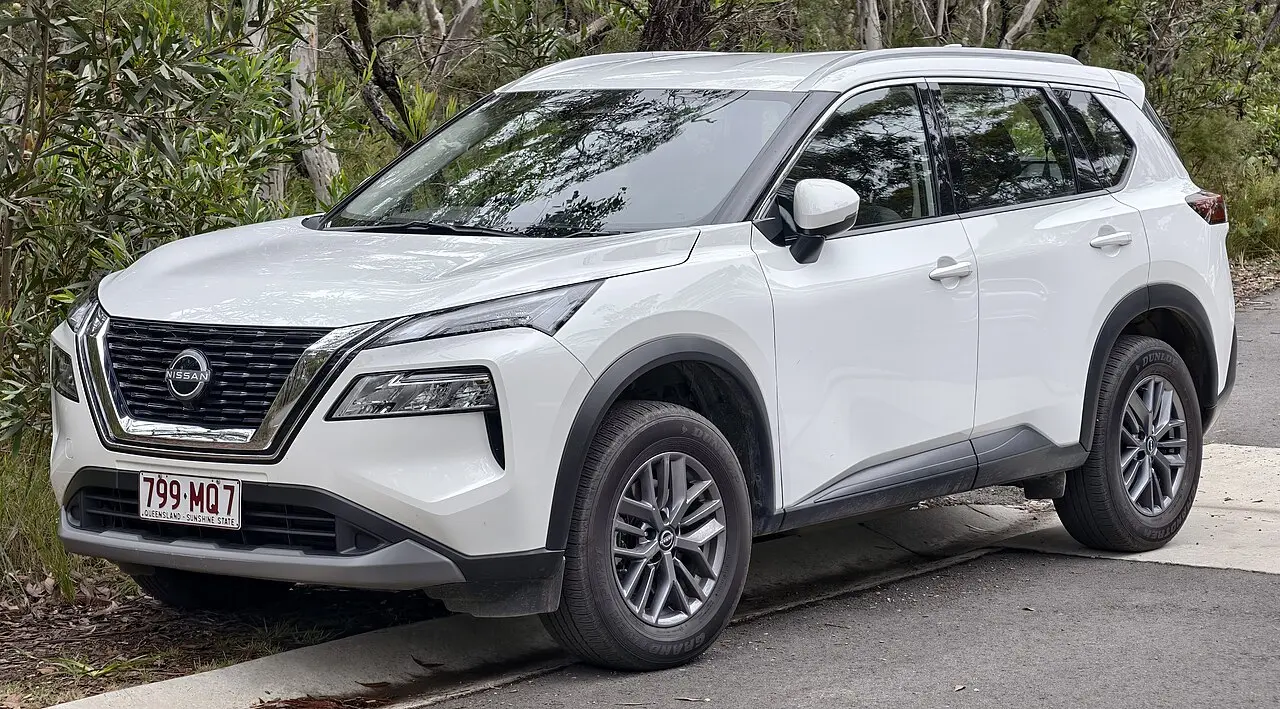
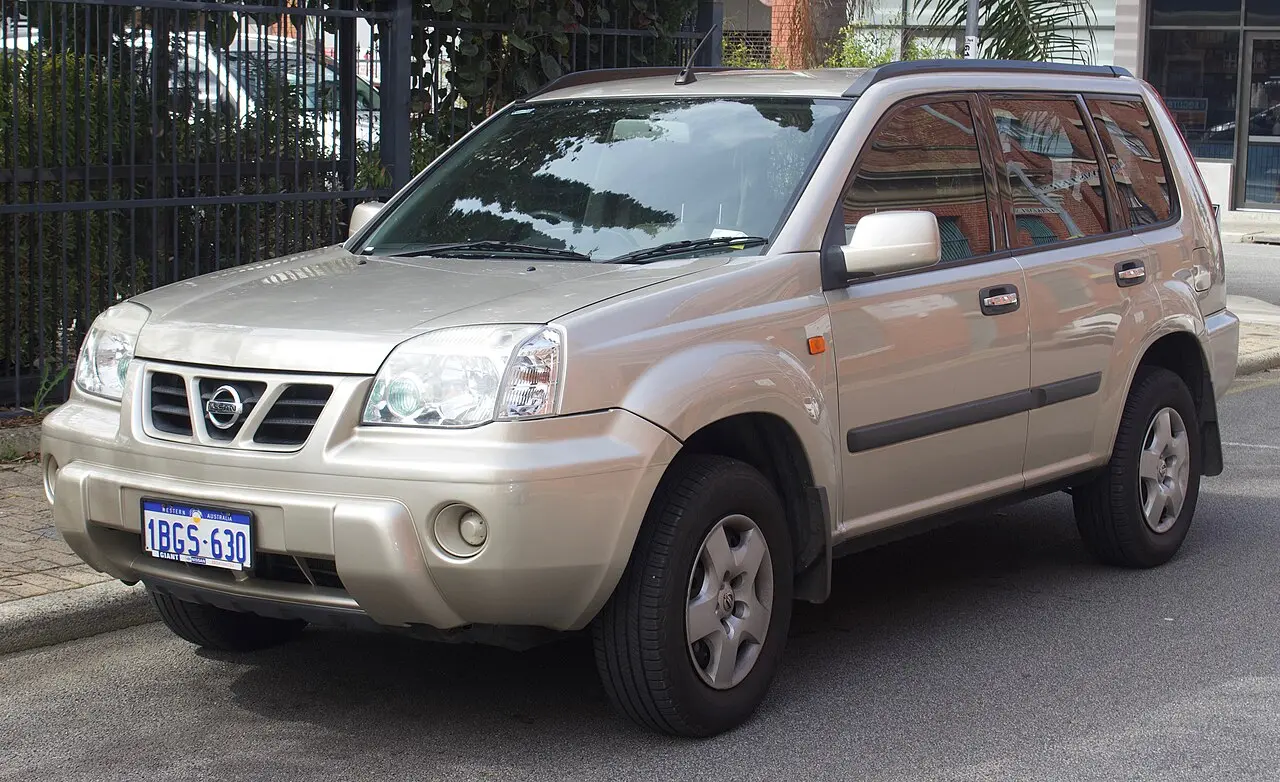
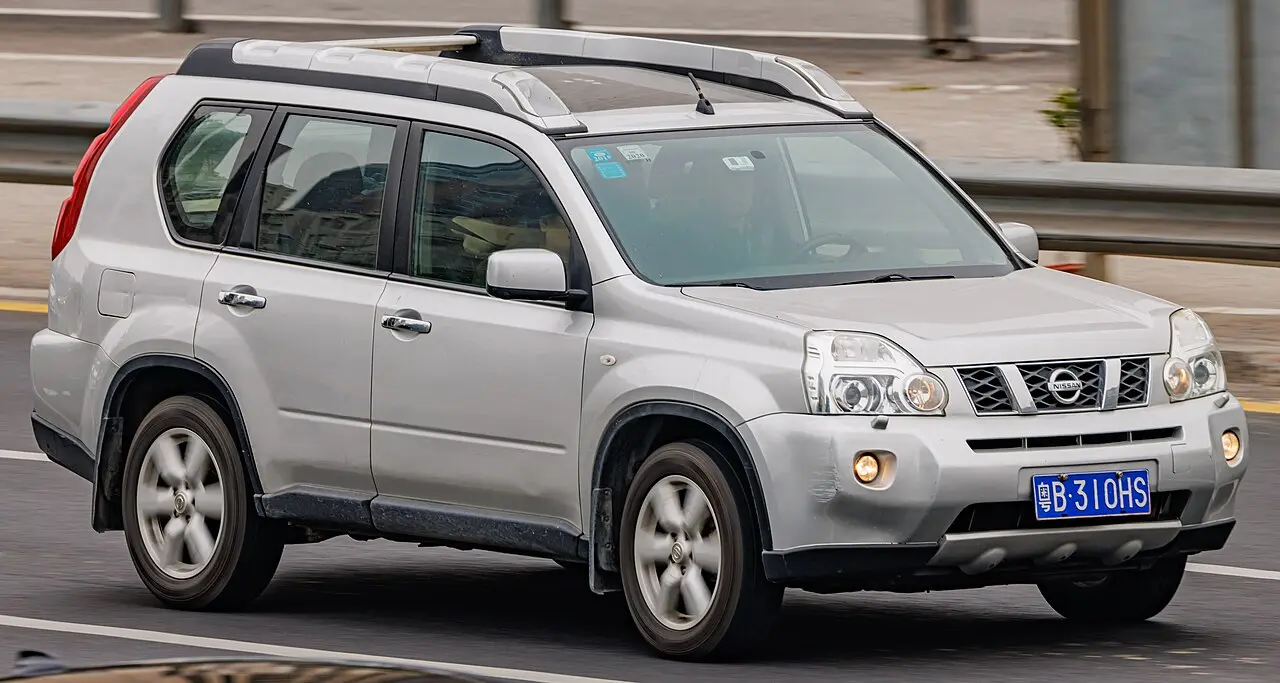
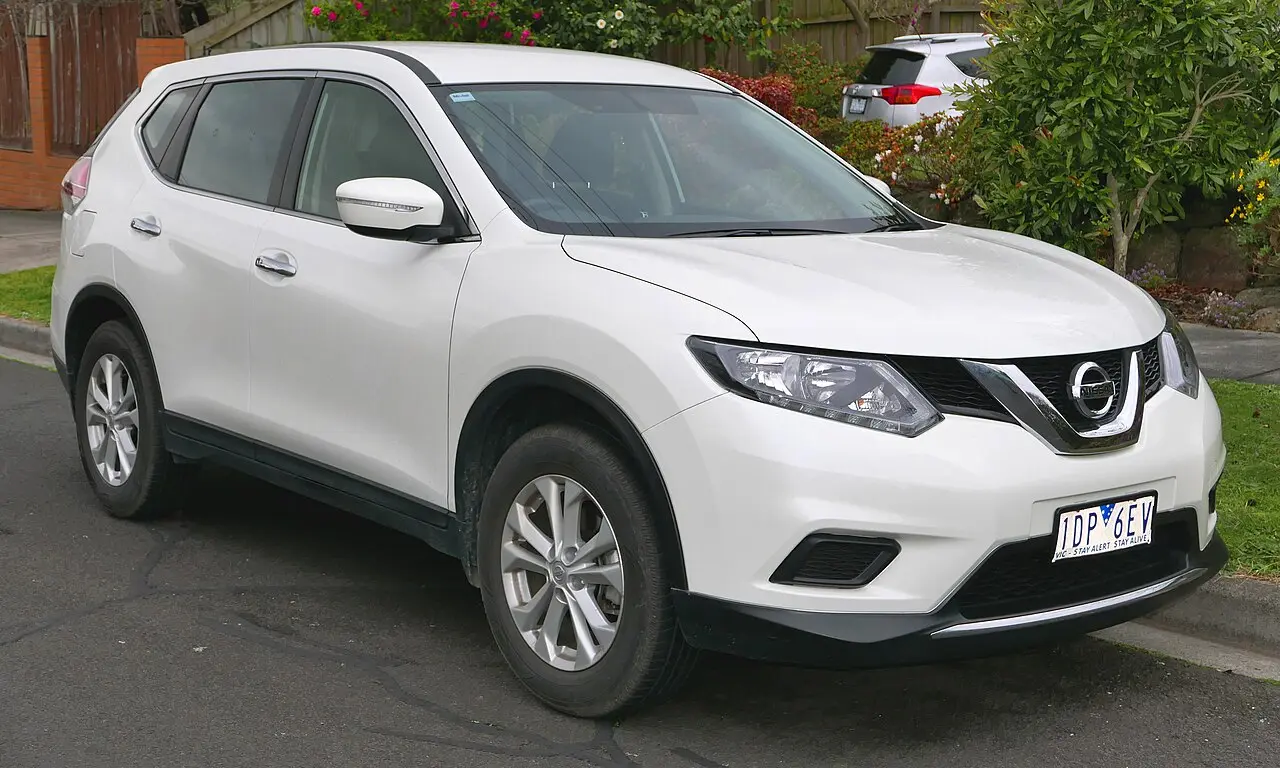
The Nissan X-Trail is a family SUV with a practical cabin and a higher driving position. It sits among the larger models in Nissan’s range and has been offered with petrol, diesel and electrified powertrains. Across four generations, it has evolved from a straightforward SUV into a family model with a broader choice of powertrains.
X-Trail generations
The first generation, T30, ran from 2002 to 2007, followed by the T31 from 2007 to 2014. The T32 ran from 2014 to 2022, and the T33 began in 2022. Over that time, the X-Trail gained hybrid and plug-in hybrid versions in Europe, alongside petrol and diesel models.
Engines, power and consumption
Across EU registrations, engines range from 1.3 to 2.0 litres and power from 96 kW (131 PS) to 195 kW (265 PS). The range includes petrol, diesel, hybrid, plug-in hybrid, electric and other fuel classifications. The lowest stated consumption for petrol, diesel and hybrid versions is 5.9 L/100 km on the WLTP test. The lowest official weighted figure for plug-in hybrids is 6.3 L/100 km WLTP; it assumes some driving is electric, so actual use depends on charging and driving habits. EU registrations total 675,231 across 2010–2025. The leading entries are 1.6-litre diesel versions rated at 96 kW (131 PS), with the largest annual totals in 2015, 2016 and 2017.
UK figures cover 2002–2026 and list petrol, diesel and hybrid engines from 1.3 to 2.5 litres, with power from 110 kW (150 PS) to 160 kW (218 PS). The lowest stated UK consumption is 4.9 L/100 km under NEDC. French figures cover diesel versions from 2012–2015. Canadian figures cover 2.5-litre petrol versions from 2005–2006, with a lowest stated consumption of 10.7 L/100 km on NRCan’s 5-cycle test. Test procedures differ: Europe uses WLTP or NEDC, while Canada uses the 5-cycle procedure, so results are not directly comparable.
Where was the X-Trail sold?
The X-Trail appears in EU and UK figures over long periods, with French figures covering a shorter span and Canadian petrol entries from 2005–2006. Its four generations trace the model’s development from a conventional SUV to one also offered with hybrid and plug-in hybrid power in Europe.
Questions and answers
How many X-Trail generations are there?
Four: T30 (2002–2007), T31 (2007–2014), T32 (2014–2022) and T33 (2022–today).
What is the lowest stated X-Trail consumption in the EU?
5.9 L/100 km WLTP for petrol, diesel and hybrid versions. The lowest plug-in hybrid weighted figure is 6.3 L/100 km WLTP.
What engines and power are listed for EU versions?
Engines range from 1.3 to 2.0 litres, and power ranges from 96 kW (131 PS) to 195 kW (265 PS).
Were X-Trails sold in Canada?
Canadian figures cover 2.5-litre petrol versions from 2005–2006, with a lowest stated consumption of 10.7 L/100 km on NRCan’s 5-cycle test.
New cars registered in the EU (plus Norway and Iceland), from the European Environment Agency. Figures on the NEDC procedure until 2020 and on WLTP from 2021; versions are grouped by engine and power, with their number of registrations.
Years and version
Engine
Power
Fuel
Consumption (combined)
CO₂
Electric range
EU registrations
2025
1.5 L
116 kW (158 PS)
Hybrid
6.1 L/100 km WLTP
139 g/km
–
17,364
2025
1.5 L
120 kW (163 PS)
Hybrid
7.1 L/100 km WLTP
161 g/km
–
2,512
2025
1.5 L
120 kW (163 PS)
Petrol
7.0 L/100 km WLTP
159 g/km
–
475
2025
1.5 L
157 kW (213 PS)
Hybrid
6.3 L/100 km WLTP
144 g/km
–
248
2025
1.5 L
116 kW (158 PS)
Plug-in hybrid
6.3 L/100 km WLTP
143 g/km
–
166
2025
Electric motor
–
Electric
1.5 kWh/100 km WLTP
0 g/km
400 km
133
2025
1.5 L
116 kW (158 PS)
Petrol
6.3 L/100 km WLTP
143 g/km
–
26
2024
1.5 L
116 kW (158 PS)
Hybrid
6.2 L/100 km WLTP
141 g/km
–
20,281
2024
1.5 L
120 kW (163 PS)
Hybrid
7.2 L/100 km WLTP
163 g/km
–
3,120
2023
1.5 L
116 kW (158 PS)
Hybrid
6.2 L/100 km WLTP
141 g/km
–
19,648
2023
1.5 L
120 kW (163 PS)
Hybrid
7.3 L/100 km WLTP
164 g/km
–
2,185
2022
1.5 L
116 kW (158 PS)
Hybrid
6.5 L/100 km WLTP
146 g/km
–
2,521
2022
1.3 L
116 kW (158 PS)
Petrol
7.3 L/100 km WLTP
165 g/km
–
330
2022
1.5 L
120 kW (163 PS)
Hybrid
7.3 L/100 km WLTP
165 g/km
–
175
2022
1.5 L
157 kW (213 PS)
Hybrid
6.5 L/100 km WLTP
147 g/km
–
96
2022
1.5 L
116 kW (158 PS)
Petrol
–
145 g/km
–
17
2022
1.3 L
116 kW (158 PS)
Hybrid
–
148 g/km
–
14
2022
–
116 kW (158 PS)
Hybrid
–
150 g/km
–
10
United Kingdom 22 versions
New cars on sale in the UK, from the Vehicle Certification Agency. NEDC figures until 2018 and WLTP figures after; years are the editions a version appeared in.
New cars on sale in France, from ADEME Car Labelling. NEDC figures until 2015, WLTP figures in the current catalogue.
Years and version
Engine
Power
Fuel
Gearbox
Consumption (combined)
CO₂
2012–2013X-TRAIL 2.0 dCi All mode (173 ch) · X-TRAIL 2.0 dCi All mode (173ch)
–
110 kW (150 PS)
Diesel
6-speed manual
6.0 L/100 km NEDC
159 g/km
2013X-TRAIL 2.0 dCi All mode (150ch)
–
110 kW (150 PS)
Diesel
6-speed manual
6.4 L/100 km NEDC
168 g/km
2013X-TRAIL 2.0 dCi All mode BVA (150ch)
–
110 kW (150 PS)
Diesel
6-speed automatic
7.1 L/100 km NEDC
188 g/km
2013X-TRAIL 2.0 dCi All mode (173ch)
–
127 kW (173 PS)
Diesel
6-speed manual
6.4 L/100 km NEDC
168 g/km
2012X-TRAIL 2.0 dCi All mode (150 ch)
–
110 kW (150 PS)
Diesel
6-speed manual
6.4 L/100 km NEDC
168 g/km
2012X-TRAIL 2.0 dCi All mode BVA (150ch)
–
110 kW (150 PS)
Diesel
6-speed automatic
7.1 L/100 km NEDC
188 g/km
2012X-TRAIL 2.0 dCi All mode (173ch)
–
127 kW (173 PS)
Diesel
6-speed manual
6.4 L/100 km NEDC
168 g/km
Official figures are measured on standard test procedures and differ between markets. Your consumption depends on how, where and in what conditions you drive.