Toyota

Toyota Highlander

Toyota Highlander
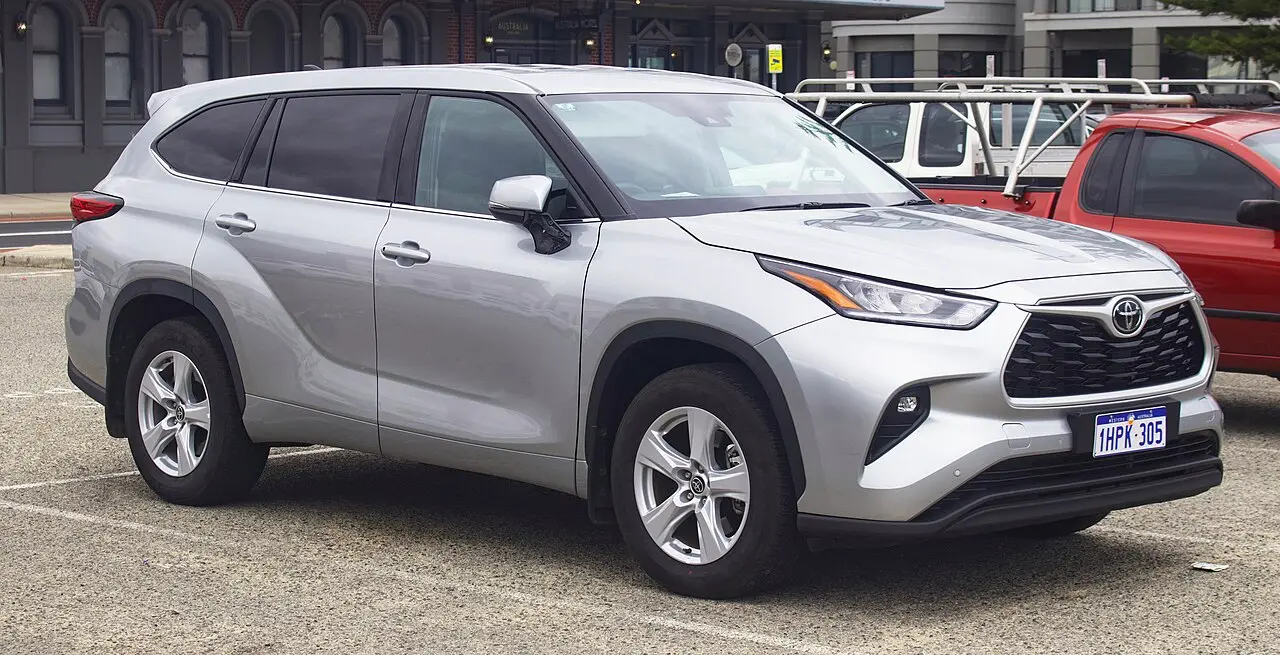
Photo: LuvsMG481 / Wikimedia Commons · CC BY-SA 4.0

The official data lists 117 versions of the Toyota Highlander (2001–2026), in the European Union, the United Kingdom, the United States, and Canada. Each market publishes its own figures, measured on its own test procedure.

At a glance

Years in the data
2001–2026
Markets
European Union, United Kingdom, United States, Canada
Engines
2.4 L to 3.5 L
Power
134 kW (182 PS) to 248 kW (337 PS)
Fuels
Hybrid, Plug-in hybrid, Petrol
Lowest consumption (United States)
6.5 L/100 km (EPA)
Lowest consumption (European Union)
6.6 L/100 km (WLTP)
Lowest consumption (Canada)
6.7 L/100 km (5-cycle)
Plug-in hybrid, weighted (European Union)
7.0 L/100 km (WLTP)
New registrations in the EU
23,395

What is the Toyota Highlander?

The Highlander is a midsize SUV with three rows of seats, aimed at families who need space for passengers and everyday flexibility. Toyota introduced it in North America in 2001, when many SUVs used truck-style construction. Its car-based design helped establish a more comfortable family SUV format. In Europe, it sits at the large end of Toyota’s SUV range.

The fourth generation arrived in Europe and the UK in 2021 as a seven-seat hybrid. It brought a redesigned body and Toyota’s TNGA-K platform, while continuing the Highlander’s role as a spacious family SUV.

Highlander generations

The second generation (XU40) ran from 2008 to 2013, followed by the third generation (XU50) from 2014 to 2019. The fourth generation (XU70) began in North America in 2020 and in Europe and the UK in 2021. Its redesign introduced the TNGA-K platform and a more sculpted exterior.

Engines, power and fuel consumption

In the EU, Highlander registrations include hybrid, plug-in hybrid and petrol versions with a 2.5-litre engine. The listed hybrid power is 140 kW (190 PS). The lowest conventional consumption is 6.6 L/100 km on the WLTP test. The plug-in hybrid’s official weighted figure is 7 L/100 km WLTP; it assumes that part of the driving is electric.

In the UK, the hybrid range is listed with power from 134 kW (182 PS) to 248 kW (337 PS), and a lowest WLTP consumption of 7.1 L/100 km. US EPA figures cover petrol and hybrid Highlanders with engines from 2.4 to 3.5 litres; the lowest listed consumption is 6.5 L/100 km, or 36 MPG combined. Canadian listings cover petrol engines from 2.4 to 3.5 litres, with a lowest figure of 6.7 L/100 km on NRCan’s 5-cycle test. Test procedures differ by market: WLTP in Europe, EPA in the US and 5-cycle testing in Canada.

Where was the Highlander sold?

The Highlander appears in official EU registration figures from 2020 to 2025 and UK VCA figures from 2021 to 2024. US EPA listings span 2001 to 2026, while Canadian NRCan listings span 2002 to 2026.

Questions and answers

When did the Highlander reach Europe?

The fourth-generation Highlander arrived in Europe and the UK in 2021.

What fuel types were offered in EU Highlander registrations?

EU registrations include hybrid, plug-in hybrid and petrol versions.

What is the lowest listed Highlander consumption in the US?

The lowest listed US EPA figure is 6.5 L/100 km, equivalent to 36 MPG combined.
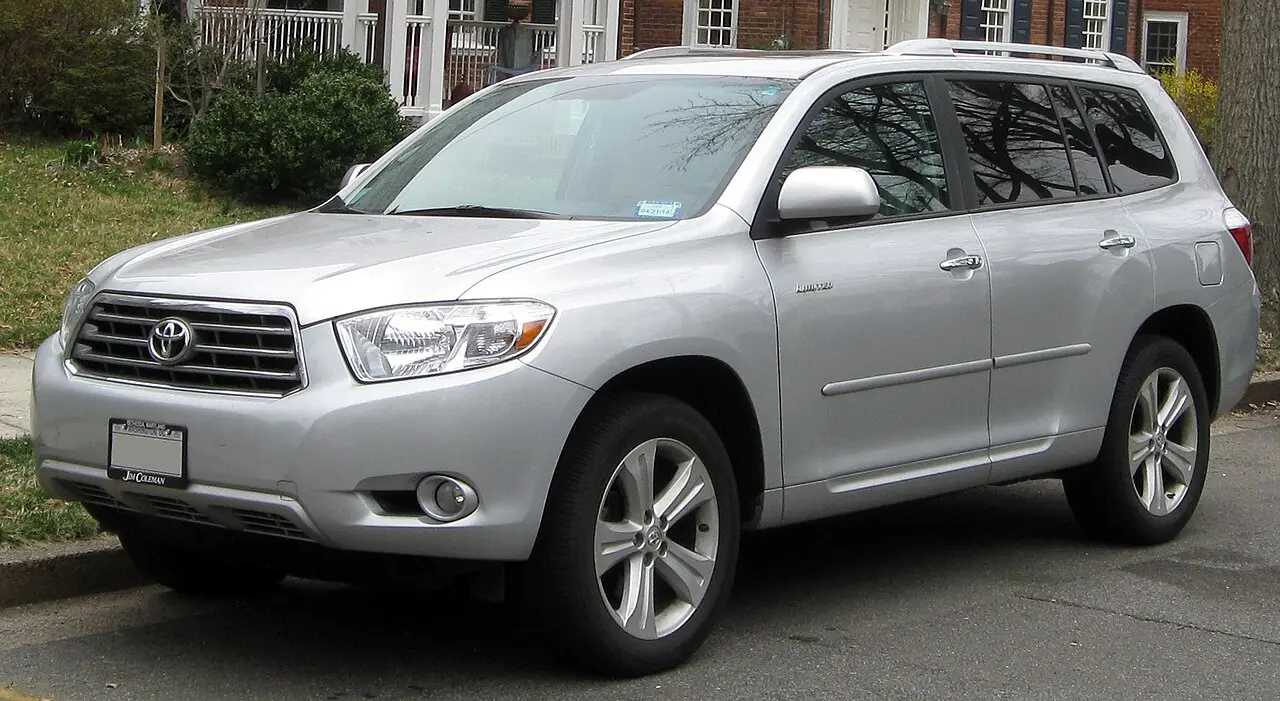
Highlander second generation (2008–2013)

Toyota Highlander second generation
Photo: IFCAR / Wikimedia Commons · Public domain

Model codes: XU40 · Sold in: United States and Canada · References: autoblog.com, en.wikipedia.org

Show all 19 versions

Highlander third generation (2014–2019)

Toyota Highlander third generation
Photo: OSX / Wikimedia Commons · Public domain

Model codes: XU50 · Sold in: United States and Canada · References: en.wikipedia.org

Show all 40 versions

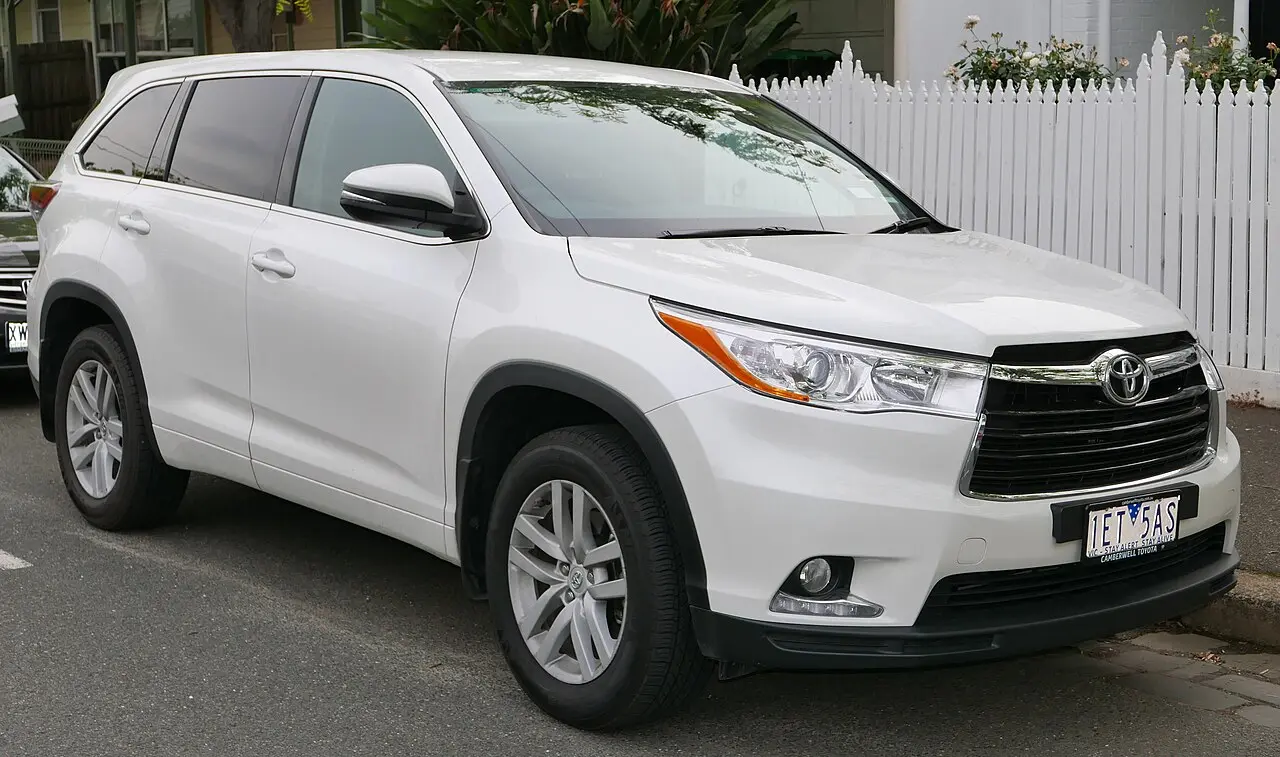
Highlander fourth generation (since 2020)

Toyota Highlander fourth generation
Photo: LuvsMG481 / Wikimedia Commons · CC BY-SA 4.0

Model codes: XU70 · Sold in: United States and Canada · References: en.wikipedia.org, pressroom.toyota.com

Show all 19 versions

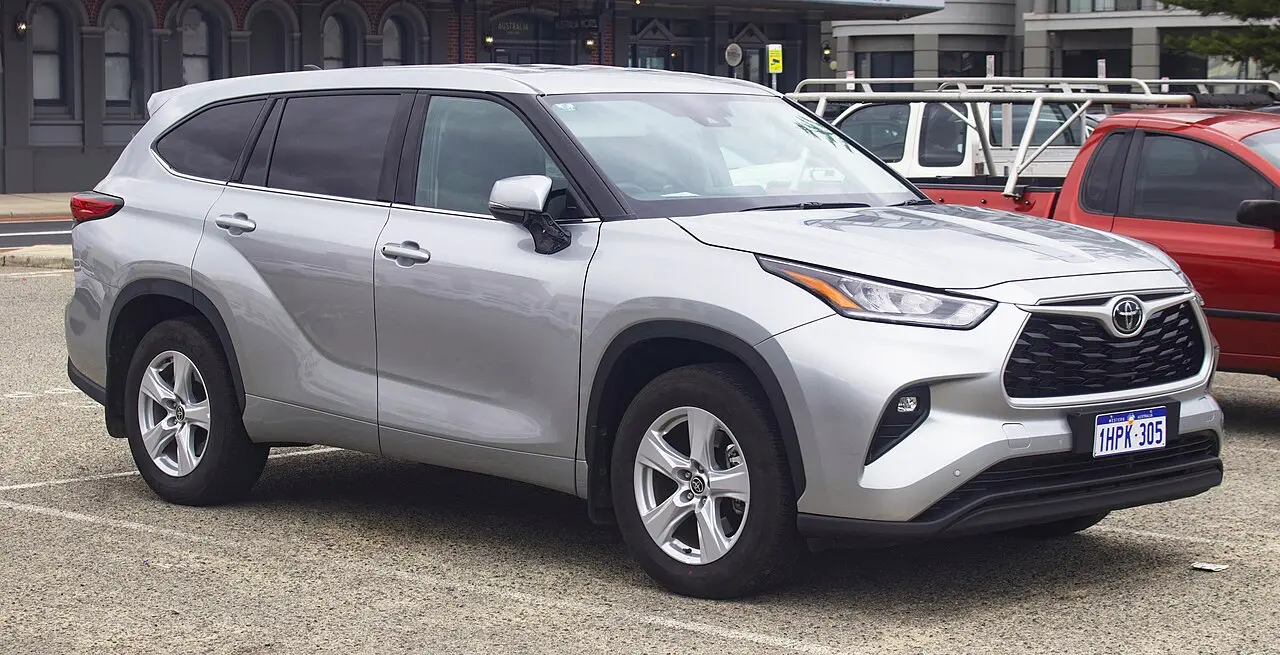
Highlander fourth generation (since 2021)

Toyota Highlander fourth generation
Photo: LuvsMG481 / Wikimedia Commons · CC BY-SA 4.0

Model codes: XU70 · Sold in: European Union and United Kingdom · References: newsroom.toyota.eu

European Union 10 versions

New cars registered in the EU (plus Norway and Iceland), from the European Environment Agency. Figures on the NEDC procedure until 2020 and on WLTP from 2021; versions are grouped by engine and power, with their number of registrations.

Years and versionEnginePowerFuelConsumption (combined)CO₂EU registrations
20252.5 L140 kW (190 PS)Hybrid7.0 L/100 km WLTP158 g/km139
20252.5 L140 kW (190 PS)Plug-in hybrid7.0 L/100 km WLTP159 g/km72
20252.5 L140 kW (190 PS)Petrol7.1 L/100 km WLTP159 g/km32
20242.5 L140 kW (190 PS)Hybrid7.0 L/100 km WLTP158 g/km4,511
20232.5 L140 kW (190 PS)Hybrid7.0 L/100 km WLTP158 g/km1,975
20222.5 L140 kW (190 PS)Petrol6.6 L/100 km WLTP154 g/km2,920
20222.5 L140 kW (190 PS)Hybrid6.9 L/100 km WLTP158 g/km2,702
20222.5 L206 kW (280 PS)Hybrid–159 g/km21
20212.5 L140 kW (190 PS)Hybrid6.7 L/100 km WLTP157 g/km9,925
20212.5 L140 kW (190 PS)Petrol7.0 L/100 km WLTP159 g/km1,068

United Kingdom 7 versions

New cars on sale in the UK, from the Vehicle Certification Agency. NEDC figures until 2018 and WLTP figures after; years are the editions a version appeared in.

Years and versionEnginePowerFuelGearboxConsumption (combined)CO₂
2024Excel 2.5 Hybrid AWD-i2.5 L182 kW (247 PS)HybridContinuously variable (CVT)7.1 L/100 km WLTP160 g/km
2024Excel AWD 2.5L Hybrid Premium Pack2.5 L248 kW (337 PS)HybridContinuously variable (CVT)7.1 L/100 km WLTP159 g/km
2024Excel AWD 2.5L Hybrid2.5 L248 kW (337 PS)HybridContinuously variable (CVT)7.1 L/100 km WLTP160 g/km
2022–2023Excel 2.5 Hybrid AWD-i2.5 L134 kW (182 PS)HybridContinuously variable (CVT)7.1 L/100 km WLTP160 g/km
2022–2023Excel AWD 2.5L Hybrid2.5 L140 kW (190 PS)HybridContinuously variable (CVT)7.1 L/100 km WLTP160 g/km
2022–2023Excel AWD 2.5L Hybrid Premium Pack2.5 L140 kW (190 PS)HybridContinuously variable (CVT)7.1 L/100 km WLTP159 g/km
2021Excel 2.5 Hybrid AWD-i2.5 L134 kW (182 PS)HybridAutomatic7.1 L/100 km WLTP160 g/km

Versions outside these generations

European Union 1 version

New cars registered in the EU (plus Norway and Iceland), from the European Environment Agency. Figures on the NEDC procedure until 2020 and on WLTP from 2021; versions are grouped by engine and power, with their number of registrations.

Years and versionEnginePowerFuelCO₂EU registrations
20202.5 L140 kW (190 PS)Hybrid124 g/km30

United States 12 versions

Model years sold in the USA, from the EPA and the Department of Energy (fueleconomy.gov). MPG on the EPA test; litres per 100 km = 235.215 ÷ MPG.

Years and versionEngineFuelGearboxDriveConsumption (combined)CO₂
2006–2009HEV · HEV, VMODE VLKUP3.3 LHybridContinuously variable (CVT)Four- or all-wheel drive26 MPG (9.0 L/100 km) EPA212 g/km
2001–2007CLKUP2.4 LPetrol4-speed automaticFront-wheel drive22 MPG (10.7 L/100 km) EPA251 g/km
2006–2007CLKUP2.4 LPetrol4-speed automaticFour- or all-wheel drive20 MPG (11.8 L/100 km) EPA276 g/km
2004–2007CLKUP3.3 LPetrol5-speed automaticFront-wheel drive19 MPG (12.4 L/100 km) EPA291 g/km
2004–2007CLKUP3.3 LPetrol5-speed automaticFour- or all-wheel drive19 MPG (12.4 L/100 km) EPA291 g/km
2007HEV3.3 LHybridContinuously variable (CVT)Front-wheel drive26 MPG (9.0 L/100 km) EPA212 g/km
2006HEV3.3 LHybridContinuously variable (CVT)Front-wheel drive27 MPG (8.7 L/100 km) EPA205 g/km
2005CLKUP2.4 LPetrol4-speed automaticFour- or all-wheel drive21 MPG (11.2 L/100 km) EPA263 g/km
2004CLKUP2.4 LPetrol4-speed automaticFour- or all-wheel drive20 MPG (11.8 L/100 km) EPA276 g/km
2001–2003CLKUP2.4 LPetrol4-speed automaticFour- or all-wheel drive19 MPG (12.4 L/100 km) EPA291 g/km
2001–2003CLKUP3.0 LPetrol4-speed automaticFront-wheel drive18 MPG (13.1 L/100 km) EPA307 g/km
2001–2003CLKUP3.0 LPetrol4-speed automaticFour- or all-wheel drive18 MPG (13.1 L/100 km) EPA307 g/km

Canada 9 versions

Model years sold in Canada, from Natural Resources Canada fuel consumption ratings (5-cycle test).

Years and versionEngineFuelGearboxConsumption (combined)CO₂
2007Sport utility vehicle2.4 LPetrol4-speed automatic11.8 L/100 km 5-cycle271 g/km
2004–2007Sport utility vehicle3.3 LPetrol5-speed automatic12.6 L/100 km 5-cycle290 g/km
2007Sport utility vehicle3.3 LPetrolContinuously variable (CVT)9.3 L/100 km 5-cycle214 g/km
2006Sport utility vehicle3.3 LPetrolContinuously variable (CVT)9.1 L/100 km 5-cycle209 g/km
2004–2005Sport utility vehicle2.4 LPetrol4-speed automatic10.8 L/100 km 5-cycle248 g/km
2005Sport utility vehicle2.4 LPetrol4-speed automatic11.6 L/100 km 5-cycle267 g/km
2002–2003Sport utility vehicle2.4 LPetrol4-speed automatic10.9 L/100 km 5-cycle251 g/km
2003Sport utility vehicle2.4 LPetrol4-speed automatic12.1 L/100 km 5-cycle278 g/km
2002–2003Sport utility vehicle3.0 LPetrol4-speed automatic13.2 L/100 km 5-cycle304 g/km

Official figures are measured on standard test procedures and differ between markets. Your consumption depends on how, where and in what conditions you drive.