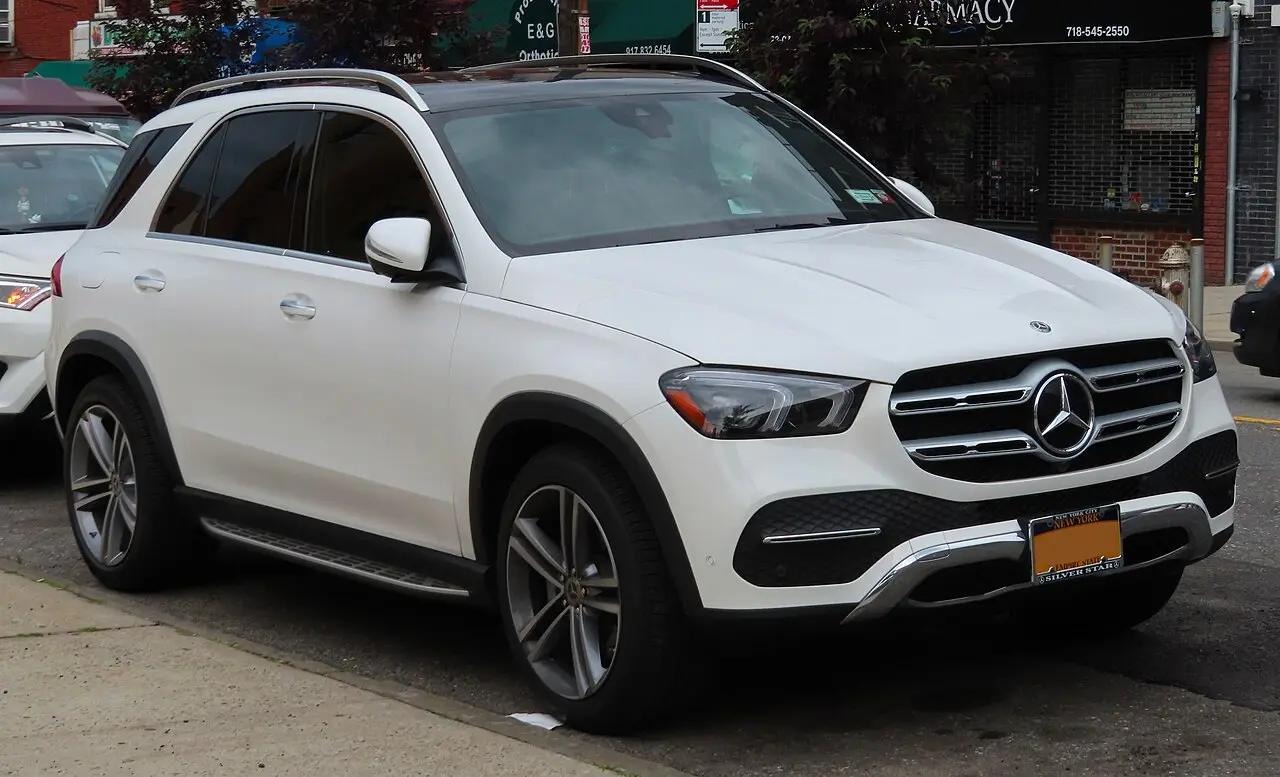
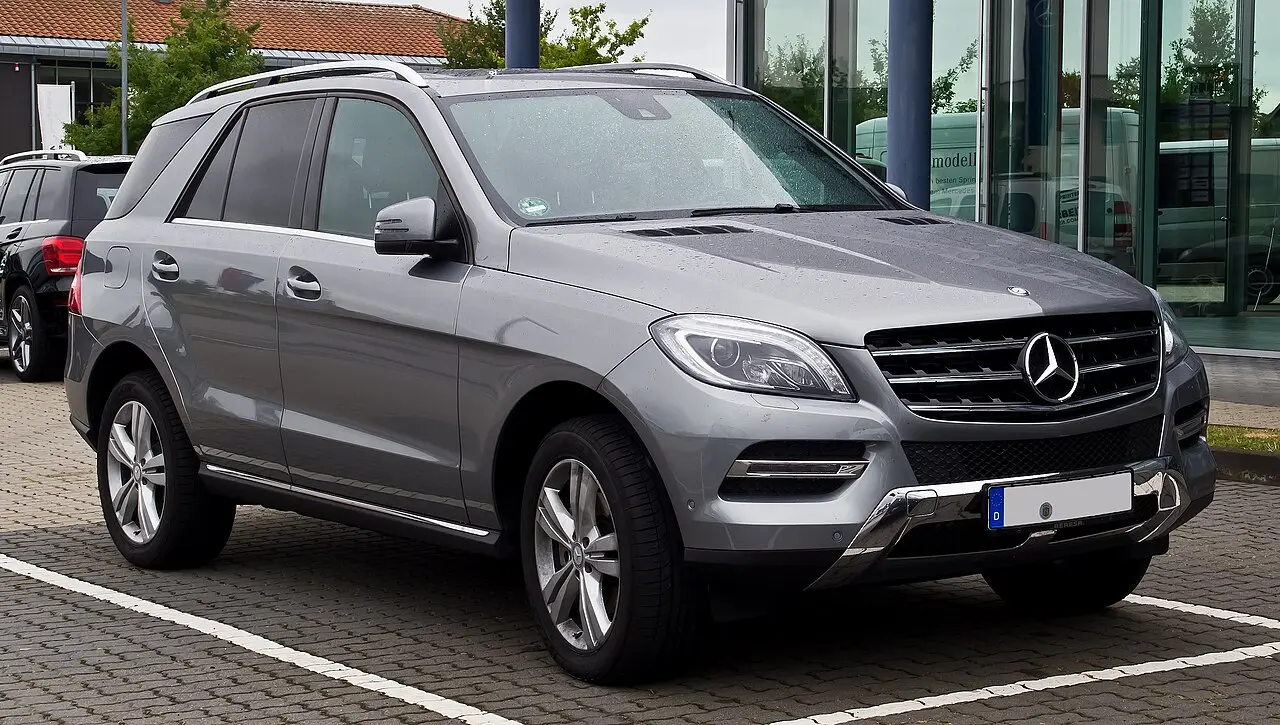
The official data lists 184 versions of the Mercedes-Benz GLE (2015 - 2027), in the European Union, the United Kingdom, the United States, and Canada. Each market publishes its own figures, measured on its own test procedure.
At a glance
Years in the data
2015 - 2027
Markets
European Union, United Kingdom, United States, Canada
The GLE is a mid-size SUV in Mercedes-Benz’s range, with a coupé-style body also available. It suits drivers who want a raised driving position and a roomy cabin. The model family began as the M-Class, which helped establish Mercedes-Benz’s SUV line-up.
The M-Class arrived in 1997. Mercedes-Benz adopted the GLE name in 2015 to show its place in the SUV range associated with the E-Class. The GLE continues that role with both SUV and coupé body styles.
GLE generations
The third-generation GLE, with W166 SUV and C292 coupé codes, ran from 2015 to 2019. It was the first generation to use the GLE name after the M-Class transition.
The fourth generation, W167/C167, began in 2019. It brought a newer cabin and MBUX multimedia system, while retaining SUV and coupé formats.
Engines, power and fuel consumption
The GLE range spans petrol, diesel, hybrid and plug-in hybrid power. In EU figures from 2015 to 2025, engines range from 1.9 to 5.5 litres, with power from 143 kW (194 PS) to 450 kW (612 PS). UK versions reach 450 kW (612 PS).
The lowest EU figure for petrol, diesel and hybrid versions is 6.2 L/100 km on WLTP. For EU plug-in hybrids, the weighted figure is 0.8 L/100 km; it assumes some driving is electric. European WLTP and NEDC, the US EPA and Canada’s 5-cycle test use different procedures, so figures are best read within each market.
Where was the GLE sold?
The GLE appears in EU figures from 2015 to 2025, UK figures from 2016 to 2026, US figures from 2016 to 2027, and Canadian figures from 2016 to 2026. EU registrations total 580,614. Among the leading EU versions were 3.0-litre diesels rated at 190 kW (258 PS), as well as plug-in hybrids.
Questions and answers
Was the GLE previously called the M-Class?
Yes. The model family began as the M-Class, and Mercedes-Benz adopted the GLE name in 2015.
What are the GLE generation years?
The third generation ran from 2015 to 2019; the fourth began in 2019.
What is the lowest GLE consumption figure?
The EU WLTP low is 6.2 L/100 km for petrol, diesel and hybrid versions; the plug-in hybrid weighted figure is 0.8 L/100 km.
Which markets have official GLE figures?
The figures cover the EU, UK, US and Canada, with different year ranges for each market.
At a glance: Length 4,850 - 4,920 mm · Kerb weight 2,050 - 2,365 kg · Top speed 225 - 280 km/h · MOT first-time pass at 6 - 8 years: 90.4% (UK average 86.4%) Specifications, reliability and all versions
At a glance: Length 4,950 - 4,960 mm · Kerb weight 2,120 - 2,700 kg · Top speed 210 - 250 km/h · MOT first-time pass at 3 years: 91.3% (UK average 92.2%) Specifications, reliability and all versions
Show all 132 versions
European Union 77 versions
New cars registered in the EU (plus Norway and Iceland), from the European Environment Agency. Figures on the NEDC procedure until 2020 and on WLTP from 2021; versions are grouped by engine and power, with their number of registrations.
Years and version
Engine
Power
Fuel
Consumption (combined)
CO₂
Electric range
EU registrations
2023 - 2025
2.0 L
145 kW (197 PS) (engine only)
Plug-in hybrid
0.8 - 1.1 L/100 km WLTP25.7 - 26.6 kWh/100 km WLTP
20 - 27 g/km
96 - 102 km
22,514
2023 - 2025
3.0 L
270 kW (367 PS)
Hybrid
8.0 - 8.1 L/100 km WLTP
209 - 213 g/km
-
14,518
2021 - 2025
3.0 L
320 kW (435 PS)
Hybrid
10.4 - 10.7 L/100 km WLTP
238 - 246 g/km
-
12,857
2023 - 2025
2.0 L
198 kW (269 PS)
Hybrid
7.0 - 7.2 L/100 km WLTP
184 - 188 g/km
-
10,539
2023 - 2025
2.0 L
185 kW (252 PS) (engine only)
Plug-in hybrid
1.0 - 1.5 L/100 km WLTP25.6 - 26.5 kWh/100 km WLTP
22 - 33 g/km
97 - 102 km
8,522
2021 - 2025
4.0 L
450 kW (612 PS)
Hybrid
12.3 - 12.7 L/100 km WLTP
282 - 291 g/km
-
6,432
2024 - 2025
3.0 L
330 kW (449 PS) (engine only)
Plug-in hybrid
1.4 L/100 km WLTP29.6 - 30.3 kWh/100 km WLTP
33 - 38 g/km
83 - 84 km
4,525
2025
3.0 L
330 kW (449 PS) (engine only)
Plug-in hybrid
2.1 L/100 km WLTP29.1 kWh/100 km WLTP
49 g/km
89 km
3,327
2023 - 2025
3.0 L
280 kW (381 PS)
Hybrid
10.1 - 10.2 L/100 km WLTP
234 - 236 g/km
-
1,484
2021 - 2025
2.0 L
200 kW (272 PS)
Diesel
6.2 - 6.9 L/100 km WLTP
162 - 182 g/km
-
1,335
2025
3.0 L
320 kW (435 PS)
Hybrid
10.5 L/100 km WLTP
239 g/km
-
969
2025
3.0 L
270 kW (367 PS)
Diesel
7.8 L/100 km WLTP
204 g/km
-
419
2025
3.0 L
280 kW (381 PS)
Hybrid
10.2 L/100 km WLTP
231 g/km
-
395
2025
2.0 L
198 kW (269 PS)
Diesel
7.0 L/100 km WLTP
183 g/km
-
390
2023 - 2025
4.0 L
380 kW (517 PS)
Hybrid
12.7 - 12.9 L/100 km WLTP
291 - 293 g/km
-
364
2025
3.0 L
270 kW (367 PS)
Hybrid
7.9 L/100 km WLTP
207 g/km
-
188
2020 - 2025
2.0 L
190 kW (258 PS)
Hybrid
-
240 - 302 g/km
-
148
2021 - 2025
4.0 L
450 kW (612 PS)
Petrol
11.9 - 12.3 L/100 km WLTP
278 - 280 g/km
-
147
2025
3.0 L
320 kW (435 PS)
Hybrid
10.4 L/100 km WLTP
237 g/km
-
137
2022 - 2025
3.0 L
300 kW (408 PS) (engine only)
Plug-in hybrid
-
27 - 245 g/km
84 km
113
2025
3.0 L
320 kW (435 PS)
Hybrid
10.4 L/100 km WLTP
237 g/km
-
93
2025
3.0 L
Not listed
Petrol
-
231 g/km
-
76
2025
2.0 L
198 kW (269 PS)
Hybrid
6.9 L/100 km WLTP
182 g/km
-
56
2025
3.0 L
330 kW (449 PS)
Petrol
-
-
-
26
2025
3.0 L
280 kW (381 PS)
Hybrid
9.9 L/100 km WLTP
226 g/km
-
18
2025
3.0 L
280 kW (381 PS)
Hybrid
10.1 L/100 km WLTP
231 g/km
-
15
2021 - 2024
2.0 L
143 kW (194 PS) (engine only)
Plug-in hybrid
0.8 - 0.9 L/100 km WLTP27.0 - 32.8 kWh/100 km WLTP
22 - 24 g/km
89 - 92 km
59,336
2021 - 2024
2.9 L
243 kW (330 PS)
Diesel
8.0 - 8.3 L/100 km WLTP
213 - 218 g/km
-
22,247
2021 - 2024
2.9 L
200 kW (272 PS)
Diesel
7.8 - 9.9 L/100 km WLTP
209 - 254 g/km
-
11,588
2022 - 2024
2.0 L
200 kW (272 PS)
Hybrid
6.9 - 7.0 L/100 km WLTP
181 - 185 g/km
-
7,822
2021 - 2024
2.0 L
180 kW (245 PS)
Diesel
6.9 - 9.9 L/100 km WLTP
201 - 227 g/km
-
7,068
2022 - 2024
2.0 L
155 kW (211 PS) (engine only)
Plug-in hybrid
1.1 - 1.2 L/100 km WLTP27.9 - 29.0 kWh/100 km WLTP
26 g/km
88 - 92 km
6,124
2021 - 2024
3.0 L
270 kW (367 PS)
Hybrid
9.7 - 9.9 L/100 km WLTP
224 - 236 g/km
-
3,947
2024
3.0 L
330 kW (449 PS)
Hybrid
-
233 g/km
-
13
2021 - 2023
4.0 L
360 kW (489 PS)
Hybrid
11.6 - 11.7 L/100 km WLTP
266 - 267 g/km
-
889
2021 - 2023
4.0 L
420 kW (571 PS)
Hybrid
12.3 - 12.4 L/100 km WLTP
281 - 282 g/km
-
377
2023
3.0 L
300 kW (408 PS) (engine only)
Plug-in hybrid
28.6 kWh/100 km WLTP
31 g/km
-
30
2023
2.9 L
200 kW (272 PS)
Diesel
-
253 g/km
-
22
2021 - 2022
2.0 L
143 kW (194 PS)
Diesel
28.7 - 33.1 kWh/100 km WLTP
155 - 194 g/km
-
406
2020 - 2022
2.0 L
200 kW (272 PS)
Hybrid
-
48 - 72 g/km
-
170
2022
2.0 L
155 kW (211 PS)
Hybrid
-
140 g/km
-
112
2021 - 2022
3.0 L
280 kW (381 PS)
Hybrid
-
252 - 253 g/km
-
102
2021 - 2022
3.0 L
272 kW (370 PS)
Hybrid
-
225 g/km
-
42
2022
2.0 L
206 kW (280 PS)
Hybrid
-
182 g/km
-
32
2022
4.0 L
420 kW (571 PS)
Petrol
12.0 L/100 km WLTP
277 g/km
-
16
2022
2.0 L
249 kW (339 PS)
Hybrid
-
32 g/km
-
13
2022
2.9 L
206 kW (280 PS)
Diesel
-
211 g/km
-
12
2021
2.0 L
155 kW (211 PS) (engine only)
Plug-in hybrid
1.1 L/100 km WLTP31.7 kWh/100 km NEDC
36 g/km
95 km
8,039
2021
2.0 L
143 kW (194 PS)
Hybrid
0.9 L/100 km WLTP31.7 kWh/100 km WLTP
23 g/km
90 km
974
2021
3.0 L
320 kW (435 PS)
Petrol
10.1 L/100 km WLTP
241 g/km
-
347
2021
3.0 L
270 kW (367 PS)
Petrol
9.5 L/100 km WLTP
224 g/km
-
253
2021
2.0 L
200 kW (272 PS)
Hybrid
6.7 L/100 km WLTP28.6 kWh/100 km WLTP
184 g/km
-
231
2021
2.0 L
155 kW (211 PS)
Hybrid
1.1 L/100 km WLTP30.9 kWh/100 km WLTP
25 g/km
90 km
203
2020 - 2021
3.0 L
274 kW (373 PS)
Hybrid
-
225 g/km
-
82
2021
4.0 L
360 kW (489 PS)
Petrol
11.6 L/100 km WLTP
267 g/km
-
27
2021
2.0 L
250 kW (340 PS)
Hybrid
-
32 g/km
-
12
2021
2.0 L
195 kW (265 PS)
Hybrid
-
213 g/km
-
10
2020
2.9 L
200 kW (272 PS)
Diesel
-
187 g/km
-
19,270
2020
2.0 L
180 kW (245 PS)
Diesel
-
164 g/km
-
18,596
2020
2.0 L
143 kW (194 PS) (engine only)
Plug-in hybrid
34.1 kWh/100 km NEDC
32 g/km
93 km
17,762
2020
2.9 L
243 kW (330 PS)
Diesel
-
191 g/km
-
13,107
2020
3.0 L
270 kW (367 PS)
Hybrid
-
196 g/km
-
6,753
2020
3.0 L
320 kW (435 PS)
Hybrid
-
212 g/km
-
4,663
2020
3.0 L
270 kW (367 PS)
Petrol
-
192 g/km
-
1,200
2020
3.0 L
190 kW (258 PS)
Diesel
-
205 g/km
-
1,160
2020
4.0 L
450 kW (612 PS)
Hybrid
-
263 g/km
-
635
2020
4.0 L
360 kW (489 PS)
Hybrid
-
228 g/km
-
482
2020
2.0 L
155 kW (211 PS) (engine only)
Plug-in hybrid
31.2 kWh/100 km NEDC
33 g/km
103 km
372
2020
2.0 L
143 kW (194 PS)
Diesel
-
289 g/km
-
351
2020
3.0 L
320 kW (435 PS)
Petrol
-
215 g/km
-
238
2020
4.0 L
420 kW (571 PS)
Hybrid
-
265 g/km
-
90
2020
5.5 L
430 kW (585 PS)
Petrol
-
320 g/km
-
44
2020
3.0 L
287 kW (390 PS)
Petrol
-
239 g/km
-
42
2020
2.0 L
Not listed
Plug-in hybrid
27.4 kWh/100 km NEDC
32 g/km
88 km
34
2020
2.0 L
143 kW (194 PS)
Hybrid
-
32 g/km
-
30
2020
4.0 L
360 kW (489 PS)
Petrol
-
231 g/km
-
28
2020
4.0 L
450 kW (612 PS)
Petrol
-
282 g/km
-
21
United Kingdom 40 versions
New cars on sale in the UK, from the Vehicle Certification Agency. NEDC figures until 2018 and WLTP figures after; years are the editions a version appeared in.
Years and version
Engine
Power
Fuel
Gearbox
Consumption (combined)
CO₂
Electric range
2023 - 2026GLE 300 d 4MATIC
2.0 L
198 kW (269 PS)
Hybrid
9-speed automatic
6.6 - 7.8 L/100 km WLTP
172 - 205 g/km
-
2024 - 2026GLE 350 de 4MATIC
2.0 L
245 kW (333 PS)
Plug-in hybrid
9-speed automatic
18.9 - 28.5 kWh/100 km WLTP
-
86 - 112 km
2023 - 2026GLE 400 e 4MATIC
2.0 L
280 kW (381 PS)
Plug-in hybrid
9-speed automatic
18.8 - 29.1 kWh/100 km WLTP
-
86 - 113 km
2026GLE 350 d 4MATIC
3.0 L
210 kW (286 PS)
Hybrid
9-speed automatic
7.4 - 8.3 L/100 km WLTP
195 - 216 g/km
-
2024 - 2026GLE 450 d 4MATIC Coupé · GLE 450 d 4MATIC
Model years sold in the USA, from the EPA and the Department of Energy (fueleconomy.gov). MPG on the EPA test; litres per 100 km = 235.215 ÷ MPG.
Years and version
Engine
Fuel
Gearbox
Drive
Consumption (combined)
CO₂
2024 - 2027SIDI; Mild Hybrid
2.0 L
Hybrid
9-speed automatic
All-wheel drive
22 - 23 MPG (10.2 - 10.7 L/100 km) EPA
235 - 255 g/km
2022 - 2027SIDI; Mild Hybrid
3.0 L
Hybrid
9-speed automatic
All-wheel drive
19 - 22 MPG (10.7 - 12.4 L/100 km) EPA
245 - 293 g/km
2024 - 2026SIDI; Mild Hybrid
2.0 L
Hybrid
9-speed automatic
Rear-wheel drive
23 - 24 MPG (9.8 - 10.2 L/100 km) EPA
229 - 237 g/km
2022 - 2026SIDI; Mild Hybrid
4.0 L
Hybrid
9-speed automatic
All-wheel drive
16 - 18 MPG (13.1 - 14.7 L/100 km) EPA
306 - 344 g/km
2025SIDI; PHEV
2.0 L
Plug-in hybrid
9-speed automatic
All-wheel drive
23 MPG (10.2 L/100 km) EPA
62 g/km
2020 - 2023SIDI
2.0 L
Petrol
9-speed automatic
Rear-wheel drive
22 MPG (10.7 L/100 km) EPA
247 - 250 g/km
2023SIDI
2.0 L
Petrol
9-speed automatic
All-wheel drive
21 MPG (11.2 L/100 km) EPA
257 g/km
2020 - 2022SIDI
2.0 L
Petrol
9-speed automatic
Four-wheel drive
22 MPG (10.7 L/100 km) EPA
250 - 254 g/km
2020 - 2022SIDI; Mild Hybrid
3.0 L
Hybrid
9-speed automatic
Four-wheel drive
19 - 23 MPG (10.2 - 12.4 L/100 km) EPA
244 - 292 g/km
2022Mild Hybrid; Gas Particulate Filter
3.0 L
Hybrid
9-speed automatic
All-wheel drive
22 MPG (10.7 L/100 km) EPA
245 g/km
2020 - 2021SIDI; Mild Hybrid
4.0 L
Hybrid
9-speed automatic
Four-wheel drive
16 - 19 MPG (12.4 - 14.7 L/100 km) EPA
289 - 336 g/km
Canada 4 versions
Model years sold in Canada, from Natural Resources Canada fuel consumption ratings (5-cycle test).
Years and version
Engine
Fuel
Gearbox
Consumption (combined)
CO₂
Electric range
2024 - 2026Sport utility vehicle: Standard
2.0 L
Plug-in hybrid
9-speed automatic
9.9 - 10.6 L/100 km 5-cycle
62 - 66 g/km
77 - 80 km
2020 - 2026Sport utility vehicle: Standard
2.0 L
Petrol
9-speed automatic
10.2 - 11.0 L/100 km 5-cycle
238 - 257 g/km
-
2020 - 2026Sport utility vehicle: Standard
3.0 L
Petrol
9-speed automatic
10.4 - 12.5 L/100 km 5-cycle
244 - 292 g/km
-
2021 - 2026Sport utility vehicle: Standard
4.0 L
Petrol
9-speed automatic
13.4 - 15.2 L/100 km 5-cycle
314 - 355 g/km
-
Versions outside these generations
Show all 26 versions
European Union 22 versions
New cars registered in the EU (plus Norway and Iceland), from the European Environment Agency. Figures on the NEDC procedure until 2020 and on WLTP from 2021; versions are grouped by engine and power, with their number of registrations.
Years and version
Engine
Power
Fuel
Consumption (combined)
CO₂
EU registrations
2019
2.0 L
180 kW (245 PS)
Diesel
-
163 g/km
14,282
2019
3.0 L
190 kW (258 PS)
Diesel
-
200 g/km
10,998
2019
2.9 L
200 kW (272 PS)
Diesel
-
188 g/km
9,840
2019
2.9 L
243 kW (330 PS)
Diesel
-
191 g/km
5,336
2019
3.0 L
270 kW (367 PS)
Petrol
-
197 g/km
5,135
2019
3.0 L
270 kW (367 PS)
Hybrid
1.0 kWh/100 km NEDC
197 g/km
1,885
2019
3.0 L
287 kW (390 PS)
Petrol
-
237 g/km
1,522
2019
2.1 L
150 kW (204 PS)
Diesel
-
156 g/km
724
2019
5.5 L
430 kW (585 PS)
Petrol
-
313 g/km
502
2019
3.0 L
245 kW (333 PS)
Petrol
-
238 g/km
398
2019
3.0 L
320 kW (435 PS)
Petrol
-
229 g/km
88
2019
2.0 L
143 kW (194 PS)
Hybrid
-
28 g/km
84
2019
5.5 L
410 kW (557 PS)
Petrol
-
316 g/km
79
2019
4.7 L
335 kW (455 PS)
Petrol
-
251 g/km
64
2019
3.0 L
245 kW (333 PS) (engine only)
Plug-in hybrid
18.0 kWh/100 km NEDC
81 g/km
61
2019
4.0 L
360 kW (489 PS)
Petrol
-
265 g/km
34
2019
2.9 L
250 kW (340 PS)
Diesel
-
262 g/km
28
2019
3.0 L
320 kW (435 PS)
Hybrid
-
212 g/km
26
2019
2.0 L
155 kW (211 PS)
Hybrid
-
65 g/km
24
2019
2.0 L
190 kW (258 PS)
Petrol
-
251 g/km
16
2019
4.0 L
450 kW (612 PS)
Petrol
-
302 g/km
16
2019
2.0 L
200 kW (272 PS)
Diesel
-
214 g/km
14
United States 2 versions
Model years sold in the USA, from the EPA and the Department of Energy (fueleconomy.gov). MPG on the EPA test; litres per 100 km = 235.215 ÷ MPG.
Years and version
Engine
Fuel
Gearbox
Drive
Consumption (combined)
CO₂
2019SIDI
3.0 L
Petrol
9-speed automatic
Four-wheel drive
19 - 20 MPG (11.8 - 12.4 L/100 km) EPA
281 - 297 g/km
2019SIDI
5.5 L
Petrol
7-speed automatic
Four-wheel drive
14 - 15 MPG (15.7 - 16.8 L/100 km) EPA
359 - 393 g/km
Canada 2 versions
Model years sold in Canada, from Natural Resources Canada fuel consumption ratings (5-cycle test).
Years and version
Engine
Fuel
Gearbox
Consumption (combined)
CO₂
2019Sport utility vehicle: Standard
3.0 L
Petrol
9-speed automatic
12.4 - 12.6 L/100 km 5-cycle
292 - 297 g/km
2019Sport utility vehicle: Standard
4.7 L
Petrol
7-speed automatic
15.2 - 15.8 L/100 km 5-cycle
357 - 370 g/km
Mercedes-Benz GLE recalls
137 official safety recalls for the Mercedes-Benz GLE from NHTSA (United States), DVSA (United Kingdom) and the EU Safety Gate, newest first. Recall repairs are normally free at the maker’s dealers.
Firewall heat shield may be incorrectly installed2022 - 2025
Rear seat belt bolts may not meet specifications2026
Rear seat belt bolts may be loose2026
Passenger air bag may not deploy as intended2025 - 2026
Rear seat belt may not secure a child restraint2025 - 2026
Official figures are measured on standard test procedures and differ between markets. Your consumption depends on how, where and in what conditions you drive.