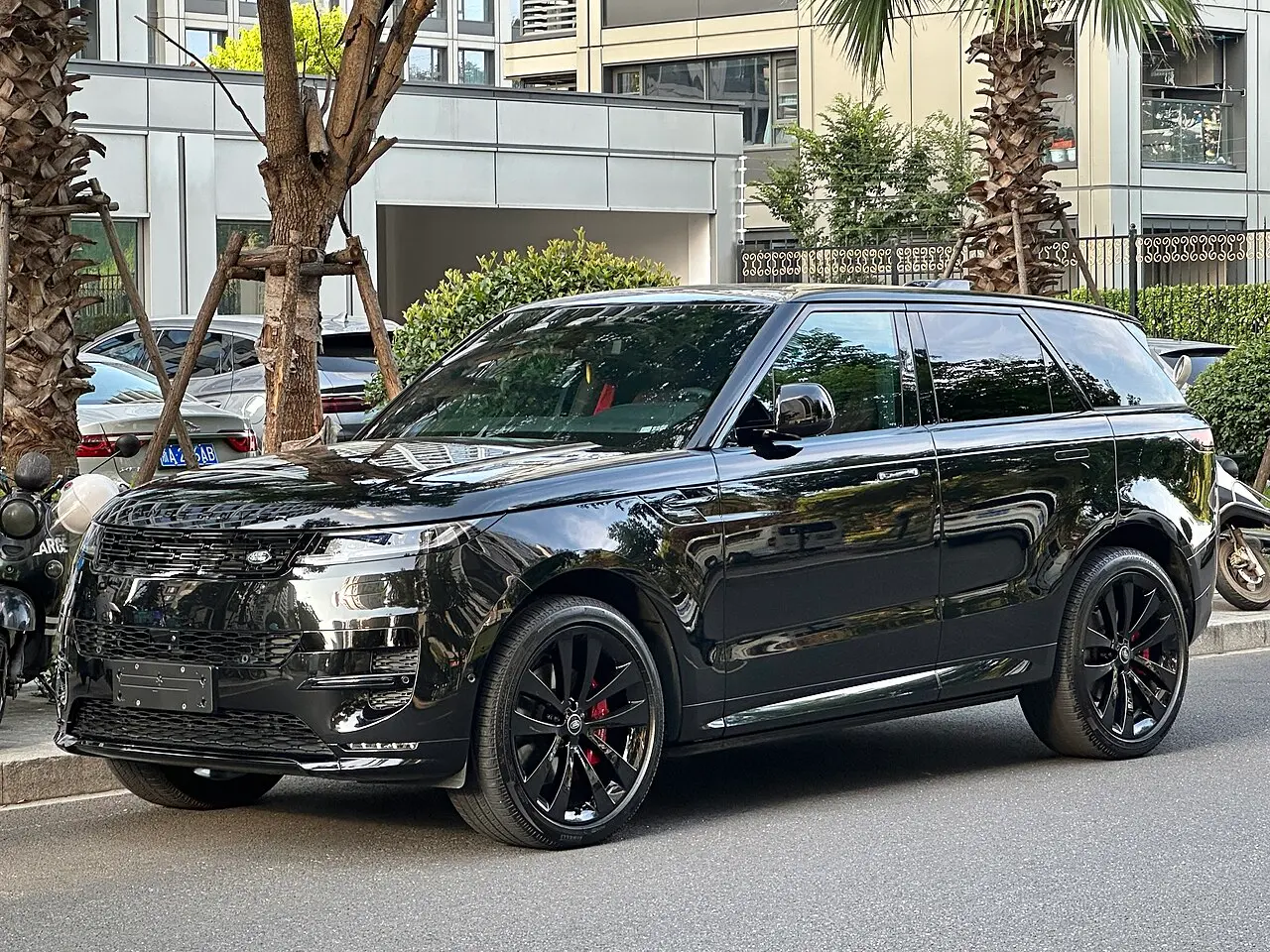
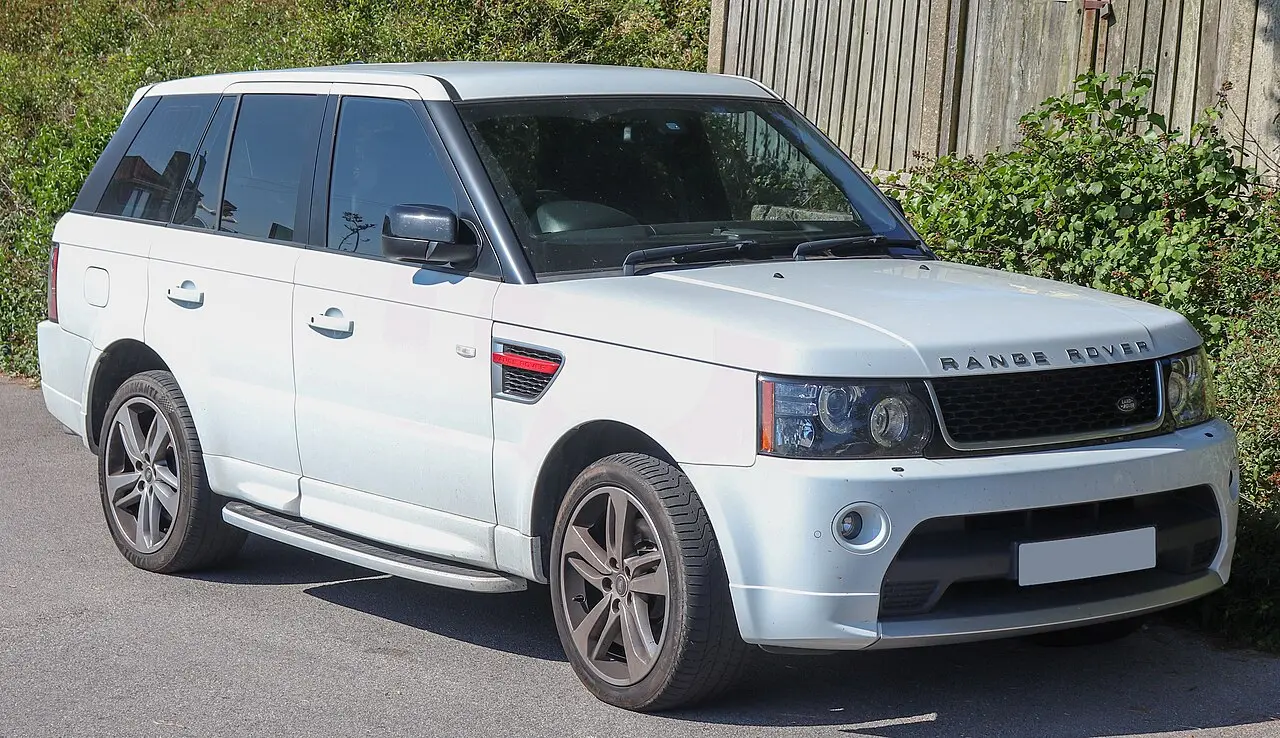
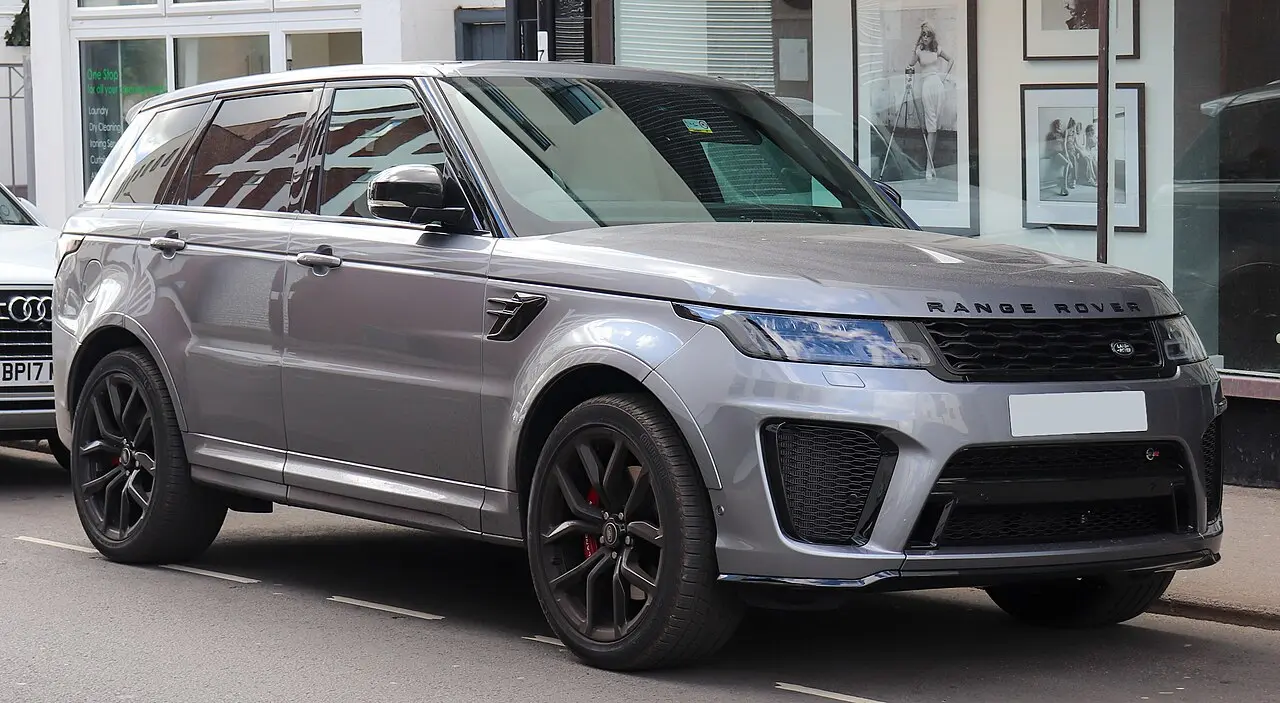
The official data lists 361 versions of the Land Rover Range Rover Sport (2006–2027), in the European Union, the United Kingdom, France, the United States, and Canada. Each market publishes its own figures, measured on its own test procedure.
At a glance
Years in the data
2006–2027
Markets
European Union, United Kingdom, France, United States, Canada
The Range Rover Sport is the more dynamically styled SUV in the Range Rover family. It brings the family’s focus on refinement and all-terrain ability to a model with a sportier character.
The first generation ran from 2006 to 2013, the second from 2014 to 2022, and the third from 2023 onward. Across those generations, the Sport has kept its place as the more performance-oriented member of the Range Rover line-up.
Engines and power
In EU registrations, engine sizes range from 2.0 to 5.0 litres, with power from 48 kW (65 PS) to 423 kW (575 PS). The range has included petrol, diesel, hybrid and plug-in hybrid versions, as well as electric and other fuel classifications. A 3.0-litre diesel rated at 190 kW (258 PS) was among the most registered versions in several years.
US figures cover engines from 2.0 to 5.0 litres; Canadian figures cover 3.0- to 5.0-litre engines. Both markets include petrol, diesel and plug-in hybrid versions, among other fuel types.
How economical is the Range Rover Sport?
The lowest EU figure for petrol, diesel and hybrid versions is 7.4 L/100 km on WLTP. The plug-in hybrid weighted figure is 0.8 L/100 km, assuming some driving is electric. In the UK, the lowest listed figure is 2.8 L/100 km on NEDC; France’s lowest listed figure is 6.4 L/100 km, also on NEDC.
The lowest US EPA figure is 9.8 L/100 km, or 24 MPG combined. The plug-in hybrid weighted EPA figure is 11.2 L/100 km. In Canada, the lowest 5-cycle figure is 9.4 L/100 km for other listed powertrains and 11 L/100 km for plug-in hybrids. WLTP and NEDC in Europe, EPA in the US and Canada’s 5-cycle test use different procedures, so results are best read within each market.
Where was the Range Rover Sport sold?
Official figures are available for the European Union, the UK, France, the United States and Canada. EU registrations span 2010–2025 and total 468,575 cars. The 3.0-litre diesel rated at 190 kW (258 PS) was among the leading versions in several years.
Questions and answers
What are the Range Rover Sport generations?
The generations ran from 2006 to 2013, 2014 to 2022, and 2023 onward.
How powerful are the EU-listed versions?
Their outputs range from 48 kW (65 PS) to 423 kW (575 PS).
What is the lowest EU plug-in hybrid figure?
It is 0.8 L/100 km on WLTP, a weighted figure that assumes some driving is electric.
New cars registered in the EU (plus Norway and Iceland), from the European Environment Agency. Figures on the NEDC procedure until 2020 and on WLTP from 2021; versions are grouped by engine and power, with their number of registrations.
Years and version
Engine
Power
Fuel
Consumption (combined)
CO₂
Electric range
EU registrations
2025
3.0 L
294 kW (400 PS)
Plug-in hybrid
1.2 L/100 km WLTP28.5 kWh/100 km WLTP
21 g/km
118 km
7,355
2025
3.0 L
183 kW (249 PS)
Hybrid
7.4 L/100 km WLTP
193 g/km
–
2,159
2025
3.0 L
221 kW (300 PS)
Hybrid
7.4 L/100 km WLTP
195 g/km
–
1,041
2025
3.0 L
258 kW (351 PS)
Hybrid
7.5 L/100 km WLTP
197 g/km
–
639
2025
4.4 L
390 kW (530 PS)
Hybrid
11.5 L/100 km WLTP
261 g/km
–
431
2025
3.0 L
221 kW (300 PS)
Diesel
7.4 L/100 km WLTP
195 g/km
–
301
2025
4.4 L
467 kW (635 PS)
Hybrid
12.1 L/100 km WLTP
275 g/km
–
257
2025
3.0 L
294 kW (400 PS)
Hybrid
9.9 L/100 km WLTP
223 g/km
–
170
2025
3.0 L
221 kW (300 PS)
Plug-in hybrid
7.4 L/100 km WLTP
194 g/km
–
82
2025
3.0 L
183 kW (249 PS)
Diesel
7.4 L/100 km WLTP
193 g/km
–
17
2025
3.0 L
258 kW (351 PS)
Plug-in hybrid
7.5 L/100 km WLTP
197 g/km
–
15
2025
4.4 L
390 kW (530 PS)
Petrol
11.5 L/100 km WLTP
263 g/km
–
14
2024
3.0 L
294 kW (400 PS)
Plug-in hybrid
0.8 L/100 km WLTP28.4 kWh/100 km WLTP
17 g/km
116 km
10,370
2024
3.0 L
183 kW (249 PS)
Hybrid
7.5 L/100 km WLTP
197 g/km
–
2,128
2024
3.0 L
221 kW (300 PS)
Hybrid
7.6 L/100 km WLTP
199 g/km
–
1,549
2024
3.0 L
258 kW (351 PS)
Hybrid
7.7 L/100 km WLTP
202 g/km
–
807
2023–2024
4.4 L
467 kW (635 PS)
Hybrid
12.0 L/100 km WLTP
273 g/km
–
453
2024
3.0 L
294 kW (400 PS)
Hybrid
9.6 L/100 km WLTP
218 g/km
–
131
2024
4.4 L
390 kW (530 PS)
Hybrid
11.2 L/100 km WLTP
255 g/km
–
19
2024
3.0 L
294 kW (400 PS)
Plug-in hybrid
0.8 L/100 km WLTP28.3 kWh/100 km WLTP
17 g/km
115 km
14
2023
3.0 L
294 kW (400 PS)
Plug-in hybrid
0.9 L/100 km WLTP28.9 kWh/100 km WLTP
19 g/km
112 km
7,259
2023
3.0 L
183 kW (249 PS)
Hybrid
7.7 L/100 km WLTP
201 g/km
–
2,243
2023
3.0 L
221 kW (300 PS)
Hybrid
7.7 L/100 km WLTP
202 g/km
–
1,477
2023
3.0 L
258 kW (351 PS)
Hybrid
7.8 L/100 km WLTP
204 g/km
–
980
2023
4.4 L
390 kW (530 PS)
Petrol
11.5 L/100 km WLTP
262 g/km
–
202
2023
3.0 L
294 kW (400 PS)
Hybrid
9.7 L/100 km WLTP
220 g/km
–
132
2023
3.0 L
105 kW (143 PS)
Plug-in hybrid
0.9 L/100 km WLTP29.1 kWh/100 km WLTP
19 g/km
112 km
31
2023
3.0 L
67 kW (91 PS)
Hybrid
7.8 L/100 km WLTP
203 g/km
–
15
2023
5.0 L
423 kW (575 PS)
Petrol
14.7 L/100 km WLTP
316 g/km
–
15
2023
3.0 L
160 kW (218 PS)
Plug-in hybrid
0.7 L/100 km WLTP28.0 kWh/100 km WLTP
17 g/km
117 km
14
United Kingdom 3 versions
New cars on sale in the UK, from the Vehicle Certification Agency. NEDC figures until 2018 and WLTP figures after; years are the editions a version appeared in.
Years and version
Engine
Power
Fuel
Gearbox
Consumption (combined)
CO₂
20243.0 i6 Petrol 400PS AWD Auto 5-seat
3.0 L
400 kW (544 PS)
Petrol
8-speed automatic
10.3 L/100 km WLTP
234 g/km
20243.0 i6 Petrol 400PS AWD Auto 7-seat
3.0 L
400 kW (544 PS)
Petrol
8-speed automatic
10.4 L/100 km WLTP
236 g/km
20243.0 i6 Petrol 400PS AWD Auto 7-seat · 3.0 i6 Petrol 400PS AWD Auto 5-seat
3.0 L
400 kW (544 PS)
Petrol
8-speed automatic
11.4 L/100 km WLTP
258 g/km
United States 8 versions
Model years sold in the USA, from the EPA and the Department of Energy (fueleconomy.gov). MPG on the EPA test; litres per 100 km = 235.215 ÷ MPG.
Years and version
Engine
Fuel
Gearbox
Drive
Consumption (combined)
CO₂
2026–2027SIDI; Mild Hybrid
3.0 L
Hybrid
8-speed automatic
Four-wheel drive
22 MPG (10.7 L/100 km) EPA
252 g/km
2024–2027SIDI; Mild Hybrid
4.4 L
Hybrid
8-speed automatic
Four-wheel drive
18 MPG (13.1 L/100 km) EPA
309 g/km
2027SIDI; Mild Hybrid
4.4 L
Hybrid
8-speed automatic
Four-wheel drive
18 MPG (13.1 L/100 km) EPA
311 g/km
2024–2026SIDI; Mild Hybrid
4.4 L
Hybrid
8-speed automatic
Four-wheel drive
19 MPG (12.4 L/100 km) EPA
296 g/km
2025SIDI; Mild Hybrid
3.0 L
Hybrid
8-speed automatic
Four-wheel drive
22 MPG (10.7 L/100 km) EPA
248 g/km
2025SIDI; PHEV
3.0 L
Plug-in hybrid
8-speed automatic
Four-wheel drive
21 MPG (11.2 L/100 km) EPA
63 g/km
2024SIDI; Mild Hybrid
3.0 L
Hybrid
8-speed automatic
Four-wheel drive
21 MPG (11.2 L/100 km) EPA
270 g/km
2024SIDI; Mild Hybrid
3.0 L
Hybrid
8-speed automatic
Four-wheel drive
21 MPG (11.2 L/100 km) EPA
262 g/km
Canada 10 versions
Model years sold in Canada, from Natural Resources Canada fuel consumption ratings (5-cycle test).
Official figures are measured on standard test procedures and differ between markets. Your consumption depends on how, where and in what conditions you drive.