Genesis

Genesis GV80

Genesis GV80
Photo: MercurySable99 / Wikimedia Commons · CC BY-SA 4.0

The official data lists 30 versions of the Genesis GV80 (2020–2027), in the European Union, the United Kingdom, the United States, and Canada. Each market publishes its own figures, measured on its own test procedure.

At a glance

Years in the data
2020–2027
Markets
European Union, United Kingdom, United States, Canada
Engines
2.5 L to 3.5 L
Power
204 kW (277 PS) to 304 kW (413 PS)
Fuels
Petrol, Hybrid, Diesel
Lowest consumption (United Kingdom)
8.5 L/100 km (WLTP)
Lowest consumption (United States)
10.2 L/100 km (EPA)
Lowest consumption (Canada)
10.5 L/100 km (5-cycle)
New registrations in the EU
10

What is the Genesis GV80?

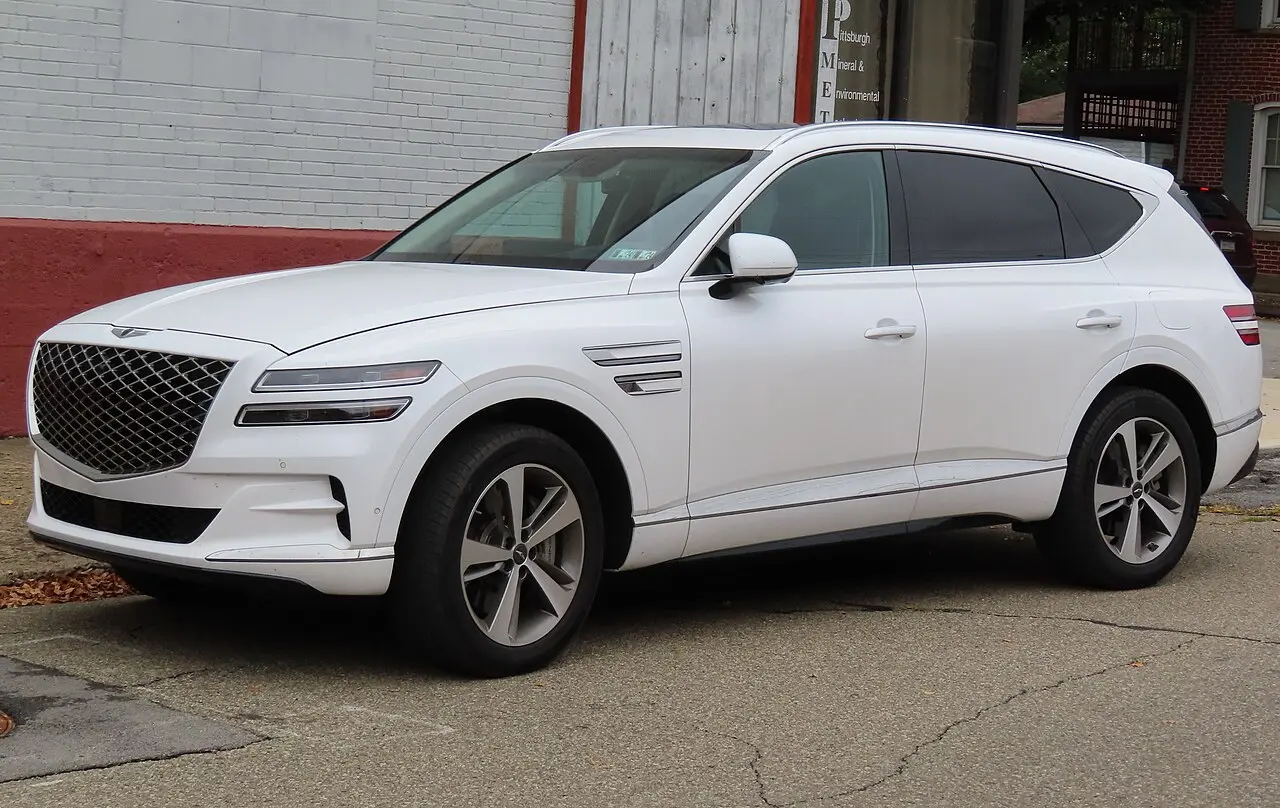
The GV80 is a luxury SUV and Genesis’s first sport-utility vehicle. It brought the brand’s premium design into a taller, more versatile shape, with room for everyday journeys and longer trips. Its large Crest Grille and paired Two-Line lights established a distinctive look that has since become familiar across the Genesis range.

Generations and engines

The first-generation GV80, known by the JX1 code, began in 2021. UK figures run through 2026, US figures through 2027, and Canadian figures through 2026. The EU registration figures include the model in 2020.

Engine choices vary by market. In the UK, the range spans 2.5 to 3.0 litres, with petrol and diesel versions producing 204 kW (277 PS) to 304 kW (413 PS). US figures cover 2.5- to 3.5-litre petrol and hybrid versions. Canada lists 2.5- to 3.5-litre petrol engines. The EU registration figures identify a 2.5-litre petrol version rated at 224 kW (305 PS).

How economical is the Genesis GV80?

Official consumption figures depend on the market and test procedure. The lowest UK figure is 8.5 L/100 km on WLTP. The US EPA figure is 10.2 L/100 km, with a best combined rating of 23 MPG. Canada’s lowest figure is 10.5 L/100 km on the NRCan 5-cycle test. WLTP and NEDC procedures are used in Europe, EPA in the USA, and the 5-cycle test in Canada, so the results are not directly equivalent.

Where was the GV80 sold?

The GV80 appears in UK figures from 2021 through 2026, US figures from 2021 through 2027, and Canadian figures from 2021 through 2026. EU registration figures show the model in 2020.

Questions and answers

Is the Genesis GV80 an SUV?

Yes. It is a luxury SUV and Genesis’s first sport-utility vehicle.

What engines and fuels are available?

The UK range includes 2.5- to 3.0-litre petrol and diesel versions; US figures cover 2.5- to 3.5-litre petrol and hybrid versions; and Canada lists 2.5- to 3.5-litre petrol engines.

What is the GV80’s lowest official fuel consumption?

The lowest market figures are 8.5 L/100 km on the UK WLTP test, 10.2 L/100 km under the US EPA, and 10.5 L/100 km on Canada’s NRCan 5-cycle test.

GV80 first generation (since 2021)

Genesis GV80 first generation
Photo: MercurySable99 / Wikimedia Commons · CC BY-SA 4.0

Model codes: JX1 · References: cars.com, en.wikipedia.org

United Kingdom 10 versions

New cars on sale in the UK, from the Vehicle Certification Agency. NEDC figures until 2018 and WLTP figures after; years are the editions a version appeared in.

Years and versionEnginePowerFuelGearboxConsumption (combined)CO₂
2025–2026Luxury [5 seats] 2.5T AWD · Luxury [7 seats] 2.5T AWD · Luxury Plus [6 Seats] 2.5T AWD and 3 more trims2.5 L224 kW (305 PS)Petrol8-speed automatic11.1 L/100 km WLTP248 g/km
2025–2026Luxury [5 seats] 3.0D AWD · Luxury [7 seats] 3.0D AWD · Premium [5 seats] 3.0D AWD and 1 more trim3.0 L204 kW (277 PS)Diesel8-speed automatic9.1 L/100 km WLTP238 g/km
2024Luxury [5 seats] 2.5T AWD · Luxury [7 seats] 2.5T AWD · Luxury Plus [6 Seats] 2.5T AWD and 3 more trims2.5 L304 kW (413 PS)Petrol8-speed automatic11.1 L/100 km WLTP248 g/km
2024Luxury [5 seats] 3.0D AWD · Luxury [7 seats] 3.0D AWD · Premium [5 seats] 3.0D AWD and 1 more trim3.0 L278 kW (378 PS)Diesel8-speed automatic9.1 L/100 km WLTP238 g/km
2023Luxury [5 seats] 2.5T AWD · Luxury [7 seats] 2.5T AWD · Luxury Plus [6 Seats] 2.5T AWD and 3 more trims2.5 L224 kW (305 PS)Petrol8-speed automatic11.1 L/100 km WLTP248 g/km
2023Luxury [5 seats] 3.0D AWD · Luxury [7 seats] 3.0D AWD · Premium [5 seats] 3.0D AWD and 1 more trim3.0 L204 kW (277 PS)Diesel8-speed automatic9.1 L/100 km WLTP238 g/km
2021–2022Luxury Line [5 seats] 2.5T AWD · Premium Line [5 seats] 2.5T AWD2.5 L224 kW (305 PS)Petrol8-speed automatic10.8 L/100 km WLTP239 g/km
2021–2022Luxury Line [7 seats] 2.5T AWD · Premium Line [7 seats] 2.5T AWD2.5 L224 kW (305 PS)Petrol8-speed automatic11.1 L/100 km WLTP244 g/km
2021–2022Luxury Line [5 seats] 3.0D AWD · Premium Line [5 seats] 3.0D AWD3.0 L204 kW (277 PS)Diesel8-speed automatic8.5 L/100 km WLTP226 g/km
2021–2022Luxury Line [7 seats] 3.0D AWD · Premium Line [7 seats] 3.0D AWD3.0 L204 kW (277 PS)Diesel8-speed automatic9.0 L/100 km WLTP233 g/km

United States 12 versions

Model years sold in the USA, from the EPA and the Department of Energy (fueleconomy.gov). MPG on the EPA test; litres per 100 km = 235.215 ÷ MPG.

Years and versionEngineFuelGearboxDriveConsumption (combined)CO₂
2025–2027SIDI & PFI2.5 LPetrol8-speed automaticAll-wheel drive21 MPG (11.2 L/100 km) EPA265 g/km
2026–2027SIDI & PFI2.5 LPetrol8-speed automaticRear-wheel drive22 MPG (10.7 L/100 km) EPA250 g/km
2026–2027SIDI & PFI; Mild Hybrid3.5 LHybrid8-speed automaticAll-wheel drive19 MPG (12.4 L/100 km) EPA290 g/km
2027SIDI & PFI3.5 LPetrol8-speed automaticAll-wheel drive19 MPG (12.4 L/100 km) EPA293 g/km
2026SIDI & PFI3.5 LPetrol8-speed automaticAll-wheel drive19 MPG (12.4 L/100 km) EPA294 g/km
2025SIDI & PFI3.5 LPetrol8-speed automaticAll-wheel drive19 MPG (12.4 L/100 km) EPA298 g/km
2025SIDI & PFI; Mild Hybrid3.5 LHybrid8-speed automaticAll-wheel drive20 MPG (11.8 L/100 km) EPA283 g/km
2024SIDI & PFI2.5 LPetrol8-speed automaticAll-wheel drive22 MPG (10.7 L/100 km) EPA254 g/km
2021–2024SIDI & PFI3.5 LPetrol8-speed automaticAll-wheel drive20 MPG (11.8 L/100 km) EPA278 g/km
2023SIDI & PFI2.5 LPetrol8-speed automaticAll-wheel drive22 MPG (10.7 L/100 km) EPA251 g/km
2021–2022SIDI & PFI2.5 LPetrol8-speed automaticRear-wheel drive23 MPG (10.2 L/100 km) EPA245 g/km
2021–2022SIDI & PFI2.5 LPetrol8-speed automaticAll-wheel drive22 MPG (10.7 L/100 km) EPA249 g/km

Canada 7 versions

Model years sold in Canada, from Natural Resources Canada fuel consumption ratings (5-cycle test).

Years and versionEngineFuelGearboxConsumption (combined)CO₂
2025–2026Sport utility vehicle: Standard2.5 LPetrol8-speed automatic11.3 L/100 km 5-cycle265 g/km
2026Sport utility vehicle: Standard3.5 LPetrol8-speed automatic12.4 L/100 km 5-cycle290 g/km
2026Sport utility vehicle: Standard3.5 LPetrol8-speed automatic12.6 L/100 km 5-cycle295 g/km
2025Sport utility vehicle: Standard3.5 LPetrol8-speed automatic12.0 L/100 km 5-cycle283 g/km
2025Sport utility vehicle: Standard3.5 LPetrol8-speed automatic12.7 L/100 km 5-cycle298 g/km
2021–2024Sport utility vehicle: Standard2.5 LPetrol8-speed automatic10.5 L/100 km 5-cycle248 g/km
2021–2024Sport utility vehicle: Standard3.5 LPetrol8-speed automatic11.8 L/100 km 5-cycle279 g/km

Versions outside these generations

European Union 1 version

New cars registered in the EU (plus Norway and Iceland), from the European Environment Agency. Figures on the NEDC procedure until 2020 and on WLTP from 2021; versions are grouped by engine and power, with their number of registrations.

Years and versionEnginePowerFuelCO₂EU registrations
20202.5 L224 kW (305 PS)Petrol248 g/km10

Official figures are measured on standard test procedures and differ between markets. Your consumption depends on how, where and in what conditions you drive.