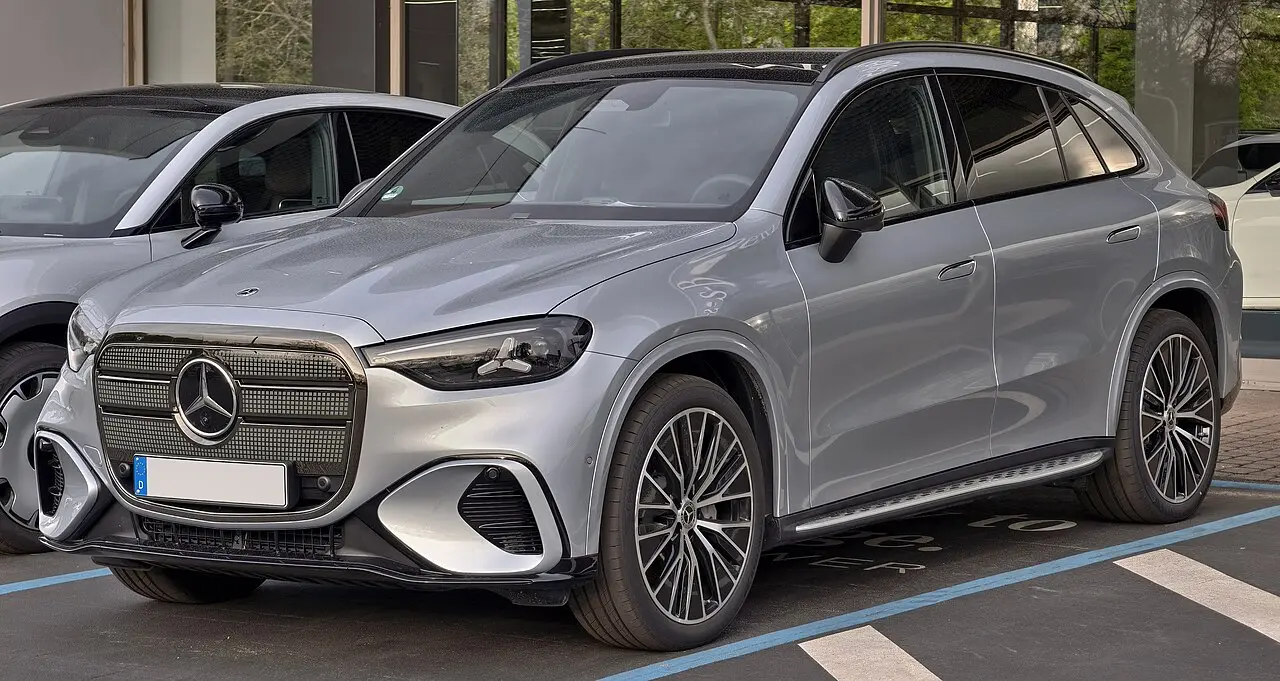
Mercedes-Benz GLC

Mercedes-Benz GLC
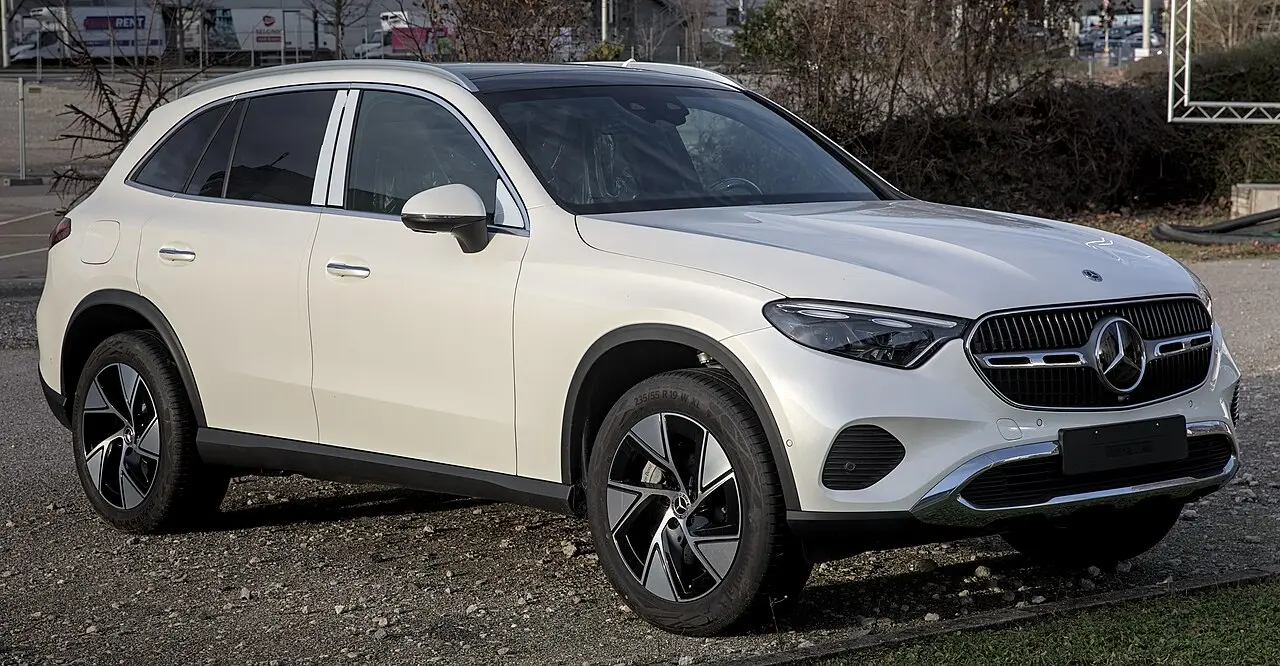
Photo: © M 93 / Wikimedia Commons · CC BY-SA 3.0 DE

The official data lists 185 versions of the Mercedes-Benz GLC (2015 - 2027), in the European Union, the United Kingdom, the United States, and Canada. Each market publishes its own figures, measured on its own test procedure.

At a glance

Years in the data
2015 - 2027
Markets
European Union, United Kingdom, United States, Canada
Engines
2.0 L to 4.0 L
Power
120 kW (163 PS) to 500 kW (680 PS)
Fuels
Hybrid, Plug-in hybrid, Diesel, Petrol, Electric, Hydrogen
Lowest consumption (United Kingdom)
5.0 L/100 km (WLTP)
Lowest consumption (European Union)
5.2 L/100 km (WLTP)
Lowest consumption (United States)
8.1 L/100 km (EPA)
Plug-in hybrid, weighted (European Union)
0.4 L/100 km (WLTP)
New registrations in the EU
1,488,820

What is the Mercedes-Benz GLC?

The GLC is an SUV in Mercedes-Benz’s range, also offered with a coupé-style body. Its name links it to the C-Class family, and the model took the place of the GLK in the brand’s SUV line-up. With a higher-riding body and room for passengers and luggage, it serves as a versatile choice in the range.

EU registration figures span 2015-2025 and include 1,488,820 GLC registrations. UK figures span 2016-2026, while US figures span 2016-2027.

Generations and place in the range

The first generation, X253 and C253, ran from 2015 to 2022. The second generation, X254 and C254, began in 2022. The X codes refer to the SUV body and the C codes to the coupé-style version. The GLC carries on the role of the GLK in Mercedes-Benz’s SUV range, with a name tied to the C-Class family.

Engines, power and official consumption

In the EU, the GLC range spans engines from 1.9 to 4.0 litres, with power from 120 kW (163 PS) to 375 kW (510 PS). UK versions reach 500 kW (680 PS). Petrol and diesel models are joined by hybrids and plug-in hybrids; EU figures also include electric and hydrogen fuel types.

The lowest listed EU consumption for petrol, diesel and hybrid versions is 5.2 L/100 km on WLTP. The plug-in hybrid weighted WLTP figure starts at 0.4 L/100 km and assumes some driving is electric. In the USA, the lowest listed figure is 8.1 L/100 km on EPA, and the best combined rating is 29 MPG. Canada’s lowest listed figure is 8.9 L/100 km on the NRCan 5-cycle test. These market results use different test procedures: WLTP in Europe, EPA in the USA and the 5-cycle test in Canada.

Where was the GLC sold?

The GLC appears in EU, UK, US and Canadian figures, with fuel types varying between markets. Canadian figures list petrol and plug-in hybrid versions, while EU figures also include electric and hydrogen types. Among EU registration leaders are 2.1-litre diesels rated at 125 kW (170 PS) and 150 kW (204 PS).

Questions and answers

When did the Mercedes-Benz GLC generations run?

The first generation (X253/C253) ran from 2015 to 2022. The second generation (X254/C254) began in 2022.

What is the GLC’s lowest listed EU consumption?

The lowest listed figure for petrol, diesel and hybrid versions is 5.2 L/100 km on WLTP. The plug-in hybrid weighted figure starts at 0.4 L/100 km and assumes some electric driving.

How is the GLC’s US fuel economy measured?

US figures use the EPA procedure. The lowest listed consumption is 8.1 L/100 km, and the best combined rating is 29 MPG.

Is the GLC available as a plug-in hybrid?

Yes. Plug-in hybrid versions appear in EU, UK, US and Canadian figures, with weighted consumption figures calculated under each market’s test procedure.
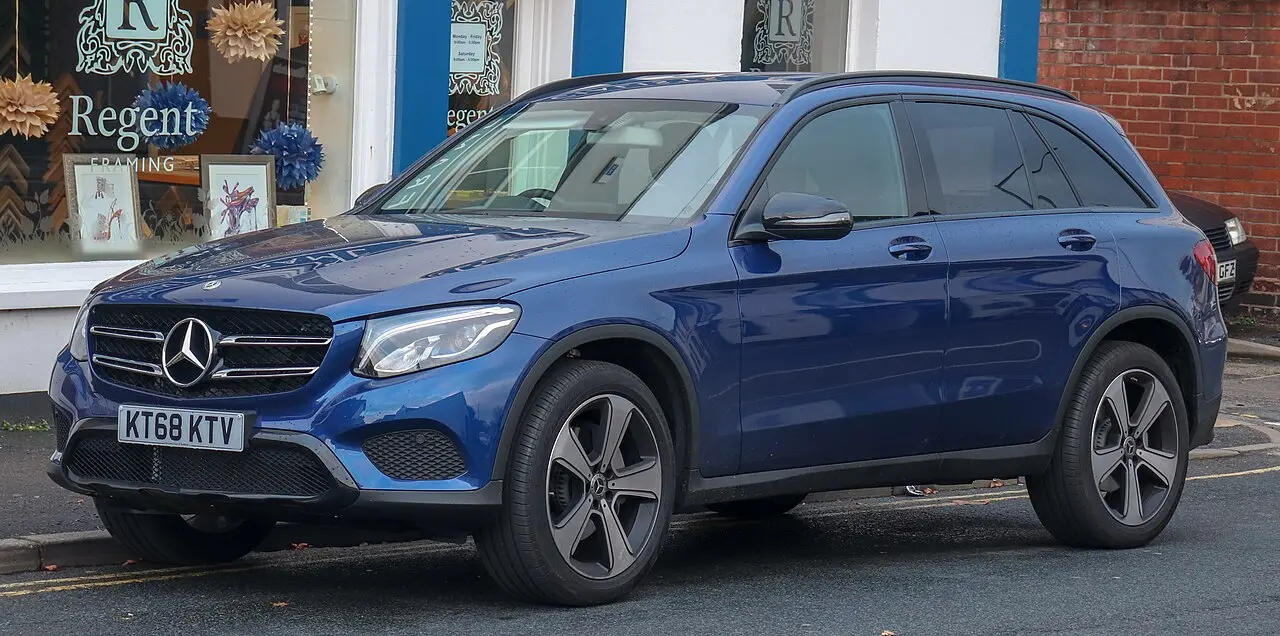
GLC first generation (2015 - 2022)

Mercedes-Benz GLC first generation
Photo: Vauxford / Wikimedia Commons · CC BY-SA 4.0

Model codes: X253, C253 · References: en.wikipedia.org, de.wikipedia.org

At a glance: Length 4,670 - 4,750 mm · Kerb weight 1,635 - 1,940 kg · Top speed 210 - 250 km/h · MOT first-time pass at 4 - 5 years: 92.7% (UK average 91.0%) Specifications, reliability and all versions

Show all 123 versions

GLC second generation (since 2022)

Mercedes-Benz GLC second generation
Photo: Alexander Migl / Wikimedia Commons · CC BY-SA 4.0

Model codes: X254, C254 · References: en.wikipedia.org, media.mercedes-benz.com

At a glance: Length 4,750 - 4,790 mm · Kerb weight 2,215 - 2,260 kg · Top speed 218 - 239 km/h Specifications, reliability and all versions

Show all 70 versions

GLC X540 (since 2026)

Mercedes-Benz GLC X540
Photo: © M 93 / Wikimedia Commons · CC BY-SA 3.0 DE

Model codes: X540 · References: en.wikipedia.org

At a glance: Top speed 210 - 240 km/h Specifications, reliability and all versions

United Kingdom 2 versions

New cars on sale in the UK, from the Vehicle Certification Agency. NEDC figures until 2018 and WLTP figures after; years are the editions a version appeared in.

Years and versionEnginePowerFuelConsumption (combined)CO₂Electric range
2026GLC 250 electricElectric motor260 kW (354 PS)Electric18.0 kWh/100 km WLTP0 g/km544 km
2026GLC 400 4MATICElectric motor360 kW (489 PS)Electric18.8 kWh/100 km WLTP0 g/km571 km

United States 1 version

Model years sold in the USA, from the EPA and the Department of Energy (fueleconomy.gov). MPG on the EPA test; litres per 100 km = 235.215 ÷ MPG.

Years and versionEngineFuelGearboxDriveConsumption (combined)CO₂Electric range
2027Electric motorElectricAutomaticAll-wheel drive102 - 119 MPGe EPA0 g/km533 - 563 km

Versions outside these generations

Show all 41 versions

European Union 29 versions

New cars registered in the EU (plus Norway and Iceland), from the European Environment Agency. Figures on the NEDC procedure until 2020 and on WLTP from 2021; versions are grouped by engine and power, with their number of registrations.

Years and versionEnginePowerFuelConsumption (combined)CO₂Electric rangeEU registrations
20222.0 L143 kW (194 PS) (engine only)Plug-in hybrid1.9 L/100 km WLTP24.3 kWh/100 km WLTP50 g/km45 km14,655
20222.0 L143 kW (194 PS)Diesel6.1 L/100 km WLTP25.7 kWh/100 km WLTP166 g/km - 13,330
20222.0 L155 kW (211 PS) (engine only)Plug-in hybrid2.4 L/100 km WLTP24.3 kWh/100 km WLTP54 g/km45 km6,359
20222.0 L120 kW (163 PS)Diesel5.8 L/100 km WLTP161 g/km - 5,287
20222.0 L145 kW (197 PS)Hybrid8.4 L/100 km WLTP192 g/km - 3,802
20222.0 L145 kW (197 PS)Hybrid5.4 L/100 km WLTP140 g/km - 3,170
20222.0 L180 kW (245 PS)Diesel6.6 L/100 km WLTP178 g/km - 2,656
20222.9 L243 kW (330 PS)Diesel7.4 L/100 km WLTP194 g/km - 1,707
20223.0 L287 kW (390 PS)Petrol10.9 L/100 km WLTP248 g/km - 1,270
20222.0 L145 kW (197 PS)Petrol7.4 L/100 km WLTP185 g/km - 1,157
20222.0 L150 kW (204 PS)Hybrid7.5 L/100 km WLTP173 g/km - 1,142
20222.0 L190 kW (258 PS)Hybrid8.5 L/100 km WLTP195 g/km - 992
20222.0 L150 kW (204 PS) (engine only)Plug-in hybrid0.5 L/100 km WLTP21.2 kWh/100 km WLTP18 g/km127 km635
20222.0 L190 kW (258 PS)Hybrid7.6 L/100 km WLTP180 g/km - 521
20224.0 L350 kW (476 PS)Petrol13.0 L/100 km WLTP295 g/km - 219
20222.0 L190 kW (258 PS)Petrol8.0 L/100 km WLTP192 g/km - 198
20222.0 L185 kW (252 PS) (engine only)Plug-in hybrid0.6 L/100 km WLTP21.2 kWh/100 km WLTP33 g/km125 km139
20222.0 L155 kW (211 PS)Hybrid - 187 g/km - 120
20222.0 L147 kW (200 PS)Hybrid - 174 g/km - 83
20222.0 L155 kW (211 PS)Petrol26.0 kWh/100 km WLTP191 g/km - 73
20222.0 L206 kW (280 PS)Diesel - 164 g/km - 52
20222.0 L237 kW (322 PS)Hybrid - 22 g/km - 41
20222.0 L195 kW (265 PS)Hybrid - 190 g/km - 36
20222.0 L350 kW (476 PS)Hybrid - 55 g/km - 33
20222.0 L240 kW (326 PS)Hybrid - 27 g/km - 33
20222.0 L275 kW (374 PS)Hybrid - 27 g/km - 29
20222.0 L300 kW (408 PS)Hybrid - 208 g/km - 25
20223.0 L272 kW (370 PS)Hybrid - 191 g/km - 12
20222.0 L145 kW (197 PS)Hybrid - 75 g/km - 10

United Kingdom 7 versions

New cars on sale in the UK, from the Vehicle Certification Agency. NEDC figures until 2018 and WLTP figures after; years are the editions a version appeared in.

Years and versionEnginePowerFuelGearboxConsumption (combined)CO₂Electric range
2022 - 2023GLC 220 d 4MATIC2.0 L143 kW (194 PS)Diesel9-speed automatic5.8 - 6.8 L/100 km WLTP153 - 180 g/km -
2022 - 2023GLC 300 de 4MATIC2.0 L143 kW (194 PS)Plug-in hybrid9-speed automatic24.1 - 26.8 kWh/100 km WLTP - 44 - 49 km
2022 - 2023GLC 300 d 4MATIC2.0 L180 kW (245 PS)Diesel9-speed automatic6.4 L/100 km WLTP168 g/km -
2022 - 2023GLC 300 e 4MATIC2.0 L155 kW (211 PS)Plug-in hybrid9-speed automatic23.7 - 25.9 kWh/100 km WLTP - 44 - 49 km
2022 - 2023GLC 300 4MATIC2.0 L190 kW (258 PS)Hybrid9-speed automatic8.0 - 9.0 L/100 km WLTP182 - 205 g/km -
2022 - 2023AMG GLC 43 4MATIC3.0 L287 kW (390 PS)Petrol9-speed automatic10.6 - 11.2 L/100 km WLTP240 - 254 g/km -
2022 - 2023AMG GLC 63 S 4MATIC+4.0 L375 kW (510 PS)Petrol9-speed automatic12.7 - 13.0 L/100 km WLTP287 - 294 g/km -

United States 3 versions

Model years sold in the USA, from the EPA and the Department of Energy (fueleconomy.gov). MPG on the EPA test; litres per 100 km = 235.215 ÷ MPG.

Years and versionEngineFuelGearboxDriveConsumption (combined)CO₂
2022SIDI2.0 LPetrol9-speed automaticRear-wheel drive24 MPG (9.8 L/100 km) EPA232 g/km
2022SIDI2.0 LPetrol9-speed automaticAll-wheel drive23 - 24 MPG (9.8 - 10.2 L/100 km) EPA232 - 238 g/km
2022SIDI3.0 LPetrol9-speed automaticAll-wheel drive19 - 21 MPG (11.2 - 12.4 L/100 km) EPA267 - 291 g/km

Canada 2 versions

Model years sold in Canada, from Natural Resources Canada fuel consumption ratings (5-cycle test).

Years and versionEngineFuelGearboxConsumption (combined)CO₂
2022Sport utility vehicle: Small2.0 LPetrol9-speed automatic10.1 - 10.4 L/100 km 5-cycle237 - 242 g/km
2022Sport utility vehicle: Small3.0 LPetrol9-speed automatic11.3 - 12.3 L/100 km 5-cycle264 - 287 g/km

Mercedes-Benz GLC recalls

131 official safety recalls for the Mercedes-Benz GLC from NHTSA (United States), DVSA (United Kingdom) and the EU Safety Gate, newest first. Recall repairs are normally free at the maker’s dealers.

  • Drive shaft universal joint may wear excessively2017 - 2019
  • Door lock may fail to engage automatic parking brake2023 - 2024
  • Instrument panel display may go blank2025 - 2026
  • Center rear seat belt may not secure a child restraint2026
  • Steering coupling bolts may not meet specifications2022 - 2025

See all 131 recalls

Official figures are measured on standard test procedures and differ between markets. Your consumption depends on how, where and in what conditions you drive.