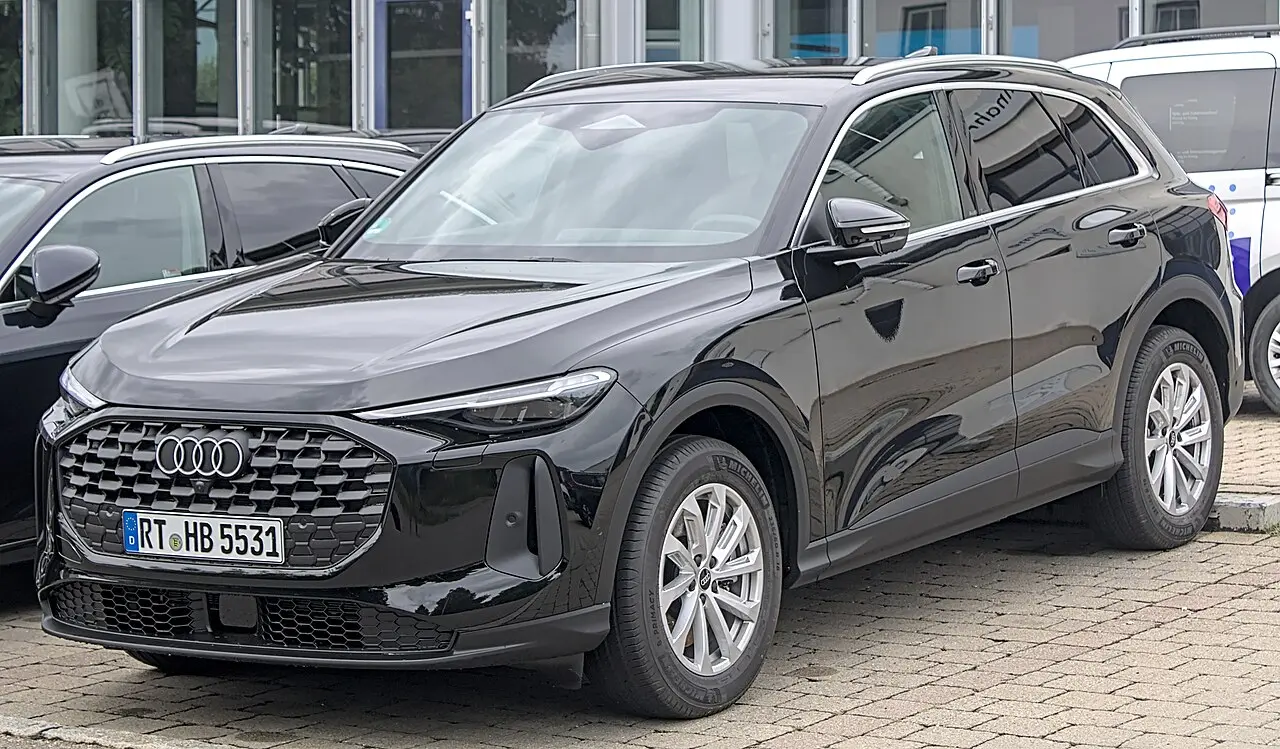
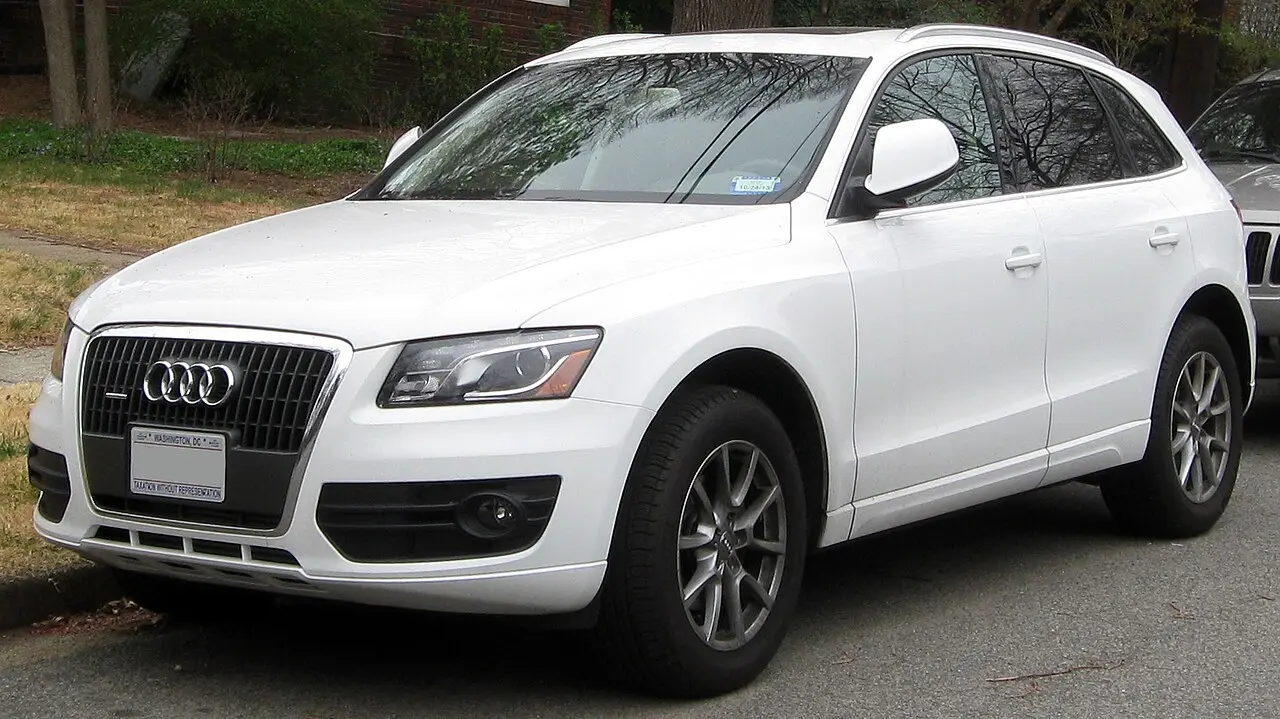
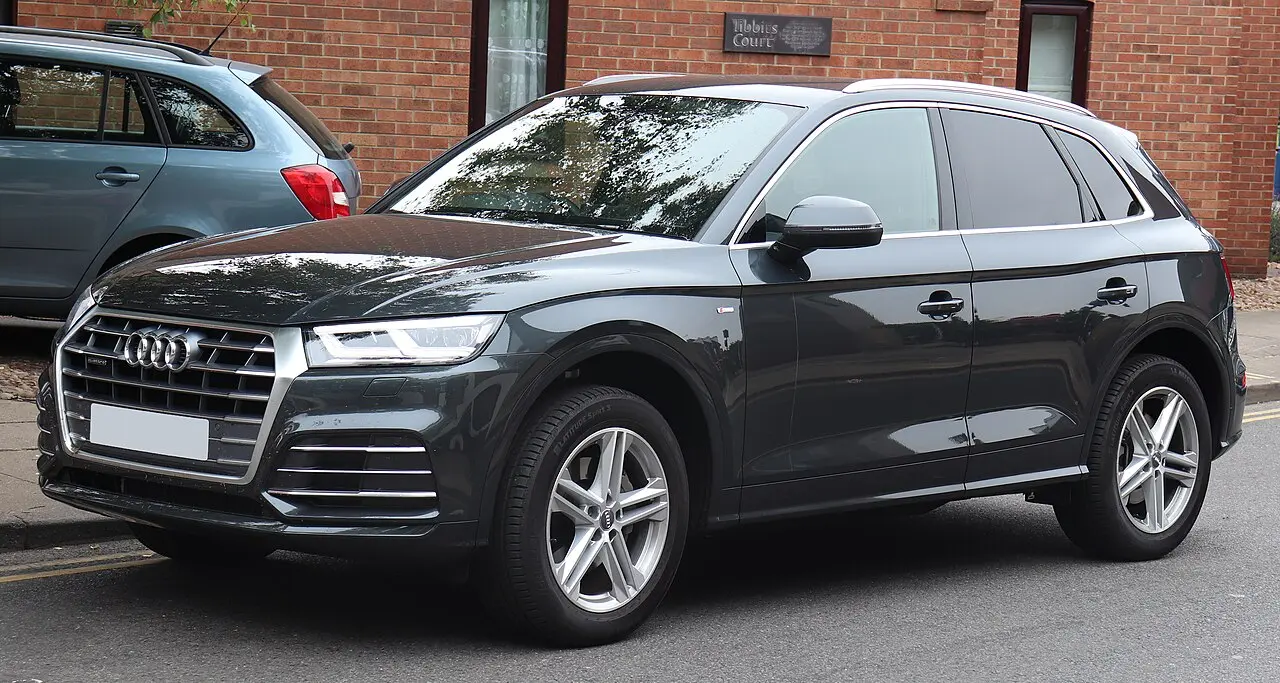
The official data lists 495 versions of the Audi Q5 (2009–2027), in the European Union, the United Kingdom, France, the United States, and Canada. Each market publishes its own figures, measured on its own test procedure.
At a glance
Years in the data
2009–2027
Markets
European Union, United Kingdom, France, United States, Canada
The Audi Q5 is a mid-size SUV, with a roomier format than the Q3. It joined Audi’s range in 2008, adding a family-friendly SUV to the line-up. The Q5 has evolved through three generations, with petrol, diesel and electrified versions appearing across its markets.
Generations and engines
The first generation, 8R, ran from 2008 to 2017. The FY generation followed from 2017 to 2024, and the third generation, GU, began in 2024. In the EU, listings span 2.0 to 3.0-litre engines and 100 kW (136 PS) to 270 kW (367 PS), with petrol, diesel, hybrid and plug-in hybrid versions among the fuel types. UK listings span 2.0 to 3.2 litres and 105 kW (143 PS) to 270 kW (367 PS). US and Canadian listings also cover 2.0 to 3.2-litre engines.
How economical is the Audi Q5?
The lowest listed EU consumption for petrol, diesel and hybrid versions is 4.7 L/100 km on WLTP. The EU plug-in hybrid weighted low is 1.7 L/100 km, assuming some of the journey is electric. In the UK, the lowest conventional figure is 5 L/100 km under NEDC; the plug-in hybrid figure is 7.3 L/100 km under WLTP. France lists 4.9 L/100 km under NEDC. The EPA low is 9 L/100 km, or 26 MPG combined, and Canada’s five-cycle low is 8.9 L/100 km. The EPA plug-in hybrid weighted figure is 8.7 L/100 km, and Canada’s is 8.8 L/100 km. WLTP and NEDC in Europe, EPA in the USA and the five-cycle test in Canada use different procedures, so their results are not direct comparisons.
Where was the Audi Q5 sold?
In official EU registration figures, the Q5 appears from 2010 to 2025, with 1,566,393 registrations. UK figures span 2009 to 2026, French figures 2012 to 2015, US figures 2009 to 2027 and Canadian figures 2010 to 2026. The fuel mix varies by market and includes petrol, diesel and electrified versions in several regions.
Questions and answers
When did the Audi Q5 first appear?
The first-generation Q5, known as 8R, began in 2008.
What are the Q5 generation names?
The generations are 8R (2008–2017), FY (2017–2024) and GU (2024–today).
What is the EU plug-in hybrid’s lowest listed consumption?
It is 1.7 L/100 km on a weighted WLTP basis that assumes some driving is electric.
Are Q5 fuel economy figures comparable across countries?
They use different procedures: WLTP or NEDC in Europe, EPA in the USA and a five-cycle test in Canada.
New cars registered in the EU (plus Norway and Iceland), from the European Environment Agency. Figures on the NEDC procedure until 2020 and on WLTP from 2021; versions are grouped by engine and power, with their number of registrations.
Years and version
Engine
Power
Fuel
Consumption (combined)
CO₂
Electric range
EU registrations
2025
2.0 L
150 kW (204 PS)
Hybrid
6.4 L/100 km WLTP
168 g/km
–
21,364
2025
2.0 L
150 kW (204 PS)
Hybrid
7.3 L/100 km WLTP
165 g/km
–
7,730
2025
2.0 L
185 kW (252 PS)
Plug-in hybrid
2.9 L/100 km WLTP16.4 kWh/100 km WLTP
67 g/km
91 km
5,146
2025
2.0 L
195 kW (265 PS)
Plug-in hybrid
1.8 L/100 km WLTP22.9 kWh/100 km WLTP
40 g/km
59 km
4,742
2025
3.0 L
270 kW (367 PS)
Hybrid
8.4 L/100 km WLTP
190 g/km
–
3,062
2025
2.0 L
120 kW (163 PS)
Hybrid
5.7 L/100 km WLTP
151 g/km
–
1,637
2025
2.0 L
150 kW (204 PS)
Diesel
6.1 L/100 km WLTP
194 g/km
–
1,183
2025
3.0 L
251 kW (341 PS)
Hybrid
8.3 L/100 km WLTP
217 g/km
–
1,015
2025
2.0 L
150 kW (204 PS)
Petrol
7.0 L/100 km WLTP
207 g/km
–
873
2025
3.0 L
210 kW (286 PS)
Hybrid
8.4 L/100 km WLTP
221 g/km
–
508
2025
2.0 L
150 kW (204 PS)
Plug-in hybrid
6.3 L/100 km WLTP
166 g/km
–
441
2025
2.0 L
195 kW (265 PS)
Hybrid
8.9 L/100 km WLTP
203 g/km
–
372
2025
2.0 L
150 kW (204 PS)
Plug-in hybrid
7.2 L/100 km WLTP
164 g/km
–
198
2025
3.0 L
270 kW (367 PS)
Petrol
8.4 L/100 km WLTP
293 g/km
–
105
2025
3.0 L
270 kW (367 PS)
Plug-in hybrid
8.3 L/100 km WLTP
188 g/km
–
24
2025
2.0 L
200 kW (272 PS)
Petrol
–
262 g/km
–
21
2025
2.0 L
150 kW (204 PS)
Petrol
–
246 g/km
–
15
2024
2.0 L
150 kW (204 PS)
Hybrid
6.7 L/100 km WLTP
175 g/km
–
18,062
2024
2.0 L
195 kW (265 PS)
Plug-in hybrid
2.1 L/100 km WLTP22.8 kWh/100 km WLTP
40 g/km
59 km
13,477
2024
2.0 L
150 kW (204 PS)
Hybrid
8.1 L/100 km WLTP
179 g/km
–
4,666
2024
2.0 L
120 kW (163 PS)
Hybrid
5.8 L/100 km WLTP
151 g/km
–
4,596
2024
2.0 L
195 kW (265 PS)
Hybrid
8.7 L/100 km WLTP
200 g/km
–
3,182
2024
3.0 L
251 kW (341 PS)
Hybrid
8.3 L/100 km WLTP
217 g/km
–
1,346
2024
2.0 L
150 kW (204 PS)
Diesel
6.7 L/100 km WLTP
176 g/km
–
483
2024
3.0 L
210 kW (286 PS)
Hybrid
8.4 L/100 km WLTP
221 g/km
–
432
2024
2.0 L
120 kW (163 PS)
Diesel
5.7 L/100 km WLTP
150 g/km
–
156
2024
2.0 L
195 kW (265 PS)
Petrol
7.8 L/100 km WLTP23.1 kWh/100 km WLTP
178 g/km
–
83
2024
3.0 L
270 kW (367 PS)
Petrol
–
–
–
61
2024
2.0 L
200 kW (272 PS)
Petrol
–
–
–
44
2024
2.0 L
150 kW (204 PS)
Petrol
–
–
–
40
2024
3.0 L
220 kW (299 PS)
Diesel
–
–
–
40
2024
2.0 L
185 kW (252 PS)
Plug-in hybrid
–
–
–
35
2024
2.0 L
100 kW (136 PS)
Hybrid
5.7 L/100 km WLTP
149 g/km
–
23
United Kingdom 15 versions
New cars on sale in the UK, from the Vehicle Certification Agency. NEDC figures until 2018 and WLTP figures after; years are the editions a version appeared in.
Years and version
Engine
Power
Fuel
Gearbox
Consumption (combined)
CO₂
Electric range
2025–2026TDI quattro 204PS
2.0 L
150 kW (204 PS)
Hybrid
7-speed automatic
6.0 L/100 km WLTP
156 g/km
–
2025–2026TDI quattro 204PS
2.0 L
150 kW (204 PS)
Hybrid
7-speed automatic
6.5 L/100 km WLTP
171 g/km
–
2025–2026TFSI quattro 204PS
2.0 L
150 kW (204 PS)
Hybrid
7-speed automatic
7.0 L/100 km WLTP
159 g/km
–
2025–2026TFSI quattro 204PS
2.0 L
150 kW (204 PS)
Hybrid
7-speed automatic
7.6 L/100 km WLTP
172 g/km
–
2025–2026TFSI quattro 204PS
2.0 L
150 kW (204 PS)
Hybrid
7-speed automatic
7.6 L/100 km WLTP
173 g/km
–
2025–202650 TFSI e quattro 299PS
2.0 L
220 kW (299 PS)
Plug-in hybrid
7-speed automatic
22.8 kWh/100 km WLTP
–
59 km
2025–202650 TFSI e quattro 299PS
2.0 L
220 kW (299 PS)
Plug-in hybrid
7-speed automatic
22.1 kWh/100 km WLTP
–
60 km
2025–2026e-hybrid quattro 299PS
2.0 L
220 kW (299 PS)
Plug-in hybrid
7-speed automatic
7.3 L/100 km WLTP15.6 kWh/100 km WLTP
–
98 km
2025–2026e-hybrid quattro 299PS
2.0 L
220 kW (299 PS)
Plug-in hybrid
7-speed automatic
7.9 L/100 km WLTP16.4 kWh/100 km WLTP
–
89 km
2025–2026TDI quattro 204PS S Tronic
2.0 L
150 kW (204 PS)
Hybrid
7-speed automatic
6.0 L/100 km WLTP
157 g/km
–
2025–2026TDI quattro 204PS S Tronic
2.0 L
150 kW (204 PS)
Hybrid
7-speed automatic
6.5 L/100 km WLTP
170 g/km
–
2025–2026TFSI 367PS
3.0 L
270 kW (367 PS)
Hybrid
7-speed automatic
8.3 L/100 km WLTP
188 g/km
–
2025–2026TFSI 367PS
3.0 L
270 kW (367 PS)
Hybrid
7-speed automatic
8.4 L/100 km WLTP
191 g/km
–
2025–2026TFSI 367PS
3.0 L
270 kW (367 PS)
Hybrid
7-speed automatic
8.3 L/100 km WLTP
189 g/km
–
2025–2026TFSI 367PS
3.0 L
270 kW (367 PS)
Hybrid
7-speed automatic
8.4 L/100 km WLTP
192 g/km
–
United States 9 versions
Model years sold in the USA, from the EPA and the Department of Energy (fueleconomy.gov). MPG on the EPA test; litres per 100 km = 235.215 ÷ MPG.
Years and version
Engine
Fuel
Gearbox
Drive
Consumption (combined)
CO₂
2026–2027SIDI
3.0 L
Petrol
7-speed automated manual
All-wheel drive
23 MPG (10.2 L/100 km) EPA
237 g/km
2026SIDI
2.0 L
Petrol
7-speed automated manual
All-wheel drive
24 MPG (9.8 L/100 km) EPA
229 g/km
2024–2025SIDI; Mild Hybrid
2.0 L
Hybrid
7-speed automated manual
All-wheel drive
26 MPG (9.0 L/100 km) EPA
215 g/km
2025SIDI; Mild Hybrid
2.0 L
Hybrid
7-speed automated manual
All-wheel drive
25 MPG (9.4 L/100 km) EPA
222 g/km
2025SIDI; PHEV
2.0 L
Plug-in hybrid
7-speed automated manual
All-wheel drive
26 MPG (9.0 L/100 km) EPA
93 g/km
2025SIDI
2.0 L
Petrol
7-speed automated manual
All-wheel drive
25 MPG (9.4 L/100 km) EPA
222 g/km
2024–2025SIDI
3.0 L
Petrol
8-speed automatic
All-wheel drive
21 MPG (11.2 L/100 km) EPA
265 g/km
2025SIDI
3.0 L
Petrol
7-speed automated manual
All-wheel drive
22 MPG (10.7 L/100 km) EPA
251 g/km
2024SIDI; Mild Hybrid
2.0 L
Hybrid
7-speed automated manual
All-wheel drive
24 MPG (9.8 L/100 km) EPA
227 g/km
Canada 9 versions
Model years sold in Canada, from Natural Resources Canada fuel consumption ratings (5-cycle test).
Years and version
Engine
Fuel
Gearbox
Consumption (combined)
CO₂
Electric range
2026Sport utility vehicle: Small
2.0 L
Petrol
7-speed automated manual
9.7 L/100 km 5-cycle
229 g/km
–
2026Sport utility vehicle: Small
3.0 L
Petrol
7-speed automated manual
10.1 L/100 km 5-cycle
238 g/km
–
2024–2025Sport utility vehicle: Small
2.0 L
Plug-in hybrid
7-speed automated manual
9.1 L/100 km 5-cycle
93 g/km
39 km
2024–2025Sport utility vehicle: Small
2.0 L
Petrol
7-speed automated manual
9.2 L/100 km 5-cycle
215 g/km
–
2025Sport utility vehicle: Small
2.0 L
Petrol
7-speed automated manual
9.6 L/100 km 5-cycle
226 g/km
–
2025Sport utility vehicle: Small
2.0 L
Petrol
7-speed automated manual
9.9 L/100 km 5-cycle
232 g/km
–
2024–2025Sport utility vehicle: Small
3.0 L
Petrol
8-speed automatic
11.4 L/100 km 5-cycle
266 g/km
–
2025Sport utility vehicle: Small
3.0 L
Petrol
7-speed automated manual
10.7 L/100 km 5-cycle
251 g/km
–
2024Sport utility vehicle: Small
2.0 L
Petrol
7-speed automated manual
9.9 L/100 km 5-cycle
230 g/km
–
Official figures are measured on standard test procedures and differ between markets. Your consumption depends on how, where and in what conditions you drive.