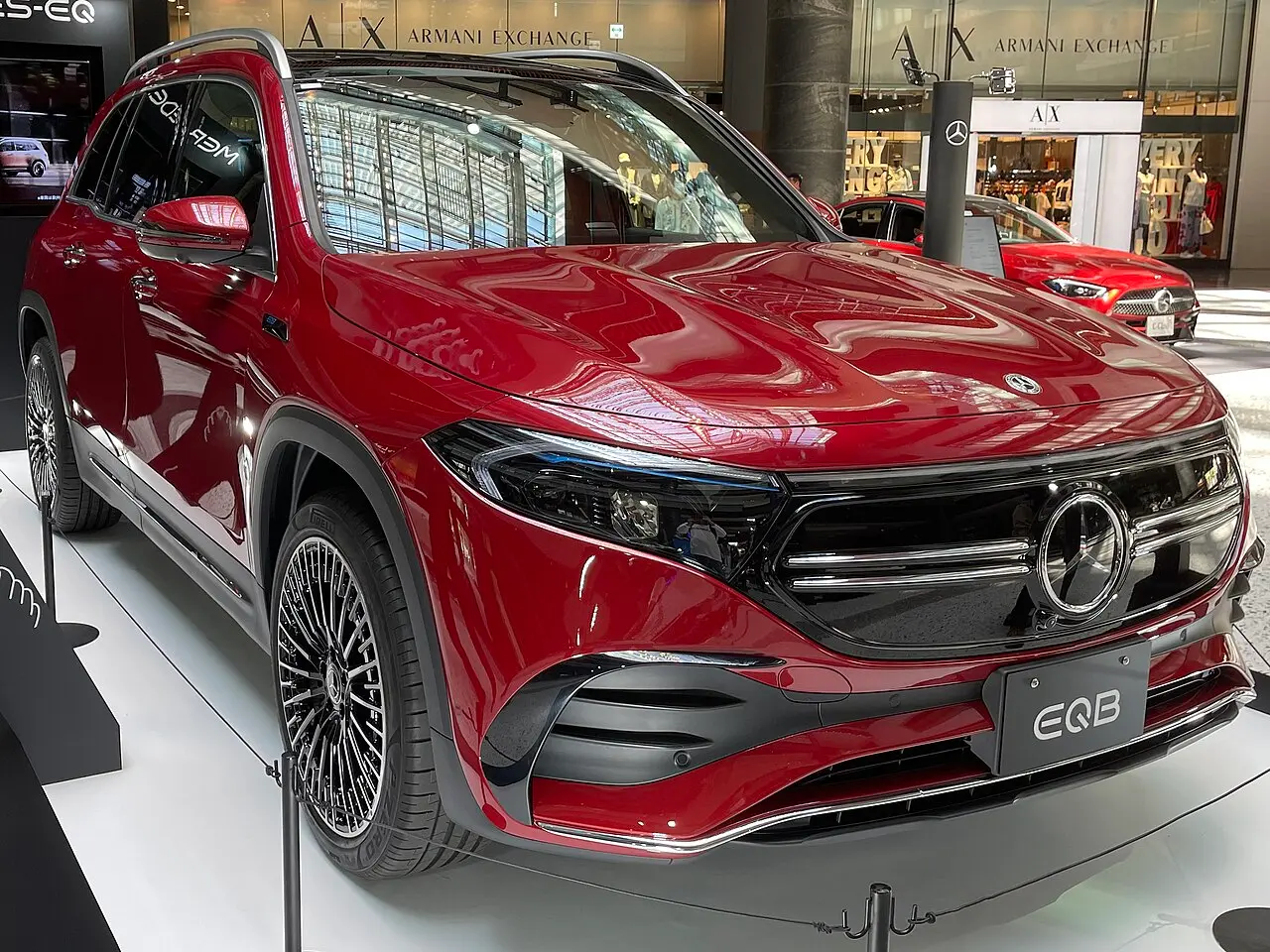
The official data lists 69 versions of the Mercedes-Benz EQB (2019–2026), in the European Union, the United Kingdom, France, the United States, and Canada. Each market publishes its own figures, measured on its own test procedure.
At a glance
Years in the data
2019–2026
Markets
European Union, United Kingdom, France, United States, Canada
Power
95 kW (129 PS) to 292 kW (397 PS)
Fuels
Electric
New registrations in the EU
81,500
What is the Mercedes-Benz EQB?
The EQB is a fully electric compact SUV in Mercedes-Benz’s EQ family. Its upright shape and flexible cabin give it a practical role in the brand’s electric line-up. Like the GLB on which it is based, it can be configured with a third row of seats, making room for up to seven people.
The X243 is the EQB’s single listed generation, built since 2022. The model appears in EU, UK, French, US and Canadian figures.
Engines and power
Every EQB in these markets is electric. Across EU registrations, listed power runs from 95 kW (129 PS) to 430 kW (585 PS). The UK range is 140 kW (190 PS) to 292 kW (397 PS), while Canada’s is 140 kW (190 PS) to 215 kW (292 PS). France lists a 139 kW (189 PS) version. US figures identify electric versions without stating a power range.
The EQB brings battery power to the compact SUV format, with a tall body and cabin flexibility suited to everyday family use.
Official consumption and CO₂
The EQB has zero tailpipe CO₂ emissions because it is electric. No official electricity-consumption figure is available to quote here. Regional test results use different procedures: Europe uses WLTP or, for some older figures, NEDC; the US uses EPA testing and Canada uses its 5-cycle procedure.
Questions and answers
Is the Mercedes-Benz EQB electric?
Yes. The listed EQB versions in the EU, UK, France, US and Canada are all electric.
How many generations of EQB are listed?
One: the X243 generation, built since 2022.
What power outputs are available?
The EU range is 95 kW (129 PS) to 430 kW (585 PS); ranges differ by market.
What are the EQB’s official CO₂ emissions?
As an electric vehicle, it has zero tailpipe CO₂ emissions. No official electricity-consumption figure is available to quote here.
Model codes: X243 · Sold in: European Union, France, United States, Canada, and United Kingdom · References: en.wikipedia.org, media.mbusa.com
European Union 29 versions
New cars registered in the EU (plus Norway and Iceland), from the European Environment Agency. Figures on the NEDC procedure until 2020 and on WLTP from 2021; versions are grouped by engine and power, with their number of registrations.
Years and version
Engine
Power
Fuel
Consumption (combined)
CO₂
Electric range
EU registrations
2025
Electric motor
140 kW (190 PS)
Electric
16.3 kWh/100 km WLTP
0 g/km
507 km
19,795
2025
Electric motor
168 kW (228 PS)
Electric
17.8 kWh/100 km WLTP
0 g/km
447 km
4,228
2025
Electric motor
215 kW (292 PS)
Electric
21.1 kWh/100 km WLTP
0 g/km
416 km
1,336
2025
Electric motor
95 kW (129 PS)
Electric
15.9 kWh/100 km WLTP
0 g/km
513 km
1,160
2025
Electric motor
139 kW (189 PS)
Electric
18.5 kWh/100 km WLTP
0 g/km
415 km
139
2025
Electric motor
130 kW (177 PS)
Electric
17.9 kWh/100 km WLTP
0 g/km
452 km
105
2025
Electric motor
111 kW (151 PS)
Electric
17.2 kWh/100 km WLTP
0 g/km
449 km
22
2025
Electric motor
430 kW (585 PS)
Electric
18.1 kWh/100 km WLTP
0 g/km
425 km
14
2024
Electric motor
140 kW (190 PS)
Electric
16.0 kWh/100 km WLTP
0 g/km
508 km
14,781
2024
Electric motor
168 kW (228 PS)
Electric
17.9 kWh/100 km WLTP
0 g/km
427 km
5,300
2024
Electric motor
215 kW (292 PS)
Electric
18.1 kWh/100 km WLTP
0 g/km
430 km
1,511
2024
Electric motor
139 kW (189 PS)
Electric
18.1 kWh/100 km WLTP
0 g/km
425 km
899
2024
Electric motor
95 kW (129 PS)
Electric
16.0 kWh/100 km WLTP
0 g/km
509 km
788
2024
Electric motor
130 kW (177 PS)
Electric
17.8 kWh/100 km WLTP
0 g/km
453 km
363
2024
Electric motor
111 kW (151 PS)
Electric
16.9 kWh/100 km WLTP
0 g/km
458 km
173
2024
Electric motor
430 kW (585 PS)
Electric
18.2 kWh/100 km WLTP
0 g/km
421 km
34
2023
Electric motor
140 kW (190 PS)
Electric
16.9 kWh/100 km WLTP
0 g/km
468 km
10,584
2023
Electric motor
168 kW (228 PS)
Electric
18.7 kWh/100 km WLTP
0 g/km
408 km
3,871
2023
Electric motor
215 kW (292 PS)
Electric
18.8 kWh/100 km WLTP
0 g/km
407 km
1,393
2023
Electric motor
111 kW (151 PS)
Electric
17.0 kWh/100 km WLTP
0 g/km
454 km
648
2023
Electric motor
139 kW (189 PS)
Electric
18.8 kWh/100 km WLTP
0 g/km
407 km
457
2023
Electric motor
95 kW (129 PS)
Electric
17.1 kWh/100 km WLTP
0 g/km
479 km
180
2023
Electric motor
430 kW (585 PS)
Electric
19.2 kWh/100 km WLTP
0 g/km
399 km
84
2022
Electric motor
168 kW (228 PS)
Electric
18.7 kWh/100 km WLTP
0 g/km
422 km
6,449
2022
Electric motor
140 kW (190 PS)
Electric
16.8 kWh/100 km WLTP
0 g/km
451 km
2,663
2022
Electric motor
215 kW (292 PS)
Electric
18.9 kWh/100 km WLTP
0 g/km
425 km
1,986
2022
Electric motor
139 kW (189 PS)
Electric
18.7 kWh/100 km WLTP
0 g/km
408 km
1,271
2022
Electric motor
111 kW (151 PS)
Electric
17.3 kWh/100 km WLTP
0 g/km
452 km
566
2022
Electric motor
165 kW (224 PS)
Electric
–
0 g/km
–
24
United Kingdom 18 versions
New cars on sale in the UK, from the Vehicle Certification Agency. NEDC figures until 2018 and WLTP figures after; years are the editions a version appeared in.
Years and version
Engine
Power
Fuel
Consumption (combined)
CO₂
Electric range
2025–2026EQB 250+
Electric motor
140 kW (190 PS)
Electric
15.1 kWh/100 km WLTP
0 g/km
537 km
2025–2026EQB 250+
Electric motor
140 kW (190 PS)
Electric
17.3 kWh/100 km WLTP
0 g/km
468 km
2025–2026EQB 300 4MATIC
Electric motor
168 kW (228 PS)
Electric
17.2 kWh/100 km WLTP
0 g/km
468 km
2025–2026EQB 300 4MATIC
Electric motor
168 kW (228 PS)
Electric
19.1 kWh/100 km WLTP
0 g/km
425 km
2025–2026EQB 350 4MATIC
Electric motor
215 kW (292 PS)
Electric
17.2 kWh/100 km WLTP
0 g/km
468 km
2025–2026EQB 350 4MATIC
Electric motor
215 kW (292 PS)
Electric
19.1 kWh/100 km WLTP
0 g/km
425 km
2024EQB 250+
Electric motor
190 kW (258 PS)
Electric
17.5 kWh/100 km WLTP
0 g/km
464 km
2024EQB 250+
Electric motor
190 kW (258 PS)
Electric
15.2 kWh/100 km WLTP
0 g/km
535 km
2024EQB 300 4MATIC
Electric motor
228 kW (310 PS)
Electric
19.2 kWh/100 km WLTP
0 g/km
397 km
2024EQB 300 4MATIC
Electric motor
228 kW (310 PS)
Electric
17.2 kWh/100 km WLTP
0 g/km
447 km
2024EQB 350 4MATIC
Electric motor
292 kW (397 PS)
Electric
19.2 kWh/100 km WLTP
0 g/km
397 km
2024EQB 350 4MATIC
Electric motor
292 kW (397 PS)
Electric
17.2 kWh/100 km WLTP
0 g/km
447 km
2022–2023EQB 300 4MATIC
Electric motor
168 kW (228 PS)
Electric
18.1 kWh/100 km WLTP
0 g/km
423 km
2022–2023EQB 300 4MATIC
Electric motor
168 kW (228 PS)
Electric
19.7 kWh/100 km WLTP
0 g/km
388 km
2023EQB 300 4MATIC
Electric motor
168 kW (228 PS)
Electric
19.7 kWh/100 km WLTP
0 g/km
387 km
2022–2023EQB 350 4MATIC
Electric motor
215 kW (292 PS)
Electric
18.1 kWh/100 km WLTP
0 g/km
423 km
2022–2023EQB 350 4MATIC
Electric motor
215 kW (292 PS)
Electric
19.7 kWh/100 km WLTP
0 g/km
388 km
2023EQB 350 4MATIC
Electric motor
215 kW (292 PS)
Electric
19.7 kWh/100 km WLTP
0 g/km
387 km
France 1 version
New cars on sale in France, from ADEME Car Labelling. NEDC figures until 2015, WLTP figures in the current catalogue.
Years and version
Engine
Power
Fuel
Gearbox
Consumption (combined)
Electric range
2026EQB 350 4MATIC
Electric motor
139 kW (189 PS)
Electric
Continuously variable (CVT)
16.7 kWh/100 km WLTP
453 km
United States 5 versions
Model years sold in the USA, from the EPA and the Department of Energy (fueleconomy.gov). MPG on the EPA test; litres per 100 km = 235.215 ÷ MPG.
Years and version
Engine
Fuel
Gearbox
Drive
Consumption (combined)
CO₂
Electric range
2024–2025
Electric motor
Electric
Automatic
Front-wheel drive
107 MPGe EPA
0 g/km
404 km
2024–2025
Electric motor
Electric
Automatic
All-wheel drive
87 MPGe EPA
0 g/km
333 km
2024–2025
Electric motor
Electric
Automatic
All-wheel drive
87 MPGe EPA
0 g/km
330 km
2022
Electric motor
Electric
Automatic
All-wheel drive
101 MPGe EPA
0 g/km
391 km
2022
Electric motor
Electric
Automatic
All-wheel drive
96 MPGe EPA
0 g/km
365 km
Canada 7 versions
Model years sold in Canada, from Natural Resources Canada fuel consumption ratings (5-cycle test).
Years and version
Engine
Power
Fuel
Gearbox
Consumption (combined)
CO₂
Electric range
2025Sport utility vehicle: Small
Electric motor
140 kW (190 PS)
Electric
Automatic
19.6 kWh/100 km 5-cycle
0 g/km
404 km
2025Sport utility vehicle: Small
Electric motor
168 kW (228 PS)
Electric
Automatic
24.0 kWh/100 km 5-cycle
0 g/km
330 km
2024Sport utility vehicle: Small
Electric motor
142 kW (193 PS)
Electric
Automatic
21.7 kWh/100 km 5-cycle
0 g/km
359 km
2024Sport utility vehicle: Small
Electric motor
170 kW (231 PS)
Electric
Automatic
24.0 kWh/100 km 5-cycle
0 g/km
330 km
2023Sport utility vehicle: Small
Electric motor
140 kW (190 PS)
Electric
Automatic
19.9 kWh/100 km 5-cycle
0 g/km
394 km
2023Sport utility vehicle: Small
Electric motor
215 kW (292 PS)
Electric
Automatic
21.7 kWh/100 km 5-cycle
0 g/km
356 km
2022Sport utility vehicle: Small
Electric motor
215 kW (292 PS)
Electric
Automatic
21.7 kWh/100 km 5-cycle
0 g/km
365 km
Versions outside these generations
European Union 9 versions
New cars registered in the EU (plus Norway and Iceland), from the European Environment Agency. Figures on the NEDC procedure until 2020 and on WLTP from 2021; versions are grouped by engine and power, with their number of registrations.
Years and version
Engine
Power
Fuel
Consumption (combined)
CO₂
Electric range
EU registrations
2021
Electric motor
139 kW (189 PS)
Electric
18.7 kWh/100 km WLTP
0 g/km
439 km
338
2021
Electric motor
215 kW (292 PS)
Electric
18.6 kWh/100 km WLTP
0 g/km
408 km
62
2021
Electric motor
165 kW (224 PS)
Electric
–
0 g/km
–
48
2021
Electric motor
210 kW (286 PS)
Electric
–
0 g/km
–
40
2021
Electric motor
140 kW (190 PS)
Electric
–
0 g/km
–
32
2020
Electric motor
140 kW (190 PS)
Electric
–
0 g/km
–
54
2020
Electric motor
210 kW (286 PS)
Electric
–
0 g/km
–
10
2019
Electric motor
140 kW (190 PS)
Electric
–
0 g/km
–
60
2019
Electric motor
210 kW (286 PS)
Electric
–
0 g/km
–
32
Official figures are measured on standard test procedures and differ between markets. Your consumption depends on how, where and in what conditions you drive.