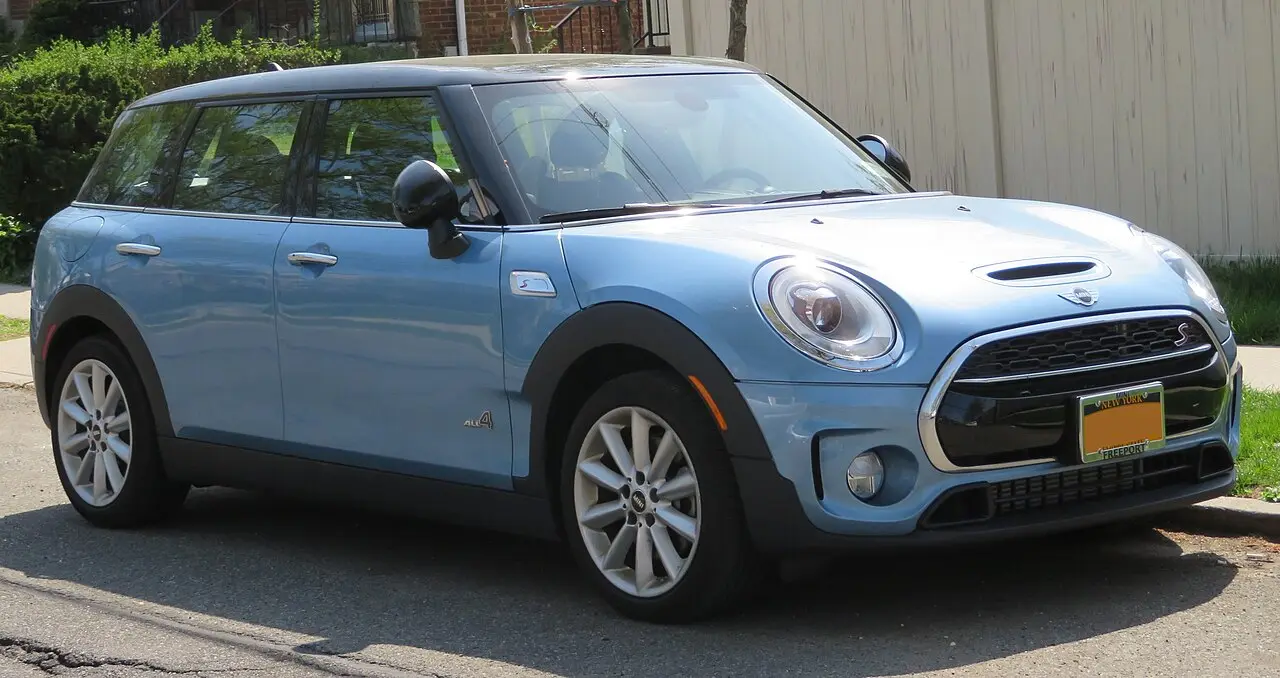
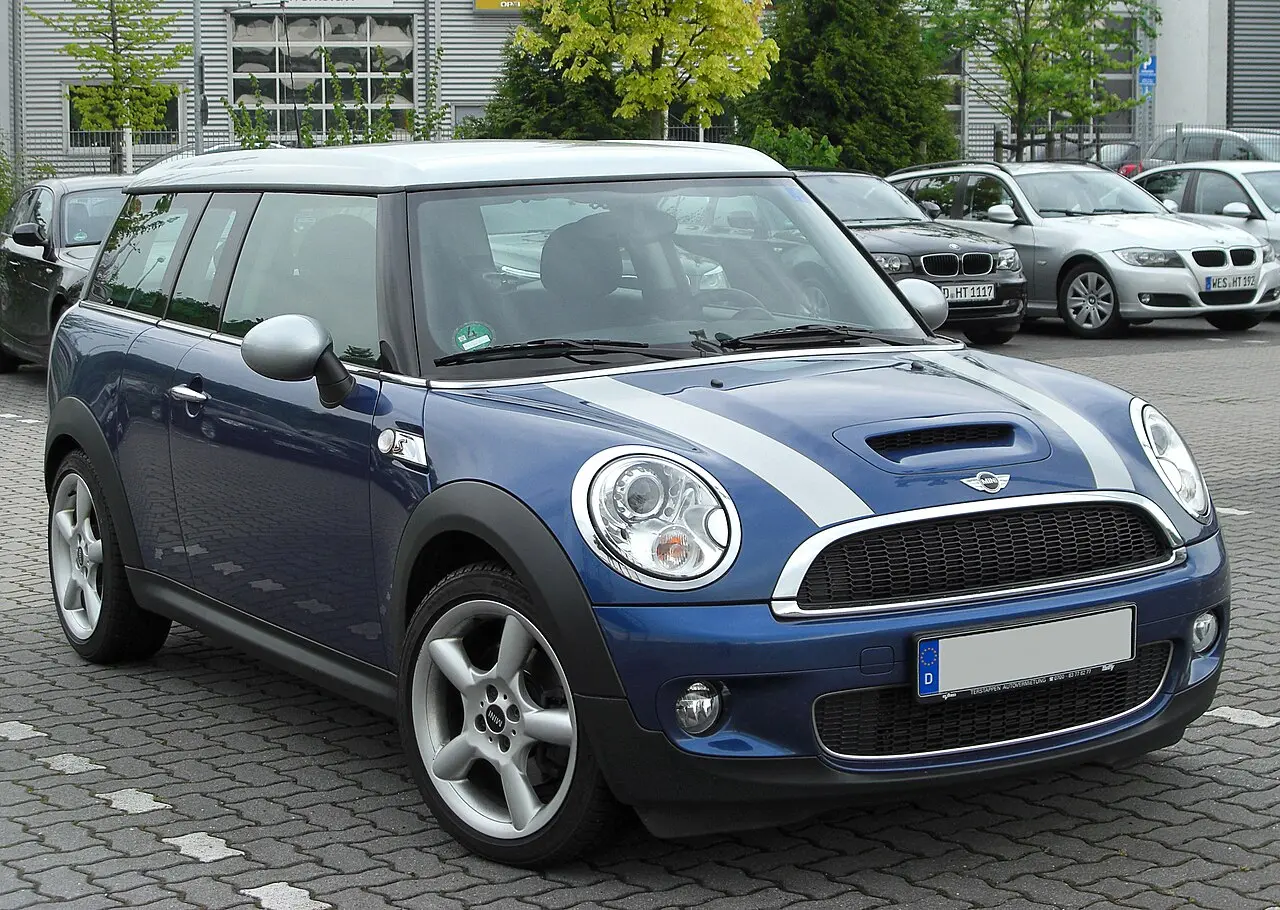
The official data lists 158 versions of the MINI Clubman (2008 - 2024), in the European Union, the United Kingdom, France, the United States, and Canada. Each market publishes its own figures, measured on its own test procedure.
At a glance
Years in the data
2008 - 2024
Markets
European Union, United Kingdom, France, United States, Canada
Engines
1.4 L to 2.0 L
Power
66 kW (90 PS) to 225 kW (306 PS)
Fuels
Diesel, Petrol
Lowest consumption (United Kingdom)
3.8 L/100 km (NEDC)
Lowest consumption (France)
3.9 L/100 km (NEDC)
Lowest consumption (European Union)
4.6 L/100 km (WLTP)
New registrations in the EU
316,376
What is the MINI Clubman?
The Clubman is MINI’s longer, estate-like compact model. Its signature feature is a pair of split rear doors that open outwards. The first modern generation also had an extra rear-hinged side door on one side, while the next adopted conventional side doors. The Clubman name also recalls the classic Mini estate models, which had distinctive split rear doors.
Clubman generations
The first modern generation, R55 (2008-2014), revived the Clubman name with split rear doors and an extra rear-hinged side door for access to the back seats. The second generation, F54 (2015-2024), used conventional side doors while retaining the split rear doors. It brought a roomier passenger layout to the estate-like Clubman format. The modern Clubman ended its run in 2024, after two generations.
Engines, power and official economy
Depending on market and year, the Clubman used 1.4 L to 2.0 L engines, with petrol and diesel versions listed. EU power runs from 66 kW (90 PS) to 225 kW (306 PS); France’s listed range reaches 155 kW (211 PS). The lowest listed EU consumption is 4.6 L/100 km on WLTP. The UK’s lowest figure is 3.8 L/100 km on NEDC, and France’s is 3.9 L/100 km on NEDC. In the US, the lowest EPA figure is 7.4 L/100 km, with a best combined rating of 32 MPG. Canada’s lowest figure is 7.4 L/100 km on NRCan’s 5-cycle test. WLTP and NEDC in Europe, EPA in the US and Canada’s 5-cycle test use different procedures, so figures are best read within their own market.
Where was it sold?
Official figures list the Clubman in the European Union, the UK, France, the US and Canada. EU registrations span 2010-2024, with 316,376 recorded. The listed period is 2008-2018 in the UK, 2012-2014 in France, 2008-2024 in the US and 2008-2023 in Canada.
Questions and answers
How many modern MINI Clubman generations were there?
There were two: the R55 first generation (2008-2014) and the F54 second generation (2015-2024).
What makes the Clubman’s rear distinctive?
It has two split rear doors. The first modern generation also had an extra rear-hinged side door; the second used conventional side doors.
At a glance: Length 3,940 - 3,960 mm · Kerb weight 1,235 - 1,313 kg · Top speed 183 - 227 km/h · MOT first-time pass at 9 - 12 years: 84.8% (UK average 77.9%) Specifications, reliability and all versions
At a glance: Length 4,250 - 4,270 mm · Kerb weight 1,275 - 1,465 kg · Top speed 185 - 250 km/h · MOT first-time pass at 6 - 8 years: 89.0% (UK average 86.4%) Specifications, reliability and all versions
Show all 86 versions
European Union 30 versions
New cars registered in the EU (plus Norway and Iceland), from the European Environment Agency. Figures on the NEDC procedure until 2020 and on WLTP from 2021; versions are grouped by engine and power, with their number of registrations.
Years and version
Engine
Power
Fuel
Consumption (combined)
CO₂
EU registrations
2021 - 2024
1.5 L
100 kW (136 PS)
Petrol
6.0 - 6.1 L/100 km WLTP
139 - 140 g/km
14,396
2021 - 2024
2.0 L
131 kW (178 PS)
Petrol
6.4 - 6.6 L/100 km WLTP
147 - 150 g/km
7,426
2021 - 2024
2.0 L
225 kW (306 PS)
Petrol
7.4 - 7.6 L/100 km WLTP
172 - 174 g/km
3,997
2021 - 2024
2.0 L
110 kW (150 PS)
Diesel
4.8 - 5.1 L/100 km WLTP
131 - 134 g/km
3,014
2021 - 2024
2.0 L
120 kW (163 PS)
Petrol
6.2 - 6.5 L/100 km WLTP
146 - 149 g/km
118
2021 - 2023
1.5 L
75 kW (102 PS)
Petrol
6.0 - 6.2 L/100 km WLTP
140 g/km
3,128
2021 - 2022
1.5 L
85 kW (116 PS)
Diesel
4.6 - 4.7 L/100 km WLTP
126 g/km
1,831
2021 - 2022
2.0 L
140 kW (190 PS)
Diesel
5.2 - 5.3 L/100 km WLTP
139 - 141 g/km
941
2021
2.0 L
141 kW (192 PS)
Petrol
6.8 L/100 km WLTP
159 g/km
354
2015 - 2020
1.5 L
100 kW (136 PS)
Petrol
-
121 - 124 g/km
55,863
2015 - 2020
2.0 L
141 kW (192 PS)
Petrol
-
131 - 142 g/km
41,193
2015 - 2020
2.0 L
110 kW (150 PS)
Diesel
-
112 - 114 g/km
39,876
2015 - 2020
1.5 L
75 kW (102 PS)
Petrol
-
121 - 129 g/km
34,889
2015 - 2020
1.5 L
85 kW (116 PS)
Diesel
-
101 - 108 g/km
21,991
2015 - 2020
2.0 L
140 kW (190 PS)
Diesel
-
118 - 124 g/km
12,279
2019 - 2020
2.0 L
225 kW (306 PS)
Petrol
-
162 g/km
3,443
2016 - 2020
2.0 L
100 kW (136 PS)
Diesel
-
112 - 113 g/km
1,236
2020
2.0 L
131 kW (178 PS)
Petrol
-
135 g/km
462
2015 - 2020
2.0 L
120 kW (163 PS)
Petrol
-
131 - 145 g/km
456
2019
1.5 L
100 kW (136 PS)
Petrol
14.8 kWh/100 km NEDC
126 g/km
8,234
2016 - 2019
2.0 L
170 kW (231 PS)
Petrol
-
155 - 161 g/km
3,637
2019
1.5 L
85 kW (116 PS)
Diesel
14.0 kWh/100 km NEDC
109 g/km
1,415
2018
2.0 L
141 kW (192 PS)
Diesel
-
147 g/km
956
2016 - 2017
2.0 L
120 kW (163 PS)
Diesel
-
120 - 121 g/km
201
2016
1.5 L
100 kW (136 PS)
Diesel
-
121 g/km
28
2016
2.5 L
150 kW (204 PS)
Petrol
-
192 g/km
10
2015
1.6 L
72 kW (98 PS)
Petrol
-
127 g/km
30
2015
1.6 L
90 kW (122 PS)
Petrol
-
129 g/km
13
2015
1.6 L
135 kW (184 PS)
Petrol
-
137 g/km
11
2015
2.0 L
105 kW (143 PS)
Diesel
-
124 g/km
11
United Kingdom 40 versions
New cars on sale in the UK, from the Vehicle Certification Agency. NEDC figures until 2018 and WLTP figures after; years are the editions a version appeared in.
Years and version
Engine
Fuel
Gearbox
Consumption (combined)
CO₂
2017 - 2018MINI One D 15'' & 16'' tyres
1.5 L
Diesel
6-speed manual
3.8 L/100 km NEDC
99 g/km
2017 - 2018MINI One D 15'' & 16'' tyres
1.5 L
Diesel
6-speed automatic
3.9 L/100 km NEDC
104 g/km
2017 - 2018MINI One D 17'' tyres
1.5 L
Diesel
6-speed manual
3.9 L/100 km NEDC
102 g/km
2017 - 2018MINI One D 17'' tyres
1.5 L
Diesel
6-speed automatic
4.1 L/100 km NEDC
107 g/km
2017 - 2018MINI One D 18'' & 19'' tyres
1.5 L
Diesel
6-speed manual
3.9 L/100 km NEDC
104 g/km
2017 - 2018MINI One D 18'' & 19'' tyres
1.5 L
Diesel
6-speed automatic
4.1 L/100 km NEDC
109 g/km
2016 - 2018MINI Cooper - 16'' tyres
1.5 L
Petrol
6-speed automatic
5.1 L/100 km NEDC
118 g/km
2016 - 2018MINI Cooper - 16'' tyres
1.5 L
Petrol
6-speed manual
5.1 L/100 km NEDC
118 g/km
2016 - 2018MINI Cooper - 17'' tyres
1.5 L
Petrol
6-speed automatic
5.2 L/100 km NEDC
121 g/km
2016 - 2018MINI Cooper - 17'' tyres
1.5 L
Petrol
6-speed manual
5.1 L/100 km NEDC
121 g/km
2016 - 2018MINI Cooper - 18'' tyres
1.5 L
Petrol
6-speed automatic
5.3 L/100 km NEDC
123 g/km
2016 - 2018MINI Cooper - 18'' tyres
1.5 L
Petrol
6-speed manual
5.3 L/100 km NEDC
123 g/km
2017 - 2018MINI One 15'' & 16'' tyres
1.5 L
Petrol
6-speed automatic
5.1 L/100 km NEDC
119 g/km
2017 - 2018MINI One 15'' & 16'' tyres
1.5 L
Petrol
6-speed manual
5.1 L/100 km NEDC
119 g/km
2017 - 2018MINI One 17'' tyres
1.5 L
Petrol
6-speed automatic
5.2 L/100 km NEDC
122 g/km
2017 - 2018MINI One 17'' tyres
1.5 L
Petrol
6-speed manual
5.2 L/100 km NEDC
122 g/km
2017 - 2018MINI One 18'' & 19'' tyres
1.5 L
Petrol
6-speed automatic
5.3 L/100 km NEDC
124 g/km
2017 - 2018MINI One 18'' & 19'' tyres
1.5 L
Petrol
6-speed manual
5.3 L/100 km NEDC
124 g/km
2016 - 2018MINI Cooper D - 16'' tyres
2.0 L
Diesel
8-speed automatic
4.1 L/100 km NEDC
109 g/km
2016 - 2018MINI Cooper D - 16'' tyres
2.0 L
Diesel
6-speed manual
4.1 L/100 km NEDC
109 g/km
2016 - 2018MINI Cooper D - 17'' tyres
2.0 L
Diesel
8-speed automatic
4.3 L/100 km NEDC
113 g/km
2016 - 2018MINI Cooper D - 17'' tyres
2.0 L
Diesel
6-speed manual
4.3 L/100 km NEDC
113 g/km
2016 - 2018MINI Cooper D - 18'' & 19'' tyres
2.0 L
Diesel
8-speed automatic
4.4 L/100 km NEDC
115 g/km
2016 - 2018MINI Cooper D - 18'' & 19'' tyres
2.0 L
Diesel
6-speed manual
4.4 L/100 km NEDC
115 g/km
2016 - 2018MINI Cooper SD - 17'' tyres
2.0 L
Diesel
8-speed automatic
4.3 L/100 km NEDC
114 g/km
2016 - 2018MINI Cooper SD - 17'' tyres
2.0 L
Diesel
6-speed manual
4.5 L/100 km NEDC
119 g/km
2016 - 2018MINI Cooper SD - 18'' & 19'' tyres
2.0 L
Diesel
8-speed automatic
4.4 L/100 km NEDC
117 g/km
2016 - 2018MINI Cooper SD - 18'' & 19'' tyres
2.0 L
Diesel
6-speed manual
4.6 L/100 km NEDC
122 g/km
2016 - 2018MINI Cooper SD ALL4 Clubman - 16'' & 17'' tyres · MINI Cooper SD ALL4 - 16'' & 17'' tyres
2.0 L
Diesel
8-speed automatic
4.8 L/100 km NEDC
126 g/km
2016 - 2018MINI Cooper SD ALL4 Clubman - 18'' & 19'' tyres · MINI Cooper SD ALL4 - 18'' & 19'' tyres
2.0 L
Diesel
8-speed automatic
4.9 L/100 km NEDC
129 g/km
2016 - 2018MINI Cooper S - 17'' tyres
2.0 L
Petrol
8-speed automatic
5.8 L/100 km NEDC
134 g/km
2016 - 2018MINI Cooper S - 17'' tyres
2.0 L
Petrol
6-speed manual
6.2 L/100 km NEDC
144 g/km
2016 - 2018MINI Cooper S - 18'' & 19'' tyres
2.0 L
Petrol
8-speed automatic
5.9 L/100 km NEDC
137 g/km
2016 - 2018MINI Cooper S - 18'' & 19'' tyres
2.0 L
Petrol
6-speed manual
6.3 L/100 km NEDC
147 g/km
2016 - 2018MINI Cooper S ALL4 Clubman - 16'' & 17'' tyres
2.0 L
Petrol
8-speed automatic
6.3 L/100 km NEDC
146 g/km
2016 - 2018MINI Cooper S ALL4 Clubman - 16'' & 17'' tyres
2.0 L
Petrol
6-speed manual
6.9 L/100 km NEDC
159 g/km
2016 - 2018MINI Cooper S ALL4 Clubman - 18'' & 19'' tyres
2.0 L
Petrol
8-speed automatic
6.4 L/100 km NEDC
149 g/km
2016 - 2018MINI Cooper S ALL4 Clubman - 18'' & 19'' tyres
2.0 L
Petrol
6-speed manual
7.0 L/100 km NEDC
162 g/km
2017 - 2018MINI John Cooper Works ALL4
2.0 L
Petrol
8-speed automatic
6.8 L/100 km NEDC
154 g/km
2017 - 2018MINI John Cooper Works ALL4
2.0 L
Petrol
6-speed manual
7.4 L/100 km NEDC
168 g/km
United States 9 versions
Model years sold in the USA, from the EPA and the Department of Energy (fueleconomy.gov). MPG on the EPA test; litres per 100 km = 235.215 ÷ MPG.
Years and version
Engine
Fuel
Gearbox
Drive
Consumption (combined)
CO₂
2017 - 2024SIDI
2.0 L
Petrol
8-speed automatic
All-wheel drive
26 - 27 MPG (8.7 - 9.0 L/100 km) EPA
206 - 215 g/km
2020 - 2024SIDI
2.0 L
Petrol
7-speed automated manual
Front-wheel drive
29 MPG (8.1 L/100 km) EPA
189 - 191 g/km
2016 - 2024SIDI
2.0 L
Petrol
6-speed manual
Front-wheel drive
25 - 26 MPG (9.0 - 9.4 L/100 km) EPA
208 - 217 g/km
2017 - 2019SIDI
1.5 L
Petrol
6-speed manual
All-wheel drive
26 MPG (9.0 L/100 km) EPA
214 g/km
2016 - 2019SIDI
1.5 L
Petrol
6-speed automatic
Front-wheel drive
27 - 28 MPG (8.4 - 8.7 L/100 km) EPA
197 - 201 g/km
2017 - 2019SIDI
1.5 L
Petrol
8-speed automatic
All-wheel drive
25 - 26 MPG (9.0 - 9.4 L/100 km) EPA
212 - 219 g/km
2016 - 2019SIDI
1.5 L
Petrol
6-speed manual
Front-wheel drive
28 MPG (8.4 L/100 km) EPA
197 - 199 g/km
2017 - 2019SIDI
2.0 L
Petrol
6-speed manual
All-wheel drive
24 MPG (9.8 L/100 km) EPA
227 - 228 g/km
2016 - 2019SIDI
2.0 L
Petrol
8-speed automatic
Front-wheel drive
27 MPG (8.7 L/100 km) EPA
204 - 206 g/km
Canada 7 versions
Model years sold in Canada, from Natural Resources Canada fuel consumption ratings (5-cycle test).
Years and version
Engine
Fuel
Gearbox
Consumption (combined)
CO₂
2017 - 2023Mid-size
1.5 L
Petrol
8-speed automatic
8.5 - 9.1 L/100 km 5-cycle
197 - 213 g/km
2017 - 2023Mid-size
2.0 L
Petrol
8-speed automatic
8.7 - 9.2 L/100 km 5-cycle
205 - 215 g/km
2023Mid-size
2.0 L
Petrol
7-speed automated manual
8.2 L/100 km 5-cycle
191 g/km
2016 - 2023Mid-size
2.0 L
Petrol
6-speed manual
9.2 - 9.7 L/100 km 5-cycle
215 - 228 g/km
2016 - 2019Mid-size
1.5 L
Petrol
6-speed manual
8.2 - 9.1 L/100 km 5-cycle
194 - 214 g/km
2016 - 2017Mid-size
1.5 L
Petrol
6-speed automatic
8.3 - 8.4 L/100 km 5-cycle
195 - 197 g/km
2016Mid-size
2.0 L
Petrol
6-speed automatic
8.5 L/100 km 5-cycle
198 g/km
MINI Clubman recalls
10 official safety recalls for the MINI Clubman from NHTSA (United States), DVSA (United Kingdom) and the EU Safety Gate, newest first. Recall repairs are normally free at the maker’s dealers.
Footwell control module may short circuit2008 - 2014
Front seatbelt retractor may not work as specified2022
Passenger seat belt retractor may deactivate early2021
Rollover sensor may prevent safety systems from activating2020
Official figures are measured on standard test procedures and differ between markets. Your consumption depends on how, where and in what conditions you drive.