Mercedes-Benz

Mercedes-Benz B-Class

Mercedes-Benz B-Class
Photo: Alexander Migl / Wikimedia Commons · CC BY-SA 4.0

The official data lists 691 versions of the Mercedes-Benz B-Class (2006–2026), in the European Union, the United Kingdom, France, the United States, and Canada. Each market publishes its own figures, measured on its own test procedure.

At a glance

Years in the data
2006–2026
Markets
European Union, United Kingdom, France, United States, Canada
Engines
1.3 L to 2.1 L
Power
66 kW (90 PS) to 165 kW (224 PS)
Fuels
Electric, Diesel, Petrol, Natural gas, Hybrid, Plug-in hybrid, LPG
Lowest consumption (European Union)
1.2 L/100 km (WLTP)
Lowest consumption (France)
3.6 L/100 km (NEDC)
Lowest consumption (United Kingdom)
3.8 L/100 km (NEDC)
Plug-in hybrid, weighted (European Union)
0.9 L/100 km (WLTP)
New registrations in the EU
1,669,543

What is the Mercedes-Benz B-Class?

The B-Class is a compact family car with a tall, practical body. Mercedes-Benz calls it a Sports Tourer: it sits in the brand’s compact-car range and offers an upright cabin suited to passengers and luggage. That makes it a natural fit for everyday family trips, commuting and longer journeys.

In EU registration figures, the B-Class spans 2010–2025, with 1,669,543 registrations. UK figures span 2006–2026.

Generations and design

The first generation, W245, ran from 2005 to 2011, followed by the W246 from 2011 to 2018. The W247 began in 2018. The B-Class kept its tall, roomy format across these generations, while gaining updated styling and powertrain options. Mercedes-Benz describes the W247 as a Sports Tourer for families, with a more dynamic design and the MBUX multimedia system.

Engines, power and official consumption

In the EU, the B-Class range spans engines from 1.3 to 2.1 litres and power from 66 kW (90 PS) to 165 kW (224 PS). Petrol and diesel versions sit alongside hybrids, plug-in hybrids and electric models; natural-gas and LPG versions also appear in EU figures. The lowest listed consumption for petrol, diesel and hybrid versions is 1.2 L/100 km on WLTP. The plug-in hybrid’s weighted WLTP figure starts at 0.9 L/100 km and assumes some driving is electric.

The lowest listed UK figure is 3.8 L/100 km on NEDC, and France’s is 3.6 L/100 km on NEDC. Canada’s lowest listed figure is 8 L/100 km on the NRCan 5-cycle test. These results use different procedures: Europe’s WLTP and NEDC, and Canada’s 5-cycle. US figures cover electric versions.

Where was the B-Class sold?

The B-Class appears in figures for the EU, UK, France, the USA and Canada, with different powertrains in different markets. Canadian figures list petrol versions, while US figures cover electric models. Among EU registration leaders are 1.8-litre diesels rated at 80 kW (109 PS).

Questions and answers

What kind of car is the Mercedes-Benz B-Class?

It is a compact family car with a tall, practical body, known as a Sports Tourer in Mercedes-Benz’s compact-car range.

What generations of B-Class are there?

The generations are W245 (2005–2011), W246 (2011–2018) and W247 (2018–today).

What is the lowest official B-Class consumption figure listed?

In EU figures, the lowest listed figure for petrol, diesel and hybrid versions is 1.2 L/100 km on WLTP. The plug-in hybrid weighted WLTP figure starts at 0.9 L/100 km and assumes some electric driving.

Was the B-Class sold in the USA?

Yes. US figures cover electric versions from 2014 to 2017.
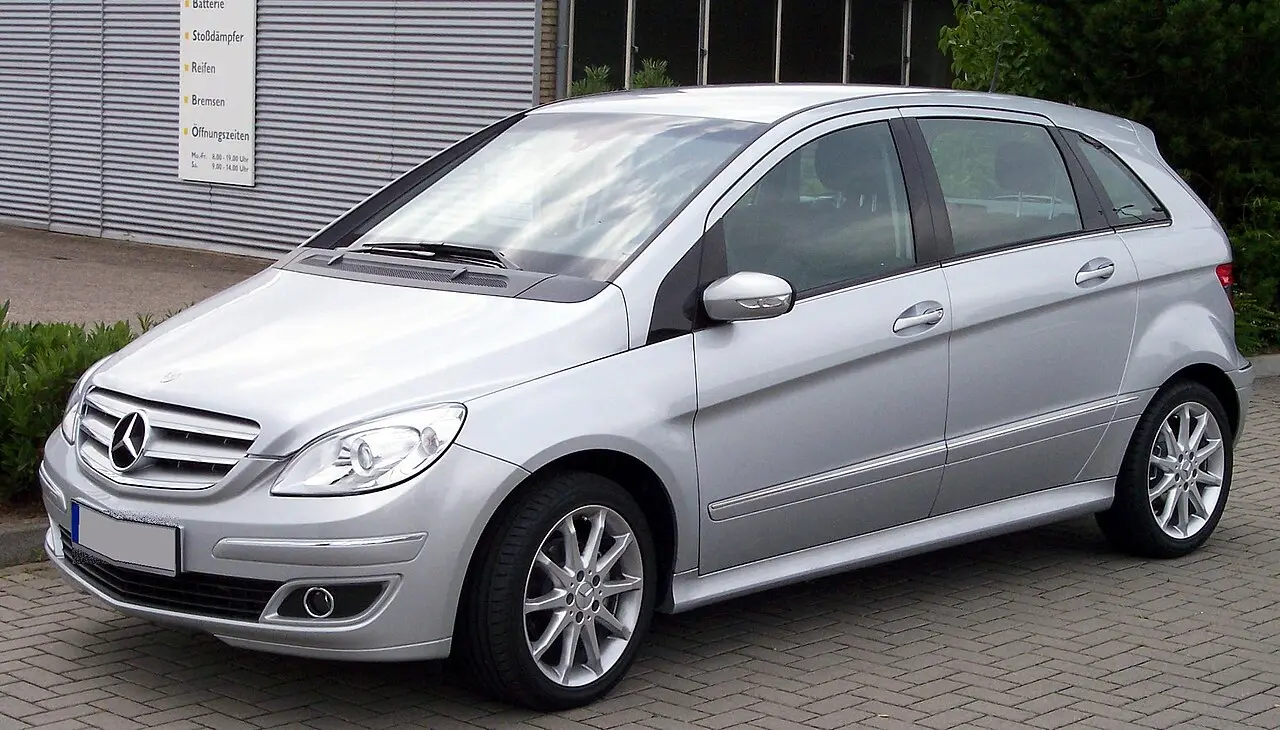
B-Class W245 (2005–2011)

Mercedes-Benz B-Class W245
Photo: Stahlkocher / Wikimedia Commons · CC BY-SA 3.0

Model codes: W245 · References: en.wikipedia.org

Show all 80 versions

B-Class W246 (2011–2018)

Mercedes-Benz B-Class W246
Photo: M 93 / Wikimedia Commons · CC BY-SA 3.0 de

Model codes: W246 · References: en.wikipedia.org

Show all 494 versions

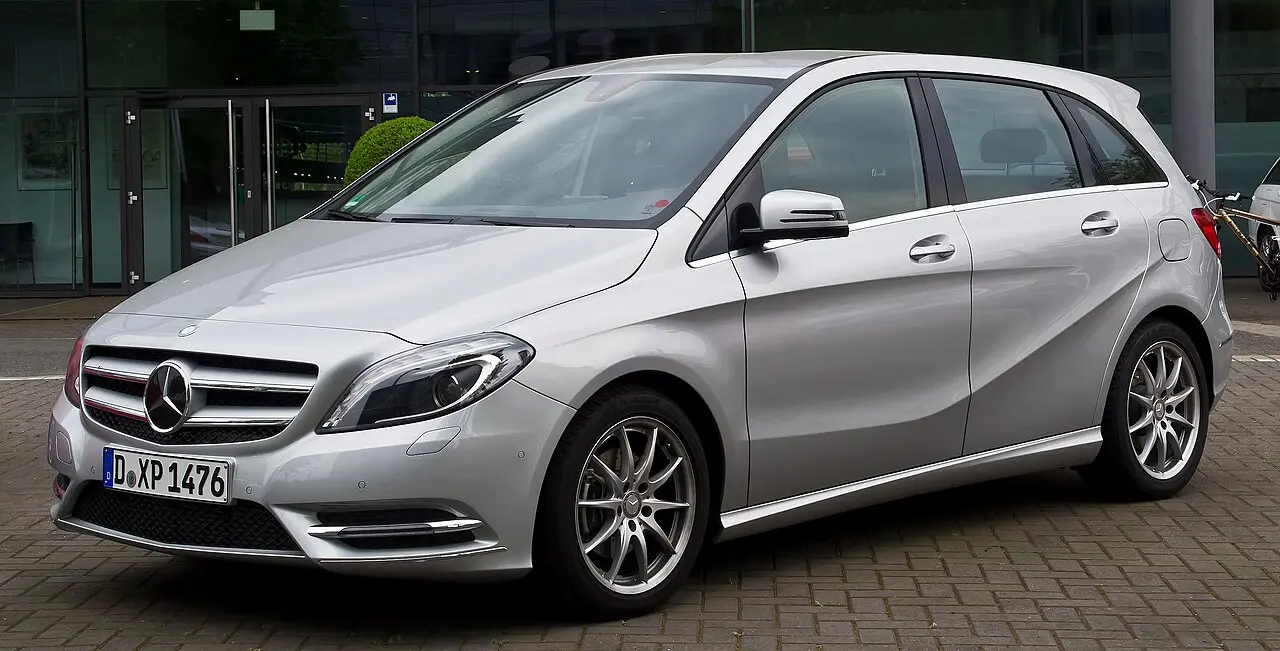
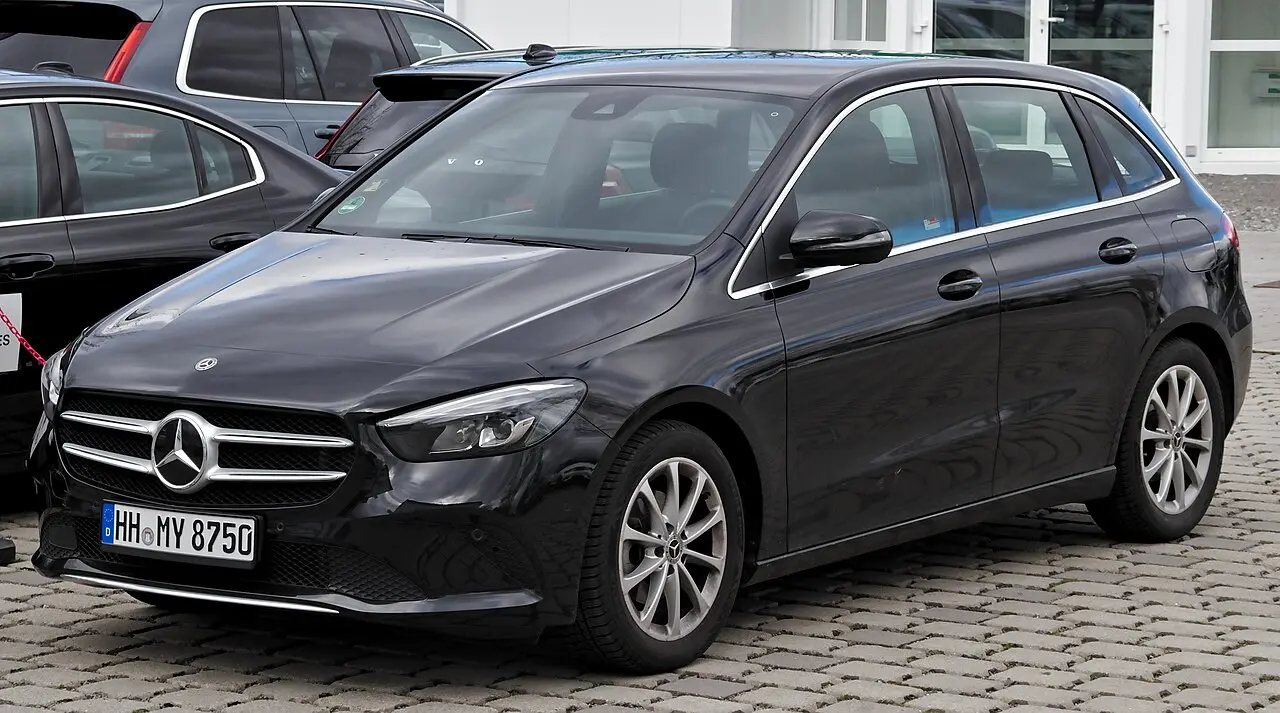
B-Class W247 (since 2018)

Mercedes-Benz B-Class W247
Photo: Alexander Migl / Wikimedia Commons · CC BY-SA 4.0

Model codes: W247 · References: en.wikipedia.org

European Union 98 versions

New cars registered in the EU (plus Norway and Iceland), from the European Environment Agency. Figures on the NEDC procedure until 2020 and on WLTP from 2021; versions are grouped by engine and power, with their number of registrations.

Years and versionEnginePowerFuelConsumption (combined)CO₂Electric rangeEU registrations
20251.3 L120 kW (163 PS)Hybrid6.1 L/100 km WLTP138 g/km–4,085
20251.3 L100 kW (136 PS)Hybrid6.1 L/100 km WLTP138 g/km–3,522
20252.0 L110 kW (150 PS)Diesel5.2 L/100 km WLTP137 g/km–2,203
20251.3 L120 kW (163 PS)Plug-in hybrid1.2 L/100 km WLTP17.4 kWh/100 km WLTP27 g/km79 km1,856
20252.0 L85 kW (116 PS)Diesel5.2 L/100 km WLTP138 g/km–1,723
2024–20252.0 L140 kW (190 PS)Diesel5.3 L/100 km WLTP138 g/km–621
20252.0 L140 kW (190 PS)Hybrid7.0 L/100 km WLTP159 g/km–310
20252.0 L165 kW (224 PS)Hybrid7.1 L/100 km WLTP161 g/km–192
20241.3 L120 kW (163 PS)Hybrid6.2 L/100 km WLTP141 g/km–3,820
20241.3 L100 kW (136 PS)Hybrid6.2 L/100 km WLTP140 g/km–3,488
20242.0 L110 kW (150 PS)Diesel5.2 L/100 km WLTP136 g/km–2,480
20241.3 L120 kW (163 PS)Plug-in hybrid1.0 L/100 km WLTP17.7 kWh/100 km WLTP22 g/km74 km2,224
20242.0 L85 kW (116 PS)Diesel5.3 L/100 km WLTP139 g/km–2,132
20242.0 L140 kW (190 PS)Hybrid7.2 L/100 km WLTP163 g/km–333
20242.0 L165 kW (224 PS)Hybrid7.2 L/100 km WLTP164 g/km–264
20231.3 L100 kW (136 PS)Hybrid6.1 L/100 km WLTP139 g/km–4,045
20231.3 L120 kW (163 PS)Hybrid6.1 L/100 km WLTP140 g/km–3,530
20232.0 L110 kW (150 PS)Diesel5.2 L/100 km WLTP137 g/km–2,795
20232.0 L85 kW (116 PS)Diesel5.3 L/100 km WLTP138 g/km–2,400
20231.3 L120 kW (163 PS)Plug-in hybrid0.9 L/100 km WLTP17.6 kWh/100 km WLTP22 g/km74 km2,202
20232.0 L140 kW (190 PS)Diesel5.3 L/100 km WLTP138 g/km–494
20232.0 L140 kW (190 PS)Hybrid7.2 L/100 km WLTP165 g/km–430
20232.0 L165 kW (224 PS)Hybrid7.3 L/100 km WLTP166 g/km–413
20231.3 L118 kW (160 PS)Plug-in hybrid1.1 L/100 km WLTP17.8 kWh/100 km WLTP25 g/km67 km229
20231.3 L100 kW (136 PS)Petrol6.2 L/100 km WLTP141 g/km–206
20231.3 L120 kW (163 PS)Petrol6.3 L/100 km WLTP143 g/km–137
20232.0 L165 kW (224 PS)Petrol7.3 L/100 km WLTP167 g/km–22
20221.3 L118 kW (160 PS)Plug-in hybrid1.1 L/100 km WLTP18.2 kWh/100 km WLTP25 g/km71 km6,390
20222.0 L85 kW (116 PS)Diesel5.1 L/100 km WLTP136 g/km–3,942
20221.3 L100 kW (136 PS)Petrol6.1 L/100 km WLTP139 g/km–3,851
20221.3 L120 kW (163 PS)Petrol6.3 L/100 km WLTP142 g/km–3,350
20222.0 L110 kW (150 PS)Diesel5.1 L/100 km WLTP135 g/km–2,762
20222.0 L140 kW (190 PS)Diesel5.3 L/100 km WLTP139 g/km–340
20222.0 L165 kW (224 PS)Petrol7.2 L/100 km WLTP163 g/km–258
20221.3 L80 kW (109 PS)Petrol6.1 L/100 km WLTP138 g/km–133
20221.3 L100 kW (136 PS)Hybrid6.3 L/100 km WLTP142 g/km–15
20221.3 L118 kW (160 PS)Hybrid1.3 L/100 km WLTP148 g/km–13
20211.3 L118 kW (160 PS)Plug-in hybrid1.2 L/100 km WLTP20.6 kWh/100 km WLTP26 g/km71 km12,514
20211.3 L100 kW (136 PS)Petrol6.1 L/100 km WLTP140 g/km–9,320
20212.0 L110 kW (150 PS)Diesel5.0 L/100 km WLTP135 g/km–7,873
20212.0 L85 kW (116 PS)Diesel5.0 L/100 km WLTP136 g/km–7,116
20211.3 L120 kW (163 PS)Petrol6.3 L/100 km WLTP143 g/km–6,276
20211.5 L85 kW (116 PS)Diesel4.4 L/100 km WLTP122 g/km–1,779
20212.0 L140 kW (190 PS)Diesel5.3 L/100 km WLTP139 g/km–806
20212.0 L165 kW (224 PS)Petrol7.2 L/100 km WLTP164 g/km–617
20211.3 L80 kW (109 PS)Petrol5.9 L/100 km WLTP137 g/km–568
20211.3 L118 kW (160 PS)Hybrid1.2 L/100 km WLTP21.1 kWh/100 km WLTP27 g/km69 km284
20212.0 L140 kW (190 PS)Petrol7.5 L/100 km WLTP167 g/km–160
20211.5 L70 kW (95 PS)Diesel4.4 L/100 km WLTP122 g/km–122
20201.3 L100 kW (136 PS)Petrol–126 g/km–22,685
20201.5 L85 kW (116 PS)Diesel–103 g/km–17,747
20202.0 L110 kW (150 PS)Diesel–114 g/km–14,976
20201.3 L120 kW (163 PS)Petrol–125 g/km–14,623
20201.3 L118 kW (160 PS)Plug-in hybrid21.4 kWh/100 km NEDC33 g/km73 km6,641
20202.0 L140 kW (190 PS)Petrol–149 g/km–2,964
20202.0 L140 kW (190 PS)Diesel–117 g/km–2,589
20202.0 L165 kW (224 PS)Petrol–144 g/km–1,370
20201.3 L80 kW (109 PS)Petrol–131 g/km–658
20201.5 L70 kW (95 PS)Diesel–107 g/km–352
20201.3 L118 kW (160 PS)Petrol–––252
20202.0 L85 kW (116 PS)Diesel–121 g/km–220
20201.3 L55 kW (75 PS)Plug-in hybrid14.7 kWh/100 km NEDC32 g/km68 km45
20202.1 L125 kW (170 PS)Diesel–144 g/km–38
20191.3 L100 kW (136 PS)Petrol–127 g/km–40,594
20191.5 L85 kW (116 PS)Diesel–104 g/km–30,738
20192.0 L110 kW (150 PS)Diesel–115 g/km–25,813
20191.3 L120 kW (163 PS)Petrol–127 g/km–20,867
20192.0 L140 kW (190 PS)Petrol–151 g/km–8,428
20192.1 L100 kW (136 PS)Diesel–141 g/km–4,616
20192.0 L165 kW (224 PS)Petrol–146 g/km–3,850
20192.0 L140 kW (190 PS)Diesel–116 g/km–3,478
20191.6 L90 kW (122 PS)Petrol–138 g/km–1,870
20192.1 L125 kW (170 PS)Diesel–144 g/km–986
20191.5 L80 kW (109 PS)Diesel–106 g/km–904
20191.6 L115 kW (156 PS)Petrol–147 g/km–716
20191.3 L80 kW (109 PS)Petrol–133 g/km–314
20192.0 L135 kW (184 PS)Petrol–169 g/km–126
20192.0 L155 kW (211 PS)Petrol–169 g/km–120
20191.3 L120 kW (163 PS)Plug-in hybrid–27 g/km–81
20191.5 L70 kW (95 PS)Diesel–113 g/km–54
20192.1 L130 kW (177 PS)Diesel–118 g/km–52
20191.6 L75 kW (102 PS)Petrol–139 g/km–48
20191.3 L120 kW (163 PS)Petrol–127 g/km–32
20191.5 L66 kW (90 PS)Diesel–107 g/km–30
20191.3 L118 kW (160 PS)Plug-in hybrid–33 g/km–10
20181.6 L90 kW (122 PS)Petrol–138 g/km–36,272
20181.5 L80 kW (109 PS)Diesel–106 g/km–28,205
20182.1 L100 kW (136 PS)Diesel–125 g/km–24,030
20181.6 L115 kW (156 PS)Petrol–137 g/km–14,278
20182.0 L135 kW (184 PS)Petrol–162 g/km–2,978
20182.1 L130 kW (177 PS)Diesel–115 g/km–1,548
20181.5 L66 kW (90 PS)Diesel–106 g/km–1,471
20182.1 L125 kW (170 PS)Diesel–145 g/km–1,458
20182.0 L155 kW (211 PS)Petrol–159 g/km–1,274
20181.6 L75 kW (102 PS)Petrol–131 g/km–1,176
2018Electric motor65 kW (88 PS)Electric17.8 kWh/100 km NEDC0 g/km–260
20182.0 L115 kW (156 PS)Natural gas–116 g/km–16
20181.2 L130 kW (177 PS)Diesel–121 g/km–14

United Kingdom 62 versions

New cars on sale in the UK, from the Vehicle Certification Agency. NEDC figures until 2018 and WLTP figures after; years are the editions a version appeared in.

Years and versionEnginePowerFuelGearboxConsumption (combined)CO₂Electric range
2025–2026B 2001.3 L163 kW (222 PS)Hybrid7-speed automatic5.9 L/100 km WLTP134 g/km–
2025–2026B 2001.3 L163 kW (222 PS)Hybrid7-speed automatic6.6 L/100 km WLTP149 g/km–
2023–2026B 200 d2.0 L150 kW (204 PS)Diesel8-speed automatic5.1 L/100 km WLTP133 g/km–
2023–2026B 200 d2.0 L150 kW (204 PS)Diesel8-speed automatic5.6 L/100 km WLTP148 g/km–
2024B 2001.3 L163 kW (222 PS)Hybrid7-speed automatic6.1 L/100 km WLTP138 g/km–
2024B 2001.3 L163 kW (222 PS)Hybrid7-speed automatic6.8 L/100 km WLTP154 g/km–
2021–2023B 1801.3 L100 kW (136 PS)Petrol7-speed automatic6.8 L/100 km WLTP154 g/km–
2022–2023B 1801.3 L100 kW (136 PS)Petrol7-speed automatic6.0 L/100 km WLTP136 g/km–
2020–2023B 2001.3 L120 kW (163 PS)Petrol7-speed automatic6.0 L/100 km WLTP137 g/km–
2021–2023B 2001.3 L120 kW (163 PS)Petrol7-speed automatic6.8 L/100 km WLTP154 g/km–
2022–2023B 250 e1.3 L160 kW (218 PS)Plug-in hybrid8-speed automatic17.9 kWh/100 km WLTP–73 km
2022–2023B 250 e1.3 L160 kW (218 PS)Plug-in hybrid8-speed automatic21.2 kWh/100 km WLTP–63 km
2023B 2001.3 L163 kW (222 PS)Hybrid7-speed automatic6.0 L/100 km WLTP136 g/km–
2023B 2001.3 L163 kW (222 PS)Hybrid7-speed automatic6.6 L/100 km WLTP150 g/km–
2021–2023B 200 d2.0 L110 kW (150 PS)Diesel8-speed automatic5.7 L/100 km WLTP148 g/km–
2022–2023B 200 d2.0 L110 kW (150 PS)Diesel8-speed automatic5.0 L/100 km WLTP130 g/km–
2021B 250 e1.3 L–Plug-in hybrid8-speed automatic17.7 kWh/100 km WLTP–67 km
2021B 250 e1.3 L–Plug-in hybrid8-speed automatic19.6 kWh/100 km WLTP–58 km
2020–2021B 1801.3 L100 kW (136 PS)Petrol7-speed automatic6.0 L/100 km WLTP137 g/km–
2020–2021B 1801.3 L100 kW (136 PS)Petrol7-speed automatic6.9 L/100 km WLTP157 g/km–
2021B 1801.3 L100 kW (136 PS)Petrol7-speed automatic5.9 L/100 km WLTP137 g/km–
2021B 1801.3 L100 kW (136 PS)Petrol7-speed automatic6.8 L/100 km WLTP137 g/km–
2020–2021B 2001.3 L120 kW (163 PS)Petrol7-speed automatic6.9 L/100 km WLTP157 g/km–
2021B 2001.3 L120 kW (163 PS)Petrol7-speed automatic5.9 L/100 km WLTP137 g/km–
2021B 2001.3 L120 kW (163 PS)Petrol7-speed automatic6.8 L/100 km WLTP137 g/km–
2021B 250 e1.3 L160 kW (218 PS)Plug-in hybrid8-speed automatic18.0 kWh/100 km WLTP–64 km
2021B 250 e1.3 L160 kW (218 PS)Plug-in hybrid8-speed automatic21.3 kWh/100 km WLTP–74 km
2020–2021B 180 d1.5 L85 kW (116 PS)Diesel7-speed automatic4.5 L/100 km WLTP119 g/km–
2020–2021B 180 d1.5 L85 kW (116 PS)Diesel7-speed automatic5.3 L/100 km WLTP138 g/km–
2021B 180 d2.0 L85 kW (116 PS)Diesel8-speed automatic4.9 L/100 km WLTP134 g/km–
2021B 180 d2.0 L85 kW (116 PS)Diesel8-speed automatic5.7 L/100 km WLTP150 g/km–
2021B 180 d2.0 L85 kW (116 PS)Diesel8-speed automatic5.8 L/100 km WLTP133 g/km–
2021B 180 d2.0 L85 kW (116 PS)Diesel8-speed automatic5.8 L/100 km WLTP150 g/km–
2020–2021B 200 d2.0 L110 kW (150 PS)Diesel8-speed automatic4.9 L/100 km WLTP128 g/km–
2020–2021B 200 d2.0 L110 kW (150 PS)Diesel8-speed automatic5.5 L/100 km WLTP145 g/km–
2021B 200 d2.0 L110 kW (150 PS)Diesel8-speed automatic4.8 L/100 km WLTP130 g/km–
2021B 200 d2.0 L110 kW (150 PS)Diesel8-speed automatic5.7 L/100 km WLTP130 g/km–
2020–2021B 220 d2.0 L140 kW (190 PS)Diesel8-speed automatic4.9 L/100 km WLTP129 g/km–
2020–2021B 220 d2.0 L140 kW (190 PS)Diesel8-speed automatic5.6 L/100 km WLTP146 g/km–
2021B 220 d2.0 L140 kW (190 PS)Diesel8-speed automatic4.9 L/100 km WLTP132 g/km–
2021B 220 d2.0 L140 kW (190 PS)Diesel8-speed automatic5.7 L/100 km WLTP150 g/km–
2021B 220 d2.0 L140 kW (190 PS)Diesel8-speed automatic5.7 L/100 km WLTP132 g/km–
2021B 220 d2.0 L140 kW (190 PS)Diesel8-speed automatic5.7 L/100 km WLTP149 g/km–
2020–2021B 2502.0 L165 kW (224 PS)Petrol7-speed automatic6.8 L/100 km WLTP155 g/km–
2020–2021B 2502.0 L165 kW (224 PS)Petrol7-speed automatic7.7 L/100 km WLTP176 g/km–
2021B 2502.0 L165 kW (224 PS)Petrol7-speed automatic6.5 L/100 km WLTP155 g/km–
2021B 2502.0 L165 kW (224 PS)Petrol7-speed automatic7.6 L/100 km WLTP174 g/km–
2021B 2502.0 L165 kW (224 PS)Petrol7-speed automatic7.4 L/100 km WLTP155 g/km–
2021B 2502.0 L165 kW (224 PS)Petrol7-speed automatic7.4 L/100 km WLTP172 g/km–
2018B 180 with 16'' rear wheels · B 180 with 17'' rear wheels1.6 L–Petrol6-speed manual6.7 L/100 km NEDC153 g/km–
2018B 180 with 18'' rear wheels1.6 L–Petrol6-speed manual6.8 L/100 km NEDC155 g/km–
2018B 180 with 16'' rear wheels · B 180 with 17'' rear wheels1.6 L–Petrol7-speed automatic6.2 L/100 km NEDC142 g/km–
2018B 180 with 18'' rear wheels1.6 L–Petrol7-speed automatic6.3 L/100 km NEDC144 g/km–
2018B 200 with 16'' rear wheels1.6 L–Petrol6-speed manual6.4 L/100 km NEDC147 g/km–
2018B 200 with 17'' rear wheels · B 200 with 18'' rear wheels1.6 L–Petrol6-speed manual6.5 L/100 km NEDC149 g/km–
2018B 200 with 16'' rear wheels1.6 L–Petrol7-speed automatic6.4 L/100 km NEDC146 g/km–
2018B 200 with 17'' rear wheels · B 200 with 18'' rear wheels1.6 L–Petrol7-speed automatic6.5 L/100 km NEDC148 g/km–
2018B 200 d with 16'' rear wheels2.1 L–Diesel7-speed automatic5.3 L/100 km NEDC142 g/km–
2018B 200 d with 17'' rear wheels · B 200 d with 18'' rear wheels2.1 L–Diesel7-speed automatic5.4 L/100 km NEDC145 g/km–
2018B 220 d 4MATIC with 17'' rear wheels2.1 L–Diesel7-speed automatic5.8 L/100 km NEDC152 g/km–
2018B 220 d with 16'' rear wheels2.1 L–Diesel7-speed automatic5.3 L/100 km NEDC139 g/km–
2018B 220 d with 17'' rear wheels · B 220 d with 18'' rear wheels2.1 L–Diesel7-speed automatic5.4 L/100 km NEDC142 g/km–

Canada 2 versions

Model years sold in Canada, from Natural Resources Canada fuel consumption ratings (5-cycle test).

Years and versionEngineFuelGearboxConsumption (combined)CO₂
2018–2019Mid-size · Station wagon: Small2.0 LPetrol7-speed automated manual8.4 L/100 km 5-cycle196 g/km
2018–2019Mid-size · Station wagon: Small2.0 LPetrol7-speed automated manual9.1 L/100 km 5-cycle215 g/km

Official figures are measured on standard test procedures and differ between markets. Your consumption depends on how, where and in what conditions you drive.