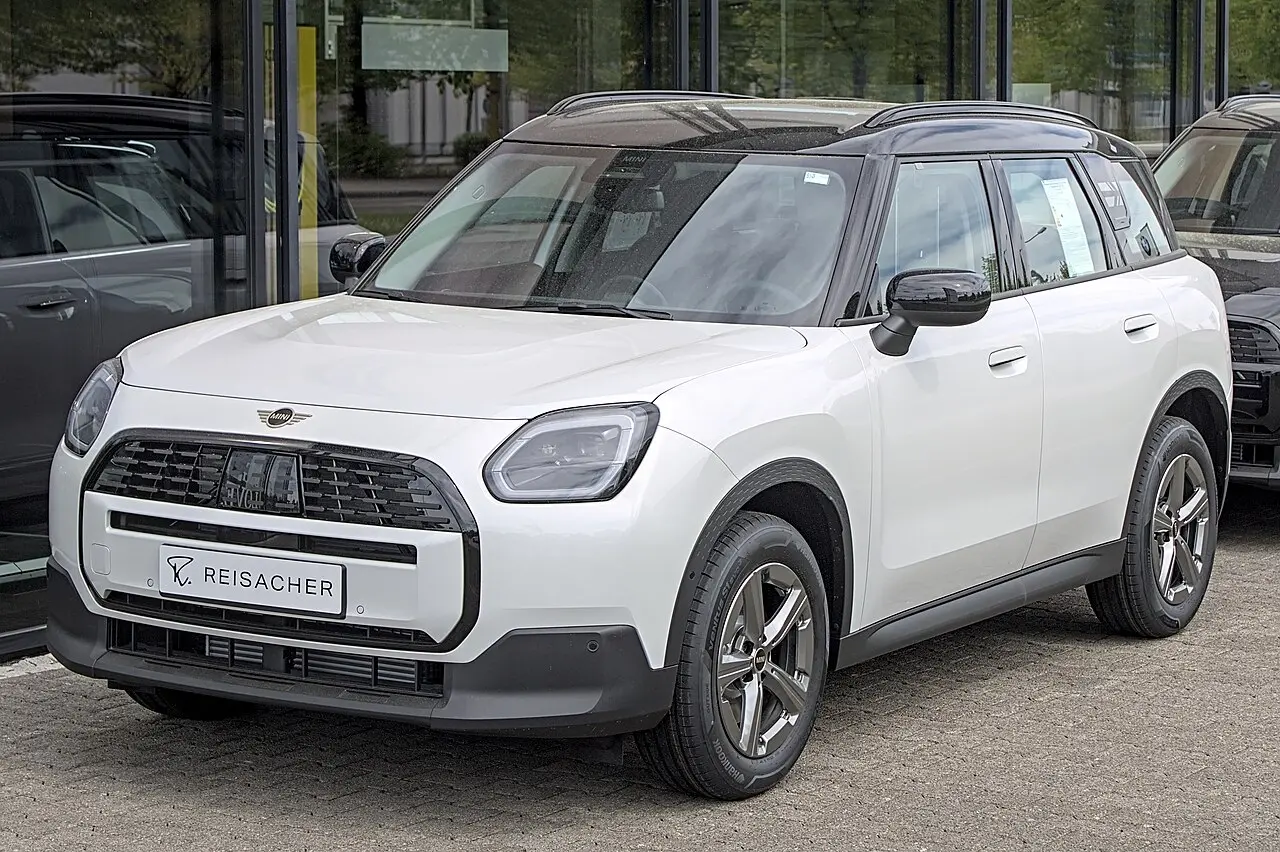
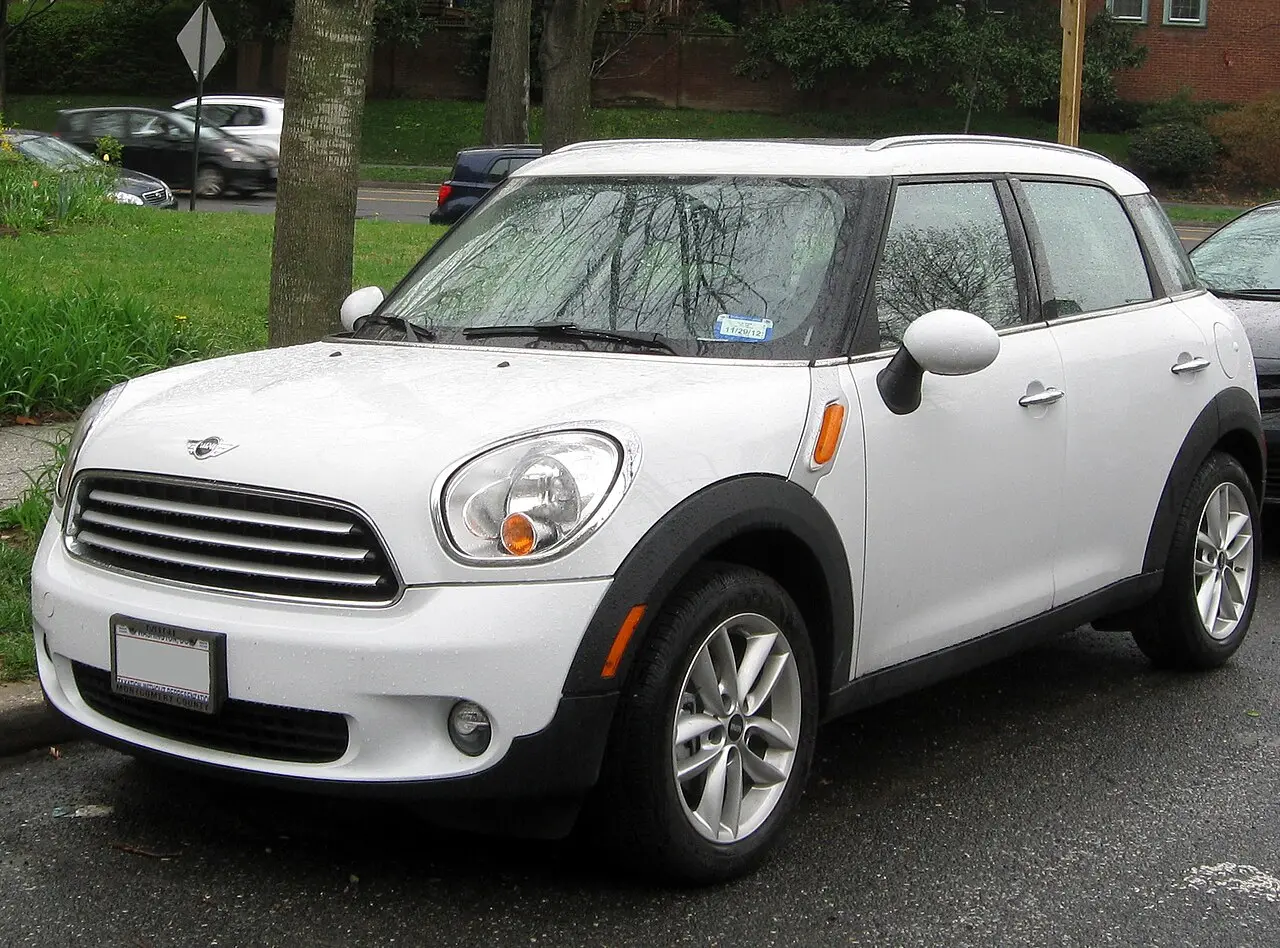
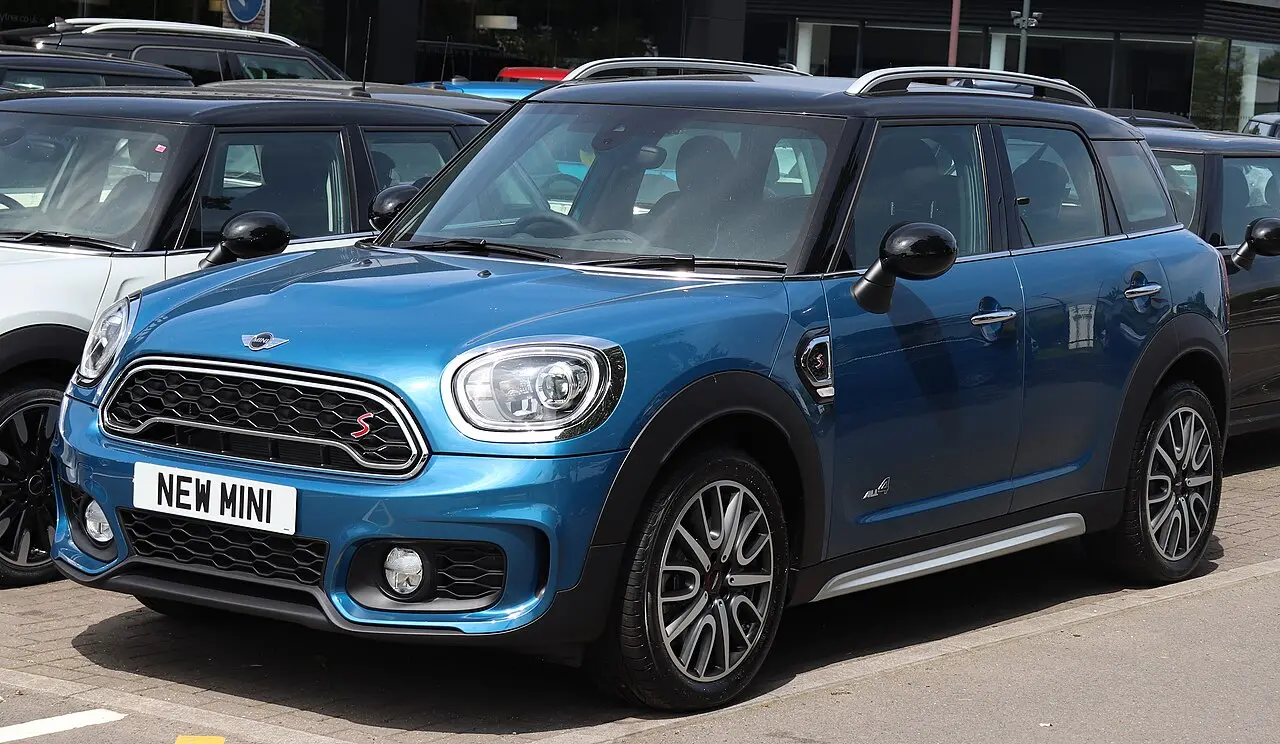
The official data lists 470 versions of the MINI Countryman (2010–2027), in the European Union, the United Kingdom, France, the United States, and Canada. Each market publishes its own figures, measured on its own test procedure.
At a glance
Years in the data
2010–2027
Markets
European Union, United Kingdom, France, United States, Canada
Engines
1.5 L to 2.0 L
Power
66 kW (90 PS) to 225 kW (306 PS)
Fuels
Diesel, Petrol, Hybrid, Electric, Plug-in hybrid
Lowest consumption (European Union)
1.9 L/100 km (WLTP)
Lowest consumption (United Kingdom)
4.2 L/100 km (NEDC)
Lowest consumption (France)
4.4 L/100 km (NEDC)
Plug-in hybrid, weighted (European Union)
1.9 L/100 km (WLTP)
Plug-in hybrid, weighted (United Kingdom)
2.1 L/100 km (NEDC)
New registrations in the EU
683,488
What is the MINI Countryman?
The Countryman is MINI’s larger crossover, bringing the brand’s distinctive design to a taller body with more room for passengers and luggage. It adds a more versatile shape to a range built around compact cars. Across its generations, the Countryman has expanded to include all-wheel drive, plug-in hybrid and electric versions.
Countryman generations
The first generation, R60 (2010–2016), introduced the modern Countryman. The second, F60 (2017–2023), continued the crossover format, with petrol, diesel and plug-in hybrid versions among its offerings. The third generation, U25 (2024–today), carries the model forward with electric and combustion-engine versions. The Countryman has grown from a new branch of the MINI range into its larger, more versatile crossover.
Engines, power and official economy
Market ranges include 1.5 L to 2.0 L engines, along with electric and hybrid powertrains. Listed EU power runs from 66 kW (90 PS) to 225 kW (306 PS); the UK range reaches 230 kW (313 PS). The lowest listed EU figure for petrol, diesel or hybrid versions is 1.9 L/100 km on WLTP. The plug-in hybrid weighted figure is also 1.9 L/100 km, assuming some driving is electric. In the UK, the lowest figures are 4.2 L/100 km for petrol, diesel or hybrid versions and 2.1 L/100 km for plug-in hybrids, both on NEDC. The US EPA’s lowest listed figures are 7.8 L/100 km for petrol, diesel or hybrid versions and 8.1 L/100 km for plug-in hybrids; its best combined rating is 30 MPG. Canada’s NRCan 5-cycle figures are 7.5 L/100 km and 8 L/100 km respectively. WLTP and NEDC in Europe, EPA in the US and Canada’s 5-cycle test use different methods, so results are best read within their own market.
Where was it sold?
Official figures list the Countryman in the European Union, the UK, France, the US and Canada. EU registrations span 2010–2025, with 683,488 recorded. The listed period is 2012–2026 in the UK, 2012–2014 in France, 2011–2027 in the US and 2011–2026 in Canada.
Questions and answers
When did the MINI Countryman first go on sale?
The first generation began in 2010 and ran through 2016.
Which Countryman generation included plug-in hybrid versions?
Plug-in hybrid versions appear in the second-generation F60 market history, which spans 2017–2023.
What is the lowest listed EU Countryman consumption?
The lowest listed figure is 1.9 L/100 km on WLTP for petrol, diesel or hybrid versions. The plug-in hybrid weighted figure is also 1.9 L/100 km and assumes some electric driving.
Why are Countryman economy figures different in Europe and North America?
Europe uses WLTP or older NEDC tests, the US uses EPA, and Canada uses NRCan’s 5-cycle procedure. The methods differ, so results are not directly interchangeable.
New cars registered in the EU (plus Norway and Iceland), from the European Environment Agency. Figures on the NEDC procedure until 2020 and on WLTP from 2021; versions are grouped by engine and power, with their number of registrations.
Years and version
Engine
Power
Fuel
Consumption (combined)
CO₂
Electric range
EU registrations
2025
1.5 L
115 kW (156 PS)
Hybrid
6.1 L/100 km WLTP
137 g/km
–
11,268
2025
Electric motor
150 kW (204 PS)
Electric
16.8 kWh/100 km WLTP
0 g/km
441 km
8,963
2024–2025
2.0 L
110 kW (150 PS)
Hybrid
4.7 L/100 km WLTP
124 g/km
–
6,829
2024–2025
2.0 L
150 kW (204 PS)
Hybrid
6.8 L/100 km WLTP
153 g/km
–
5,483
2025
Electric motor
225 kW (306 PS)
Electric
18.4 kWh/100 km WLTP
0 g/km
406 km
3,393
2025
2.0 L
221 kW (300 PS)
Petrol
8.0 L/100 km WLTP
180 g/km
–
1,558
2025
Electric motor
68 kW (92 PS)
Electric
16.4 kWh/100 km WLTP
0 g/km
446 km
649
2025
Electric motor
104 kW (141 PS)
Electric
17.9 kWh/100 km WLTP
0 g/km
411 km
249
2025
1.5 L
115 kW (156 PS)
Plug-in hybrid
6.1 L/100 km WLTP
137 g/km
–
26
2025
1.5 L
115 kW (156 PS)
Petrol
6.1 L/100 km WLTP
138 g/km
–
25
2025
Electric motor
140 kW (190 PS)
Electric
17.8 kWh/100 km WLTP
0 g/km
412 km
17
2025
2.0 L
150 kW (204 PS)
Plug-in hybrid
6.8 L/100 km WLTP
153 g/km
–
15
2025
2.0 L
150 kW (204 PS)
Petrol
6.8 L/100 km WLTP
153 g/km
–
11
2024
1.5 L
115 kW (156 PS)
Hybrid
6.1 L/100 km WLTP
138 g/km
–
12,645
2024
Electric motor
150 kW (204 PS)
Electric
16.5 kWh/100 km WLTP
0 g/km
444 km
5,520
2024
Electric motor
225 kW (306 PS)
Electric
18.0 kWh/100 km WLTP
0 g/km
409 km
2,972
2024
1.5 L
100 kW (136 PS)
Petrol
6.3 L/100 km WLTP
148 g/km
–
1,067
2024
1.5 L
92 kW (125 PS)
Plug-in hybrid
3.3 L/100 km WLTP15.5 kWh/100 km WLTP
42 g/km
53 km
940
2024
Electric motor
68 kW (92 PS)
Electric
16.4 kWh/100 km WLTP
0 g/km
448 km
503
2024
2.0 L
110 kW (150 PS)
Diesel
5.2 L/100 km WLTP
135 g/km
–
321
2024
Electric motor
104 kW (141 PS)
Electric
18.0 kWh/100 km WLTP
0 g/km
409 km
253
2024
2.0 L
131 kW (178 PS)
Petrol
6.9 L/100 km WLTP
157 g/km
–
244
2024
1.5 L
115 kW (156 PS)
Petrol
6.1 L/100 km WLTP
139 g/km
–
194
2024
2.0 L
225 kW (306 PS)
Petrol
7.9 L/100 km WLTP
183 g/km
–
95
2024
2.0 L
140 kW (190 PS)
Diesel
5.5 L/100 km WLTP
143 g/km
–
84
2024
Electric motor
140 kW (190 PS)
Electric
18.8 kWh/100 km WLTP
0 g/km
389 km
18
2024
1.5 L
92 kW (125 PS)
Petrol
1.9 L/100 km WLTP
120 g/km
–
18
2024
2.0 L
150 kW (204 PS)
Petrol
6.7 L/100 km WLTP
152 g/km
–
14
United Kingdom 25 versions
New cars on sale in the UK, from the Vehicle Certification Agency. NEDC figures until 2018 and WLTP figures after; years are the editions a version appeared in.
Years and version
Engine
Power
Fuel
Gearbox
Consumption (combined)
CO₂
Electric range
2025–2026E Classic · E Exclusive · E Sport
Electric motor
150 kW (204 PS)
Electric
Automatic
12.9 kWh/100 km WLTP
0 g/km
461 km
2026E Classic · E Exclusive · E Sport and 1 more trim
Electric motor
150 kW (204 PS)
Electric
Automatic
16.3 kWh/100 km WLTP
0 g/km
499 km
2026E Monochrome
Electric motor
150 kW (204 PS)
Electric
Automatic
14.8 kWh/100 km WLTP
0 g/km
500 km
2025–2026SE ALL4 Classic · SE ALL4 Exclusive · SE ALL4 Sport
Electric motor
230 kW (313 PS)
Electric
Automatic
14.2 kWh/100 km WLTP
0 g/km
431 km
2026SE ALL4 Classic · SE ALL4 Exclusive · SE ALL4 Sport
Electric motor
230 kW (313 PS)
Electric
Automatic
17.3 kWh/100 km WLTP
0 g/km
466 km
2025–2026C Classic · C Sport
1.5 L
125 kW (170 PS)
Hybrid
7-speed automatic
5.9 L/100 km WLTP
133 g/km
–
2025–2026C Classic · C Sport
1.5 L
125 kW (170 PS)
Hybrid
7-speed automatic
6.2 L/100 km WLTP
140 g/km
–
2025–2026C Exclusive
1.5 L
125 kW (170 PS)
Petrol
7-speed automatic
5.9 L/100 km WLTP
133 g/km
–
2025–2026C Exclusive
1.5 L
125 kW (170 PS)
Petrol
7-speed automatic
6.2 L/100 km WLTP
140 g/km
–
2025–2026C Sport
1.5 L
125 kW (170 PS)
Petrol
7-speed automatic
6.0 L/100 km WLTP
136 g/km
–
2025–2026C Sport
1.5 L
125 kW (170 PS)
Petrol
7-speed automatic
6.2 L/100 km WLTP
141 g/km
–
2026C Classic · C Exclusive
1.5 L
125 kW (170 PS)
Hybrid
7-speed automatic
6.2 L/100 km WLTP
141 g/km
–
2026C Exclusive
1.5 L
125 kW (170 PS)
Hybrid
7-speed automatic
6.0 L/100 km WLTP
136 g/km
–
2025–2026S ALL4 Classic · S ALL4 Exclusive
2.0 L
160 kW (218 PS)
Hybrid
7-speed automatic
6.6 L/100 km WLTP
148 g/km
–
2025–2026S ALL4 Classic · S ALL4 Exclusive
2.0 L
160 kW (218 PS)
Hybrid
7-speed automatic
6.9 L/100 km WLTP
155 g/km
–
2025–2026S ALL4 Exclusive
2.0 L
160 kW (218 PS)
Petrol
7-speed automatic
6.6 L/100 km WLTP
148 g/km
–
2025–2026S ALL4 Exclusive
2.0 L
160 kW (218 PS)
Petrol
7-speed automatic
6.9 L/100 km WLTP
155 g/km
–
2025–2026S ALL4 Sport
2.0 L
160 kW (218 PS)
Petrol
7-speed automatic
6.7 L/100 km WLTP
152 g/km
–
2025–2026S ALL4 Sport
2.0 L
160 kW (218 PS)
Petrol
7-speed automatic
6.9 L/100 km WLTP
156 g/km
–
2026S ALL4 Sport
2.0 L
160 kW (218 PS)
Hybrid
7-speed automatic
6.9 L/100 km WLTP
152 g/km
–
2026S ALL4 Sport
2.0 L
160 kW (218 PS)
Hybrid
7-speed automatic
6.7 L/100 km WLTP
152 g/km
–
2025–2026John Cooper Works
2.0 L
221 kW (300 PS)
Petrol
7-speed automatic
8.0 L/100 km WLTP
180 g/km
–
2025E Classic · E Exclusive · E Sport
Electric motor
150 kW (204 PS)
Electric
Automatic
13.9 kWh/100 km WLTP
0 g/km
423 km
2025SE ALL4 Classic · SE ALL4 Exclusive · SE ALL4 Sport
Electric motor
230 kW (313 PS)
Electric
Automatic
15.2 kWh/100 km WLTP
0 g/km
399 km
2025John Cooper Works
2.0 L
221 kW (300 PS)
Petrol
7-speed automatic
7.8 L/100 km WLTP
177 g/km
–
United States 8 versions
Model years sold in the USA, from the EPA and the Department of Energy (fueleconomy.gov). MPG on the EPA test; litres per 100 km = 235.215 ÷ MPG.
Years and version
Engine
Fuel
Gearbox
Drive
Consumption (combined)
CO₂
Electric range
2027
Electric motor
Electric
Automatic
All-wheel drive
98 MPGe EPA
0 g/km
348 km
2027
Electric motor
Electric
Automatic
All-wheel drive
97 MPGe EPA
0 g/km
344 km
2025–2027SIDI & PFI
2.0 L
Petrol
7-speed automated manual
All-wheel drive
27 MPG (8.7 L/100 km) EPA
201 g/km
–
2025–2026
Electric motor
Electric
Automatic
All-wheel drive
96 MPGe EPA
0 g/km
341 km
2025–2026
Electric motor
Electric
Automatic
All-wheel drive
91 MPGe EPA
0 g/km
328 km
2026SIDI & PFI
2.0 L
Petrol
7-speed automated manual
All-wheel drive
25 MPG (9.4 L/100 km) EPA
214 g/km
–
2025SIDI & PFI
2.0 L
Petrol
7-speed automated manual
All-wheel drive
26 MPG (9.0 L/100 km) EPA
212 g/km
–
2024SIDI
1.5 L
Petrol
7-speed automated manual
Front-wheel drive
28 MPG (8.4 L/100 km) EPA
194 g/km
–
Canada 5 versions
Model years sold in Canada, from Natural Resources Canada fuel consumption ratings (5-cycle test).
Years and version
Engine
Power
Fuel
Gearbox
Consumption (combined)
CO₂
Electric range
2025–2026Sport utility vehicle: Small
Electric motor
225 kW (306 PS)
Electric
Automatic
21.7 kWh/100 km 5-cycle
0 g/km
341 km
2025–2026Sport utility vehicle: Small
Electric motor
225 kW (306 PS)
Electric
Automatic
22.9 kWh/100 km 5-cycle
0 g/km
328 km
2025–2026Sport utility vehicle: Small
2.0 L
–
Petrol
7-speed automated manual
8.7 L/100 km 5-cycle
201 g/km
–
2026Sport utility vehicle: Small
2.0 L
–
Petrol
7-speed automated manual
9.2 L/100 km 5-cycle
214 g/km
–
2025Sport utility vehicle: Small
2.0 L
–
Petrol
7-speed automated manual
9.2 L/100 km 5-cycle
212 g/km
–
Official figures are measured on standard test procedures and differ between markets. Your consumption depends on how, where and in what conditions you drive.