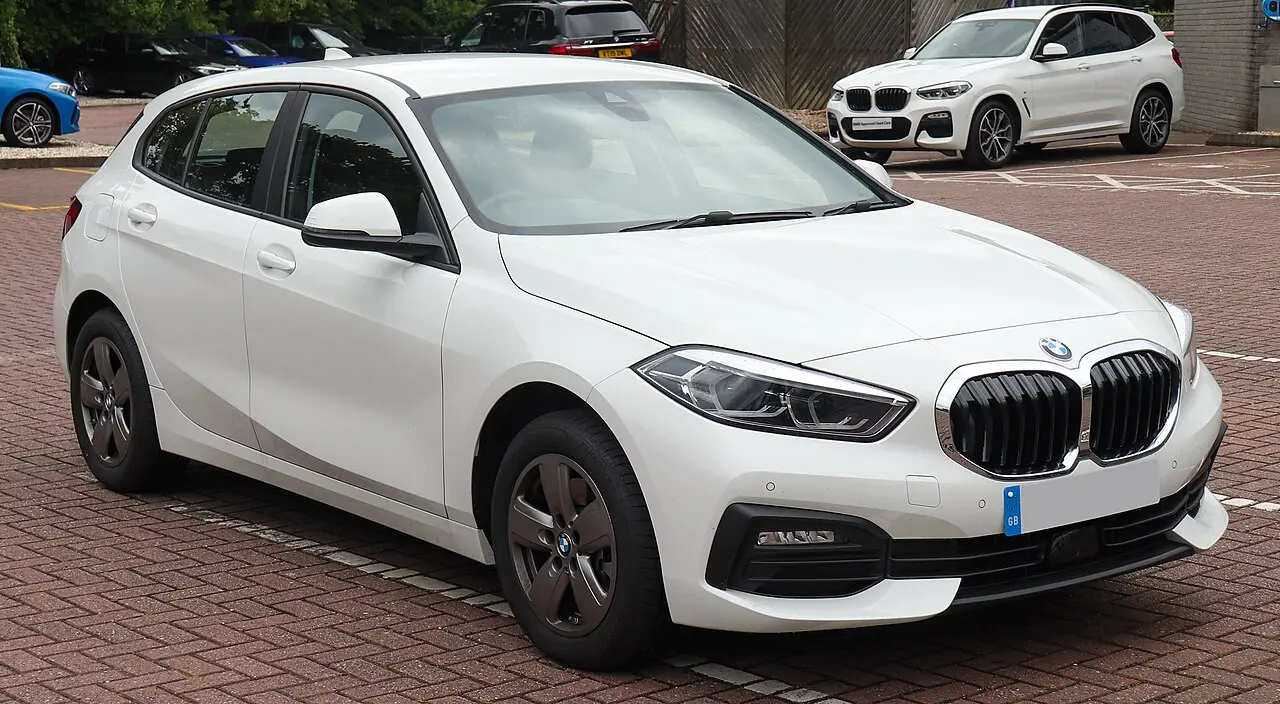
The official data lists 829 versions of the BMW 1 Series (2006–2026), in the European Union, the United Kingdom, France, the United States, and Canada. Each market publishes its own figures, measured on its own test procedure.
At a glance
Years in the data
2006–2026
Markets
European Union, United Kingdom, France, United States, Canada
Engines
1.5 L to 3.0 L
Power
70 kW (95 PS) to 235 kW (320 PS)
Fuels
Diesel, Petrol, Hybrid, Plug-in hybrid
Lowest consumption (France)
3.4 L/100 km (NEDC)
Lowest consumption (United Kingdom)
3.4 L/100 km (NEDC)
Lowest consumption (European Union)
4.4 L/100 km (WLTP)
Plug-in hybrid, weighted (European Union)
5.5 L/100 km (WLTP)
New registrations in the EU
3,166,744
What is the BMW 1 Series?
The BMW 1 Series is a compact hatchback in the brand’s range, below the 3 Series. Its smaller size suits everyday driving where a full-size saloon or estate may be more than needed.
The first generation arrived in 2004, adding a compact model to BMW’s range. Early versions included hatchbacks, a coupé and a convertible; later generations focused on the hatchback. The first two generations used rear-wheel drive. With the third generation, BMW switched to a front-wheel-drive-based layout, which created more room for passengers and luggage.
Generations
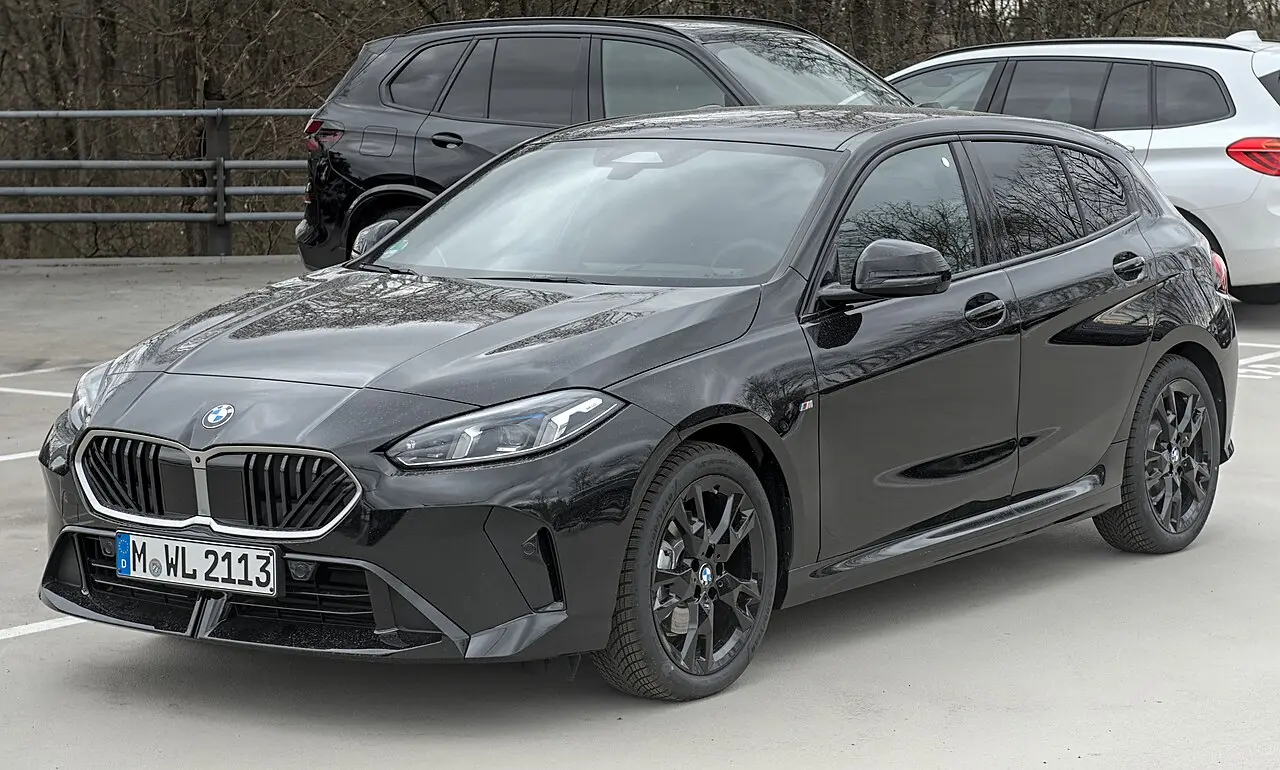
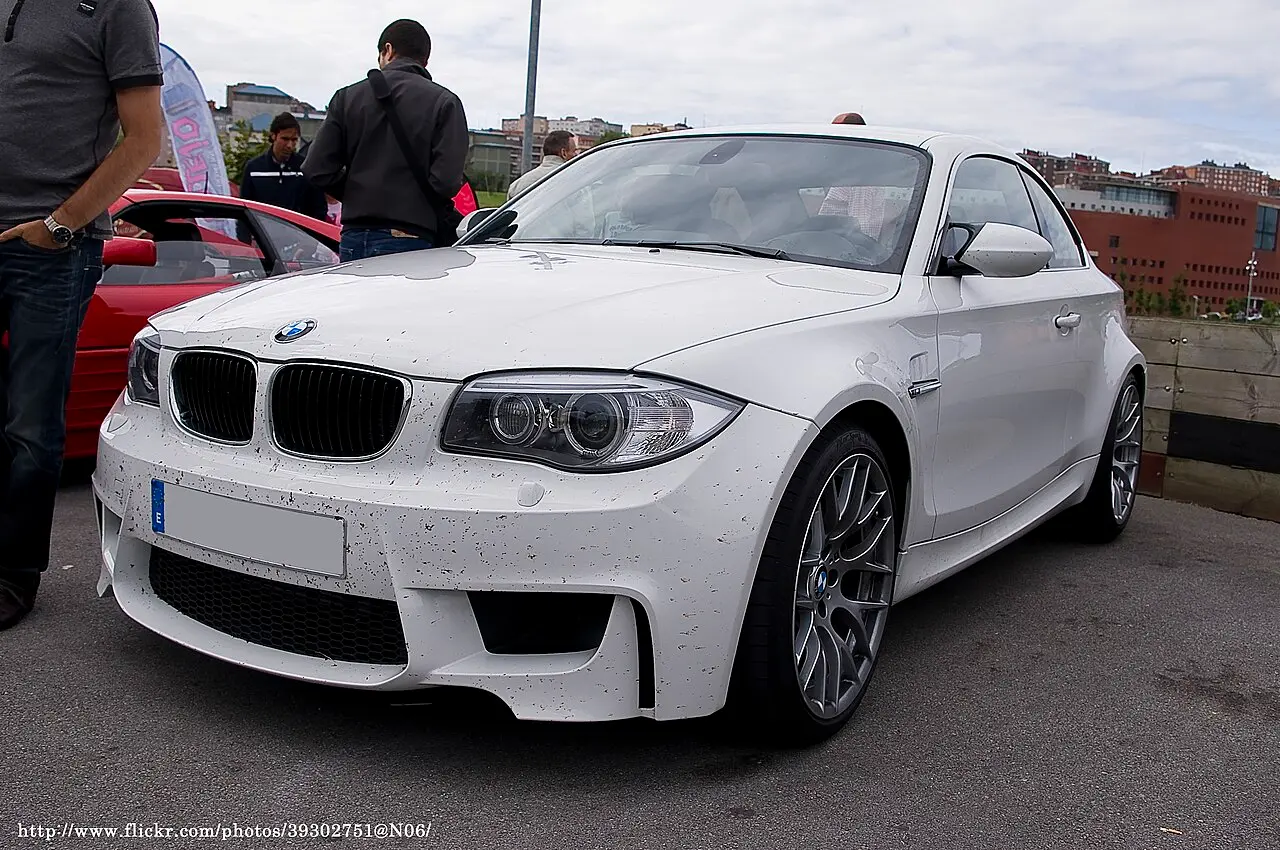
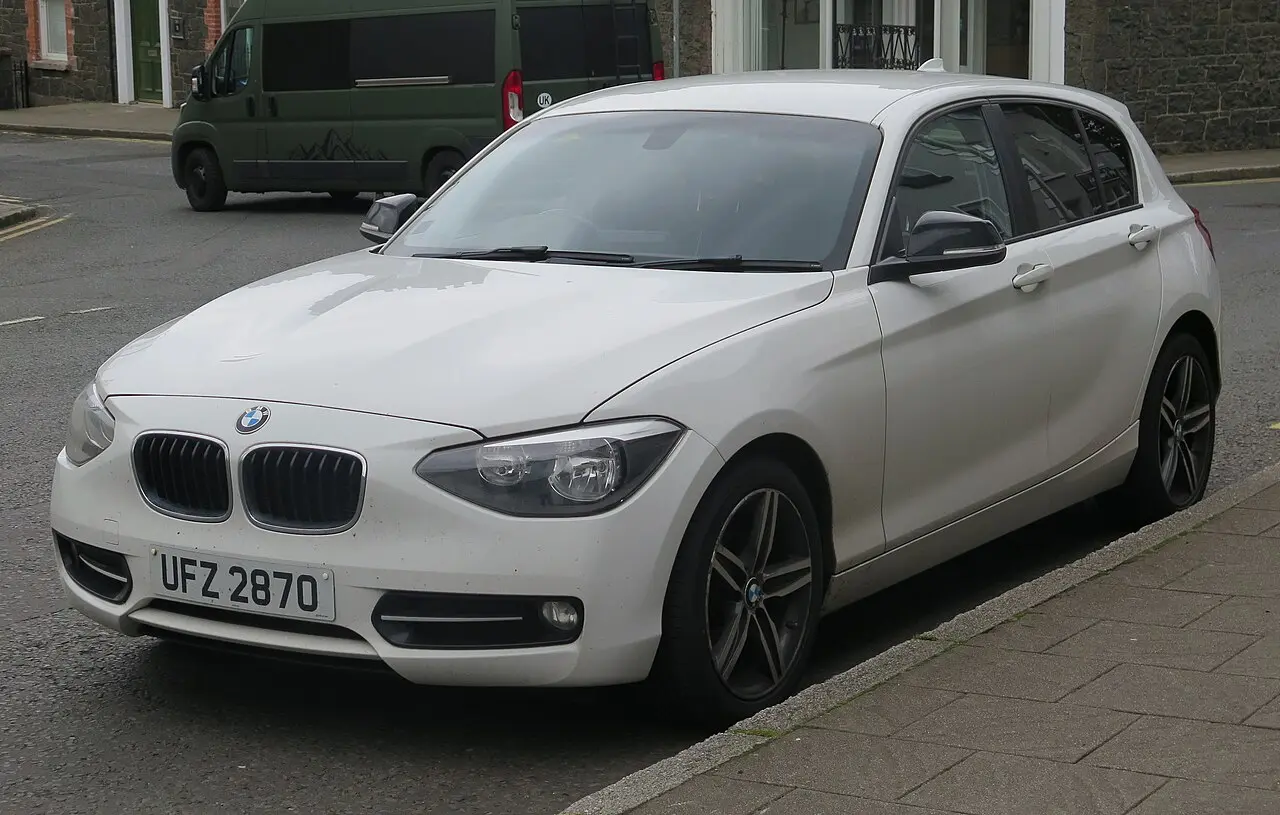
The first generation E81, E82, E87 and E88 ran from 2006 to 2013 in the UK, and from 2008 to 2013 in US and Canadian figures. The second generation F20 and F21 ran from 2011 to 2019, followed by the third generation F40 from 2019 to 2024. The fourth generation F70 began in 2024 and continues today in European and UK figures.
The 1 Series began as a family of compact body styles and became a hatchback line. The change to a front-wheel-drive-based layout came with the F40. The latest generation continues the hatchback format.
Engines, power and official economy
The 1 Series has been offered with petrol and diesel engines, as well as hybrid and plug-in hybrid versions in some markets. EU figures from 2010 to 2025 cover engines from 1.5 to 3.0 litres and outputs from 70 kW (95 PS) to 250 kW (340 PS). UK figures include engines up to 3.0 litres and outputs up to 221 kW (300 PS); French figures include outputs up to 235 kW (320 PS).
The lowest listed conventional consumption is 4.4 L/100 km in the EU on WLTP. The UK and France figures reach 3.4 L/100 km on NEDC. US EPA and Canadian 5-cycle figures cover petrol 3.0-litre versions, with a lowest figure of 10.2 L/100 km in each market. WLTP and NEDC are European test procedures; the EPA and Canadian 5-cycle tests differ, so figures from different markets are not directly comparable.
Where was it sold?
The 1 Series has been sold in Europe and North America. Official figures cover the EU, UK, France, the United States and Canada. The US and Canadian figures span 2008–2013 and cover petrol 3.0-litre versions.
Questions and answers
When did the BMW 1 Series first appear?
BMW introduced the 1 Series in 2004 as a compact model in its range.
Which generation changed the 1 Series to a front-wheel-drive-based layout?
The third generation F40, which ran from 2019 to 2024.
What is the lowest official consumption figure shown?
The lowest listed figure is 3.4 L/100 km on NEDC in the UK and France. The lowest EU figure is 4.4 L/100 km on WLTP.
Are there US and Canadian figures for the 1 Series?
Yes. They span 2008–2013 and cover petrol 3.0-litre versions.
New cars registered in the EU (plus Norway and Iceland), from the European Environment Agency. Figures on the NEDC procedure until 2020 and on WLTP from 2021; versions are grouped by engine and power, with their number of registrations.
Years and version
Engine
Power
Fuel
Consumption (combined)
CO₂
EU registrations
2025
1.5 L
115 kW (156 PS)
Hybrid
5.4 L/100 km WLTP
123 g/km
33,839
2025
1.5 L
90 kW (122 PS)
Petrol
6.0 L/100 km WLTP
136 g/km
12,103
2025
2.0 L
110 kW (150 PS)
Diesel
4.8 L/100 km WLTP
125 g/km
8,549
2025
2.0 L
110 kW (150 PS)
Hybrid
4.4 L/100 km WLTP
114 g/km
8,382
2025
2.0 L
150 kW (204 PS)
Hybrid
6.1 L/100 km WLTP
139 g/km
3,062
2025
2.0 L
221 kW (300 PS)
Petrol
7.8 L/100 km WLTP
176 g/km
2,415
2025
1.5 L
115 kW (156 PS)
Petrol
5.4 L/100 km WLTP
122 g/km
473
2025
1.5 L
115 kW (156 PS)
Plug-in hybrid
5.5 L/100 km WLTP
124 g/km
340
2025
1.5 L
100 kW (136 PS)
Hybrid
5.4 L/100 km WLTP
123 g/km
171
2025
1.5 L
80 kW (109 PS)
Petrol
5.9 L/100 km WLTP
134 g/km
143
2025
1.5 L
85 kW (116 PS)
Diesel
4.6 L/100 km WLTP
121 g/km
142
2025
1.5 L
100 kW (136 PS)
Petrol
5.9 L/100 km WLTP
134 g/km
74
2025
2.0 L
225 kW (306 PS)
Petrol
7.6 L/100 km WLTP
172 g/km
36
2025
2.0 L
100 kW (136 PS)
Diesel
4.7 L/100 km WLTP
123 g/km
34
2025
2.0 L
140 kW (190 PS)
Diesel
5.4 L/100 km WLTP
139 g/km
11
2024
2.0 L
110 kW (150 PS)
Diesel
4.9 L/100 km WLTP
129 g/km
9,685
2024
1.5 L
115 kW (156 PS)
Hybrid
5.5 L/100 km WLTP
123 g/km
8,132
2024
2.0 L
110 kW (150 PS)
Hybrid
4.4 L/100 km WLTP
115 g/km
2,667
2024
2.0 L
131 kW (178 PS)
Petrol
6.3 L/100 km WLTP
143 g/km
2,420
2024
2.0 L
195 kW (265 PS)
Petrol
7.1 L/100 km WLTP
162 g/km
1,343
2024
2.0 L
140 kW (190 PS)
Diesel
5.3 L/100 km WLTP
137 g/km
1,269
2024
2.0 L
225 kW (306 PS)
Petrol
7.6 L/100 km WLTP
172 g/km
1,002
2024
2.0 L
221 kW (300 PS)
Petrol
7.8 L/100 km WLTP
176 g/km
981
2024
1.5 L
90 kW (122 PS)
Petrol
6.0 L/100 km WLTP
135 g/km
771
2024
1.5 L
115 kW (156 PS)
Petrol
5.4 L/100 km WLTP
124 g/km
250
2024
2.0 L
150 kW (204 PS)
Hybrid
6.1 L/100 km WLTP
138 g/km
185
2024
2.0 L
100 kW (136 PS)
Diesel
4.8 L/100 km WLTP
124 g/km
11
United Kingdom 12 versions
New cars on sale in the UK, from the Vehicle Certification Agency. NEDC figures until 2018 and WLTP figures after; years are the editions a version appeared in.
Years and version
Engine
Power
Fuel
Gearbox
Consumption (combined)
CO₂
2025–2026120 Sport
1.5 L
125 kW (170 PS)
Hybrid
7-speed automatic
5.3 L/100 km WLTP
124 g/km
2025–2026120 M Sport
1.5 L
125 kW (170 PS)
Hybrid
7-speed automatic
5.4 L/100 km WLTP
130 g/km
2026120 M Sport
1.5 L
125 kW (170 PS)
Hybrid
7-speed automatic
5.4 L/100 km WLTP
121 g/km
2026120 Sport
1.5 L
125 kW (170 PS)
Hybrid
7-speed automatic
5.3 L/100 km WLTP
121 g/km
2025–2026123 xDrive M Sport
2.0 L
160 kW (218 PS)
Hybrid
7-speed automatic
5.9 L/100 km WLTP
144 g/km
2026123 xDrive M Sport
2.0 L
160 kW (218 PS)
Hybrid
7-speed automatic
6.0 L/100 km WLTP
135 g/km
2025–2026M135 xDrive
2.0 L
221 kW (300 PS)
Petrol
7-speed automatic
7.6 L/100 km WLTP
185 g/km
2026M135 xDrive
2.0 L
221 kW (300 PS)
Petrol
7-speed automatic
7.6 L/100 km WLTP
173 g/km
2025120 Sport
1.5 L
125 kW (170 PS)
Hybrid
7-speed automatic
5.5 L/100 km WLTP
121 g/km
2025120 M Sport
1.5 L
125 kW (170 PS)
Hybrid
7-speed automatic
5.8 L/100 km WLTP
121 g/km
2025123 xDrive M Sport
2.0 L
160 kW (218 PS)
Hybrid
7-speed automatic
6.3 L/100 km WLTP
135 g/km
2025M135 xDrive
2.0 L
221 kW (300 PS)
Petrol
7-speed automatic
8.3 L/100 km WLTP
173 g/km
France 8 versions
New cars on sale in France, from ADEME Car Labelling. NEDC figures until 2015, WLTP figures in the current catalogue.
Years and version
Engine
Power
Fuel
Gearbox
Consumption (combined)
CO₂
2026116d
1.5 L
85 kW (116 PS)
Diesel
6-speed manual
4.4 L/100 km WLTP
116 g/km
2026116i
1.5 L
80 kW (109 PS)
Petrol
6-speed manual
5.6 L/100 km WLTP
128 g/km
2026116i
1.5 L
80 kW (109 PS)
Petrol
7-speed automatic
5.8 L/100 km WLTP
131 g/km
2026118i
1.5 L
100 kW (136 PS)
Petrol
6-speed manual
5.6 L/100 km WLTP
127 g/km
2026118i
1.5 L
100 kW (136 PS)
Petrol
7-speed automatic
5.6 L/100 km WLTP
127 g/km
2026120i
2.0 L
131 kW (178 PS)
Petrol
7-speed automatic
5.9 L/100 km WLTP
135 g/km
2026128ti
2.0 L
195 kW (265 PS)
Petrol
8-speed automatic
6.8 L/100 km WLTP
156 g/km
2026M135i xDrive
2.0 L
225 kW (306 PS)
Petrol
8-speed automatic
7.4 L/100 km WLTP
168 g/km
Versions outside these generations
European Union 12 versions
New cars registered in the EU (plus Norway and Iceland), from the European Environment Agency. Figures on the NEDC procedure until 2020 and on WLTP from 2021; versions are grouped by engine and power, with their number of registrations.
Years and version
Engine
Fuel
CO₂
EU registrations
2010
2.0 L
Diesel
129 g/km
199,422
2010
2.0 L
Petrol
151 g/km
75,680
2010
3.0 L
Petrol
196 g/km
2,728
2010
–
Petrol
150 g/km
2,478
2010
3.0 L
Petrol
210 g/km
1,408
2010
1.6 L
Petrol
145 g/km
1,396
2010
–
Other fuel
138 g/km
70
2010
3.0 L
Petrol
197 g/km
58
2010
2.9 L
Petrol
199 g/km
24
2010
1.6 L
Petrol
182 g/km
16
2010
2.0 L
Diesel
127 g/km
14
2010
–
Diesel
143 g/km
12
Official figures are measured on standard test procedures and differ between markets. Your consumption depends on how, where and in what conditions you drive.