The official data lists 295 versions of the MINI Convertible (2004–2027), in the European Union, the United Kingdom, France, the United States, and Canada. Each market publishes its own figures, measured on its own test procedure.
At a glance
Years in the data
2004–2027
Markets
European Union, United Kingdom, France, United States, Canada
Engines
1.5 L to 2.0 L
Power
72 kW (98 PS) to 170 kW (231 PS)
Fuels
Petrol, Diesel
Lowest consumption (United Kingdom)
3.8 L/100 km (NEDC)
Lowest consumption (France)
4.0 L/100 km (NEDC)
Lowest consumption (European Union)
6.6 L/100 km (WLTP)
New registrations in the EU
77,417
What is the MINI Convertible?
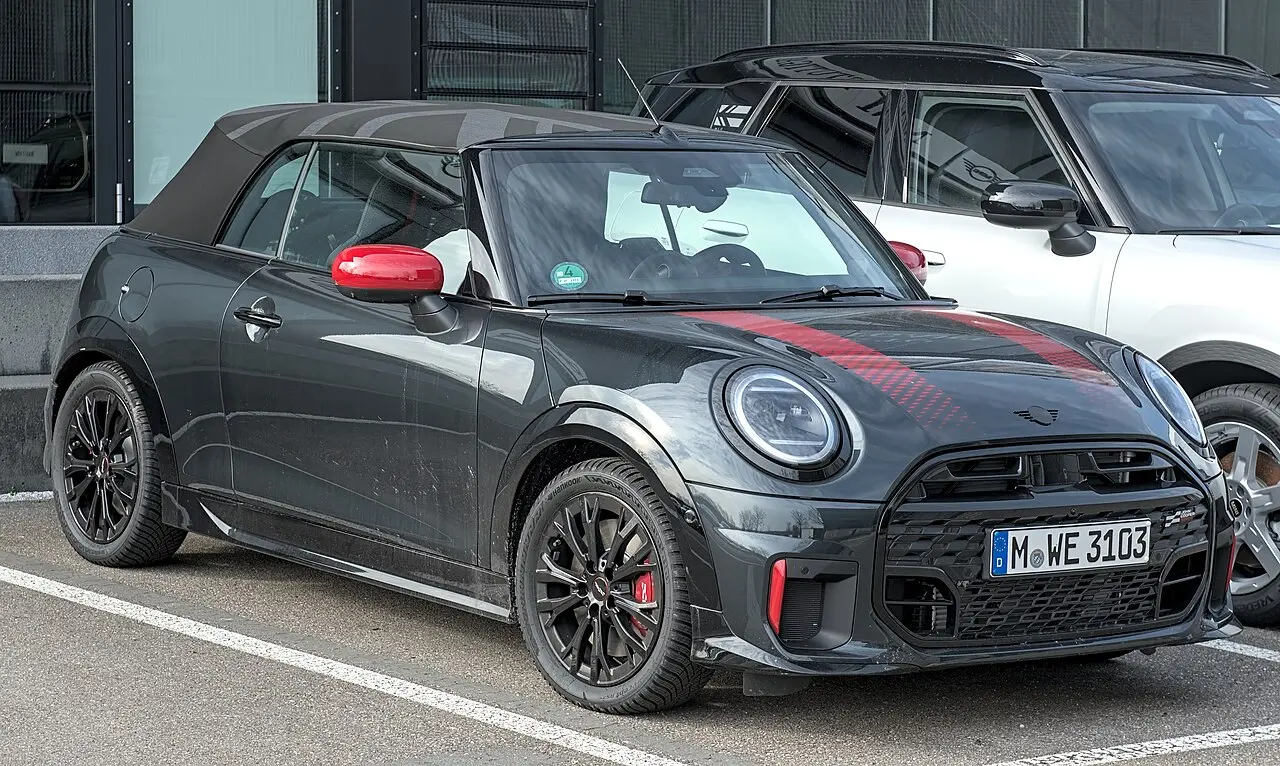
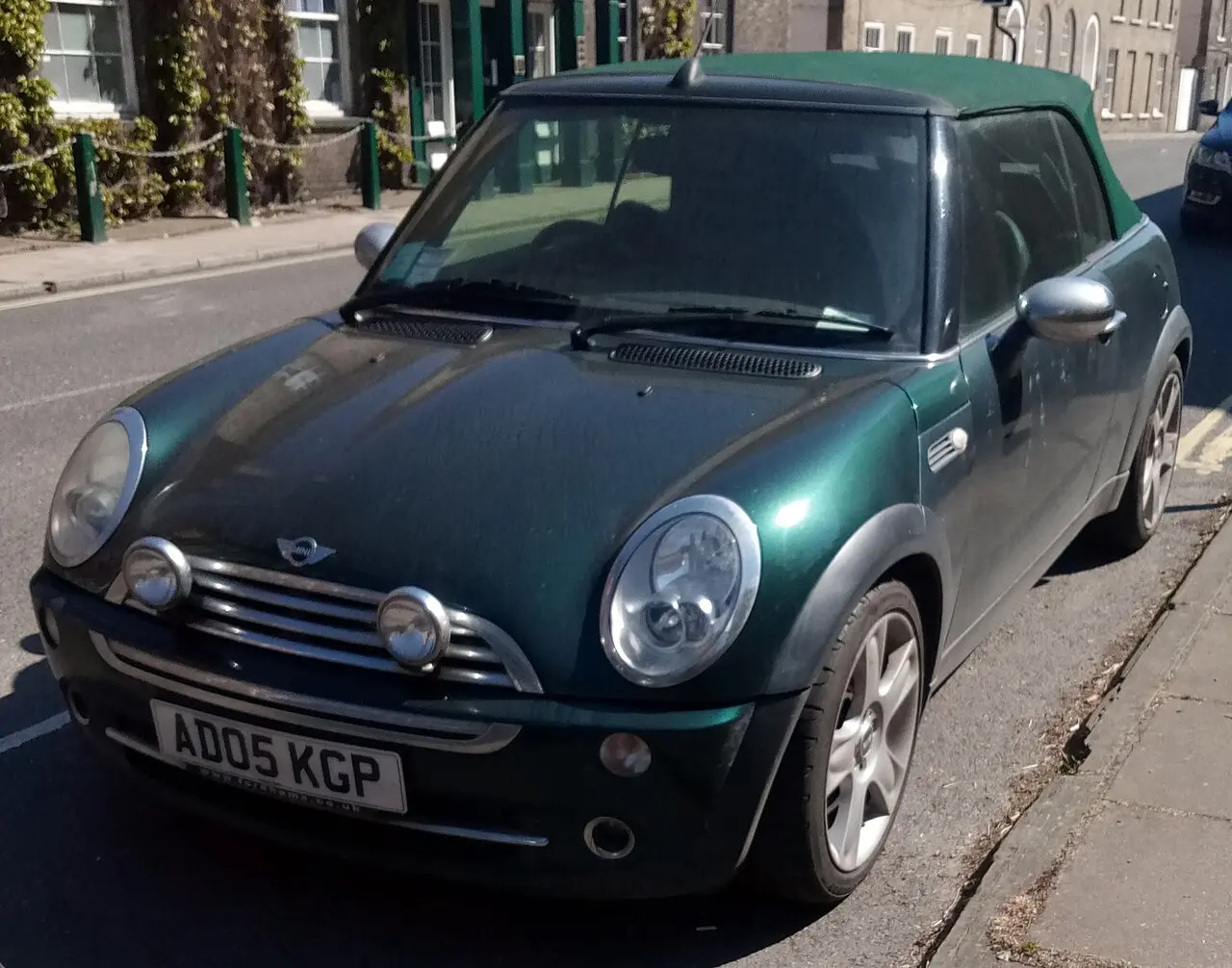
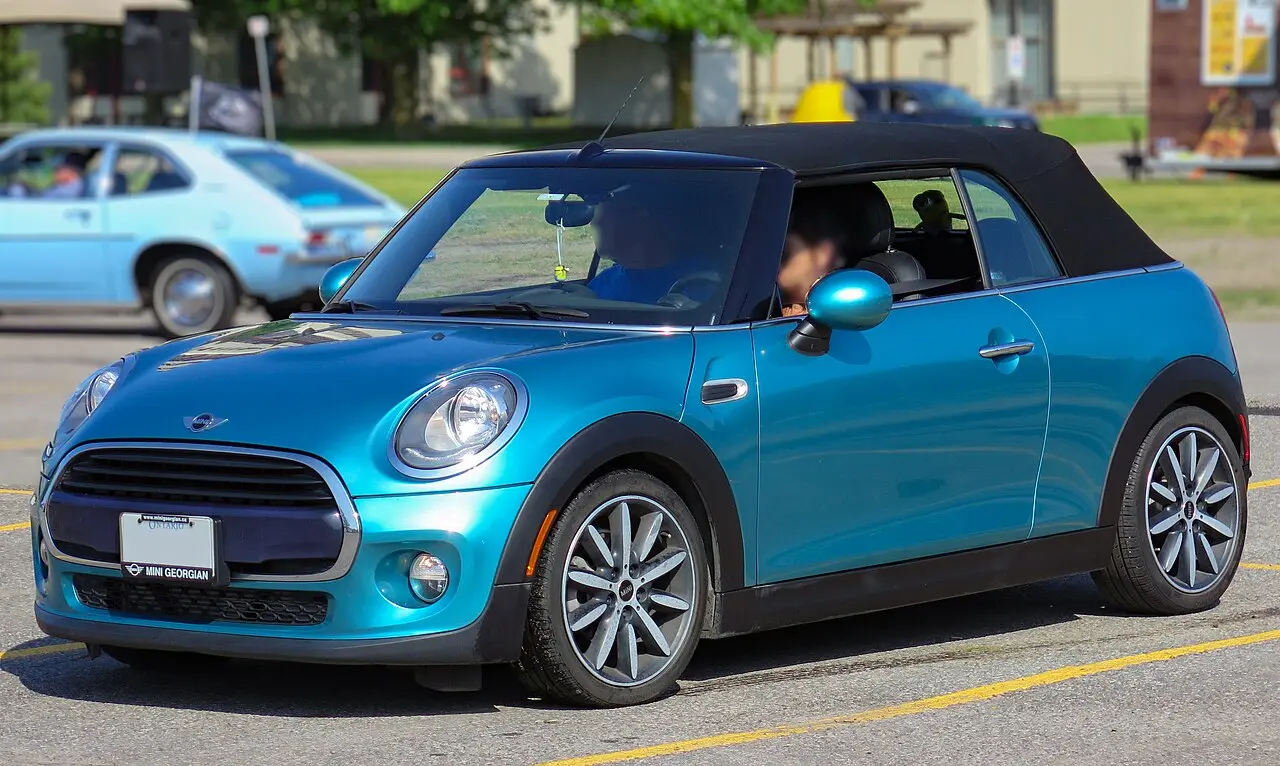
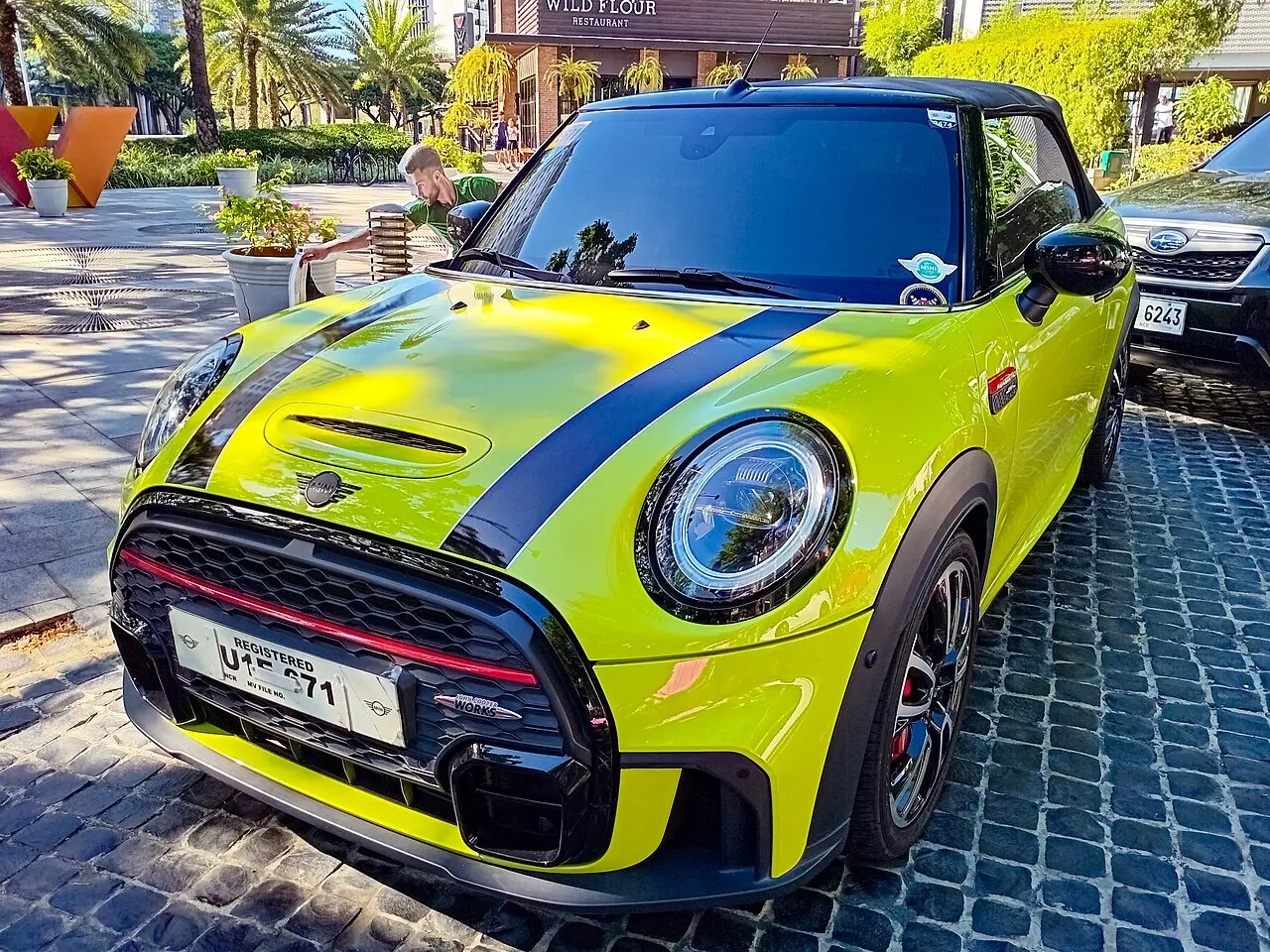
The MINI Convertible brings the familiar compact MINI shape to an open-top body style, with a folding fabric roof. It suits drivers who want a small car for everyday journeys and the option of open-air motoring. Within the MINI range, it offers a more leisure-focused take on the brand’s small-car character.
The classic British Mini made a virtue of its compact shape and clever use of space. BMW retained the MINI name and developed the modern MINI as a distinct model family. The Convertible carries that design identity into an open-top car.
Generations and engines
The first generation, R52, ran from 2004 to 2008. The R57 followed from 2009 to 2015, then the F57 from 2016 to 2024. The F67 began in 2025. Across these generations, the Convertible kept its folding roof while adopting newer MINI styling and technology.
In EU registration figures, petrol and diesel versions have engines from 1.2 to 2.0 litres and power from 72 kW (98 PS) to 170 kW (231 PS). UK figures list engines from 1.5 to 2.0 litres and power from 120 kW (163 PS) to 170 kW (231 PS). Among the leading EU entries are a 1.6-litre petrol version rated at 72 kW (98 PS) and a 1.6-litre diesel rated at 82 kW (111 PS).
How economical is the MINI Convertible?
The lowest listed consumption is 6.6 L/100 km in EU figures under WLTP. UK figures list 3.8 L/100 km and French figures 4 L/100 km under NEDC. In the United States, the EPA figure is 7.4 L/100 km, or 32 MPG combined; Canada’s five-cycle figure is 7.2 L/100 km. These results are not directly comparable because WLTP and NEDC in Europe, EPA in the United States, and Canada’s five-cycle procedure use different tests.
EU registration figures span 2010 to 2025, UK figures 2004 to 2026, and French figures 2012 to 2014. US figures span 2005 to 2027, while Canadian figures span 2005 to 2026.
Questions and answers
When did the MINI Convertible generations run?
The R52 ran from 2004 to 2008, the R57 from 2009 to 2015, the F57 from 2016 to 2024, and the F67 began in 2025.
What engines and power are listed for the Convertible?
EU figures cover 1.2- to 2.0-litre petrol and diesel engines, with power from 72 kW (98 PS) to 170 kW (231 PS).
What is the lowest listed fuel consumption?
The lowest figure is 3.8 L/100 km in UK VCA figures under NEDC. Test procedures differ between markets, so the results are not directly comparable.
New cars registered in the EU (plus Norway and Iceland), from the European Environment Agency. Figures on the NEDC procedure until 2020 and on WLTP from 2021; versions are grouped by engine and power, with their number of registrations.
Years and version
Engine
Power
Fuel
Consumption (combined)
CO₂
EU registrations
2025
2.0 L
120 kW (163 PS)
Petrol
6.6 L/100 km WLTP
149 g/km
136
2025
2.0 L
150 kW (204 PS)
Petrol
6.6 L/100 km WLTP
150 g/km
62
2025
2.0 L
170 kW (231 PS)
Petrol
6.9 L/100 km WLTP
156 g/km
39
United Kingdom 8 versions
New cars on sale in the UK, from the Vehicle Certification Agency. NEDC figures until 2018 and WLTP figures after; years are the editions a version appeared in.
Years and version
Engine
Power
Fuel
Gearbox
Consumption (combined)
CO₂
2025–2026C Classic · C Exclusive
2.0 L
120 kW (163 PS)
Petrol
7-speed automatic
6.6 L/100 km WLTP
149 g/km
2025–2026C Sport
2.0 L
120 kW (163 PS)
Petrol
7-speed automatic
6.6 L/100 km WLTP
150 g/km
2025–2026S Classic · S Exclusive · S Sport
2.0 L
150 kW (204 PS)
Petrol
7-speed automatic
6.6 L/100 km WLTP
150 g/km
2025–2026John Cooper Works
2.0 L
170 kW (231 PS)
Petrol
7-speed automatic
7.1 L/100 km WLTP
162 g/km
2025C Classic · C Exclusive
2.0 L
120 kW (163 PS)
Petrol
7-speed automatic
6.5 L/100 km WLTP
147 g/km
2025C Sport
2.0 L
120 kW (163 PS)
Petrol
7-speed automatic
6.5 L/100 km WLTP
148 g/km
2025S Classic · S Exclusive · S Sport
2.0 L
150 kW (204 PS)
Petrol
7-speed automatic
6.6 L/100 km WLTP
149 g/km
2025John Cooper Works
2.0 L
170 kW (231 PS)
Petrol
7-speed automatic
6.9 L/100 km WLTP
156 g/km
United States 5 versions
Model years sold in the USA, from the EPA and the Department of Energy (fueleconomy.gov). MPG on the EPA test; litres per 100 km = 235.215 ÷ MPG.
Years and version
Engine
Fuel
Gearbox
Drive
Consumption (combined)
CO₂
2027SIDI & PFI
2.0 L
Petrol
7-speed automated manual
Front-wheel drive
31 MPG (7.6 L/100 km) EPA
176 g/km
2027SIDI & PFI
2.0 L
Petrol
7-speed automated manual
Front-wheel drive
30 MPG (7.8 L/100 km) EPA
183 g/km
2025–2026SIDI & PFI
2.0 L
Petrol
7-speed automated manual
Front-wheel drive
30 MPG (7.8 L/100 km) EPA
178 g/km
2025–2026SIDI & PFI
2.0 L
Petrol
7-speed automated manual
Front-wheel drive
30 MPG (7.8 L/100 km) EPA
181 g/km
2025–2026SIDI & PFI
2.0 L
Petrol
7-speed automated manual
Front-wheel drive
30 MPG (7.8 L/100 km) EPA
184 g/km
Canada 3 versions
Model years sold in Canada, from Natural Resources Canada fuel consumption ratings (5-cycle test).
Years and version
Engine
Fuel
Gearbox
Consumption (combined)
CO₂
2025–2026Minicompact
2.0 L
Petrol
7-speed automated manual
7.7 L/100 km 5-cycle
179 g/km
2025–2026Minicompact
2.0 L
Petrol
7-speed automated manual
7.9 L/100 km 5-cycle
181 g/km
2025–2026Minicompact
2.0 L
Petrol
7-speed automated manual
7.9 L/100 km 5-cycle
184 g/km
Official figures are measured on standard test procedures and differ between markets. Your consumption depends on how, where and in what conditions you drive.