The official data lists 23 versions of the BMW M6 (1989 - 2019), in the European Union, France, the United States, and Canada. Each market publishes its own figures, measured on its own test procedure.
At a glance
Years in the data
1989 - 2019
Markets
European Union, France, United States, Canada
Engines
3.5 L to 5.0 L
Power
412 kW (560 PS) to 441 kW (600 PS)
Fuels
Petrol
Lowest consumption (France)
9.9 L/100 km (NEDC)
Lowest consumption (Canada)
12.8 L/100 km (5-cycle)
Lowest consumption (United States)
13.8 L/100 km (EPA)
New registrations in the EU
7,979
What is the BMW M6?
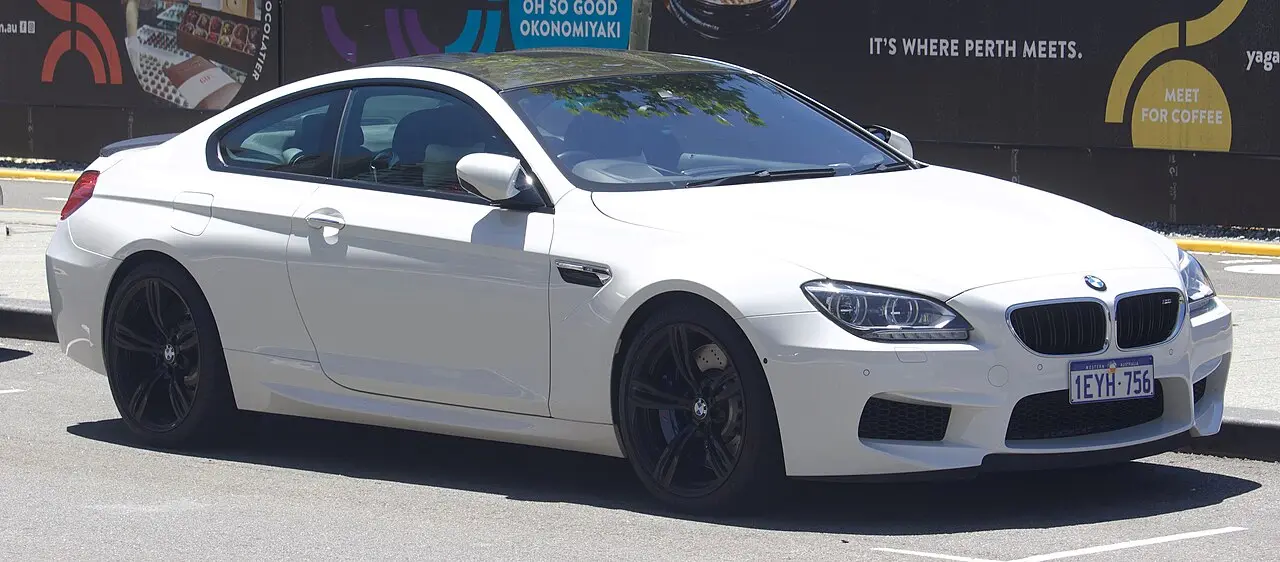
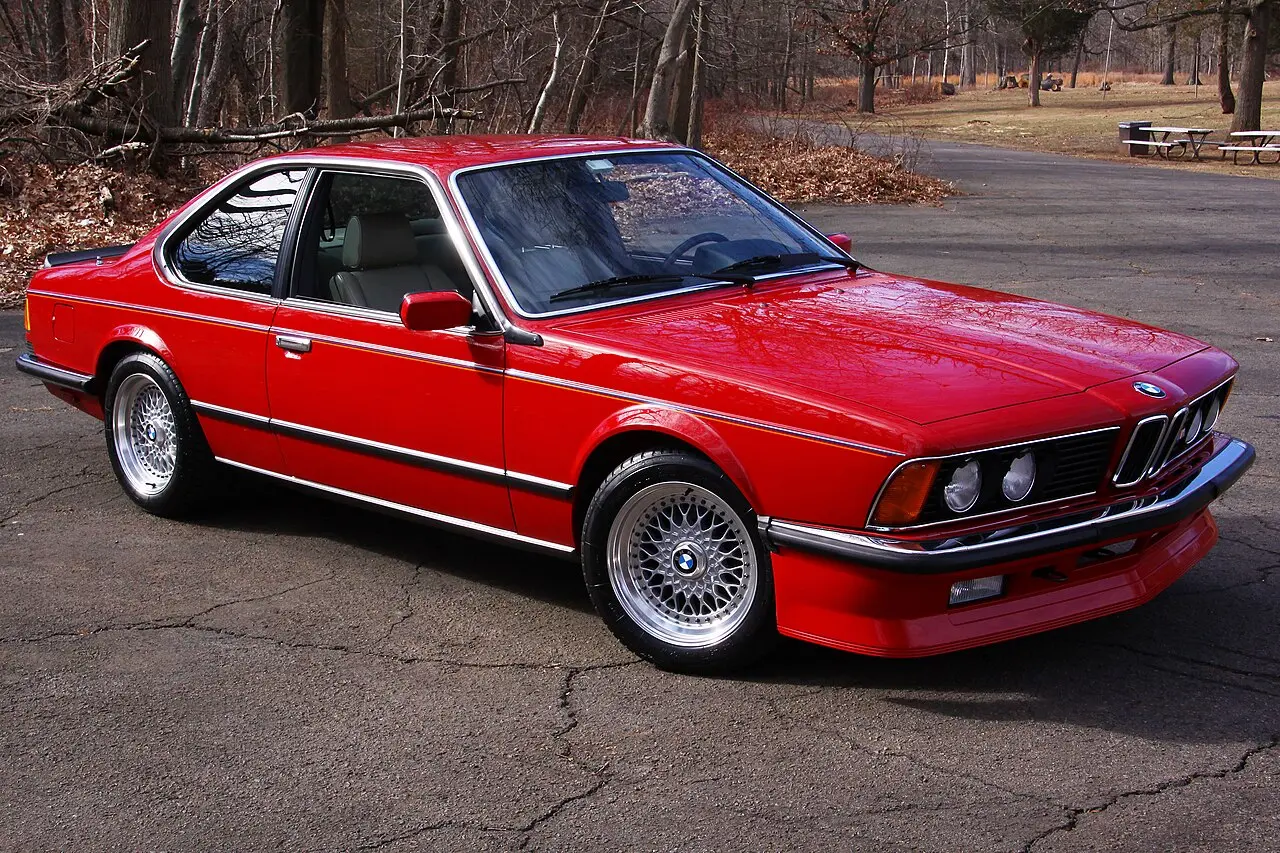
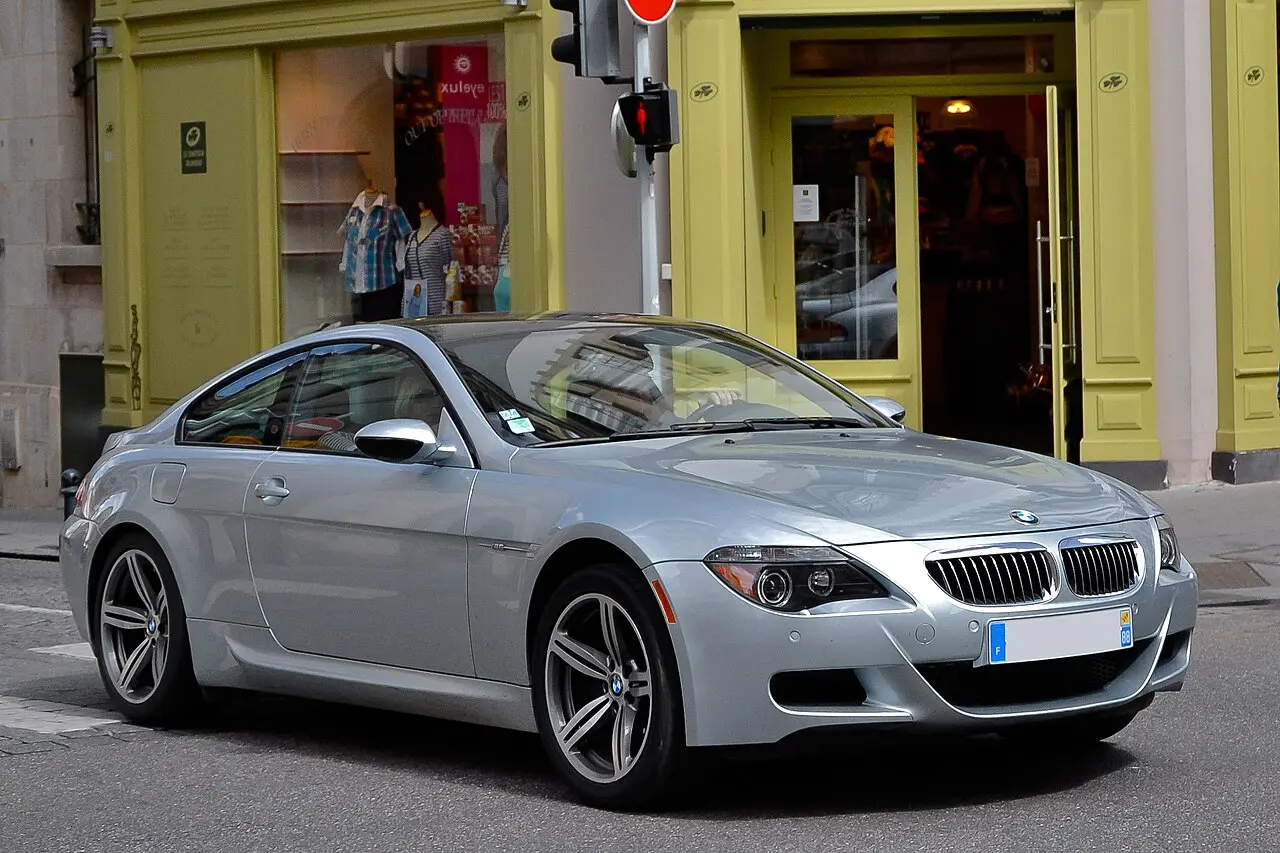
The BMW M6 was BMW M’s performance version of the 6 Series, a grand tourer built for relaxed long-distance driving. Across its generations, the M6 came as a coupé and later also as a convertible and four-door Gran Coupé.
The M6 name spans the E24 (1987-1989), E63/E64 (2005-2010) and F12/F13/F06 (2012-2018) generations. After the E24, the name returned with the E63 generation and its V10 engine. The final generation replaced that engine with a twin-turbocharged V8 and added the four-door Gran Coupé to the range.
Engines and power
EU figures span petrol engines from 4.4 to 5.0 litres and outputs from 412 kW (560 PS) to 441 kW (600 PS). The 4.4-litre petrol version rated at 412 kW (560 PS) led the listed EU registrations in 2013, 2014 and 2015. US figures span 3.5 to 5.0 litres, while Canadian figures cover 4.4 to 5.0 litres.
How economical is the BMW M6?
In France, the lowest listed petrol consumption is 9.9 L/100 km on the NEDC test. The lowest listed US figure is 13.8 L/100 km on the EPA test, with a best combined rating of 17 MPG. Canada’s lowest listed figure is 12.8 L/100 km on its 5-cycle test. These test procedures differ, so the results are best understood within their respective markets.
Where was the M6 sold?
EU registration figures cover 2010-2018, and French figures cover 2013-2014. US EPA figures span 1989-2019, while Canadian figures cover 2007-2019. Across its generations, the M6 brought BMW M performance to the 6 Series coupé, convertible and Gran Coupé body styles.
Questions and answers
What generations of BMW M6 were made?
The M6 came in the E24 (1987-1989), E63/E64 (2005-2010) and F12/F13/F06 (2012-2018) generations.
What engine did the later M6 use?
The final generation used a twin-turbocharged V8. EU figures include a 4.4-litre petrol version rated at 412 kW (560 PS).
What is the M6’s official fuel consumption?
The lowest listed figures are 9.9 L/100 km on NEDC in France, 13.8 L/100 km on EPA in the US and 12.8 L/100 km on Canada’s 5-cycle test.
Was the M6 only a coupé?
No. Later generations also came as a convertible and a four-door Gran Coupé.
At a glance: Length 4,870 mm · Kerb weight 1,685 - 1,905 kg · Top speed 250 - 305 km/h · MOT first-time pass at 13 years and older: 87.8% (UK average 69.2%) Specifications, reliability and all versions
At a glance: Length 4,900 - 5,010 mm · Kerb weight 1,825 - 1,955 kg · Top speed 250 - 305 km/h · MOT first-time pass at 6 - 8 years: 91.2% (UK average 86.4%) Specifications, reliability and all versions
Show all 16 versions
European Union 4 versions
New cars registered in the EU (plus Norway and Iceland), from the European Environment Agency. Figures on the NEDC procedure until 2020 and on WLTP from 2021; versions are grouped by engine and power, with their number of registrations.
Years and version
Engine
Power
Fuel
CO₂
EU registrations
2012 - 2018
4.4 L
412 kW (560 PS)
Petrol
233 - 237 g/km
5,360
2015 - 2018
4.4 L
441 kW (600 PS)
Petrol
233 - 237 g/km
1,368
2013 - 2016
4.4 L
423 kW (575 PS)
Petrol
232 - 233 g/km
953
2013
4.4 L
Not listed
Other fuel
234 g/km
28
France 3 versions
New cars on sale in France, from ADEME Car Labelling. NEDC figures until 2015, WLTP figures in the current catalogue.
Years and version
Engine
Power
Fuel
Gearbox
Consumption (combined)
CO₂
2014M6 Cabriolet
-
412 kW (560 PS)
Petrol
7-speed automatic
10.3 L/100 km NEDC
239 g/km
2014M6 Coupé
-
412 kW (560 PS)
Petrol
7-speed automatic
9.9 L/100 km NEDC
232 g/km
2013 - 2014M6 Gran Coupe
-
412 kW (560 PS)
Petrol
7-speed automatic
9.9 L/100 km NEDC
232 g/km
United States 3 versions
Model years sold in the USA, from the EPA and the Department of Energy (fueleconomy.gov). MPG on the EPA test; litres per 100 km = 235.215 ÷ MPG.
Years and version
Engine
Fuel
Gearbox
Drive
Consumption (combined)
CO₂
2013 - 2019SIDI
4.4 L
Petrol
7-speed automated manual
Rear-wheel drive
16 MPG (14.7 L/100 km) EPA
343 - 344 g/km
2013 - 2019SIDI
4.4 L
Petrol
6-speed manual
Rear-wheel drive
17 MPG (13.8 L/100 km) EPA
321 - 324 g/km
2012SIDI
4.4 L
Petrol
7-speed automatic
Rear-wheel drive
16 MPG (14.7 L/100 km) EPA
345 g/km
Canada 6 versions
Model years sold in Canada, from Natural Resources Canada fuel consumption ratings (5-cycle test).
Years and version
Engine
Fuel
Gearbox
Consumption (combined)
CO₂
2018 - 2019Subcompact · Compact
4.4 L
Petrol
7-speed automated manual
14.7 L/100 km 5-cycle
344 g/km
2014 - 2018Compact · Subcompact
4.4 L
Petrol
6-speed manual
13.7 - 13.8 L/100 km 5-cycle
317 - 324 g/km
2014 - 2017Compact · Subcompact
4.4 L
Petrol
7-speed automated manual
14.7 L/100 km 5-cycle
338 - 344 g/km
2015Subcompact · Compact
4.4 L
Petrol
6-speed manual
13.7 L/100 km 5-cycle
315 g/km
2013Compact
4.4 L
Petrol
7-speed automated manual
12.8 L/100 km 5-cycle
294 g/km
2013Compact
4.4 L
Petrol
6-speed manual
13.7 L/100 km 5-cycle
315 g/km
Versions outside these generations
European Union 1 version
New cars registered in the EU (plus Norway and Iceland), from the European Environment Agency. Figures on the NEDC procedure until 2020 and on WLTP from 2021; versions are grouped by engine and power, with their number of registrations.
Years and version
Engine
Fuel
CO₂
EU registrations
2011
5.0 L
Petrol
347 g/km
16
BMW M6 recalls
8 official safety recalls for the BMW M6 from NHTSA (United States), DVSA (United Kingdom) and the EU Safety Gate, newest first. Recall repairs are normally free at the maker’s dealers.
Third brake light fixings may come loose2013 - 2018
Official figures are measured on standard test procedures and differ between markets. Your consumption depends on how, where and in what conditions you drive.