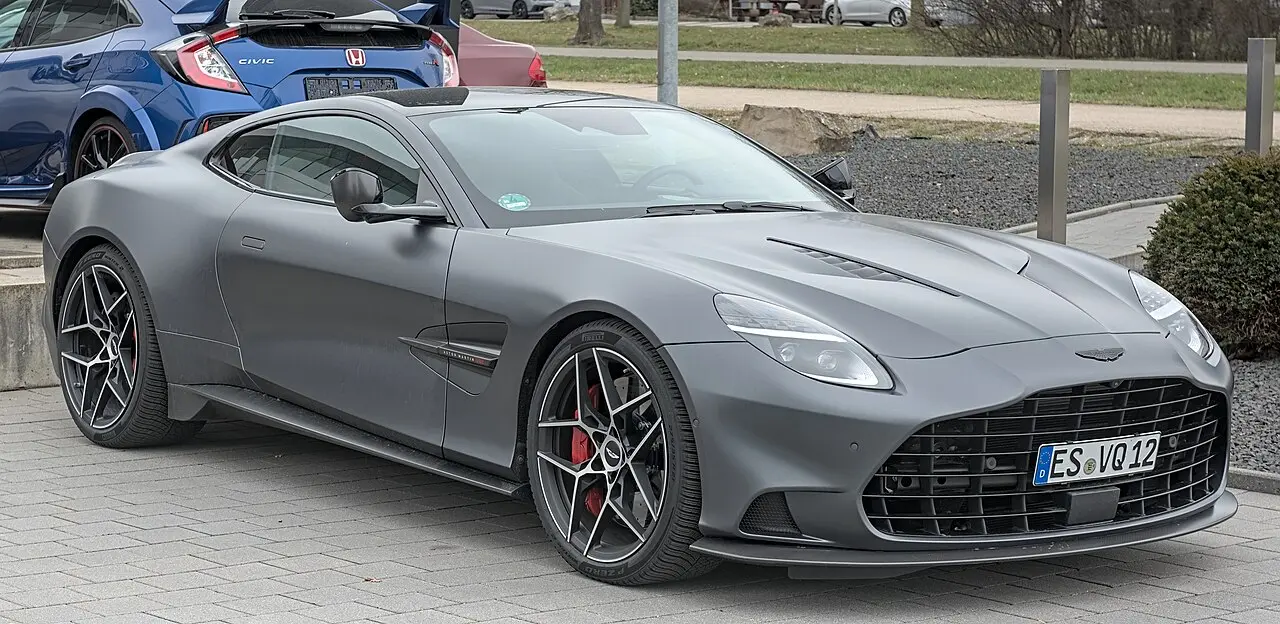
Aston Martin

Aston Martin Vanquish

Aston Martin Vanquish
Photo: Alexander Migl / Wikimedia Commons · CC BY-SA 4.0

The official data lists 41 versions of the Aston Martin Vanquish (2002–2027), in the European Union, the United Kingdom, France, the United States, and Canada. Each market publishes its own figures, measured on its own test procedure.

At a glance

Years in the data
2002–2027
Markets
European Union, United Kingdom, France, United States, Canada
Engines
5.2 L to 6.0 L
Power
422 kW (574 PS) to 825 kW (1,122 PS)
Fuels
Petrol
Lowest consumption (United Kingdom)
12.8 L/100 km (NEDC)
Lowest consumption (European Union)
13.7 L/100 km (WLTP)
Lowest consumption (France)
14.4 L/100 km (NEDC)
New registrations in the EU
3,811

What is the Aston Martin Vanquish?

The Vanquish is a front-engined grand tourer with a two-door body and a V12 at its heart. It sits among Aston Martin’s flagship sports cars, pairing a focus on long-distance travel with the marque’s sporting character. Carbon-fibre body panels and carefully finished interiors have featured in its story across distinct generations.

The name has appeared in three generations, with a gap between the first and second.

Vanquish generations

The first generation ran from 2002 to 2007. The second followed from 2012 to 2018 and carried the internal code AM310. It used carbon-fibre body panels and continued the car’s grand touring role. The third generation began in 2024, bringing the Vanquish name back as a modern flagship.

Engines, power and fuel consumption

The Vanquish versions listed across these markets use petrol engines. Engine sizes range from 5.2 to 5.9 litres in the EU and UK, and from 5.2 to 6.0 litres in the US and Canada. EU power ranges from 422 kW (574 PS) to 614 kW (835 PS); UK figures span 444 kW (604 PS) to 825 kW (1,122 PS).

Official fuel consumption depends on the version and test procedure. The lowest listed EU figure is 13.7 L/100 km on WLTP. The UK and France figures are 12.8 and 14.4 L/100 km, respectively, on NEDC. In the US, the EPA figure is 14.7 L/100 km, or 16 MPG combined; Canada’s 5-cycle figure is also 14.7 L/100 km. WLTP and NEDC are European procedures; EPA and Canada’s 5-cycle test differ, so results across markets are not directly comparable.

Where was the Vanquish sold?

Official figures list the Vanquish in the EU, UK, France, the United States and Canada. EU registration figures span 2012 to 2025; UK figures run from 2004 to 2026, and US figures from 2002 to 2027. These spans reflect the different generations and market reporting periods.

Questions and answers

How many Vanquish generations are there?

Three: the first ran from 2002 to 2007, the second from 2012 to 2018, and the third began in 2024.

What engines does the Vanquish use?

The listed versions are petrol-powered. Engine sizes range from 5.2 to 5.9 litres in the EU and UK, and reach 6.0 litres in US and Canadian listings.

What is the Vanquish’s official fuel consumption?

The lowest listed figure is 13.7 L/100 km on the EU WLTP test. The UK NEDC figure is 12.8 L/100 km; the EPA figure is 14.7 L/100 km, or 16 MPG combined.
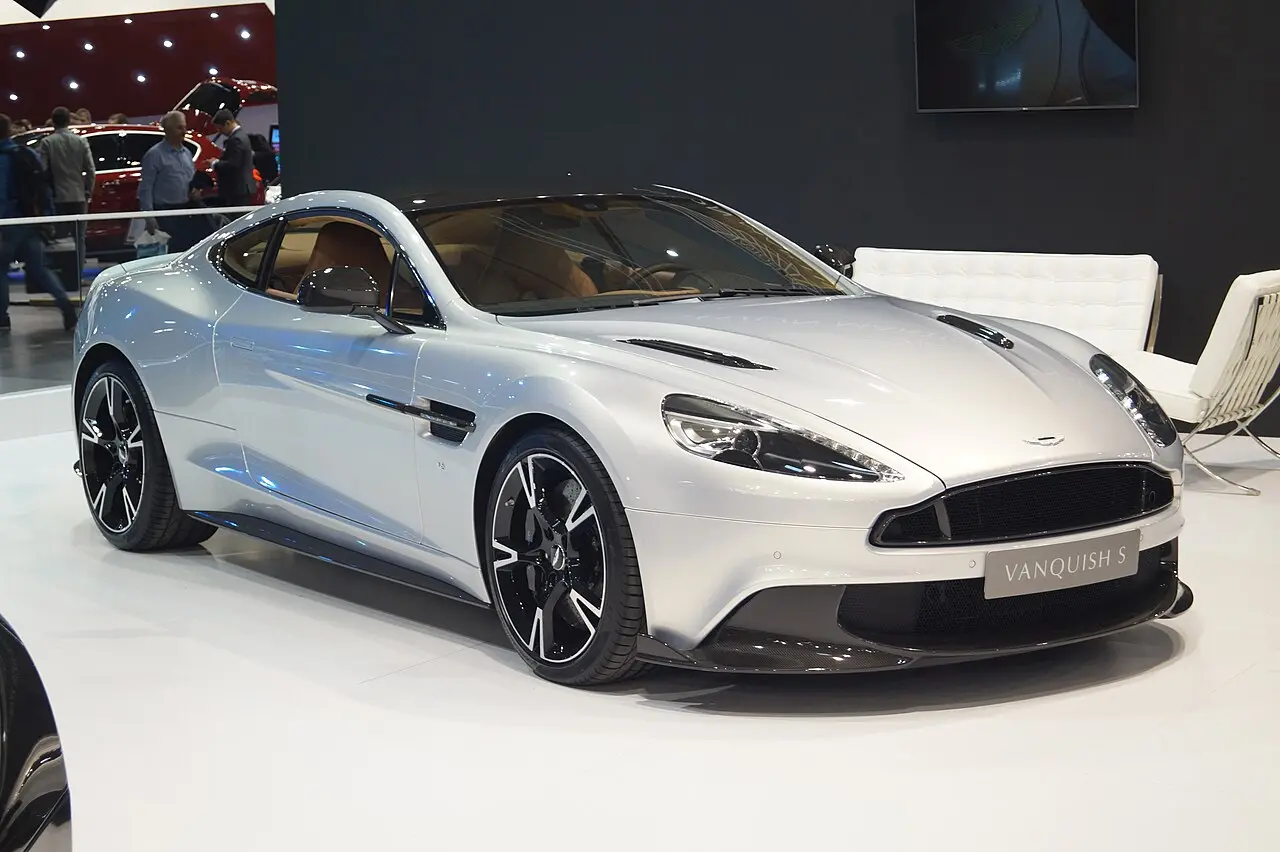
Vanquish I (2002–2007)

Aston Martin Vanquish I
Photo: Jakub "flyz1" Maciejewski / Wikimedia Commons · CC BY-SA 3.0

References: en.wikipedia.org, jdpower.com

Show all 5 versions

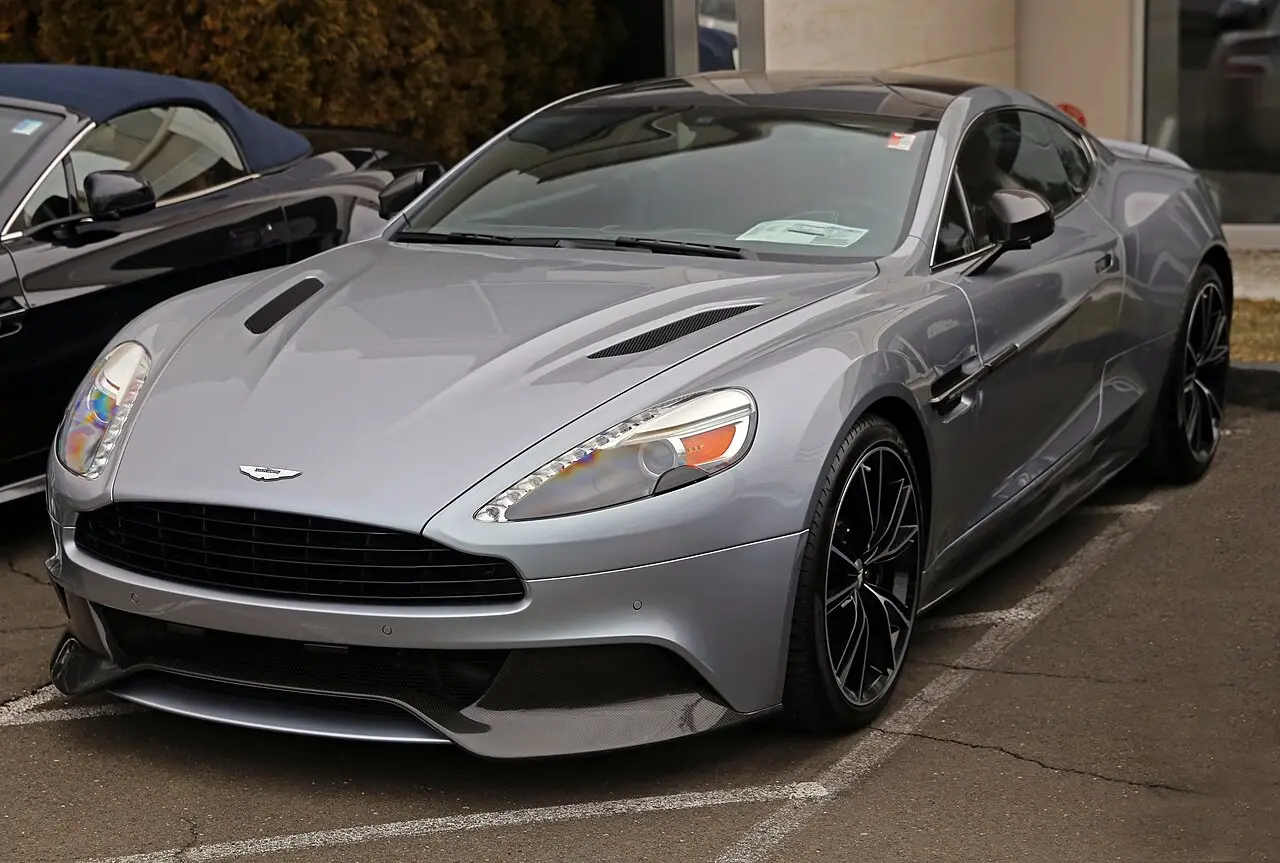
Vanquish II (2012–2018)

Aston Martin Vanquish II
Photo: Mr.choppers / Wikimedia Commons · CC BY-SA 3.0

Model codes: AM310 · References: en.wikipedia.org, carandclassic.com

Show all 25 versions

Vanquish III (since 2024)

Aston Martin Vanquish III
Photo: Alexander Migl / Wikimedia Commons · CC BY-SA 4.0

References: en.wikipedia.org, astonmartin.com

European Union 1 version

New cars registered in the EU (plus Norway and Iceland), from the European Environment Agency. Figures on the NEDC procedure until 2020 and on WLTP from 2021; versions are grouped by engine and power, with their number of registrations.

Years and versionEnginePowerFuelConsumption (combined)CO₂EU registrations
20255.2 L614 kW (835 PS)Petrol13.7 L/100 km WLTP313 g/km145

United Kingdom 2 versions

New cars on sale in the UK, from the Vehicle Certification Agency. NEDC figures until 2018 and WLTP figures after; years are the editions a version appeared in.

Years and versionEnginePowerFuelGearboxConsumption (combined)CO₂
2025–202625MY5.2 L614 kW (835 PS)Petrol8-speed automatic13.7 L/100 km WLTP312 g/km
202425MY5.2 L825 kW (1,122 PS)Petrol8-speed automatic13.7 L/100 km WLTP312 g/km

United States 2 versions

Model years sold in the USA, from the EPA and the Department of Energy (fueleconomy.gov). MPG on the EPA test; litres per 100 km = 235.215 ÷ MPG.

Years and versionEngineFuelGearboxDriveConsumption (combined)CO₂
2025–20275.2 LPetrol8-speed automaticRear-wheel drive16 MPG (14.7 L/100 km) EPA350 g/km
2026–20275.2 LPetrol8-speed automaticRear-wheel drive16 MPG (14.7 L/100 km) EPA352 g/km

Canada 2 versions

Model years sold in Canada, from Natural Resources Canada fuel consumption ratings (5-cycle test).

Years and versionEngineFuelGearboxConsumption (combined)CO₂
2025–2026Two-seater5.2 LPetrol8-speed automatic14.8 L/100 km 5-cycle347 g/km
2026Two-seater5.2 LPetrol8-speed automatic15.0 L/100 km 5-cycle352 g/km

Versions outside these generations

European Union 2 versions

New cars registered in the EU (plus Norway and Iceland), from the European Environment Agency. Figures on the NEDC procedure until 2020 and on WLTP from 2021; versions are grouped by engine and power, with their number of registrations.

Years and versionEnginePowerFuelCO₂EU registrations
20205.9 L444 kW (604 PS)Petrol311 g/km14
20195.9 L444 kW (604 PS)Petrol303 g/km202

United Kingdom 2 versions

New cars on sale in the UK, from the Vehicle Certification Agency. NEDC figures until 2018 and WLTP figures after; years are the editions a version appeared in.

Years and versionEnginePowerFuelGearboxConsumption (combined)CO₂
2020–20213 door sports5.9 L444 kW (604 PS)Petrol8-speed automatic13.3 L/100 km WLTP301 g/km
20193 door sports5.9 L444 kW (604 PS)Petrol8-speed automatic13.3 L/100 km WLTP–

Official figures are measured on standard test procedures and differ between markets. Your consumption depends on how, where and in what conditions you drive.