The official data lists 105 versions of the BMW 8 Series (1991–2026), in the European Union, the United Kingdom, France, the United States, and Canada. Each market publishes its own figures, measured on its own test procedure.
At a glance
Years in the data
1991–2026
Markets
European Union, United Kingdom, France, United States, Canada
Engines
3.0 L to 5.4 L
Power
235 kW (320 PS) to 390 kW (530 PS)
Fuels
Hybrid, Petrol, Diesel
Lowest consumption (European Union)
5.8 L/100 km (WLTP)
Lowest consumption (France)
6.1 L/100 km (WLTP)
Lowest consumption (United Kingdom)
8.3 L/100 km (WLTP)
New registrations in the EU
39,684
What is the BMW 8 Series?
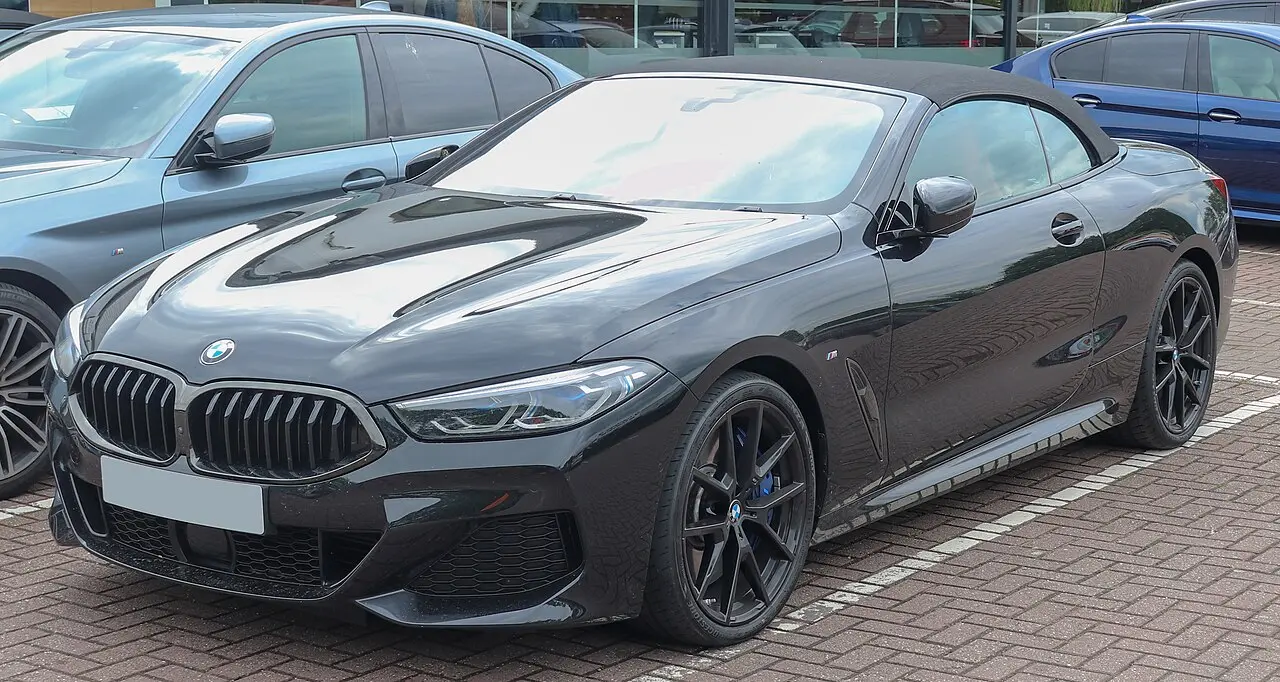
The BMW 8 Series is a grand touring luxury car, offered in the current generation as a coupé, convertible and four-door Gran Coupé. It brings a sleek profile and a more sporting character to long-distance touring, and sits near the top of BMW’s range.
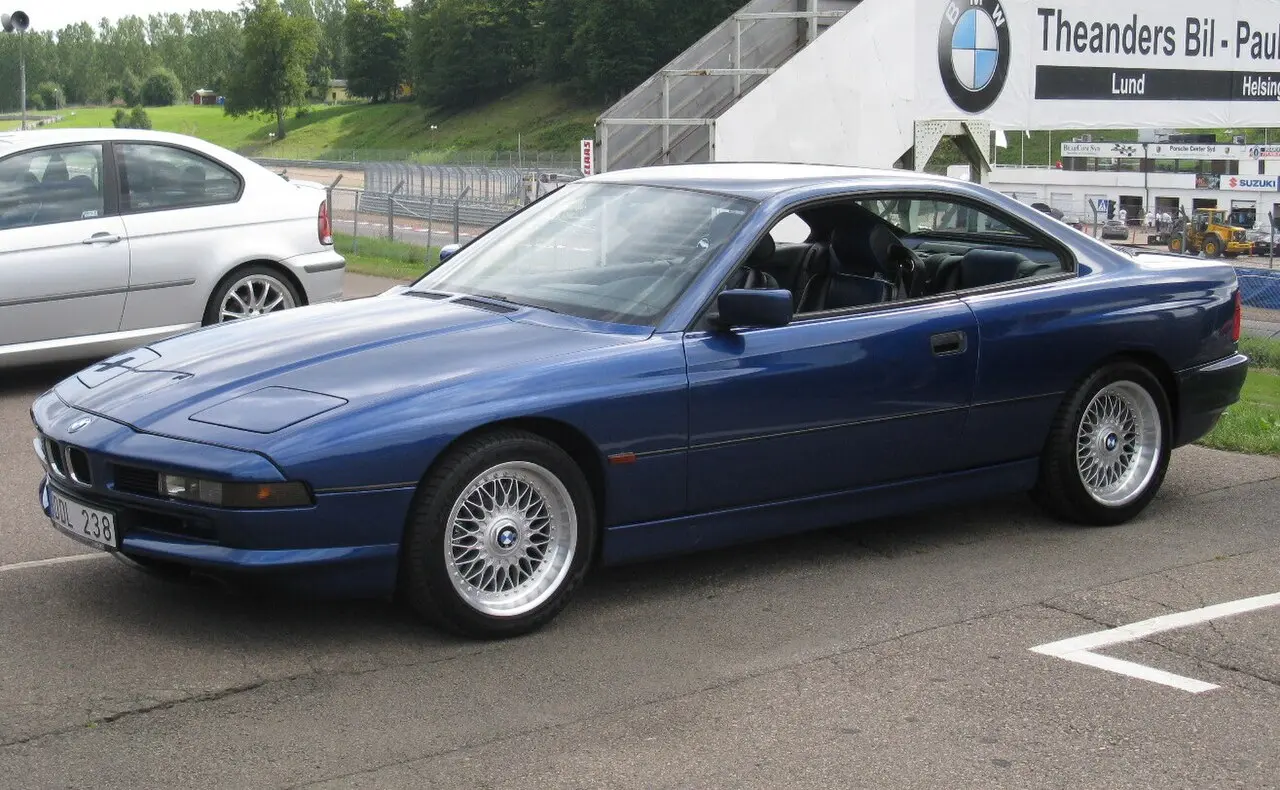
The name first appeared on a high-end coupé in the 1990s and returned for a modern family of body styles. The current generation carries the 8 Series name across three distinct shapes.
BMW 8 Series generations
The first generation, E31, ran from 1991 to 1999. The second generation, comprising G14, G15 and G16, began in 2019 and includes the convertible, coupé and Gran Coupé.
EU figures cover petrol, diesel and hybrid versions, with engine sizes from 3.0 to 4.4 litres and power from 235 kW (320 PS) to 390 kW (530 PS). UK figures list petrol versions, while French figures list petrol and hybrid versions.
How economical is the BMW 8 Series?
The lowest EU fuel-consumption figure for petrol, diesel and hybrid versions is 5.8 L/100 km on the WLTP test. The UK’s lowest listed WLTP figure is 8.3 L/100 km, while France’s is 6.1 L/100 km.
For the US, the lowest listed figure is 9.4 L/100 km under EPA testing, with a best combined rating of 25 MPG. Canada’s lowest listed figure is 11.5 L/100 km on the NRCan 5-cycle test. WLTP, EPA and NRCan 5-cycle procedures differ, so their results are not directly comparable. EU registrations total 39,684 for 2016–2025. The most registered listed version was a 4.4-litre petrol model with 390 kW (530 PS), recording 5,553 registrations in 2019.
Where is the BMW 8 Series listed?
Official figures cover the EU, UK, France, United States and Canada. EU registrations cover 2016–2025; UK figures cover 2025–2026, and French figures cover 2026. US figures span 1991–2026 and Canadian figures 1995–2026.
Questions and answers
How many BMW 8 Series generations are there?
Two: the E31 first generation from 1991 to 1999, and the G14/G15/G16 second generation, which began in 2019.
What body styles does the current 8 Series come in?
The second generation includes a coupé, convertible and four-door Gran Coupé.
What is the lowest listed BMW 8 Series fuel consumption?
The EU low is 5.8 L/100 km WLTP for petrol, diesel and hybrid versions. Other markets use different test procedures.
Model codes: G14, G15, G16 · Sold in: United States, Canada, European Union, France, and United Kingdom · References: en.wikipedia.org, en.wikipedia.org
European Union 34 versions
New cars registered in the EU (plus Norway and Iceland), from the European Environment Agency. Figures on the NEDC procedure until 2020 and on WLTP from 2021; versions are grouped by engine and power, with their number of registrations.
Years and version
Engine
Power
Fuel
Consumption (combined)
CO₂
EU registrations
2025
4.4 L
390 kW (530 PS)
Petrol
10.7 L/100 km WLTP
245 g/km
545
2025
3.0 L
250 kW (340 PS)
Hybrid
7.0 L/100 km WLTP
184 g/km
374
2025
3.0 L
245 kW (333 PS)
Petrol
8.7 L/100 km WLTP
198 g/km
339
2025
3.0 L
–
Diesel
5.8 L/100 km WLTP
179 g/km
80
2024
4.4 L
390 kW (530 PS)
Petrol
10.6 L/100 km WLTP
244 g/km
742
2024
3.0 L
250 kW (340 PS)
Hybrid
6.6 L/100 km WLTP
181 g/km
409
2024
3.0 L
245 kW (333 PS)
Petrol
8.5 L/100 km WLTP
199 g/km
398
2023
4.4 L
390 kW (530 PS)
Petrol
10.7 L/100 km WLTP
245 g/km
886
2023
3.0 L
250 kW (340 PS)
Hybrid
6.7 L/100 km WLTP
179 g/km
609
2023
3.0 L
245 kW (333 PS)
Petrol
8.7 L/100 km WLTP
201 g/km
543
2023
3.0 L
250 kW (340 PS)
Diesel
5.4 L/100 km WLTP
181 g/km
45
2022
4.4 L
390 kW (530 PS)
Petrol
10.7 L/100 km WLTP
245 g/km
1,006
2022
3.0 L
250 kW (340 PS)
Hybrid
6.5 L/100 km WLTP
175 g/km
844
2022
3.0 L
245 kW (333 PS)
Petrol
8.6 L/100 km WLTP
199 g/km
658
2021
4.4 L
390 kW (530 PS)
Petrol
10.8 L/100 km WLTP
249 g/km
2,324
2021
3.0 L
250 kW (340 PS)
Hybrid
6.5 L/100 km WLTP
173 g/km
1,418
2021
3.0 L
245 kW (333 PS)
Petrol
8.5 L/100 km WLTP
199 g/km
1,379
2021
3.0 L
235 kW (320 PS)
Diesel
6.8 L/100 km WLTP
186 g/km
422
2021
3.0 L
250 kW (340 PS)
Petrol
8.5 L/100 km WLTP
202 g/km
214
2021
3.0 L
250 kW (340 PS)
Diesel
5.8 L/100 km WLTP
169 g/km
153
2021
4.4 L
360 kW (489 PS)
Petrol
–
–
52
2021
3.0 L
250 kW (340 PS)
Petrol
–
–
26
2021
3.0 L
250 kW (340 PS)
Petrol
–
–
26
2021
3.0 L
250 kW (340 PS)
Hybrid
–
–
14
2020
3.0 L
250 kW (340 PS)
Petrol
–
170 g/km
4,788
2020
4.4 L
390 kW (530 PS)
Petrol
–
226 g/km
3,409
2020
3.0 L
235 kW (320 PS)
Diesel
–
162 g/km
3,022
2020
3.0 L
245 kW (333 PS)
Petrol
–
172 g/km
303
2020
3.0 L
250 kW (340 PS)
Hybrid
–
152 g/km
158
2020
4.4 L
360 kW (489 PS)
Petrol
–
214 g/km
30
2020
3.0 L
250 kW (340 PS)
Hybrid
–
157 g/km
22
2019
4.4 L
390 kW (530 PS)
Petrol
–
224 g/km
5,553
2019
3.0 L
235 kW (320 PS)
Diesel
–
162 g/km
5,069
2019
3.0 L
250 kW (340 PS)
Petrol
–
171 g/km
1,356
United Kingdom 12 versions
New cars on sale in the UK, from the Vehicle Certification Agency. NEDC figures until 2018 and WLTP figures after; years are the editions a version appeared in.
Years and version
Engine
Power
Fuel
Gearbox
Consumption (combined)
CO₂
2025–2026840i M Sport Convertible
3.0 L
245 kW (333 PS)
Petrol
8-speed automatic
8.6 L/100 km WLTP
195 g/km
2025–2026840i M Sport Convertible
3.0 L
245 kW (333 PS)
Petrol
8-speed automatic
8.5 L/100 km WLTP
196 g/km
2025–2026840i M Sport Coupé (VL) · 840i M Sport Coupé
3.0 L
245 kW (333 PS)
Petrol
8-speed automatic
8.4 L/100 km WLTP
190 g/km
2025–2026840i M Sport Coupé (VH) · 840i M Sport Coupé
Model years sold in the USA, from the EPA and the Department of Energy (fueleconomy.gov). MPG on the EPA test; litres per 100 km = 235.215 ÷ MPG.
Years and version
Engine
Fuel
Gearbox
Drive
Consumption (combined)
CO₂
2023–2026SIDI
3.0 L
Petrol
8-speed automatic
All-wheel drive
24 MPG (9.8 L/100 km) EPA
232 g/km
2025–2026SIDI
3.0 L
Petrol
8-speed automatic
Rear-wheel drive
24 MPG (9.8 L/100 km) EPA
229 g/km
2025–2026SIDI
4.4 L
Petrol
8-speed automatic
All-wheel drive
19 MPG (12.4 L/100 km) EPA
283 g/km
2025SIDI
4.4 L
Petrol
8-speed automatic
All-wheel drive
19 MPG (12.4 L/100 km) EPA
285 g/km
2023–2024SIDI
3.0 L
Petrol
8-speed automatic
Rear-wheel drive
24 MPG (9.8 L/100 km) EPA
232 g/km
2023–2024SIDI
4.4 L
Petrol
8-speed automatic
All-wheel drive
19 MPG (12.4 L/100 km) EPA
284 g/km
2020–2022SIDI
3.0 L
Petrol
8-speed automatic
Rear-wheel drive
25 MPG (9.4 L/100 km) EPA
216 g/km
2022SIDI
3.0 L
Petrol
8-speed automatic
All-wheel drive
23 MPG (10.2 L/100 km) EPA
241 g/km
2021–2022SIDI
3.0 L
Petrol
8-speed automatic
Rear-wheel drive
25 MPG (9.4 L/100 km) EPA
224 g/km
2022SIDI
4.4 L
Petrol
8-speed automatic
All-wheel drive
20 MPG (11.8 L/100 km) EPA
275 g/km
2022SIDI
4.4 L
Petrol
8-speed automatic
All-wheel drive
19 MPG (12.4 L/100 km) EPA
282 g/km
2021SIDI
3.0 L
Petrol
8-speed automatic
All-wheel drive
23 MPG (10.2 L/100 km) EPA
240 g/km
2021SIDI
4.4 L
Petrol
8-speed automatic
All-wheel drive
19 MPG (12.4 L/100 km) EPA
281 g/km
2021SIDI
4.4 L
Petrol
8-speed automatic
All-wheel drive
20 MPG (11.8 L/100 km) EPA
273 g/km
2020SIDI
3.0 L
Petrol
8-speed automatic
All-wheel drive
23 MPG (10.2 L/100 km) EPA
236 g/km
2020SIDI
3.0 L
Petrol
8-speed automatic
Rear-wheel drive
24 MPG (9.8 L/100 km) EPA
224 g/km
2020SIDI
3.0 L
Petrol
8-speed automatic
All-wheel drive
23 MPG (10.2 L/100 km) EPA
241 g/km
2020SIDI
4.4 L
Petrol
8-speed automatic
All-wheel drive
20 MPG (11.8 L/100 km) EPA
270 g/km
2020SIDI
4.4 L
Petrol
8-speed automatic
All-wheel drive
20 MPG (11.8 L/100 km) EPA
280 g/km
2019SIDI
4.4 L
Petrol
8-speed automatic
All-wheel drive
20 MPG (11.8 L/100 km) EPA
269 g/km
2019SIDI
4.4 L
Petrol
8-speed automatic
All-wheel drive
20 MPG (11.8 L/100 km) EPA
270 g/km
Canada 10 versions
Model years sold in Canada, from Natural Resources Canada fuel consumption ratings (5-cycle test).
Years and version
Engine
Fuel
Gearbox
Consumption (combined)
CO₂
2023–2026Mid-size · Subcompact
4.4 L
Petrol
8-speed automatic
12.2 L/100 km 5-cycle
284 g/km
2025Subcompact · Mid-size
4.4 L
Petrol
8-speed automatic
12.2 L/100 km 5-cycle
285 g/km
2022Mid-size · Subcompact
4.4 L
Petrol
8-speed automatic
12.0 L/100 km 5-cycle
279 g/km
2022Subcompact
4.4 L
Petrol
8-speed automatic
11.6 L/100 km 5-cycle
271 g/km
2021Subcompact · Mid-size
4.4 L
Petrol
8-speed automatic
12.0 L/100 km 5-cycle
281 g/km
2021Subcompact
4.4 L
Petrol
8-speed automatic
11.7 L/100 km 5-cycle
272 g/km
2020Subcompact · Mid-size
4.4 L
Petrol
8-speed automatic
12.4 L/100 km 5-cycle
290 g/km
2020Subcompact
4.4 L
Petrol
8-speed automatic
11.7 L/100 km 5-cycle
273 g/km
2019Subcompact
4.4 L
Petrol
8-speed automatic
11.6 L/100 km 5-cycle
270 g/km
2019Subcompact
4.4 L
Petrol
8-speed automatic
11.5 L/100 km 5-cycle
269 g/km
Versions outside these generations
European Union 4 versions
New cars registered in the EU (plus Norway and Iceland), from the European Environment Agency. Figures on the NEDC procedure until 2020 and on WLTP from 2021; versions are grouped by engine and power, with their number of registrations.
Years and version
Engine
Power
Fuel
CO₂
EU registrations
2018
3.0 L
235 kW (320 PS)
Diesel
162 g/km
1,498
2018
4.4 L
390 kW (530 PS)
Petrol
223 g/km
794
2016
4.4 L
360 kW (489 PS)
Petrol
215 g/km
106
2016
3.0 L
235 kW (320 PS)
Diesel
148 g/km
70
Official figures are measured on standard test procedures and differ between markets. Your consumption depends on how, where and in what conditions you drive.