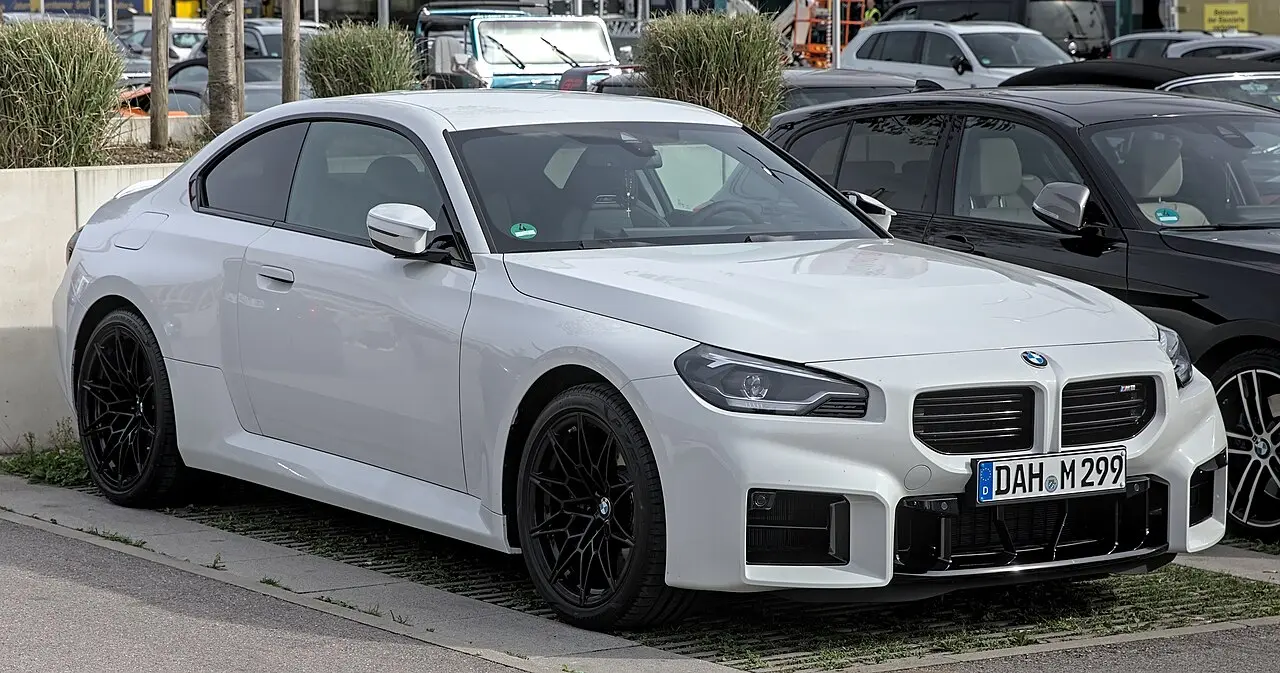
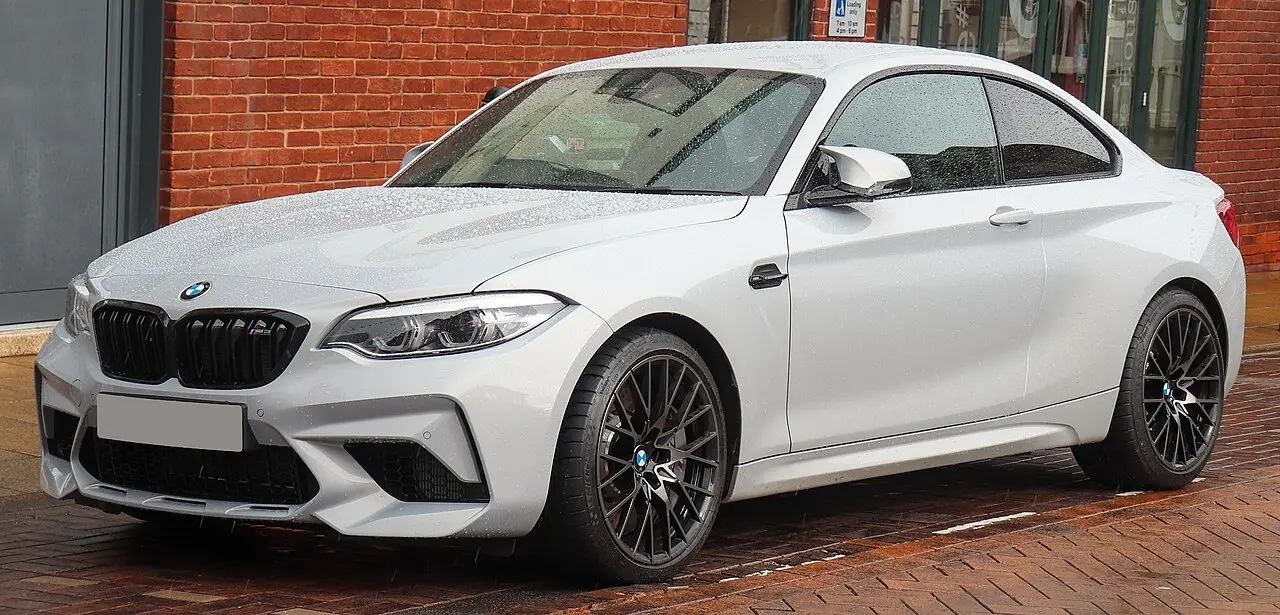
The official data lists 154 versions of the BMW M2 (2013–2027), in the European Union, the United Kingdom, the United States, and Canada. Each market publishes its own figures, measured on its own test procedure.
At a glance
Years in the data
2013–2027
Markets
European Union, United Kingdom, United States, Canada
Engines
2.0 L to 3.0 L
Power
225 kW (306 PS) to 390 kW (530 PS)
Fuels
Petrol, Hybrid
Lowest consumption (European Union)
7.0 L/100 km (WLTP)
Lowest consumption (United States)
7.8 L/100 km (EPA)
Lowest consumption (Canada)
9.0 L/100 km (5-cycle)
New registrations in the EU
136,516
What is the BMW M2?
The BMW M2 is a compact, high-performance coupé from BMW M, the brand’s performance division. It brings M engineering to a small two-door body, with a petrol engine and an enclosed cabin. Its place in BMW’s range gives drivers a compact way into the M model family.
The first M2 followed the 1 Series M Coupé, carrying on BMW M’s interest in compact performance cars. The G87 is a new generation, with a new body code and a different engine and power range in the listed market figures. Both generations keep the same core idea: a compact coupé developed by BMW M.
Generations
The first generation, F87, ran from 2016 to 2021. The second generation, G87, began in 2023 and continues in the years covered by the figures. BMW introduced the G87 with a six-cylinder in-line engine, rear-wheel drive and an optional manual gearbox.
Engines, power and fuel consumption
In EU registration figures, the M2 range spans 2.0 to 3.0 litres and 221 kW (300 PS) to 408 kW (555 PS), with petrol and other fuel types represented. US figures cover 2.0 to 3.0 litres and include petrol and hybrid categories; Canadian listings use 3.0-litre petrol engines. UK figures cover 3.0-litre petrol versions rated at 353 kW (480 PS) to 390 kW (530 PS). Among the listed EU versions, a 3.0-litre petrol rated at 302 kW (411 PS) was the most registered specification.
The lowest stated consumption is 7 L/100 km on WLTP among EU versions. The UK figure is 9.7 L/100 km on WLTP. The EPA’s lowest figure is 7.8 L/100 km, or 30 MPG combined, and Canada’s is 9 L/100 km under the NRCan 5-cycle test. WLTP in Europe, EPA ratings in the US and Canada’s 5-cycle test use different procedures, so market figures are not direct comparisons.
Questions and answers
Is the BMW M2 a coupé or a roadster?
It is a two-door coupé with an enclosed cabin.
How many M2 generations are there?
The first generation, F87, ran from 2016 to 2021; the second, G87, began in 2023.
What is the lowest stated M2 fuel consumption?
The lowest EU figure is 7 L/100 km on WLTP. The US and Canadian figures use their own test procedures.
New cars registered in the EU (plus Norway and Iceland), from the European Environment Agency. Figures on the NEDC procedure until 2020 and on WLTP from 2021; versions are grouped by engine and power, with their number of registrations.
Years and version
Engine
Power
Fuel
Consumption (combined)
CO₂
EU registrations
2025
3.0 L
353 kW (480 PS)
Petrol
9.7 L/100 km WLTP
221 g/km
3,386
2025
3.0 L
275 kW (374 PS)
Petrol
8.3 L/100 km WLTP
188 g/km
1,379
2025
2.0 L
221 kW (300 PS)
Petrol
7.6 L/100 km WLTP
174 g/km
882
2025
3.0 L
338 kW (460 PS)
Petrol
9.8 L/100 km WLTP
221 g/km
206
2025
2.0 L
225 kW (306 PS)
Petrol
7.4 L/100 km WLTP
170 g/km
137
2025
3.0 L
390 kW (530 PS)
Petrol
10.0 L/100 km WLTP
226 g/km
73
2025
3.0 L
353 kW (480 PS)
Petrol
–
245 g/km
36
2025
3.0 L
285 kW (387 PS)
Petrol
–
235 g/km
15
2023–2024
3.0 L
338 kW (460 PS)
Petrol
9.8 L/100 km WLTP
221 g/km
6,961
2024
3.0 L
275 kW (374 PS)
Petrol
8.2 L/100 km WLTP
186 g/km
1,768
2024
3.0 L
353 kW (480 PS)
Petrol
9.8 L/100 km WLTP
221 g/km
521
2024
2.0 L
225 kW (306 PS)
Petrol
7.4 L/100 km WLTP
166 g/km
460
2024
2.0 L
221 kW (300 PS)
Petrol
7.8 L/100 km WLTP
178 g/km
46
2023–2024
3.0 L
353 kW (480 PS)
Petrol
–
–
42
2024
2.0 L
233 kW (317 PS)
Petrol
–
–
28
2024
3.0 L
285 kW (387 PS)
Petrol
–
–
25
2024
3.0 L
390 kW (530 PS)
Petrol
–
–
19
2023
3.0 L
275 kW (374 PS)
Petrol
8.3 L/100 km WLTP
188 g/km
2,384
2023
2.0 L
225 kW (306 PS)
Petrol
7.4 L/100 km WLTP
167 g/km
498
2023
2.0 L
233 kW (317 PS)
Petrol
–
180 g/km
29
2023
3.0 L
285 kW (387 PS)
Petrol
–
–
11
United Kingdom 8 versions
New cars on sale in the UK, from the Vehicle Certification Agency. NEDC figures until 2018 and WLTP figures after; years are the editions a version appeared in.
Years and version
Engine
Power
Fuel
Gearbox
Consumption (combined)
CO₂
2025–2026M2 Coupé
3.0 L
353 kW (480 PS)
Petrol
6-speed manual
10.2 L/100 km WLTP
227 g/km
2025–2026M2 Coupé
3.0 L
353 kW (480 PS)
Petrol
6-speed manual
10.0 L/100 km WLTP
230 g/km
2025–2026M2 Coupé
3.0 L
353 kW (480 PS)
Petrol
8-speed automatic
9.8 L/100 km WLTP
219 g/km
2025–2026M2 Coupé · M2 Coupe
3.0 L
353 kW (480 PS)
Petrol
8-speed automatic
9.7 L/100 km WLTP
219 g/km
2026M2 Coupe
3.0 L
353 kW (480 PS)
Petrol
8-speed automatic
9.8 L/100 km WLTP
222 g/km
2026M2 Coupé Manual
3.0 L
353 kW (480 PS)
Petrol
6-speed manual
10.2 L/100 km WLTP
230 g/km
2026M2 Coupé Manual
3.0 L
353 kW (480 PS)
Petrol
6-speed manual
10.0 L/100 km WLTP
227 g/km
2025–2026M2 CS Coupé
3.0 L
390 kW (530 PS)
Petrol
8-speed automatic
10.0 L/100 km WLTP
226 g/km
United States 12 versions
Model years sold in the USA, from the EPA and the Department of Energy (fueleconomy.gov). MPG on the EPA test; litres per 100 km = 235.215 ÷ MPG.
Years and version
Engine
Fuel
Gearbox
Drive
Consumption (combined)
CO₂
2025–2027SIDI
3.0 L
Petrol
8-speed automatic
Rear-wheel drive
19 MPG (12.4 L/100 km) EPA
290 g/km
2025–2027SIDI
3.0 L
Petrol
6-speed manual
Rear-wheel drive
19 MPG (12.4 L/100 km) EPA
294 g/km
2027SIDI & PFI; Mild Hybrid
3.0 L
Hybrid
8-speed automatic
Rear-wheel drive
30 MPG (7.8 L/100 km) EPA
186 g/km
2027SIDI & PFI; Mild Hybrid
3.0 L
Hybrid
8-speed automatic
All-wheel drive
29 MPG (8.1 L/100 km) EPA
191 g/km
2027SIDI
3.0 L
Petrol
8-speed automatic
All-wheel drive
18 MPG (13.1 L/100 km) EPA
300 g/km
2025–2026SIDI
3.0 L
Petrol
8-speed automatic
Rear-wheel drive
26 MPG (9.0 L/100 km) EPA
211 g/km
2025–2026SIDI
3.0 L
Petrol
8-speed automatic
All-wheel drive
26 MPG (9.0 L/100 km) EPA
209 g/km
2026SIDI
3.0 L
Petrol
8-speed automatic
Rear-wheel drive
19 MPG (12.4 L/100 km) EPA
295 g/km
2023–2024SIDI
3.0 L
Petrol
8-speed automatic
Rear-wheel drive
26 MPG (9.0 L/100 km) EPA
213 g/km
2023–2024SIDI
3.0 L
Petrol
8-speed automatic
All-wheel drive
26 MPG (9.0 L/100 km) EPA
210 g/km
2023–2024SIDI
3.0 L
Petrol
6-speed manual
Rear-wheel drive
19 MPG (12.4 L/100 km) EPA
286 g/km
2023–2024SIDI
3.0 L
Petrol
8-speed automatic
Rear-wheel drive
19 MPG (12.4 L/100 km) EPA
293 g/km
Canada 7 versions
Model years sold in Canada, from Natural Resources Canada fuel consumption ratings (5-cycle test).
Years and version
Engine
Fuel
Gearbox
Consumption (combined)
CO₂
2025–2026Subcompact
3.0 L
Petrol
8-speed automatic
12.5 L/100 km 5-cycle
290 g/km
2025–2026Subcompact
3.0 L
Petrol
6-speed manual
12.6 L/100 km 5-cycle
294 g/km
2025–2026Subcompact
3.0 L
Petrol
8-speed automatic
9.0 L/100 km 5-cycle
209 g/km
2026Subcompact
3.0 L
Petrol
8-speed automatic
12.7 L/100 km 5-cycle
295 g/km
2023–2024Subcompact
3.0 L
Petrol
8-speed automatic
12.7 L/100 km 5-cycle
294 g/km
2023–2024Subcompact
3.0 L
Petrol
6-speed manual
12.4 L/100 km 5-cycle
287 g/km
2023–2024Subcompact
3.0 L
Petrol
8-speed automatic
9.0 L/100 km 5-cycle
210 g/km
Versions outside these generations
European Union 7 versions
New cars registered in the EU (plus Norway and Iceland), from the European Environment Agency. Figures on the NEDC procedure until 2020 and on WLTP from 2021; versions are grouped by engine and power, with their number of registrations.
Years and version
Engine
Power
Fuel
Consumption (combined)
CO₂
EU registrations
2022
3.0 L
275 kW (374 PS)
Petrol
8.4 L/100 km WLTP
191 g/km
2,038
2022
2.0 L
225 kW (306 PS)
Petrol
7.0 L/100 km WLTP
166 g/km
598
2022
3.0 L
250 kW (340 PS)
Petrol
8.9 L/100 km WLTP
202 g/km
57
2015
3.0 L
240 kW (326 PS)
Petrol
–
184 g/km
8,767
2015
3.0 L
272 kW (370 PS)
Petrol
–
192 g/km
126
2014
3.0 L
240 kW (326 PS)
Petrol
–
181 g/km
5,734
2013
3.0 L
240 kW (326 PS)
Petrol
–
179 g/km
140
United States 7 versions
Model years sold in the USA, from the EPA and the Department of Energy (fueleconomy.gov). MPG on the EPA test; litres per 100 km = 235.215 ÷ MPG.
Years and version
Engine
Fuel
Gearbox
Drive
Consumption (combined)
CO₂
2022SIDI
3.0 L
Petrol
8-speed automatic
All-wheel drive
26 MPG (9.0 L/100 km) EPA
208 g/km
2015–2016SIDI
3.0 L
Petrol
6-speed manual
Rear-wheel drive
22 MPG (10.7 L/100 km) EPA
255 g/km
2015SIDI
3.0 L
Petrol
8-speed automatic
Rear-wheel drive
25 MPG (9.4 L/100 km) EPA
224 g/km
2015SIDI
3.0 L
Petrol
6-speed manual
Rear-wheel drive
22 MPG (10.7 L/100 km) EPA
244 g/km
2015SIDI
3.0 L
Petrol
8-speed automatic
All-wheel drive
23 MPG (10.2 L/100 km) EPA
235 g/km
2014SIDI
3.0 L
Petrol
8-speed automatic
Rear-wheel drive
25 MPG (9.4 L/100 km) EPA
220 g/km
2014SIDI
3.0 L
Petrol
6-speed manual
Rear-wheel drive
22 MPG (10.7 L/100 km) EPA
242 g/km
Canada 5 versions
Model years sold in Canada, from Natural Resources Canada fuel consumption ratings (5-cycle test).
Years and version
Engine
Fuel
Gearbox
Consumption (combined)
CO₂
2022Subcompact
3.0 L
Petrol
8-speed automatic
9.1 L/100 km 5-cycle
212 g/km
2015Subcompact
3.0 L
Petrol
8-speed automatic
10.2 L/100 km 5-cycle
235 g/km
2015Subcompact
3.0 L
Petrol
6-speed manual
10.8 L/100 km 5-cycle
248 g/km
2015Subcompact
3.0 L
Petrol
6-speed manual
10.4 L/100 km 5-cycle
239 g/km
2015Subcompact
3.0 L
Petrol
8-speed automatic
10.0 L/100 km 5-cycle
230 g/km
Official figures are measured on standard test procedures and differ between markets. Your consumption depends on how, where and in what conditions you drive.