The official data lists 240 versions of the BMW Z4 (2003–2026), in the European Union, the United Kingdom, France, the United States, and Canada. Each market publishes its own figures, measured on its own test procedure.
At a glance
Years in the data
2003–2026
Markets
European Union, United Kingdom, France, United States, Canada
Engines
2.0 L to 3.2 L
Power
115 kW (156 PS) to 250 kW (340 PS)
Fuels
Petrol
Lowest consumption (European Union)
6.6 L/100 km (WLTP)
Lowest consumption (France)
6.8 L/100 km (WLTP)
Lowest consumption (United Kingdom)
6.8 L/100 km (NEDC)
New registrations in the EU
132,037
What is the BMW Z4?
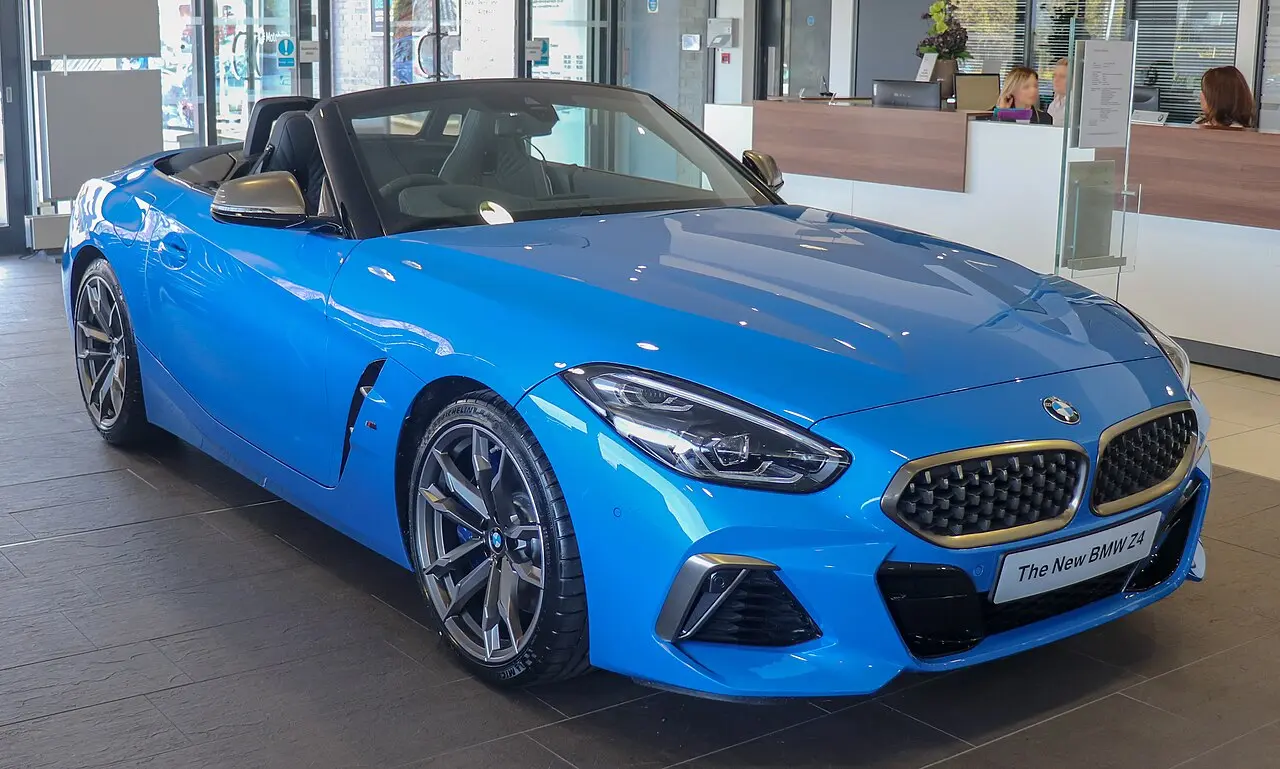
The BMW Z4 is a two-seat sports roadster for open-air motoring. Its compact cabin and long bonnet give it the familiar proportions of a classic roadster. With the roof down, the drive is all about the open cabin; with it up, the Z4 remains a coupé-like choice for everyday trips.
The Z4 carries on BMW’s tradition of open-top sports cars. Its second generation introduced a retractable hardtop, while the third returned to a fabric roof. Through those changes, the two-seat roadster layout has remained at the heart of the model.
Generations
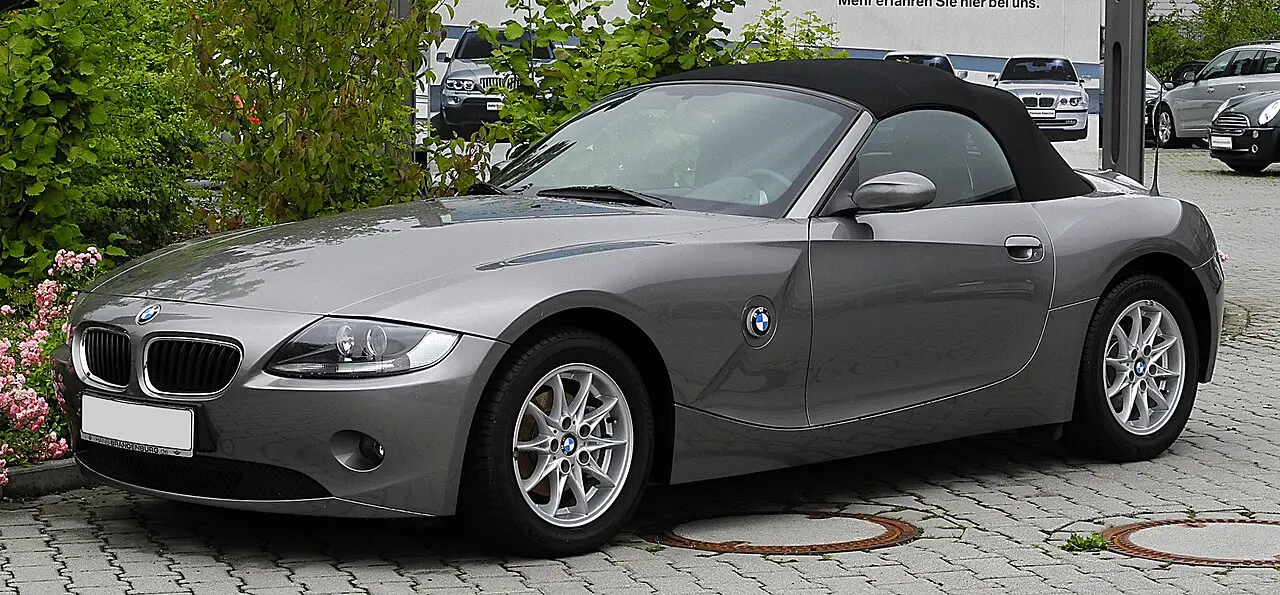
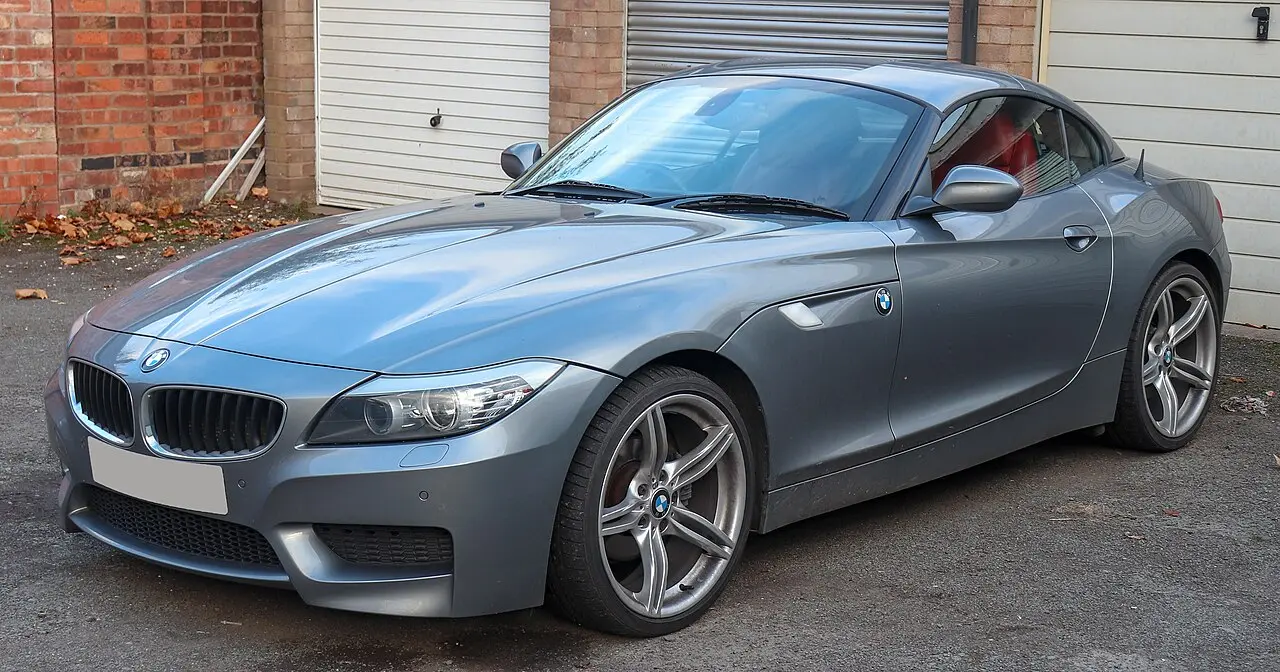
The first generation, E85 roadster and E86 coupé, ran from 2003 to 2008. The E86 added a fixed-roof option. The second generation, E89, followed from 2009 to 2016, with a retractable hardtop that opened or closed at the touch of a button. The third generation, G29, has been sold from 2019 to 2026 in the listed figures. It brought back a soft top.
Engines and fuel consumption
The Z4 has used petrol engines across the listed markets. EU registration figures span 2.0 to 3.0 litres and 115 kW (156 PS) to 250 kW (340 PS). In the UK, the engine range runs from 2.0 to 3.2 litres, with power from 145 kW (197 PS) to 250 kW (340 PS). The US range covers 2.0 to 3.2 litres, while Canada’s spans 2.0 to 3.0 litres. One of the most registered EU versions was the 2.0-litre petrol rated at 135 kW (184 PS).
The lowest stated consumption in EU registration figures is 6.6 L/100 km on WLTP. The UK’s lowest is 6.8 L/100 km on NEDC; France’s is 6.8 L/100 km on WLTP. The US EPA figure is 8.4 L/100 km, equivalent to 28 MPG combined, and Canada’s lowest is 8.1 L/100 km on the NRCan 5-cycle test. WLTP and NEDC in Europe, EPA in the US and Canada’s 5-cycle procedure use different methods, so market figures are not direct comparisons.
Questions and answers
How many people does the BMW Z4 seat?
The Z4 is a two-seat roadster.
Which Z4 generation had a retractable hardtop?
The second-generation E89, sold from 2009 to 2016, had a retractable hardtop.
What is the lowest stated consumption for the Z4?
The lowest EU figure is 6.6 L/100 km on WLTP. Other market figures use different test procedures.
New cars registered in the EU (plus Norway and Iceland), from the European Environment Agency. Figures on the NEDC procedure until 2020 and on WLTP from 2021; versions are grouped by engine and power, with their number of registrations.
Years and version
Engine
Power
Fuel
Consumption (combined)
CO₂
EU registrations
2024–2025
2.0 L
145 kW (197 PS)
Petrol
7.2 L/100 km WLTP
163 g/km
3,713
2025
3.0 L
250 kW (340 PS)
Petrol
8.1 L/100 km WLTP
183 g/km
1,969
2025
2.0 L
190 kW (258 PS)
Petrol
7.3 L/100 km WLTP
165 g/km
772
2024–2025
2.0 L
120 kW (163 PS)
Petrol
7.2 L/100 km WLTP
163 g/km
94
2024
3.0 L
250 kW (340 PS)
Petrol
8.1 L/100 km WLTP
182 g/km
1,961
2024
2.0 L
190 kW (258 PS)
Petrol
7.3 L/100 km WLTP
164 g/km
514
2023
3.0 L
250 kW (340 PS)
Petrol
8.1 L/100 km WLTP
183 g/km
2,127
2023
2.0 L
145 kW (197 PS)
Petrol
7.2 L/100 km WLTP
162 g/km
1,992
2023
2.0 L
190 kW (258 PS)
Petrol
7.3 L/100 km WLTP
164 g/km
642
2023
2.0 L
120 kW (163 PS)
Petrol
7.2 L/100 km WLTP
163 g/km
78
2022
2.0 L
145 kW (197 PS)
Petrol
6.9 L/100 km WLTP
162 g/km
2,291
2022
3.0 L
250 kW (340 PS)
Petrol
7.9 L/100 km WLTP
182 g/km
2,101
2022
2.0 L
190 kW (258 PS)
Petrol
6.9 L/100 km WLTP
163 g/km
813
2022
2.0 L
120 kW (163 PS)
Petrol
7.1 L/100 km WLTP
162 g/km
102
2021
2.0 L
145 kW (197 PS)
Petrol
7.0 L/100 km WLTP
162 g/km
5,330
2021
3.0 L
250 kW (340 PS)
Petrol
8.0 L/100 km WLTP
182 g/km
5,075
2021
2.0 L
190 kW (258 PS)
Petrol
7.1 L/100 km WLTP
163 g/km
2,128
2021
2.0 L
120 kW (163 PS)
Petrol
6.6 L/100 km WLTP
162 g/km
214
2020
2.0 L
145 kW (197 PS)
Petrol
–
140 g/km
7,751
2020
3.0 L
250 kW (340 PS)
Petrol
–
167 g/km
5,207
2020
2.0 L
190 kW (258 PS)
Petrol
–
139 g/km
2,699
2020
2.0 L
120 kW (163 PS)
Petrol
–
140 g/km
200
2019
2.0 L
145 kW (197 PS)
Petrol
–
140 g/km
8,707
2019
2.0 L
190 kW (258 PS)
Petrol
–
139 g/km
3,450
2019
2.0 L
120 kW (163 PS)
Petrol
–
140 g/km
128
United Kingdom 4 versions
New cars on sale in the UK, from the Vehicle Certification Agency. NEDC figures until 2018 and WLTP figures after; years are the editions a version appeared in.
Years and version
Engine
Power
Fuel
Gearbox
Consumption (combined)
CO₂
2025–2026Z4 sDrive20i M Sport
2.0 L
145 kW (197 PS)
Petrol
8-speed automatic
7.3 L/100 km WLTP
161 g/km
2025–2026Z4 sDrive20i M Sport
2.0 L
145 kW (197 PS)
Petrol
8-speed automatic
7.1 L/100 km WLTP
164 g/km
2025–2026Z4 M40i - Automatic
3.0 L
250 kW (340 PS)
Petrol
8-speed automatic
8.0 L/100 km WLTP
180 g/km
2025–2026Z4 M40i - Manual
3.0 L
250 kW (340 PS)
Petrol
6-speed manual
8.7 L/100 km WLTP
197 g/km
France 2 versions
New cars on sale in France, from ADEME Car Labelling. NEDC figures until 2015, WLTP figures in the current catalogue.
Years and version
Engine
Power
Fuel
Gearbox
Consumption (combined)
CO₂
2026Z4 sDrive20i
2.0 L
145 kW (197 PS)
Petrol
8-speed automatic
6.8 L/100 km WLTP
154 g/km
2026Z4 sDrive20i
2.0 L
145 kW (197 PS)
Petrol
6-speed manual
6.8 L/100 km WLTP
155 g/km
United States 11 versions
Model years sold in the USA, from the EPA and the Department of Energy (fueleconomy.gov). MPG on the EPA test; litres per 100 km = 235.215 ÷ MPG.
Years and version
Engine
Fuel
Gearbox
Drive
Consumption (combined)
CO₂
2023–2026SIDI
2.0 L
Petrol
8-speed automatic
Rear-wheel drive
28 MPG (8.4 L/100 km) EPA
194 g/km
2025–2026SIDI
3.0 L
Petrol
8-speed automatic
Rear-wheel drive
25 MPG (9.4 L/100 km) EPA
215 g/km
2025–2026SIDI
3.0 L
Petrol
6-speed manual
Rear-wheel drive
22 MPG (10.7 L/100 km) EPA
253 g/km
2023–2024SIDI
3.0 L
Petrol
8-speed automatic
Rear-wheel drive
26 MPG (9.0 L/100 km) EPA
210 g/km
2022SIDI
2.0 L
Petrol
8-speed automatic
Rear-wheel drive
28 MPG (8.4 L/100 km) EPA
197 g/km
2022SIDI
3.0 L
Petrol
8-speed automatic
Rear-wheel drive
25 MPG (9.4 L/100 km) EPA
222 g/km
2021SIDI
2.0 L
Petrol
8-speed automatic
Rear-wheel drive
28 MPG (8.4 L/100 km) EPA
199 g/km
2021SIDI
3.0 L
Petrol
8-speed automatic
Rear-wheel drive
25 MPG (9.4 L/100 km) EPA
221 g/km
2020SIDI
2.0 L
Petrol
8-speed automatic
Rear-wheel drive
27 MPG (8.7 L/100 km) EPA
201 g/km
2020SIDI
3.0 L
Petrol
8-speed automatic
Rear-wheel drive
26 MPG (9.0 L/100 km) EPA
208 g/km
2019SIDI
2.0 L
Petrol
8-speed automatic
Rear-wheel drive
28 MPG (8.4 L/100 km) EPA
199 g/km
Canada 11 versions
Model years sold in Canada, from Natural Resources Canada fuel consumption ratings (5-cycle test).
Years and version
Engine
Fuel
Gearbox
Consumption (combined)
CO₂
2023–2026Two-seater
2.0 L
Petrol
8-speed automatic
8.4 L/100 km 5-cycle
194 g/km
2025–2026Two-seater
3.0 L
Petrol
8-speed automatic
9.3 L/100 km 5-cycle
215 g/km
2025–2026Two-seater
3.0 L
Petrol
6-speed manual
10.9 L/100 km 5-cycle
253 g/km
2023–2024Two-seater
3.0 L
Petrol
8-speed automatic
9.1 L/100 km 5-cycle
210 g/km
2022Two-seater
2.0 L
Petrol
8-speed automatic
8.5 L/100 km 5-cycle
199 g/km
2022Two-seater
3.0 L
Petrol
8-speed automatic
9.6 L/100 km 5-cycle
223 g/km
2021Two-seater
2.0 L
Petrol
8-speed automatic
8.4 L/100 km 5-cycle
197 g/km
2021Two-seater
3.0 L
Petrol
8-speed automatic
9.5 L/100 km 5-cycle
221 g/km
2020Two-seater
2.0 L
Petrol
8-speed automatic
8.5 L/100 km 5-cycle
200 g/km
2020Two-seater
3.0 L
Petrol
8-speed automatic
9.3 L/100 km 5-cycle
216 g/km
2019Two-seater
2.0 L
Petrol
8-speed automatic
8.5 L/100 km 5-cycle
199 g/km
Versions outside these generations
European Union 7 versions
New cars registered in the EU (plus Norway and Iceland), from the European Environment Agency. Figures on the NEDC procedure until 2020 and on WLTP from 2021; versions are grouped by engine and power, with their number of registrations.
Years and version
Engine
Power
Fuel
CO₂
EU registrations
2018–2019
3.0 L
250 kW (340 PS)
Petrol
168 g/km
7,283
2018
2.0 L
190 kW (258 PS)
Petrol
139 g/km
44
2018
2.0 L
145 kW (197 PS)
Petrol
139 g/km
22
2017
2.0 L
180 kW (245 PS)
Petrol
159 g/km
332
2017
2.0 L
115 kW (156 PS)
Petrol
159 g/km
30
2017
2.0 L
135 kW (184 PS)
Petrol
159 g/km
16
2017
2.0 L
120 kW (163 PS)
Petrol
159 g/km
12
Official figures are measured on standard test procedures and differ between markets. Your consumption depends on how, where and in what conditions you drive.