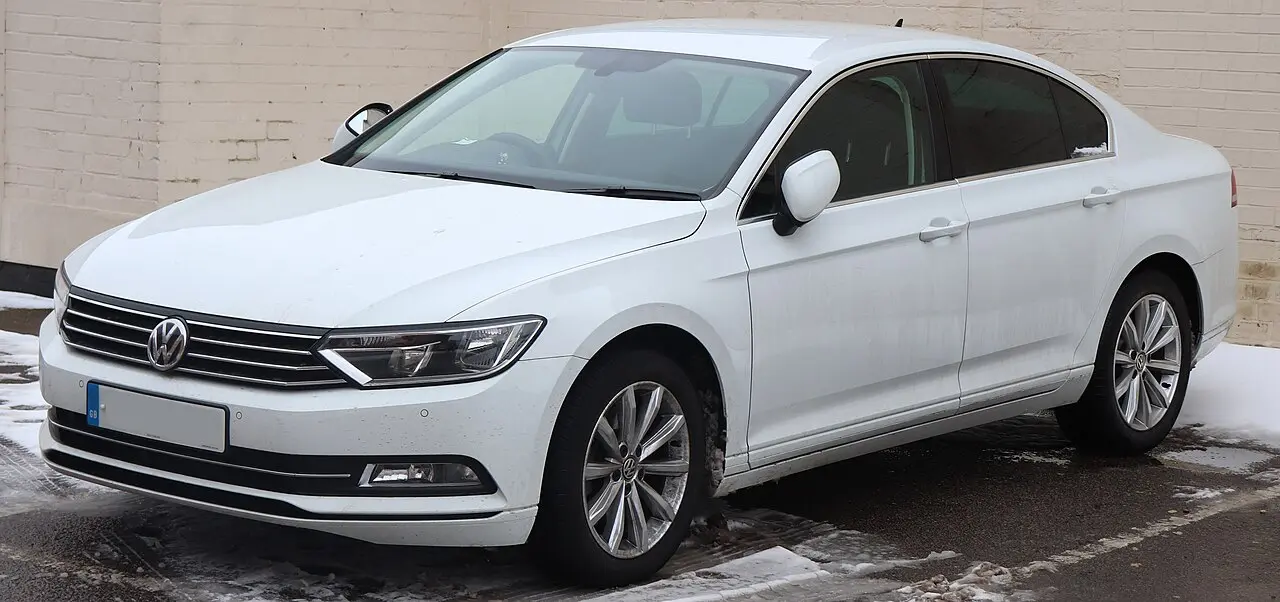
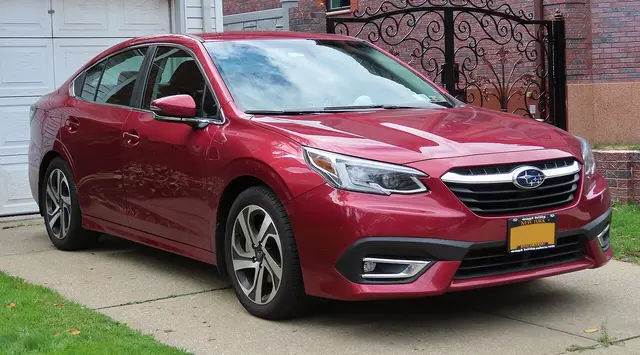
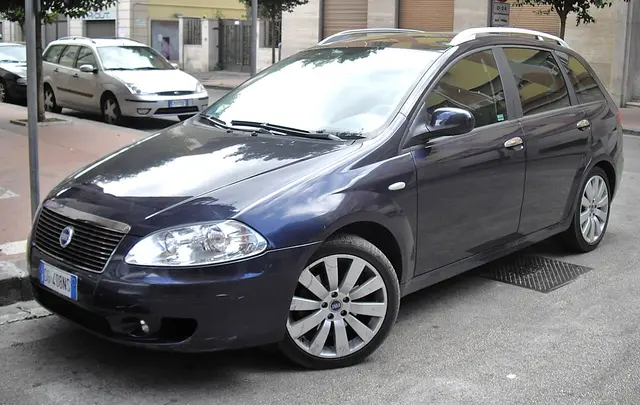
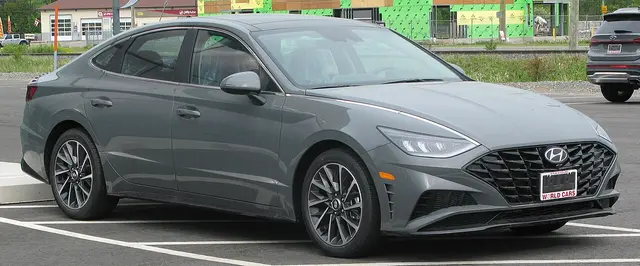
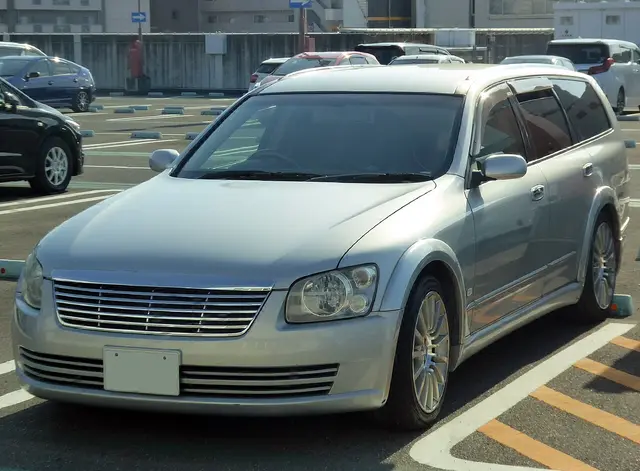
The official data lists 563 versions of the Volkswagen Passat (1990 - 2026), in the European Union, the United Kingdom, France, the United States, and Canada. Each market publishes its own figures, measured on its own test procedure.
At a glance
Years in the data
1990 - 2026
Markets
European Union, United Kingdom, France, United States, Canada
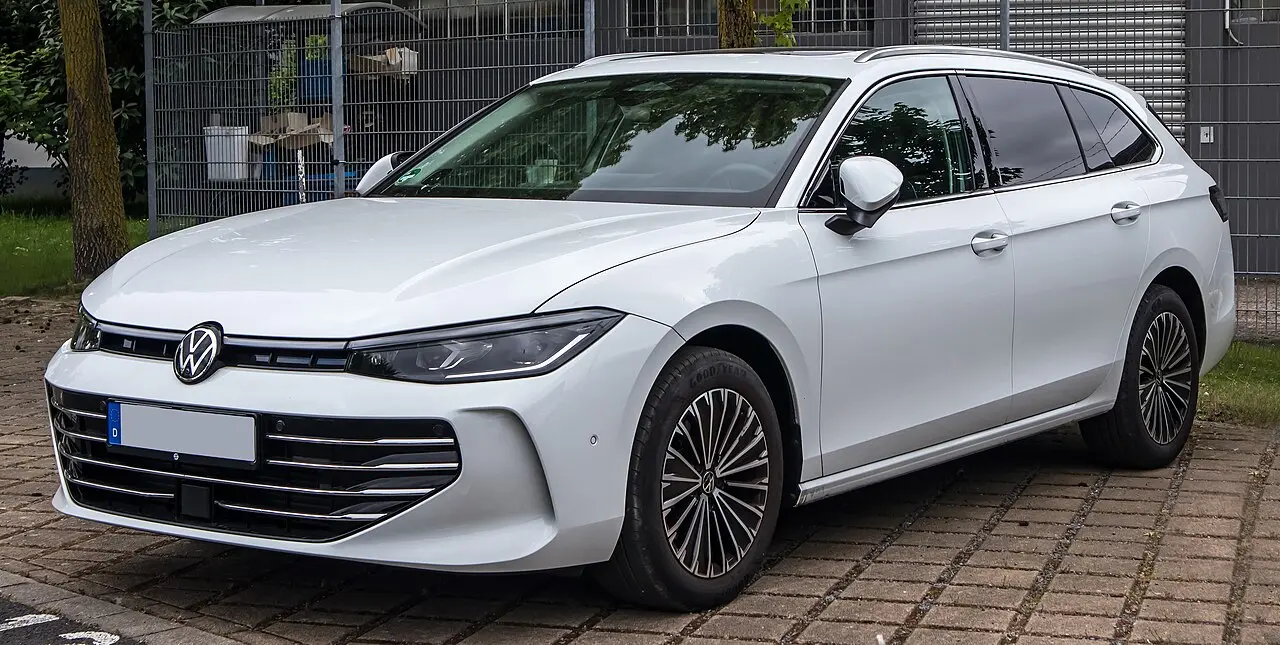
The Passat is a mid-size family car, offered in saloon and estate body styles over its history. It has long served drivers who want room for passengers and luggage for everyday travel and longer journeys. Volkswagen now offers the European Passat as an estate, placing it among the brand’s larger family cars.
The Passat’s role has stayed practical even as its design and technology have changed. Its latest generation is built on Volkswagen’s MQB evo platform, bringing the model’s established estate format onto the latest version of the company’s modular vehicle architecture.
Passat generations
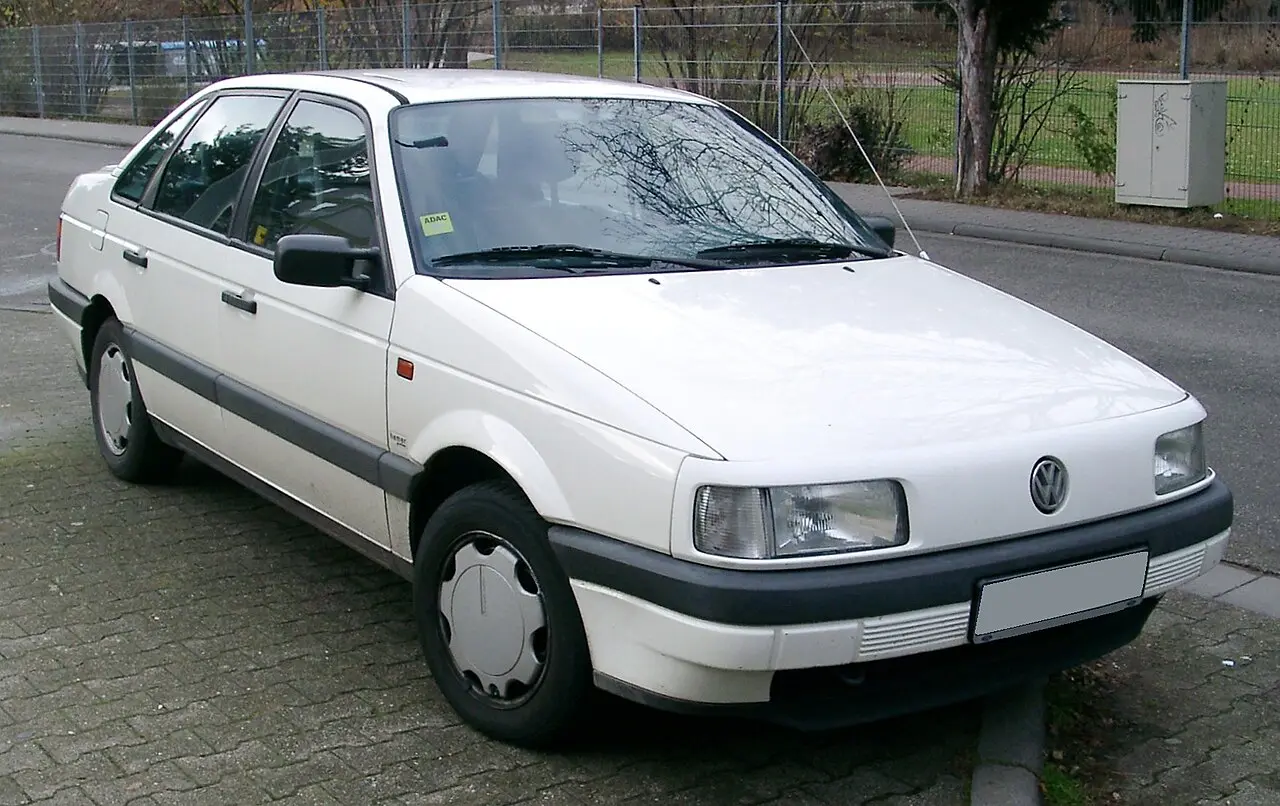
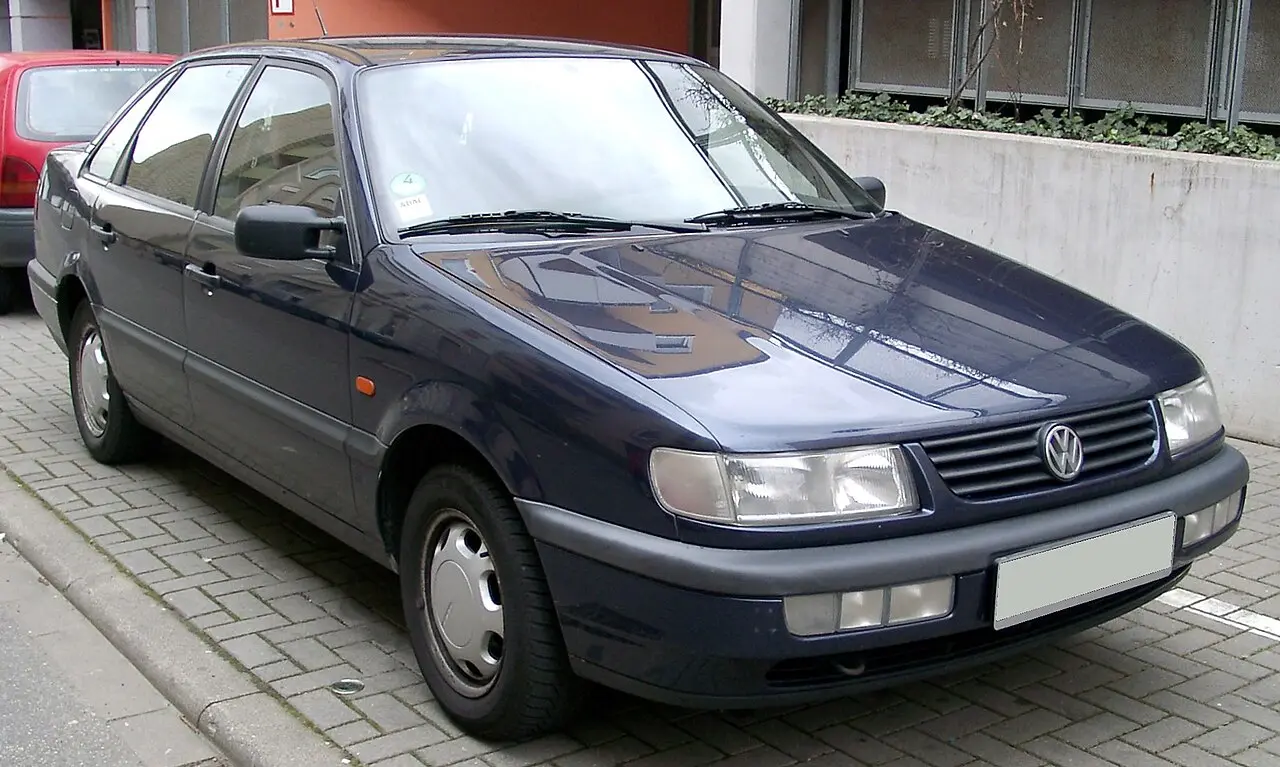
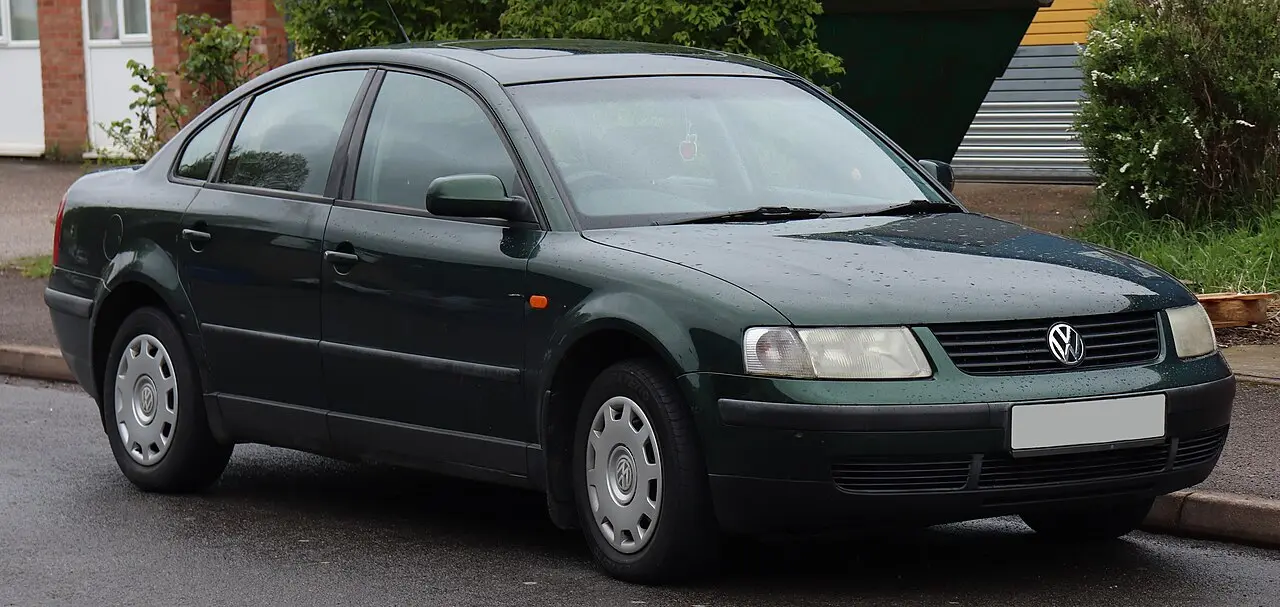
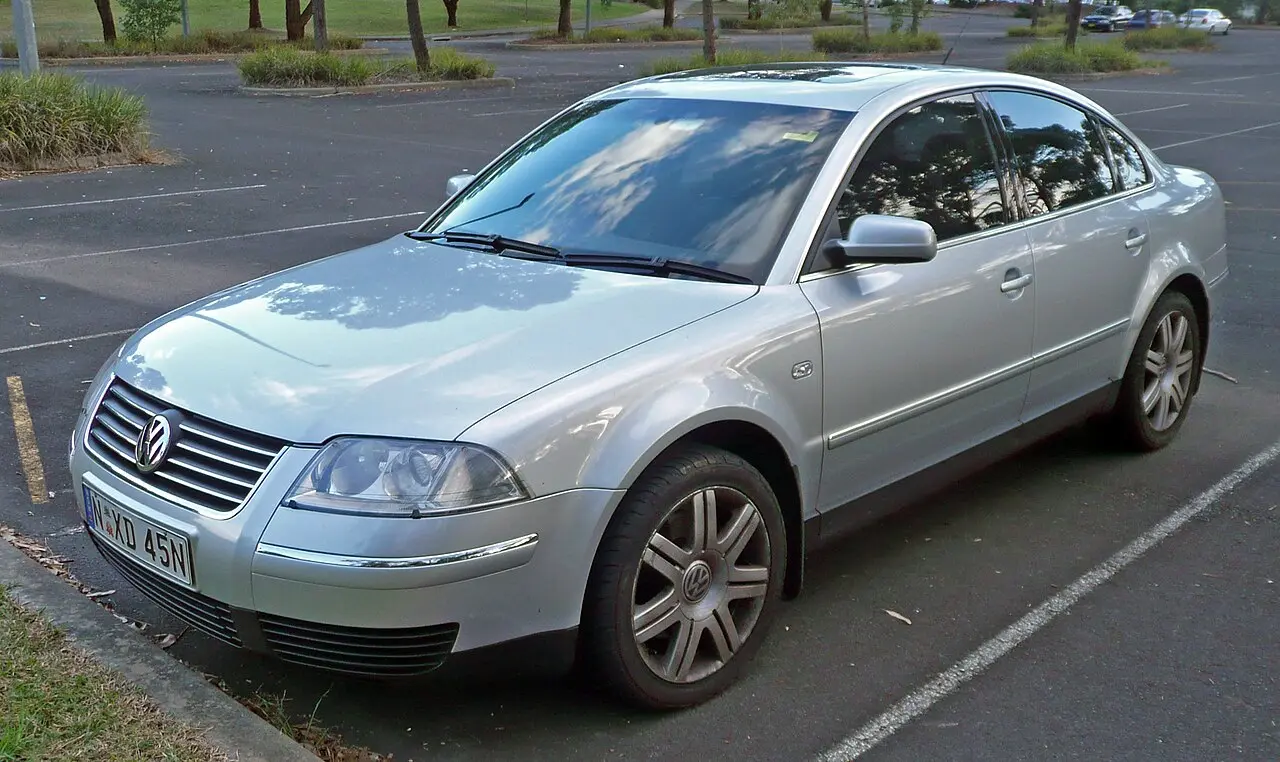
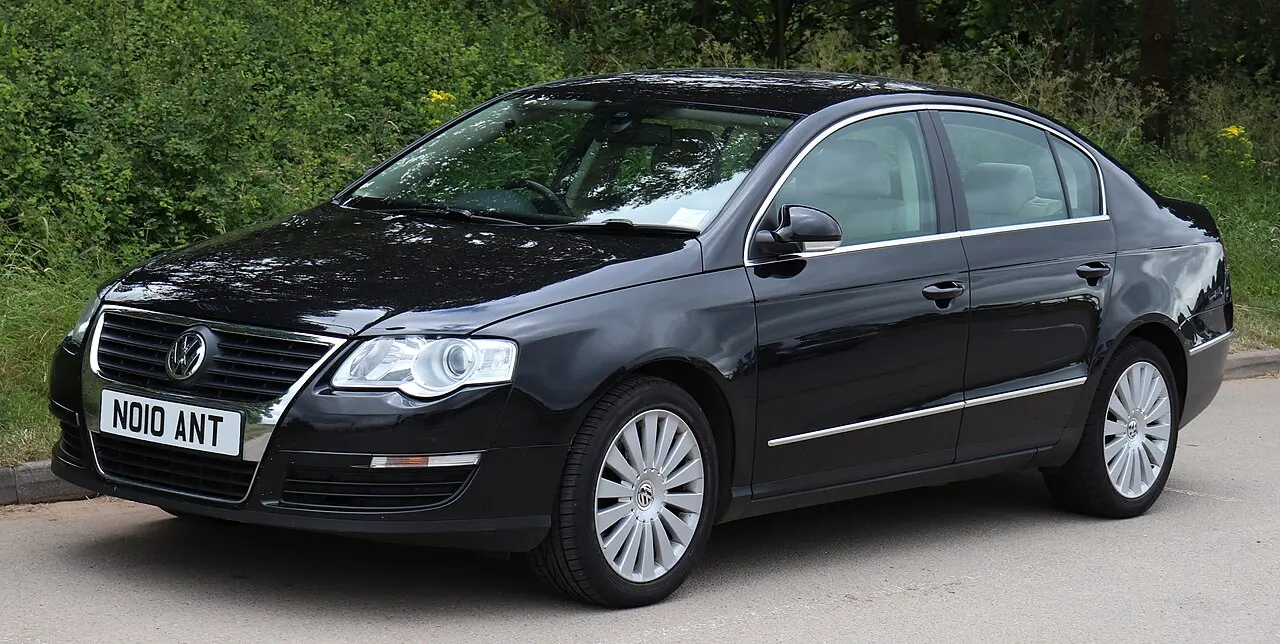
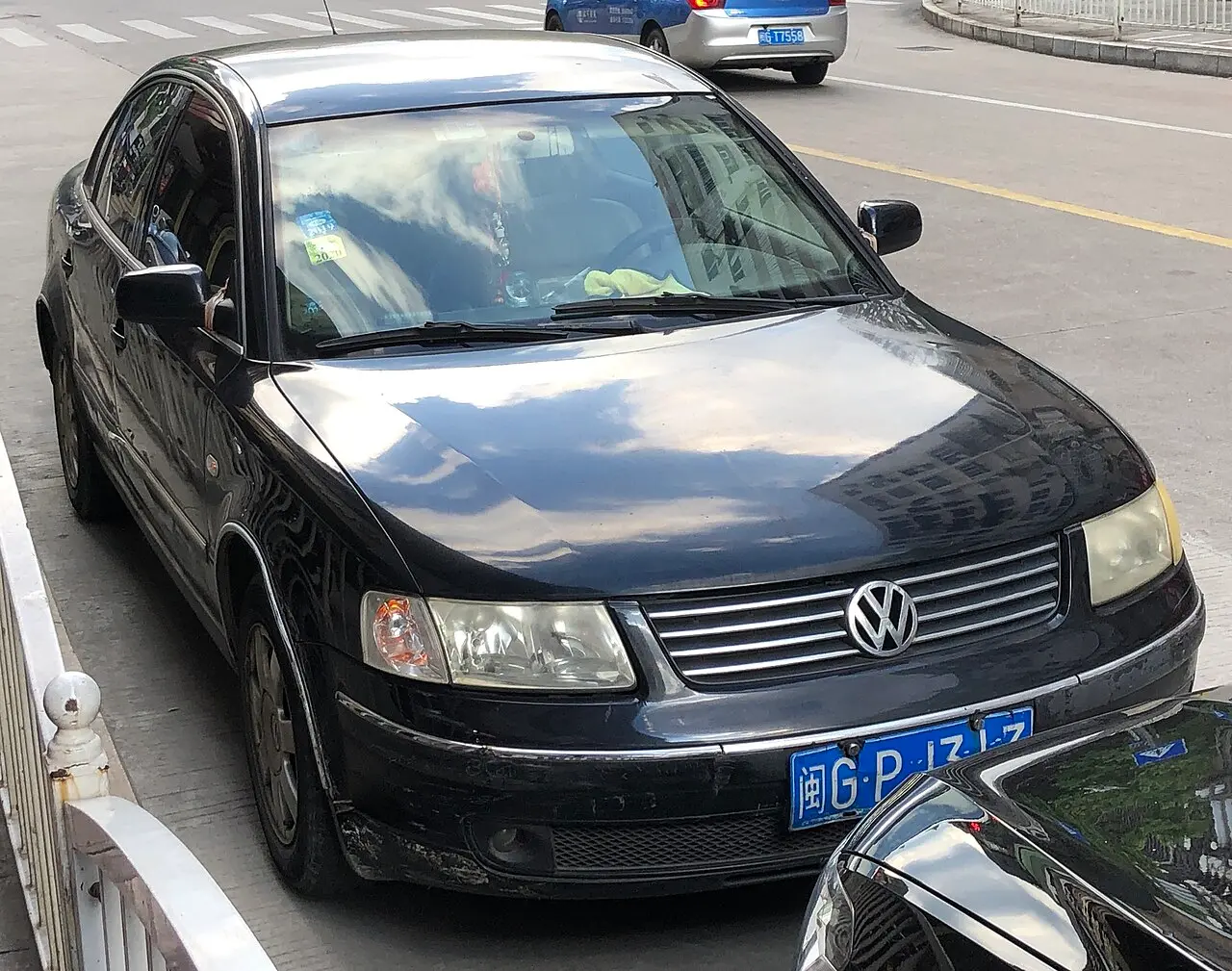
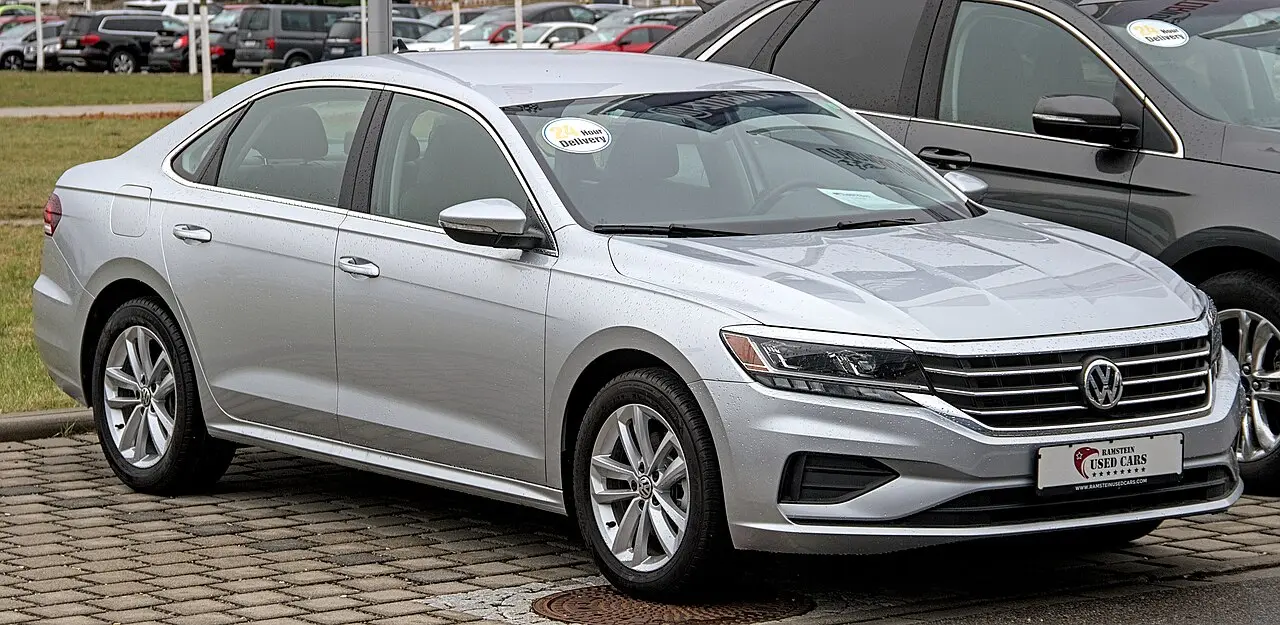
The North American line listed here begins with B3 (1990-1993), followed by B4 (1994-1997), B5 (1998-2001) and B5.5 (2001-2005). B6 (2006-2010) was sold in Europe and North America. Europe then had B7 (2010-2014), followed by B8 (2015-2023), and B9 began in 2024. North America also had a separate Passat, the NMS (2012-2022).
The latest European Passat is an estate. Earlier generations came in other body styles, and the North American NMS was a distinct line from the European B7 and B8.
Engines, power and official consumption
EU figures list engines from 1.4 to 3.6 litres and power from 77 kW (105 PS) to 220 kW (299 PS). Listed fuels include petrol, diesel, natural gas, flex fuel E85, hybrid and plug-in hybrid. The UK range spans 1.4 to 4.0 litres and 67 kW (91 PS) to 221 kW (300 PS).
The lowest listed EU consumption for petrol, diesel and hybrid versions is 4.7 L/100 km on WLTP. The lowest EU plug-in hybrid figure is 0.4 L/100 km WLTP, a weighted result that assumes some driving is electric. In the UK, the corresponding figures are 3.7 L/100 km and 1.7 L/100 km on NEDC. The best combined US EPA rating is 37 MPG; Canada’s lowest listed figure is 6.3 L/100 km on the NRCan 5-cycle test. European WLTP and NEDC, the US EPA procedure and Canada’s 5-cycle test differ, so their results are not directly comparable.
Where was the Passat sold?
The Passat appears in EU registration figures from 2010 to 2025, UK figures from 2000 to 2026, French figures from 2012 to 2015, US EPA figures from 1990 to 2022 and Canadian figures from 1995 to 2022. EU registrations total 4,005,702 over that period.
Questions and answers
Is the Passat a saloon or an estate?
It has been offered in several body styles. The latest European Passat is an estate.
What is the lowest listed EU fuel consumption?
The lowest listed figure for petrol, diesel and hybrid versions is 4.7 L/100 km on WLTP. The plug-in hybrid weighted figure is 0.4 L/100 km WLTP.
How powerful are Passat versions in the EU figures?
The listed EU range runs from 77 kW (105 PS) to 220 kW (299 PS).
Was the North American Passat the same as the European model?
North America had a separate Passat called NMS, listed for 2012-2022. The European range included the B7 and B8 generations.
Model codes: Typ 3C · Sold in: United States, Canada, European Union, France, and United Kingdom · References: en.wikipedia.org
At a glance: Length 4,770 - 4,910 mm · Kerb weight 1,323 - 1,664 kg · Top speed 196 - 243 km/h · MOT first-time pass at 13 years and older: 71.0% (UK average 69.2%) Specifications, reliability and all versions
Model codes: Typ 3C · Sold in: European Union, France, and United Kingdom · References: volkswagen-newsroom.com
At a glance: Length 4,770 mm · Kerb weight 1,351 - 1,501 kg · Top speed 193 - 218 km/h · MOT first-time pass at 9 - 12 years: 78.5% (UK average 77.9%) Specifications, reliability and all versions
Model codes: Typ 3G · Sold in: European Union, France, and United Kingdom · References: volkswagen-newsroom.com
At a glance: Length 4,770 - 4,780 mm · Kerb weight 1,320 - 1,660 kg · Top speed 204 - 230 km/h · MOT first-time pass at 6 - 8 years: 88.0% (UK average 86.4%) Specifications, reliability and all versions
New cars registered in the EU (plus Norway and Iceland), from the European Environment Agency. Figures on the NEDC procedure until 2020 and on WLTP from 2021; versions are grouped by engine and power, with their number of registrations.
Years and version
Engine
Power
Fuel
Consumption (combined)
CO₂
Electric range
EU registrations
2024 - 2025
2.0 L
110 kW (150 PS)
Diesel
5.0 - 5.1 L/100 km WLTP
132 - 133 g/km
-
58,214
2024 - 2025
1.5 L
110 kW (150 PS)
Hybrid
5.5 - 5.7 L/100 km WLTP
125 - 126 g/km
-
25,726
2024 - 2025
1.5 L
110 kW (150 PS) (engine only)
Plug-in hybrid
0.5 L/100 km WLTP16.3 - 16.4 kWh/100 km WLTP
10 - 12 g/km
128 km
14,488
2024 - 2025
2.0 L
142 kW (193 PS)
Diesel
5.9 L/100 km WLTP
154 g/km
-
11,281
2024 - 2025
1.5 L
130 kW (177 PS) (engine only)
Plug-in hybrid
0.4 - 0.5 L/100 km WLTP16.6 - 16.7 kWh/100 km WLTP
11 - 12 g/km
124 km
10,544
2024 - 2025
1.5 L
110 kW (150 PS)
Petrol
6.2 - 6.5 L/100 km WLTP
141 - 147 g/km
-
5,880
2024 - 2025
2.0 L
90 kW (122 PS)
Diesel
4.9 L/100 km WLTP
128 - 129 g/km
-
5,024
2024 - 2025
2.0 L
147 kW (200 PS)
Diesel
5.7 - 5.8 L/100 km WLTP
152 - 154 g/km
-
2,500
2024 - 2025
2.0 L
195 kW (265 PS)
Petrol
8.1 L/100 km WLTP
184 - 187 g/km
-
1,585
2025
2.0 L
150 kW (204 PS)
Petrol
7.0 L/100 km WLTP
163 g/km
-
165
2024 - 2025
2.0 L
190 kW (258 PS)
Petrol
-
252 - 254 g/km
-
26
2025
1.5 L
118 kW (160 PS)
Hybrid
-
125 g/km
-
18
2025
1.5 L
95 kW (129 PS)
Hybrid
-
138 g/km
-
13
2025
1.5 L
95 kW (129 PS)
Hybrid
-
138 g/km
-
11
2025
2.0 L
110 kW (150 PS)
Hybrid
-
141 g/km
-
11
2024
2.0 L
140 kW (190 PS)
Petrol
7.0 L/100 km WLTP
163 g/km
-
443
2024
1.4 L
115 kW (156 PS) (engine only)
Plug-in hybrid
1.4 L/100 km WLTP15.5 kWh/100 km WLTP
28 g/km
59 km
350
2024
2.0 L
206 kW (280 PS)
Petrol
8.4 L/100 km WLTP
196 g/km
-
51
2024
2.0 L
150 kW (204 PS)
Petrol
-
230 g/km
-
26
2024
2.0 L
162 kW (220 PS)
Petrol
-
233 g/km
-
13
United Kingdom 21 versions
New cars on sale in the UK, from the Vehicle Certification Agency. NEDC figures until 2018 and WLTP figures after; years are the editions a version appeared in.
Years and version
Engine
Power
Fuel
Gearbox
Consumption (combined)
CO₂
Electric range
2025 - 2026Elegance 1.5 eTSI 150 PS 7-Speed DSG 5 Door · Life 1.5 eTSI 150 PS 7-Speed DSG 5 Door · R-Line 1.5 eTSI 150 PS 7-Speed DSG 5 Door
1.5 L
110 kW (150 PS)
Hybrid
7-speed automatic
5.6 L/100 km WLTP
127 g/km
-
2025 - 2026Elegance 1.5 eTSI 150 PS 7-Speed DSG
1.5 L
110 kW (150 PS)
Hybrid
7-speed automatic
5.4 L/100 km WLTP
123 g/km
-
2025 - 2026Elegance 1.5 eTSI 150 PS 7-Speed DSG · R-Line 1.5 eTSI 150PS 7-speed DSG
1.5 L
110 kW (150 PS)
Hybrid
7-speed automatic
5.7 L/100 km WLTP
130 g/km
-
2025 - 2026Life 1.5 eTSI 150 PS 7-Speed DSG 5 Door · Life 1.5 eTSI 150 PS 7-Speed DSG
1.5 L
110 kW (150 PS)
Hybrid
7-speed automatic
5.4 L/100 km WLTP
122 g/km
-
2025 - 2026Life 1.5 eTSI 150 PS 7-Speed DSG
1.5 L
110 kW (150 PS)
Hybrid
7-speed automatic
5.7 L/100 km WLTP
131 g/km
-
2025 - 2026R-Line 1.5 eTSI 150 PS 7-Speed DSG 5 Door · R-Line 1.5 eTSI 150 PS 7-Speed DSG
1.5 L
110 kW (150 PS)
Hybrid
7-speed automatic
5.6 L/100 km WLTP
126 g/km
-
2025 - 2026R-Line 1.5 eTSI 150PS 7-speed DSG
1.5 L
110 kW (150 PS)
Hybrid
7-speed automatic
5.7 L/100 km WLTP
129 g/km
-
2025 - 2026R-Line 1.5 eTSI 150 PS 7-Speed DSG
1.5 L
110 kW (150 PS)
Hybrid
7-speed automatic
5.8 L/100 km WLTP
132 g/km
-
2026Elegance 1.5 TSI eHybrid 204 PS 6-Speed DSG 5 Door
1.5 L
150 kW (204 PS)
Plug-in hybrid
6-speed automatic
5.4 L/100 km WLTP16.3 kWh/100 km WLTP
-
129 km
2026Life 1.5 TSI eHybrid 204 PS 6-Speed DSG 5 Door · Match 1.5 TSI eHybrid 204 PS 6-Speed DSG 5 Door
1.5 L
150 kW (204 PS)
Plug-in hybrid
6-speed automatic
5.3 L/100 km WLTP16.1 kWh/100 km WLTP
-
132 km
2026R-Line 1.5 TSI eHybrid 204 PS 6-Speed DSG 5 Door
1.5 L
150 kW (204 PS)
Plug-in hybrid
6-speed automatic
5.5 L/100 km WLTP16.7 kWh/100 km WLTP
-
125 km
2026Black Edition 1.5 TSI eHybrid 204 PS 6-Speed DSG 5 Door
1.5 L
150 kW (204 PS)
Plug-in hybrid
6-speed automatic
5.6 L/100 km WLTP16.8 kWh/100 km WLTP
-
125 km
2026Elegance 1.5 TSI eHybrid 272 PS 6-Speed DSG 5 Door
1.5 L
200 kW (272 PS)
Plug-in hybrid
6-speed automatic
5.5 L/100 km WLTP16.3 kWh/100 km WLTP
-
130 km
2026R-Line 1.5 TSI eHybrid 272 PS 6-Speed DSG 5 Door
1.5 L
200 kW (272 PS)
Plug-in hybrid
6-speed automatic
5.7 L/100 km WLTP16.7 kWh/100 km WLTP
-
124 km
2025 - 2026R-Line 2.0 TSI 204 PS 7-Speed DSG
2.0 L
150 kW (204 PS)
Petrol
7-speed automatic
7.0 - 7.3 L/100 km WLTP
159 - 165 g/km
-
2025Black Edition 1.5 TSI eHybrid 204 PS 6-Speed DSG 5 Door
1.5 L
150 kW (204 PS)
Plug-in hybrid
6-speed automatic
5.6 L/100 km WLTP
-
168 km
2025Elegance 1.5 TSI eHybrid 204 PS 6-Speed DSG 5 Door
1.5 L
150 kW (204 PS)
Plug-in hybrid
6-speed automatic
5.4 L/100 km WLTP
-
163 km
2025Life 1.5 TSI eHybrid 204 PS 6-Speed DSG 5 Door · Match 1.5 TSI eHybrid 204 PS 6-Speed DSG 5 Door
1.5 L
150 kW (204 PS)
Plug-in hybrid
6-speed automatic
5.3 L/100 km WLTP
-
161 km
2025R-Line 1.5 TSI eHybrid 204 PS 6-Speed DSG 5 Door
1.5 L
150 kW (204 PS)
Plug-in hybrid
6-speed automatic
5.5 L/100 km WLTP
-
167 km
2025Elegance 1.5 TSI eHybrid 272 PS 6-Speed DSG 5 Door
1.5 L
200 kW (272 PS)
Plug-in hybrid
6-speed automatic
5.5 L/100 km WLTP
-
163 km
2025R-Line 1.5 TSI eHybrid 272 PS 6-Speed DSG 5 Door
1.5 L
200 kW (272 PS)
Plug-in hybrid
6-speed automatic
5.7 L/100 km WLTP
-
167 km
Versions outside these generations
Show all 61 versions
European Union 19 versions
New cars registered in the EU (plus Norway and Iceland), from the European Environment Agency. Figures on the NEDC procedure until 2020 and on WLTP from 2021; versions are grouped by engine and power, with their number of registrations.
Years and version
Engine
Fuel
CO₂
EU registrations
2010
2.0 L
Diesel
149 g/km
204,756
2010
1.6 L
Diesel
117 g/km
48,130
2010
1.4 L
Petrol
147 g/km
17,522
2010
1.4 L
Natural gas
124 g/km
12,776
2010
1.8 L
Petrol
172 g/km
7,224
2010
2.0 L
Diesel
143 g/km
1,782
2010
1.6 L
Petrol
182 g/km
1,590
2010
2.0 L
Petrol
188 g/km
1,544
2010
-
Petrol
163 g/km
1,456
2010
3.2 L
Petrol
236 g/km
590
2010
1.9 L
Diesel
149 g/km
494
2010
3.6 L
Petrol
229 g/km
494
2010
-
Other fuel
159 g/km
418
2010
2.0 L
Diesel
155 g/km
284
2010
1.8 L
Petrol
175 g/km
270
2010
1.4 L
Other fuel
122 g/km
202
2010
2.0 L
Petrol
172 g/km
34
2010
-
Diesel
151 g/km
18
2010
1.8 L
Petrol
191 g/km
16
United Kingdom 37 versions
New cars on sale in the UK, from the Vehicle Certification Agency. NEDC figures until 2018 and WLTP figures after; years are the editions a version appeared in.
Model years sold in the USA, from the EPA and the Department of Energy (fueleconomy.gov). MPG on the EPA test; litres per 100 km = 235.215 ÷ MPG.
Years and version
Engine
Fuel
Gearbox
Drive
Consumption (combined)
CO₂
2001
1.8 L
Petrol
5-speed manual
Front-wheel drive
23 MPG (10.2 L/100 km) EPA
240 g/km
Canada 4 versions
Model years sold in Canada, from Natural Resources Canada fuel consumption ratings (5-cycle test).
Years and version
Engine
Fuel
Gearbox
Consumption (combined)
CO₂
2001Mid-size · Station wagon: Mid-size
1.8 L
Petrol
5-speed automatic
11.4 L/100 km 5-cycle
262 g/km
2001Mid-size · Station wagon: Mid-size
1.8 L
Petrol
5-speed manual
10.3 L/100 km 5-cycle
237 g/km
2001Mid-size · Station wagon: Mid-size
2.8 L
Petrol
5-speed automatic
12.4 L/100 km 5-cycle
285 g/km
2001Compact · Station wagon: Mid-size
2.8 L
Petrol
5-speed automatic
13.3 L/100 km 5-cycle
306 g/km
Volkswagen Passat recalls
92 official safety recalls for the Volkswagen Passat from NHTSA (United States), DVSA (United Kingdom) and the EU Safety Gate, newest first. Recall repairs are normally free at the maker’s dealers.
Front airbag inflator may explode2005 - 2013
Passenger airbag may provide reduced protection or burst2025
Driver airbag inflator may rupture2006 - 2017
Heat shield may allow brake fluid reservoir to melt2019 - 2023
Official figures are measured on standard test procedures and differ between markets. Your consumption depends on how, where and in what conditions you drive.