Hyundai

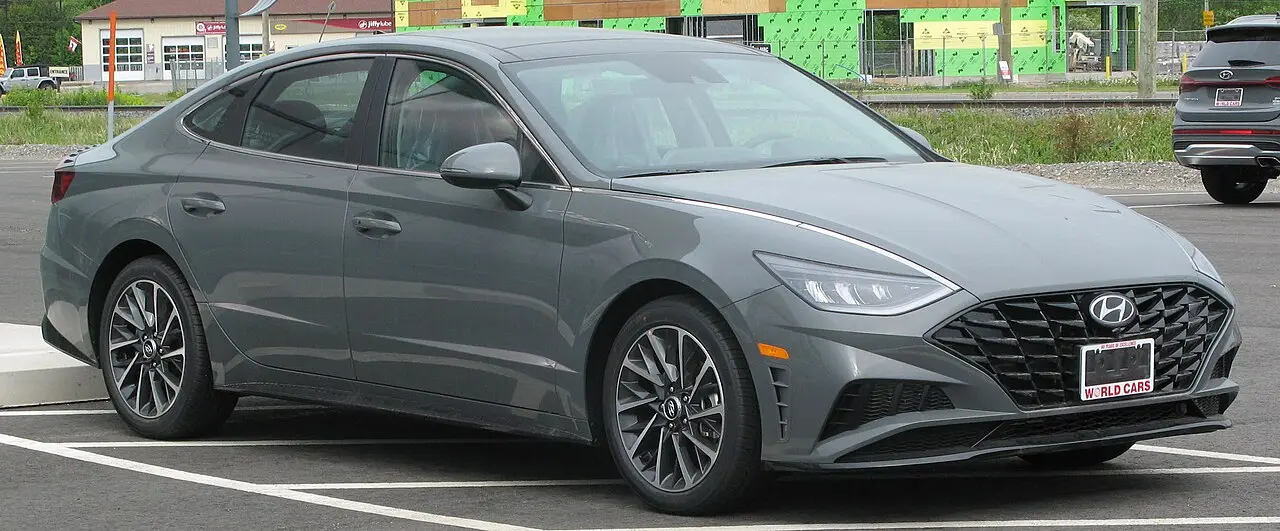
Hyundai Sonata

Hyundai Sonata
Photo: SsmIntrigue / Wikimedia Commons · CC BY-SA 4.0

The official data lists 181 versions of the Hyundai Sonata (1989–2027), in the European Union, the United Kingdom, the United States, and Canada. Each market publishes its own figures, measured on its own test procedure.

At a glance

Years in the data
1989–2027
Markets
European Union, United Kingdom, United States, Canada
Engines
1.6 L to 3.3 L
Power
110 kW (150 PS) to 121 kW (165 PS)
Fuels
Diesel, Petrol, Hybrid, Plug-in hybrid
Lowest consumption (United States)
4.5 L/100 km (EPA)
Lowest consumption (Canada)
5.0 L/100 km (5-cycle)
Lowest consumption (United Kingdom)
6.1 L/100 km (NEDC)
Plug-in hybrid, weighted (United States)
5.9 L/100 km (EPA)
Plug-in hybrid, weighted (Canada)
5.9 L/100 km (5-cycle)
New registrations in the EU
3,260

What is the Hyundai Sonata?

The Sonata is a mid-size, four-door family sedan that has been part of Hyundai’s range for decades. Its roomy layout and conventional boot make it a practical shape for everyday driving. Hyundai introduced the model in the 1980s, and it has continued through successive generations as the company expanded internationally.

The generations are Y2 (1989–1993), Y3 (1994–1998), EF (1999–2005), NF (2006–2010), YF (2011–2014), LF (2015–2019) and DN8 (2020–today). The Sonata’s styling and technology have changed over time; the LF generation included a plug-in hybrid, while the DN8 has a more expressive exterior and a curved display joining driver information and infotainment.

Engines and power

The Sonata’s engines and fuels have varied by market and generation. EU versions listed for 2010–2011 include diesel, petrol and other fuel types, with engines from 2.0 L to 3.3 L and power from 110 kW (150 PS) to 121 kW (165 PS). UK figures cover petrol and diesel engines from 2.0 L to 3.3 L. In the USA, listed versions include petrol, hybrid and plug-in hybrid models with engines from 1.6 L to 3.3 L; Canada lists petrol and plug-in hybrid versions across the same engine-size span.

How economical is the Hyundai Sonata?

Official consumption varies by version and test procedure. The lowest listed UK figure is 6.1 L/100 km on NEDC. The USA’s lowest listed figure is 4.5 L/100 km under EPA testing, with a best combined rating of 52 MPG. Canada’s lowest listed figure is 5 L/100 km under the NRCan 5-cycle test. For plug-in hybrids, the lowest official weighted figure is 5.9 L/100 km in both the USA and Canada; it assumes that some driving is electric.

These results are not directly interchangeable: Europe uses WLTP or NEDC depending on the vehicle and year, the USA uses EPA procedures, and Canada uses its 5-cycle test. EU registration figures for 2010–2011 total 3,260. The most registered listed version was the 2.0 L diesel in 2010, with 2,474 registrations.

Where was the Hyundai Sonata sold?

The Sonata has appeared in figures for several markets: EU registrations for 2010–2011, UK versions for 2000–2009, US versions for 1989–2027 and Canadian versions for 1995–2026. The range of engines and fuel types has varied by country and model year.

Questions and answers

What type of car is the Hyundai Sonata?

It is a mid-size, four-door sedan offered across multiple generations.

Which Sonata generations are listed?

The generations are Y2, Y3, EF, NF, YF, LF and DN8, spanning 1989 to today.

Did the Sonata have hybrid versions?

Yes. The listed US lineup includes hybrid and plug-in hybrid versions, and Canada lists plug-in hybrids.

Which market has the 52 MPG figure?

That is the best combined EPA rating listed for the USA.
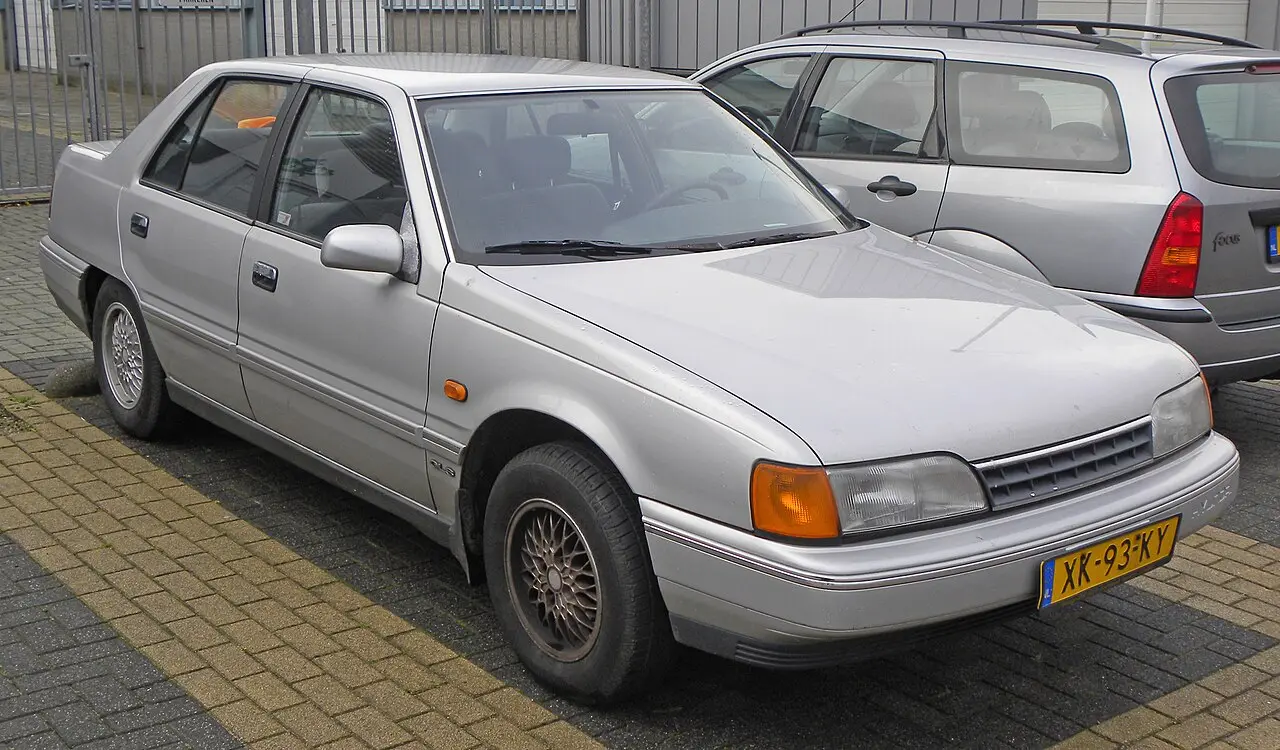
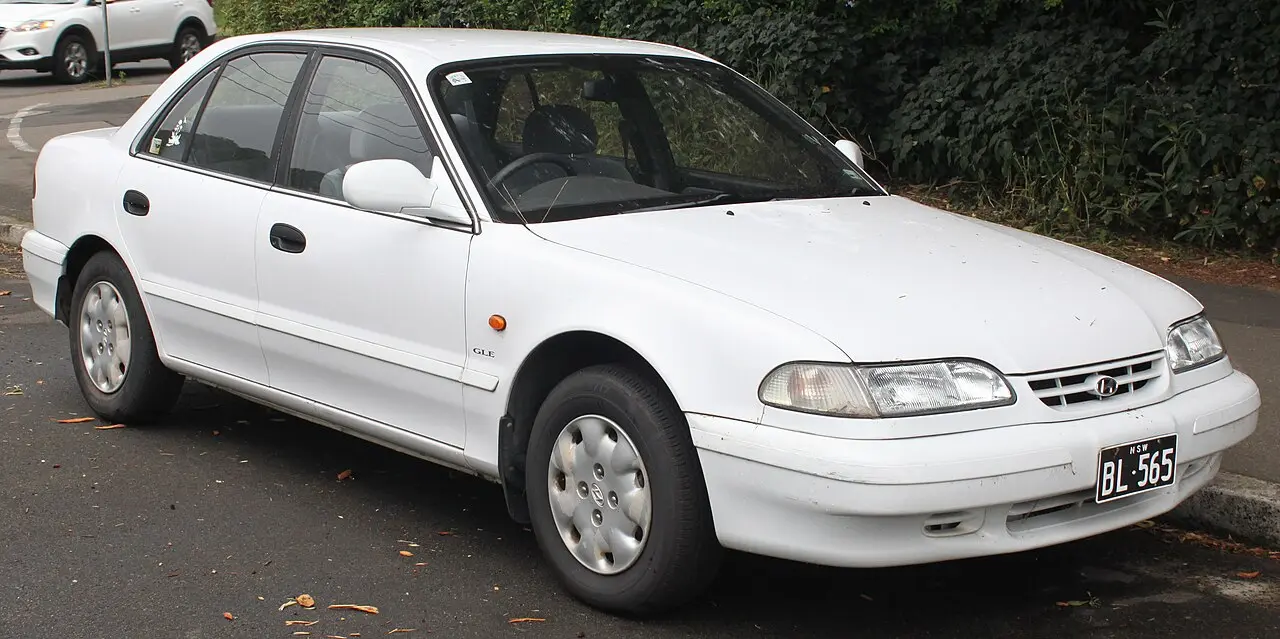
Sonata Y2 (1989–1993)

Hyundai Sonata Y2
Photo: free photos & art / Wikimedia Commons · CC BY 2.0

Model codes: Y2 · References: en.wikipedia.org, hyundai.com

Show all 6 versions

Sonata Y3 (1994–1998)

Hyundai Sonata Y3
Photo: Jeremy from Sydney, Australia / Wikimedia Commons · CC BY 2.0

Model codes: Y3 · References: en.wikipedia.org

Show all 17 versions

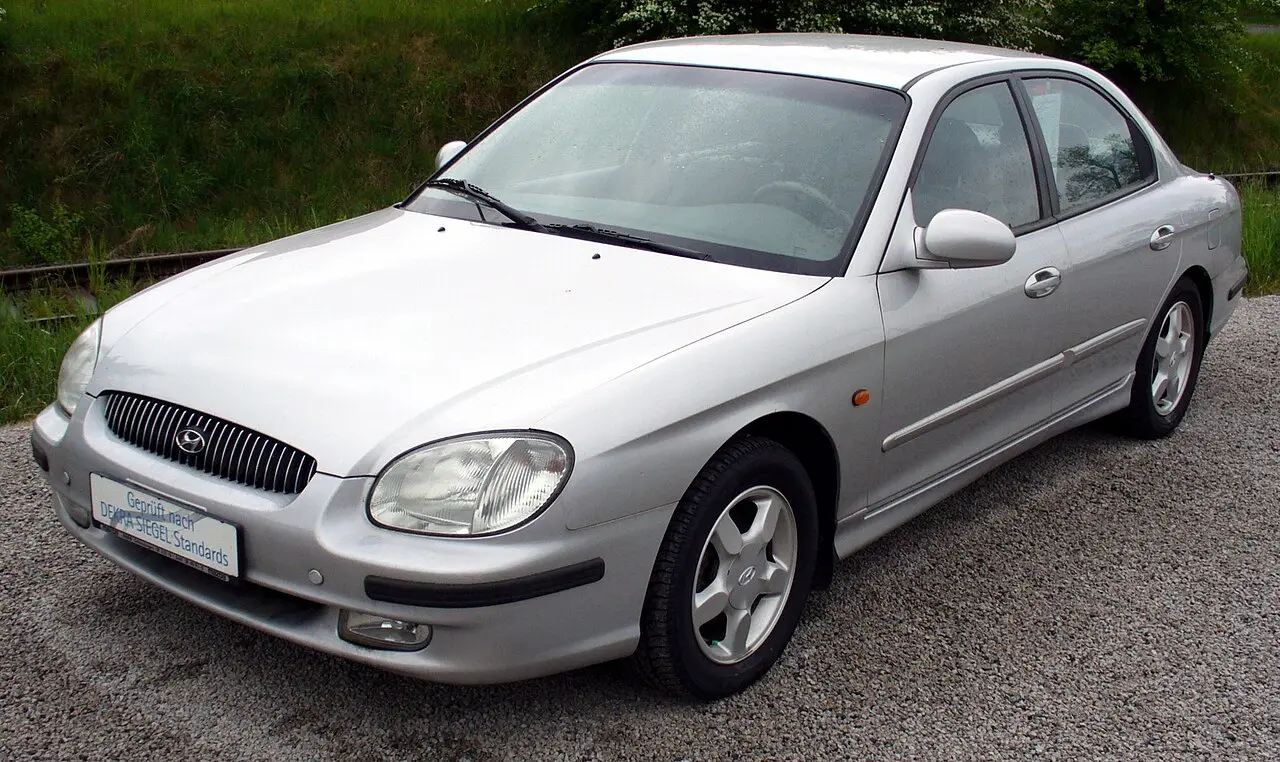
Sonata EF (1999–2005)

Hyundai Sonata EF
Photo: Thomas doerfer / Wikimedia Commons · CC BY-SA 3.0

Model codes: EF · References: en.wikipedia.org, hyundai.com

Show all 32 versions

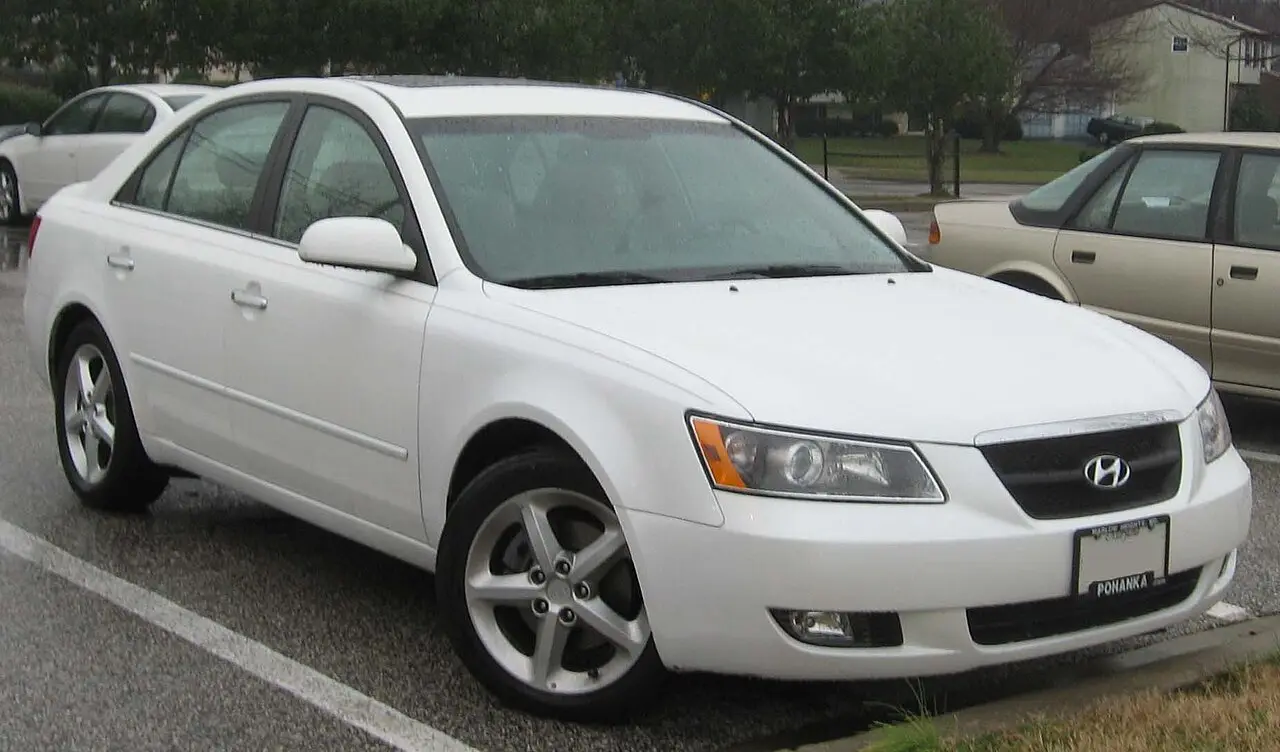
Sonata NF (2006–2010)

Hyundai Sonata NF
Photo: IFCAR / Wikimedia Commons · Public domain

Model codes: NF · References: en.wikipedia.org, hyundai.com

Show all 30 versions

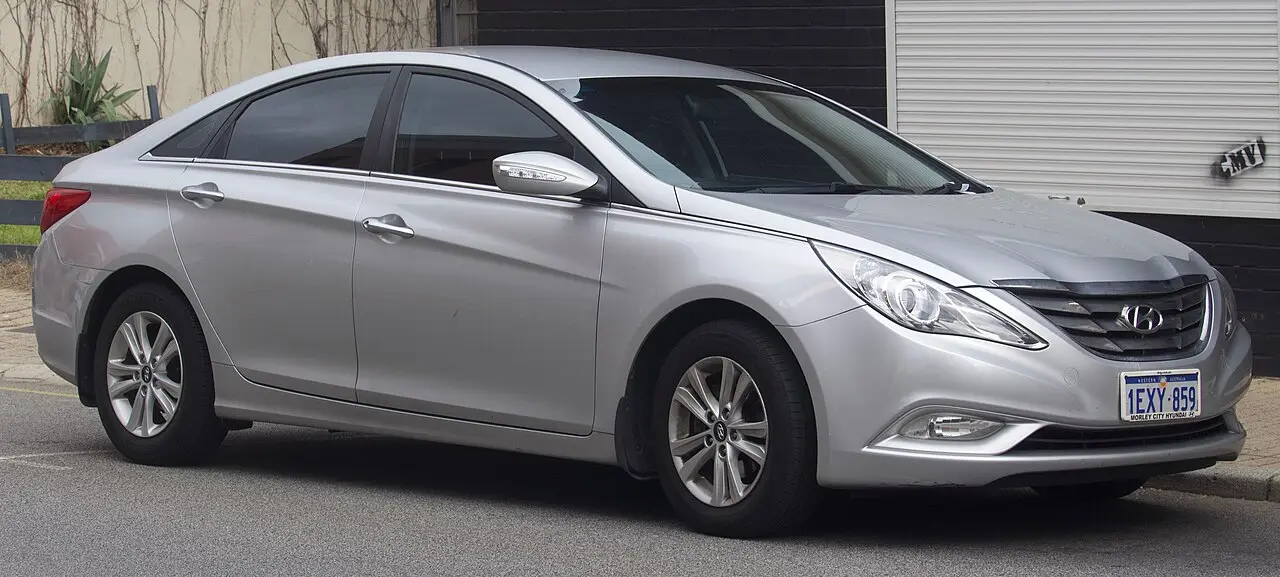
Sonata YF (2011–2014)

Hyundai Sonata YF
Photo: EurovisionNim / Wikimedia Commons · CC BY-SA 4.0

Model codes: YF · References: en.wikipedia.org, hyundai.com

Show all 25 versions

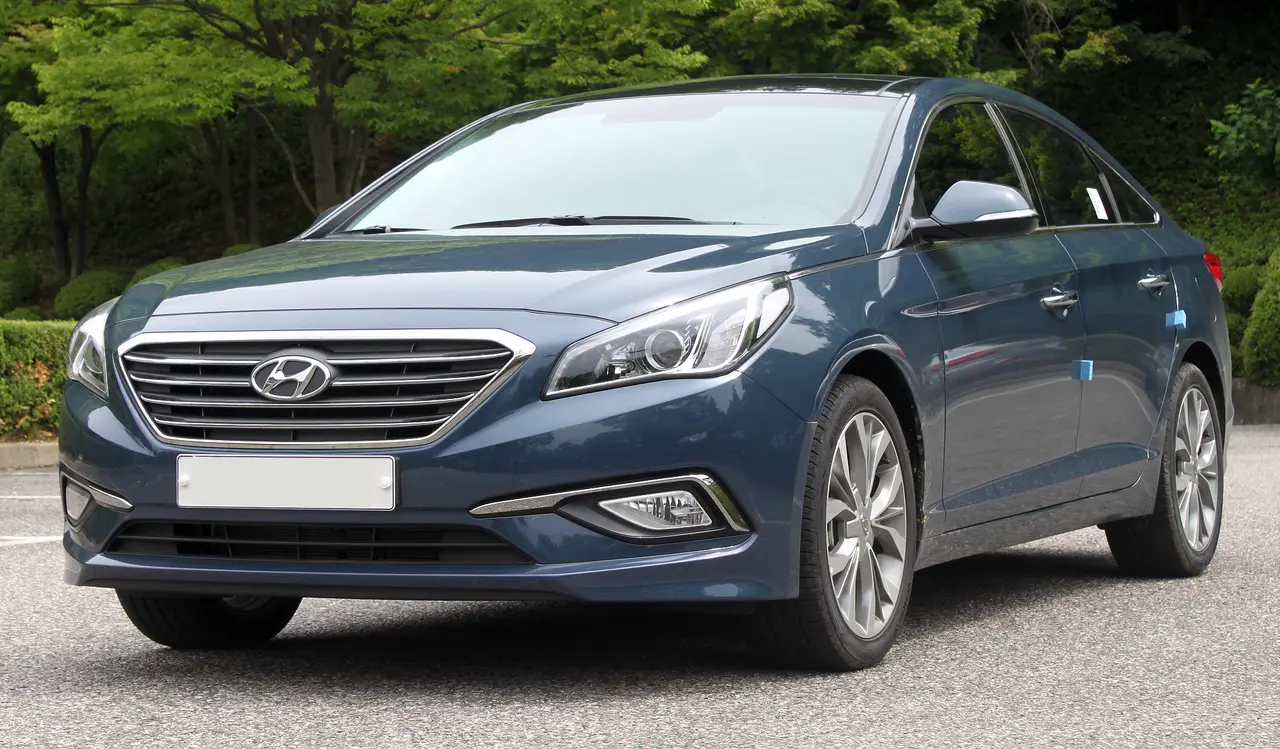
Sonata LF (2015–2019)

Hyundai Sonata LF
Photo: Ki hoon / Wikimedia Commons · CC BY-SA 4.0

Model codes: LF · References: en.wikipedia.org, hyundai.com

Show all 42 versions

Sonata DN8 (since 2020)

Hyundai Sonata DN8
Photo: SsmIntrigue / Wikimedia Commons · CC BY-SA 4.0

Model codes: DN8 · References: en.wikipedia.org, fastcarcheck.uk

United States 19 versions

Model years sold in the USA, from the EPA and the Department of Energy (fueleconomy.gov). MPG on the EPA test; litres per 100 km = 235.215 ÷ MPG.

Years and versionEngineFuelGearboxDriveConsumption (combined)CO₂
2024–2027SIDI; Hybrid2.0 LHybrid6-speed automated manualFront-wheel drive47 MPG (5.0 L/100 km) EPA117 g/km
2026–2027SIDI; Hybrid2.0 LHybrid6-speed automated manualFront-wheel drive51 MPG (4.6 L/100 km) EPA109 g/km
2024–2027SIDI & PFI2.5 LPetrol8-speed automated manualFront-wheel drive27 MPG (8.7 L/100 km) EPA207 g/km
2027SIDI & PFI2.5 LPetrol8-speed automaticAll-wheel drive26 MPG (9.0 L/100 km) EPA213 g/km
2027SIDI & PFI2.5 LPetrol8-speed automaticFront-wheel drive29 MPG (8.1 L/100 km) EPA190 g/km
2027SIDI & PFI2.5 LPetrol8-speed automaticFront-wheel drive31 MPG (7.6 L/100 km) EPA180 g/km
2025–2026SIDI & PFI; with Stop-Start · SIDI & PFI2.5 LPetrol8-speed automaticFront-wheel drive32 MPG (7.4 L/100 km) EPA175 g/km
2026SIDI & PFI2.5 LPetrol8-speed automaticAll-wheel drive27 MPG (8.7 L/100 km) EPA203 g/km
2026SIDI & PFI2.5 LPetrol8-speed automaticFront-wheel drive29 MPG (8.1 L/100 km) EPA193 g/km
2024–2025SIDI & PFI2.5 LPetrol8-speed automaticAll-wheel drive28 MPG (8.4 L/100 km) EPA196 g/km
2024–2025SIDI & PFI2.5 LPetrol8-speed automaticFront-wheel drive29 MPG (8.1 L/100 km) EPA190 g/km
2022–2023SIDI1.6 LPetrol8-speed automaticFront-wheel drive31 MPG (7.6 L/100 km) EPA182 g/km
2020–2023SIDI; Hybrid2.0 LHybrid6-speed automated manualFront-wheel drive47 MPG (5.0 L/100 km) EPA117 g/km
2020–2023SIDI; Hybrid2.0 LHybrid6-speed automated manualFront-wheel drive52 MPG (4.5 L/100 km) EPA107 g/km
2020–2023SIDI & PFI2.5 LPetrol8-speed automaticFront-wheel drive31 MPG (7.6 L/100 km) EPA182 g/km
2020–2023SIDI & PFI; Stop-Start2.5 LPetrol8-speed automaticFront-wheel drive32 MPG (7.4 L/100 km) EPA175 g/km
2021–2023SIDI & PFI2.5 LPetrol8-speed automated manualFront-wheel drive27 MPG (8.7 L/100 km) EPA208 g/km
2021SIDI1.6 LPetrol8-speed automaticFront-wheel drive30 MPG (7.8 L/100 km) EPA182 g/km
2020SIDI1.6 LPetrol8-speed automaticFront-wheel drive31 MPG (7.6 L/100 km) EPA181 g/km

Canada 10 versions

Model years sold in Canada, from Natural Resources Canada fuel consumption ratings (5-cycle test).

Years and versionEngineFuelGearboxConsumption (combined)CO₂
2020–2026Full-size2.0 LPetrol6-speed automated manual5.0 L/100 km 5-cycle117 g/km
2024–2026Full-size2.5 LPetrol8-speed automated manual8.8 L/100 km 5-cycle207 g/km
2024–2026Full-size2.5 LPetrol8-speed automatic8.6 L/100 km 5-cycle203 g/km
2024–2025Full-size2.5 LPetrol8-speed automatic8.2 L/100 km 5-cycle193 g/km
2023Full-size1.6 LPetrol8-speed automatic7.9 L/100 km 5-cycle186 g/km
2020–2023Full-size2.5 LPetrol8-speed automatic7.7 L/100 km 5-cycle182 g/km
2021–2023Full-size2.5 LPetrol8-speed automated manual8.8 L/100 km 5-cycle208 g/km
2022Full-size1.6 LPetrol8-speed automatic7.7 L/100 km 5-cycle183 g/km
2021Full-size1.6 LPetrol8-speed automatic7.7 L/100 km 5-cycle182 g/km
2020Full-size1.6 LPetrol8-speed automatic7.7 L/100 km 5-cycle181 g/km

Official figures are measured on standard test procedures and differ between markets. Your consumption depends on how, where and in what conditions you drive.