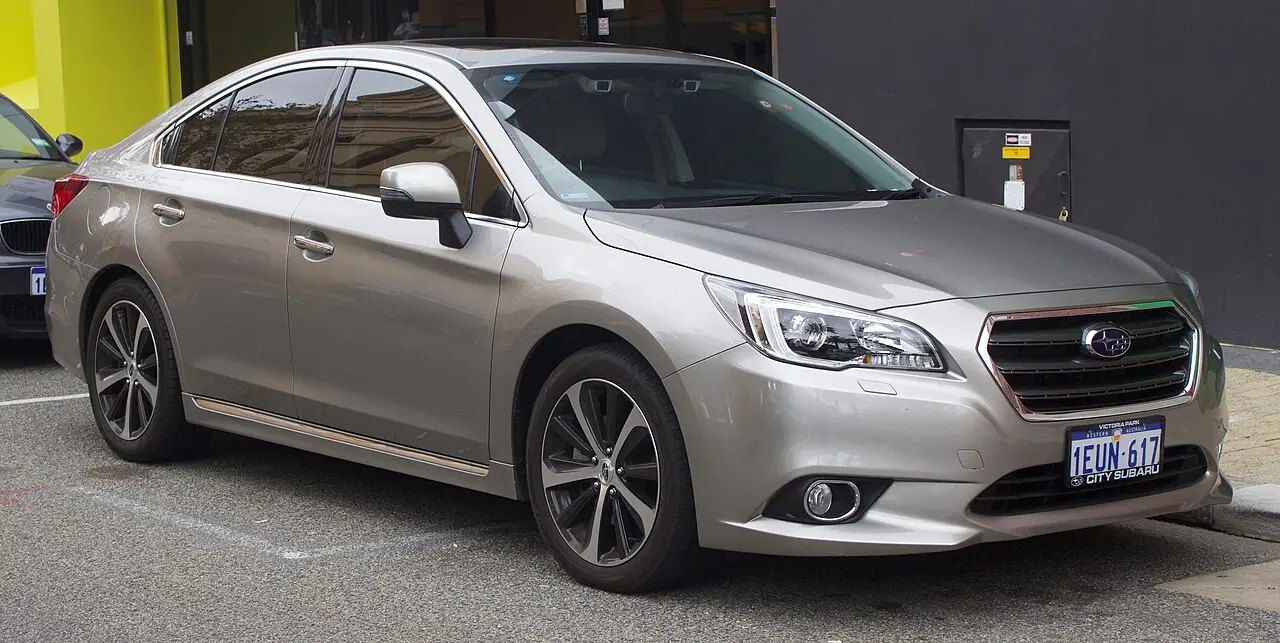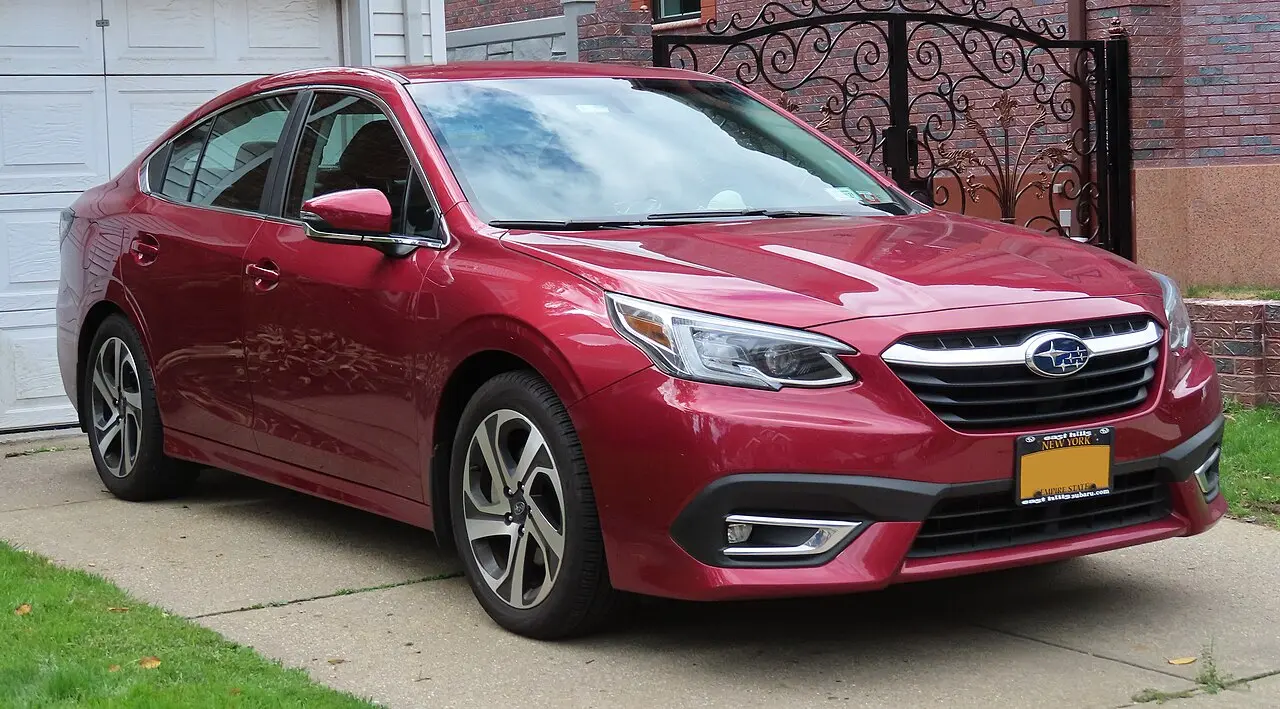
Subaru

Subaru Legacy

Subaru Legacy
Photo: Kevauto / Wikimedia Commons · CC BY-SA 4.0

The official data lists 356 versions of the Subaru Legacy (1990–2025), in the European Union, the United Kingdom, France, the United States, and Canada. Each market publishes its own figures, measured on its own test procedure.

At a glance

Years in the data
1990–2025
Markets
European Union, United Kingdom, France, United States, Canada
Engines
2.0 L to 3.6 L
Power
101 kW (137 PS) to 191 kW (260 PS)
Fuels
Diesel, Petrol, LPG, Natural gas
Lowest consumption (United Kingdom)
5.6 L/100 km (NEDC)
Lowest consumption (France)
5.8 L/100 km (NEDC)
Lowest consumption (United States)
7.8 L/100 km (EPA)
New registrations in the EU
93,467

What kind of car is the Subaru Legacy?

The Legacy is Subaru’s midsize family car, offered as a sedan and, in many markets and generations, a station wagon. Its passenger-car shape carries the brand’s Boxer-engine and all-wheel-drive identity. Subaru introduced the Legacy in 1989 as part of a move toward a more upmarket position, and it became an important model for the company.

The sedan offered a roomy everyday car, while the wagon added space for luggage and family travel. The Outback grew from the Legacy wagon line and later became a distinct model.

Legacy generations

The first generation (BC, BF and BJ) ran from 1990–1994, followed by the second (BD, BG and BK) from 1995–1999. The third (BE and BH) covered 2000–2004; the fourth (BL and BP), 2005–2009; the fifth (BM and BR), 2010–2014; and the sixth (BN and BS), 2015–2020. The seventh generation (BW) ran from 2020–2025 and was sold in the US and Canada.

The Legacy continued as a sedan and wagon in many markets, while the seventh generation was a North American sedan. Subaru’s horizontally opposed Boxer engine remained a defining feature of the model.

Engines and power

The Legacy’s engine choices varied over its long history and between regional lineups. EU versions span 2.0 L to 3.6 L engines, with power from 101 kW (137 PS) to 191 kW (260 PS). UK listings cover 2.0 L to 3.0 L engines; US and Canadian listings cover 2.2 L to 3.6 L. North American versions use petrol, while European lineups also included diesel and alternative-fuel versions.

Where was the Legacy sold?

The Legacy has been sold in the EU, UK, France, the United States and Canada. The EU listing runs from 2010–2018, while US listings span 1990–2025 and Canadian listings 1995–2024. Official EU registration figures total 93,467 for 2010–2018. In Australia, the model was known as Liberty.

How economical is the Subaru Legacy?

The lowest listed consumption is 5.6 L/100 km on the UK NEDC test. France lists 5.8 L/100 km on NEDC, while US EPA and Canadian 5-cycle figures each reach a low of 7.8 L/100 km. NEDC, EPA and Canada’s 5-cycle procedure differ, so these figures are not direct comparisons.

Questions and answers

What body styles did the Subaru Legacy use?

The Legacy was sold as a sedan and station wagon in many markets and generations. The seventh generation was a sedan sold in the US and Canada.

How many Legacy generations are there?

Seven, from the BC/BF/BJ first generation (1990–1994) through the BW seventh generation (2020–2025).

What is the Legacy’s lowest listed fuel consumption?

The lowest listed figure is 5.6 L/100 km on the UK NEDC test; EPA and Canadian 5-cycle figures use different procedures.

Was the Legacy sold under another name?

Yes. In Australia it was called Liberty.
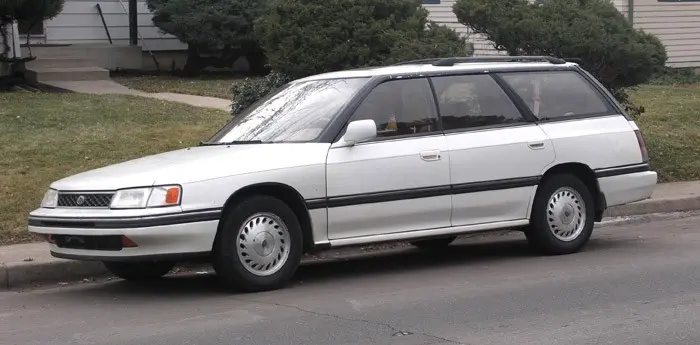
Legacy first generation (1990–1994)

Subaru Legacy first generation
Photo: Dddike / Wikimedia Commons · Public domain

Model codes: BC, BF, BJ · References: en.wikipedia.org

Show all 17 versions

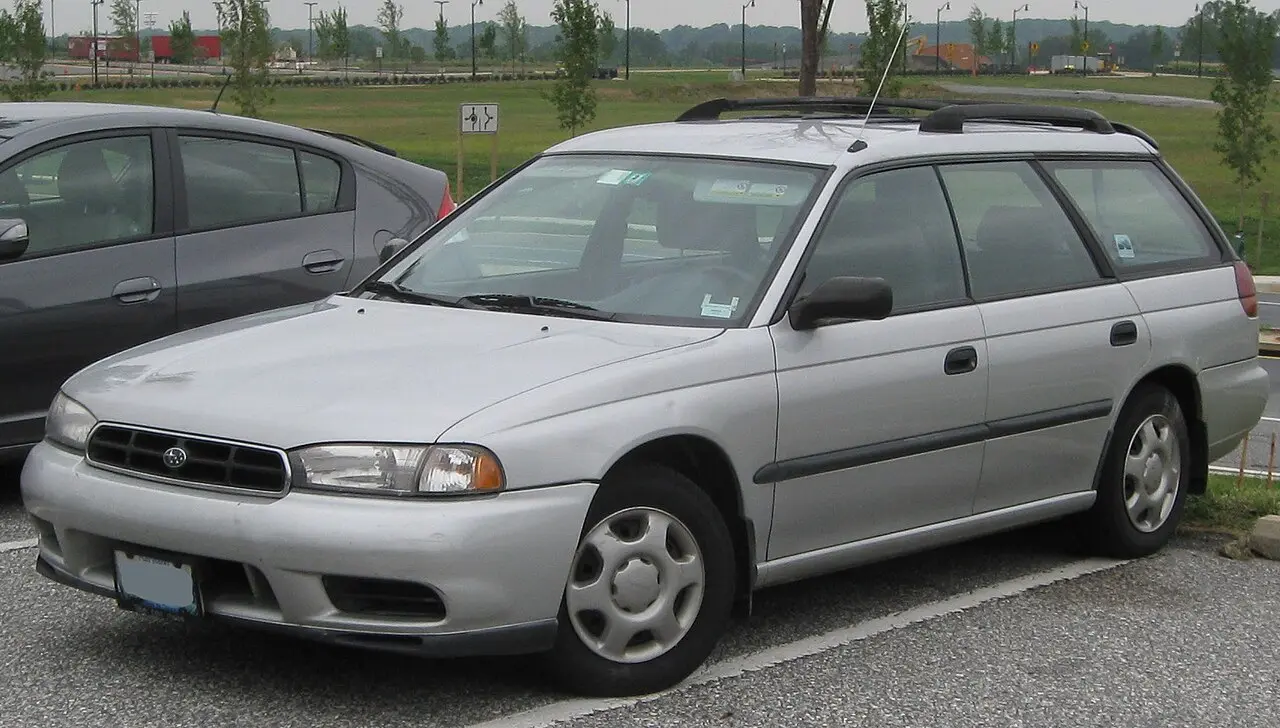
Legacy second generation (1995–1999)

Subaru Legacy second generation
Photo: IFCAR / Wikimedia Commons · Public domain

Model codes: BD, BG, BK · References: en.wikipedia.org

Show all 42 versions

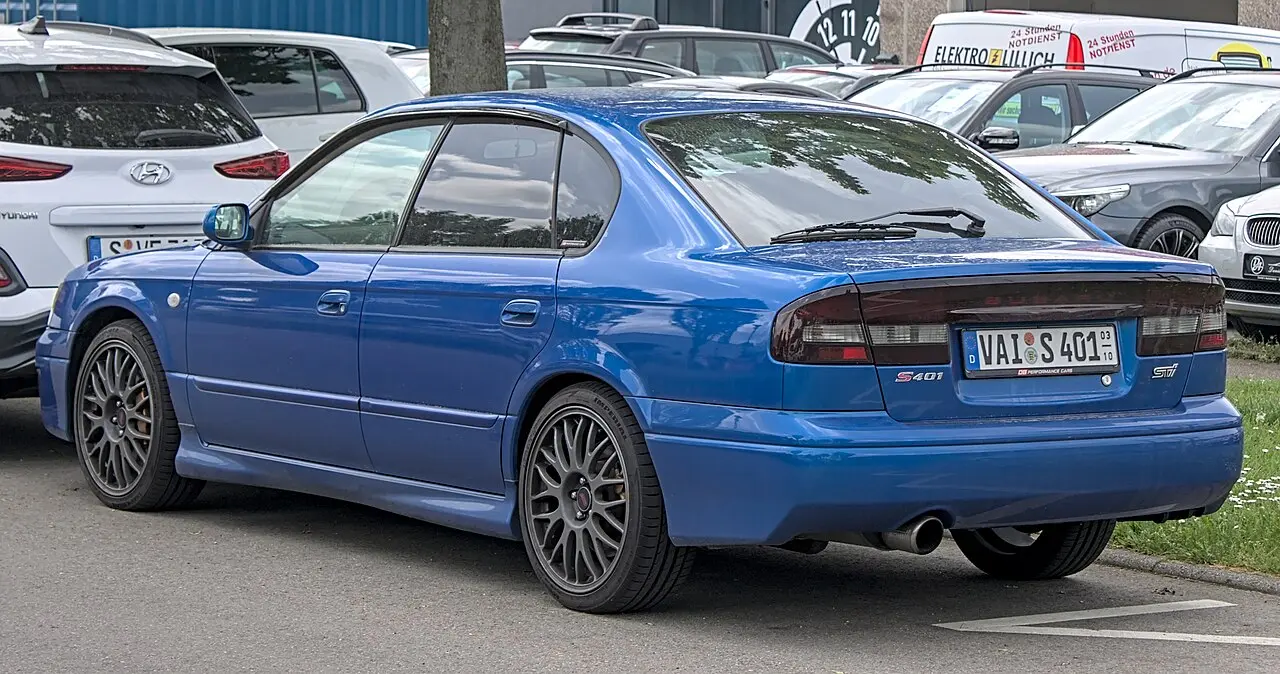
Legacy third generation (2000–2004)

Subaru Legacy third generation
Photo: Alexander-93 / Wikimedia Commons · CC BY-SA 4.0

Model codes: BE, BH · References: en.wikipedia.org

Show all 70 versions

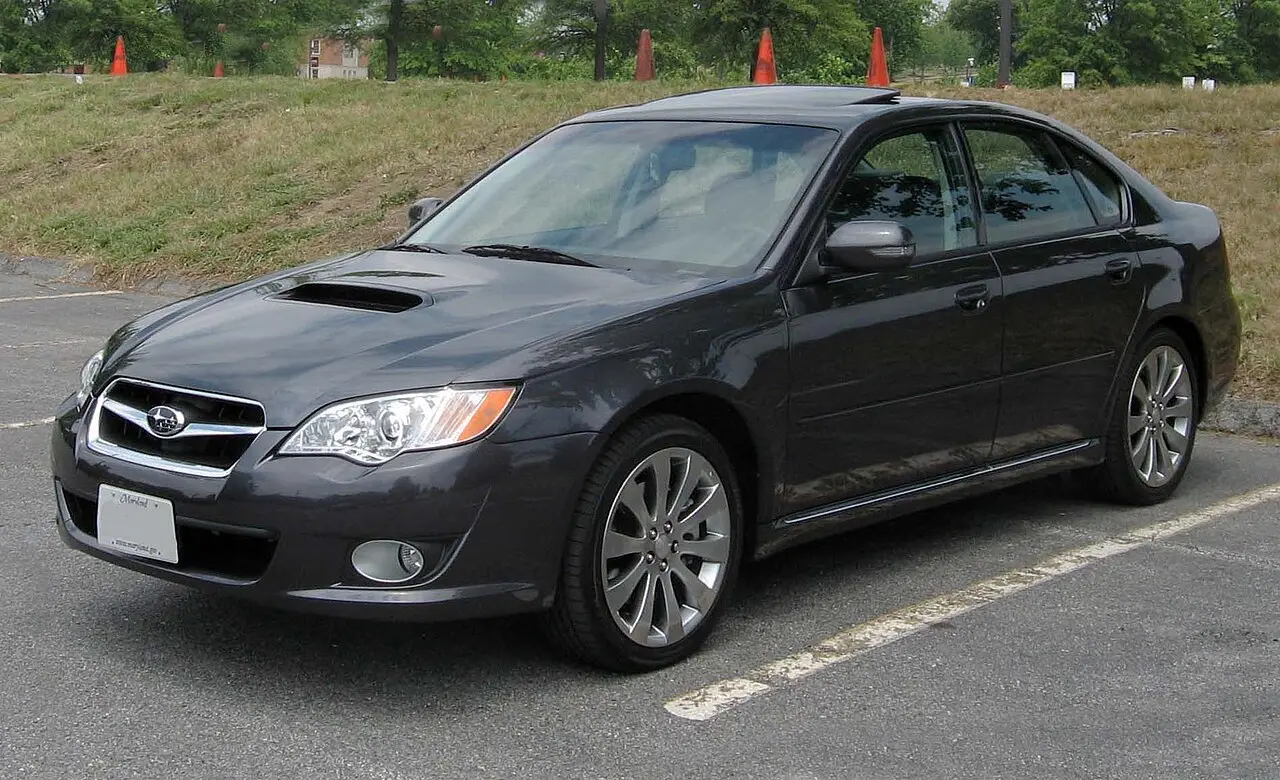
Legacy fourth generation (2005–2009)

Subaru Legacy fourth generation
Photo: photographed by IFCARpost production by RichN / Wikimedia Commons · Public domain

Model codes: BL, BP · References: en.wikipedia.org

Show all 85 versions

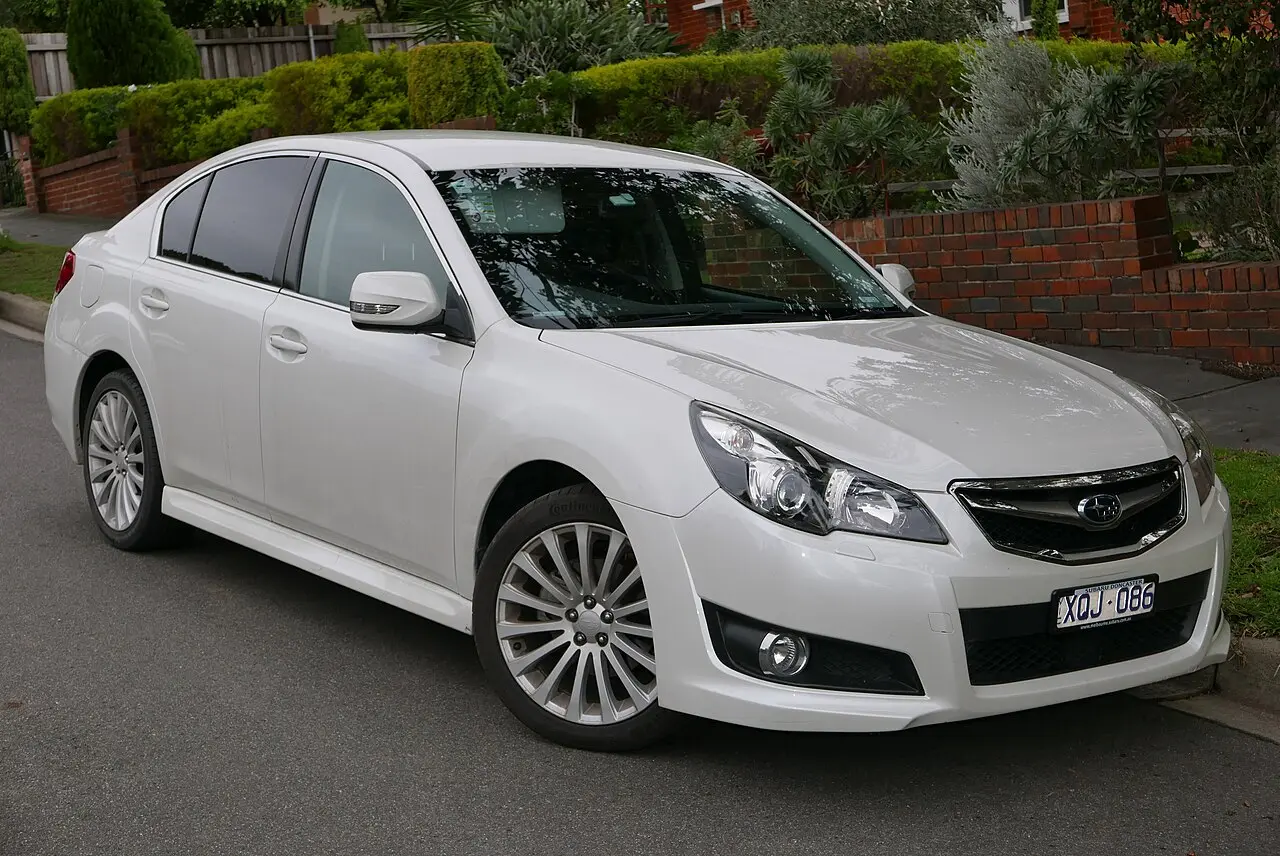
Legacy fifth generation (2010–2014)

Subaru Legacy fifth generation
Photo: OSX / Wikimedia Commons · Public domain

Model codes: BM, BR · References: en.wikipedia.org

Show all 106 versions

Legacy sixth generation (2015–2020)

Subaru Legacy sixth generation
Photo: EurovisionNim / Wikimedia Commons · CC BY-SA 4.0

Model codes: BN, BS · References: en.wikipedia.org

Show all 31 versions

Legacy seventh generation (2020–2025)

Subaru Legacy seventh generation
Photo: Kevauto / Wikimedia Commons · CC BY-SA 4.0

Model codes: BW · Sold in: United States and Canada · References: en.wikipedia.org

United States 3 versions

Model years sold in the USA, from the EPA and the Department of Energy (fueleconomy.gov). MPG on the EPA test; litres per 100 km = 235.215 ÷ MPG.

Years and versionEngineFuelGearboxDriveConsumption (combined)CO₂
2023–2025SIDI2.4 LPetrolContinuously variable (CVT)All-wheel drive26 MPG (9.0 L/100 km) EPA209 g/km
2020–2025SIDI2.5 LPetrolContinuously variable (CVT)All-wheel drive30 MPG (7.8 L/100 km) EPA183 g/km
2020–2022SIDI2.4 LPetrolContinuously variable (CVT)All-wheel drive27 MPG (8.7 L/100 km) EPA205 g/km

Canada 6 versions

Model years sold in Canada, from Natural Resources Canada fuel consumption ratings (5-cycle test).

Years and versionEngineFuelGearboxConsumption (combined)CO₂
2023–2024Full-size · Mid-size2.4 LPetrolContinuously variable (CVT)9.0 L/100 km 5-cycle209 g/km
2023Full-size2.5 LPetrolContinuously variable (CVT)7.8 L/100 km 5-cycle183 g/km
2020–2022Full-size2.4 LPetrolContinuously variable (CVT)8.7 L/100 km 5-cycle205 g/km
2022Full-size2.5 LPetrolContinuously variable (CVT)7.8 L/100 km 5-cycle184 g/km
2021Full-size2.5 LPetrolContinuously variable (CVT)7.9 L/100 km 5-cycle184 g/km
2020Full-size2.5 LPetrolContinuously variable (CVT)7.9 L/100 km 5-cycle185 g/km

Official figures are measured on standard test procedures and differ between markets. Your consumption depends on how, where and in what conditions you drive.