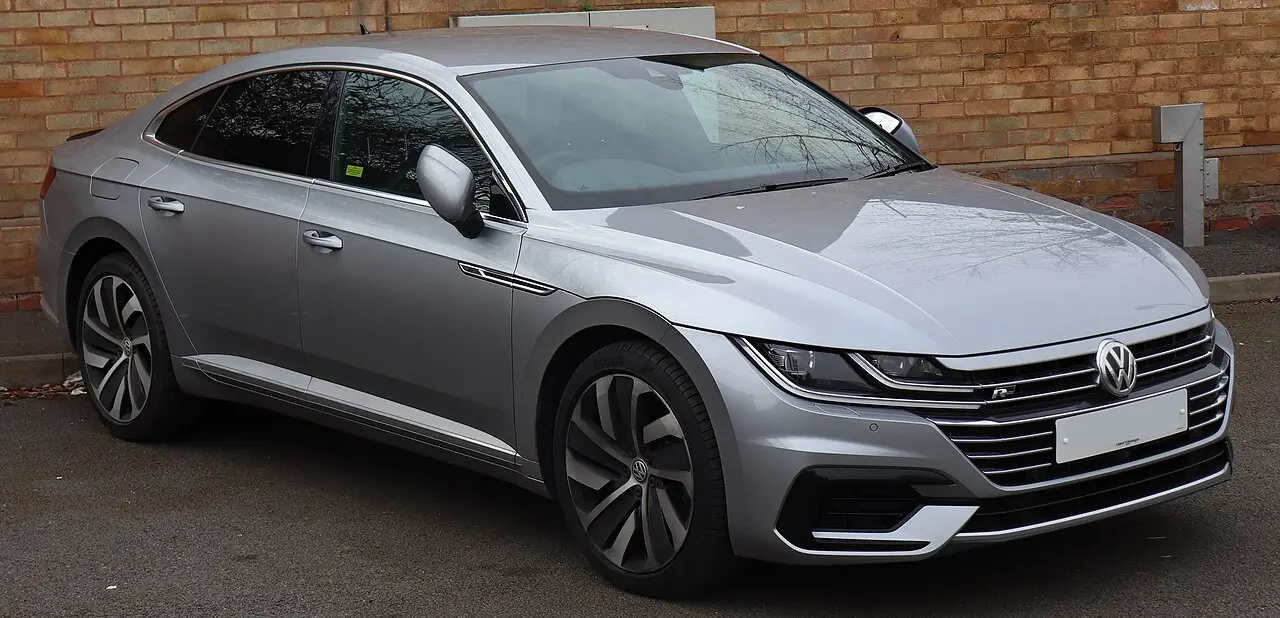
The official data lists 121 versions of the Volkswagen Arteon (2017–2025), in the European Union, the United Kingdom, the United States, and Canada. Each market publishes its own figures, measured on its own test procedure.
At a glance
Years in the data
2017–2025
Markets
European Union, United Kingdom, United States, Canada
Engines
1.4 L to 2.0 L
Power
85 kW (116 PS) to 309 kW (420 PS)
Fuels
Diesel, Petrol, Plug-in hybrid, Hybrid
Lowest consumption (United Kingdom)
4.3 L/100 km (NEDC)
Lowest consumption (European Union)
4.8 L/100 km (WLTP)
Lowest consumption (United States)
8.4 L/100 km (EPA)
Plug-in hybrid, weighted (European Union)
1.2 L/100 km (WLTP)
New registrations in the EU
230,004
What is the Volkswagen Arteon?
The Arteon is Volkswagen’s Gran Turismo: a spacious, long-distance car with a coupé-like shape. It first appeared as a four-door fastback, with a long bonnet and a sloping rear that give it a more distinctive profile than a conventional family car. It sat near the top of Volkswagen’s passenger-car range and paired everyday practicality with a more formal design.
In 2020, Volkswagen added the Arteon Shooting Brake. It shares the fastback’s front end but has a longer roof and an estate-style rear, giving buyers a choice of two body styles.
Generations and engines
The Arteon’s first generation ran from 2017 to 2024. A substantial update arrived in 2020, bringing the Shooting Brake and the model’s first plug-in hybrid. The Arteon followed the CC, carrying Volkswagen’s four-door coupé idea into a newer model.
In EU registration figures, engines range from 1.4 to 2.0 litres, with power from 85 kW (116 PS) to 309 kW (420 PS). The listed fuels include petrol, diesel, hybrid and plug-in hybrid. UK figures cover 1.5- to 2.0-litre petrol and diesel engines, with power from 110 kW (150 PS) to 206 kW (280 PS). US and Canadian figures cover 2.0-litre petrol models.
How economical is the Volkswagen Arteon?
The lowest listed conventional figure in EU registrations is 4.8 L/100 km on the WLTP test. The plug-in hybrid’s lowest official weighted figure is 1.2 L/100 km WLTP. That figure assumes some driving is electric, so it is not directly comparable with a car that runs only on fuel.
The UK’s lowest listed figure is 4.3 L/100 km under NEDC. In the United States, the lowest EPA figure is 8.4 L/100 km, or 28 MPG combined. Canada’s lowest figure is 9.8 L/100 km under NRCan’s 5-cycle test. WLTP and NEDC are European procedures; EPA testing in the USA and Canada’s 5-cycle procedure use different methods, so figures across markets are not directly comparable.
Where was the Arteon sold?
Official figures cover the European Union, the United Kingdom, the United States and Canada. EU registration figures span 2017–2025, while the first generation ran from 2017 to 2024. US figures cover 2019–2024, and Canadian figures cover 2019–2021.
Questions and answers
What body styles did the Volkswagen Arteon have?
It was sold as a four-door fastback and, from 2020, as the estate-style Arteon Shooting Brake.
What was the most powerful Arteon in the EU figures?
The range reaches 309 kW (420 PS) in EU registration figures.
What is the lowest listed Arteon consumption figure?
The lowest is the plug-in hybrid’s weighted 1.2 L/100 km WLTP figure, which assumes some driving is electric.
Was the Arteon sold in North America?
Yes. US figures cover 2019–2024, and Canadian figures cover 2019–2021.
New cars registered in the EU (plus Norway and Iceland), from the European Environment Agency. Figures on the NEDC procedure until 2020 and on WLTP from 2021; versions are grouped by engine and power, with their number of registrations.
Years and version
Engine
Power
Fuel
Consumption (combined)
CO₂
Electric range
EU registrations
2024
2.0 L
140 kW (190 PS)
Petrol
6.4 L/100 km WLTP
159 g/km
–
3,425
2024
2.0 L
110 kW (150 PS)
Diesel
5.1 L/100 km WLTP
131 g/km
–
3,101
2024
2.0 L
147 kW (200 PS)
Diesel
5.8 L/100 km WLTP
152 g/km
–
1,595
2024
2.0 L
235 kW (320 PS)
Petrol
8.7 L/100 km WLTP
201 g/km
–
833
2024
2.0 L
142 kW (193 PS)
Diesel
6.2 L/100 km WLTP
161 g/km
–
563
2024
1.4 L
115 kW (156 PS)
Plug-in hybrid
1.4 L/100 km WLTP15.8 kWh/100 km WLTP
29 g/km
57 km
519
2024
2.0 L
206 kW (280 PS)
Petrol
8.2 L/100 km WLTP
196 g/km
–
329
2024
1.5 L
110 kW (150 PS)
Petrol
5.7 L/100 km WLTP
140 g/km
–
22
2024
1.4 L
115 kW (156 PS)
Hybrid
1.9 L/100 km WLTP16.1 kWh/100 km WLTP
130 g/km
–
11
2023
2.0 L
147 kW (200 PS)
Diesel
5.7 L/100 km WLTP
149 g/km
–
6,312
2023
2.0 L
110 kW (150 PS)
Diesel
5.0 L/100 km WLTP
130 g/km
–
5,525
2023
2.0 L
140 kW (190 PS)
Petrol
7.2 L/100 km WLTP
162 g/km
–
4,253
2023
1.4 L
115 kW (156 PS)
Plug-in hybrid
1.2 L/100 km WLTP15.5 kWh/100 km WLTP
28 g/km
58 km
2,648
2023
2.0 L
235 kW (320 PS)
Petrol
9.0 L/100 km WLTP
205 g/km
–
2,055
2023
2.0 L
206 kW (280 PS)
Petrol
8.8 L/100 km WLTP
201 g/km
–
552
2023
1.5 L
110 kW (150 PS)
Petrol
6.3 L/100 km WLTP
144 g/km
–
121
2023
2.0 L
162 kW (220 PS)
Petrol
–
–
–
48
2022–2023
2.0 L
142 kW (193 PS)
Diesel
–
195 g/km
–
34
2023
2.0 L
67 kW (91 PS)
Diesel
5.1 L/100 km WLTP
134 g/km
–
23
2023
2.0 L
67 kW (91 PS)
Petrol
7.0 L/100 km WLTP
158 g/km
–
21
2023
2.0 L
150 kW (204 PS)
Petrol
6.9 L/100 km WLTP
217 g/km
–
10
2022
2.0 L
147 kW (200 PS)
Diesel
5.7 L/100 km WLTP
151 g/km
–
5,861
2022
2.0 L
140 kW (190 PS)
Petrol
6.6 L/100 km WLTP
164 g/km
–
4,593
2022
1.4 L
115 kW (156 PS)
Plug-in hybrid
1.3 L/100 km WLTP15.5 kWh/100 km WLTP
29 g/km
63 km
4,487
2022
2.0 L
110 kW (150 PS)
Diesel
4.8 L/100 km WLTP
130 g/km
–
4,203
2022
2.0 L
235 kW (320 PS)
Petrol
9.1 L/100 km WLTP
209 g/km
–
2,820
2022
2.0 L
206 kW (280 PS)
Petrol
8.5 L/100 km WLTP
201 g/km
–
558
2022
1.5 L
110 kW (150 PS)
Petrol
5.6 L/100 km WLTP
148 g/km
–
231
2021–2022
2.0 L
195 kW (265 PS)
Petrol
–
250 g/km
–
47
2022
1.5 L
110 kW (150 PS)
Hybrid
–
116 g/km
–
14
2022
1.4 L
115 kW (156 PS)
Petrol
–
26 g/km
–
13
2021
2.0 L
147 kW (200 PS)
Diesel
5.8 L/100 km WLTP
154 g/km
–
15,568
2021
2.0 L
110 kW (150 PS)
Diesel
4.8 L/100 km WLTP
132 g/km
–
9,088
2021
1.4 L
115 kW (156 PS)
Plug-in hybrid
1.3 L/100 km WLTP15.7 kWh/100 km WLTP
30 g/km
62 km
9,000
2021
2.0 L
140 kW (190 PS)
Petrol
6.4 L/100 km WLTP
165 g/km
–
5,834
2021
2.0 L
235 kW (320 PS)
Petrol
9.1 L/100 km WLTP
210 g/km
–
2,460
2021
2.0 L
206 kW (280 PS)
Petrol
8.6 L/100 km WLTP
200 g/km
–
1,278
2021
1.5 L
110 kW (150 PS)
Petrol
5.7 L/100 km WLTP
146 g/km
–
592
2021
2.0 L
140 kW (190 PS)
Diesel
5.8 L/100 km WLTP
158 g/km
–
430
2021
2.0 L
200 kW (272 PS)
Petrol
7.9 L/100 km WLTP
186 g/km
–
64
2021
1.4 L
115 kW (156 PS)
Petrol
15.9 kWh/100 km WLTP
30 g/km
56 km
50
2021
2.0 L
224 kW (305 PS)
Petrol
–
260 g/km
–
32
2021
2.0 L
150 kW (204 PS)
Petrol
–
229 g/km
–
12
2021
2.0 L
176 kW (239 PS)
Diesel
6.9 L/100 km WLTP
193 g/km
–
10
2021
2.0 L
162 kW (220 PS)
Petrol
–
231 g/km
–
10
2020
2.0 L
140 kW (190 PS)
Petrol
–
143 g/km
–
10,809
2020
2.0 L
140 kW (190 PS)
Diesel
–
124 g/km
–
5,966
2020
2.0 L
110 kW (150 PS)
Diesel
–
108 g/km
–
4,505
2020
2.0 L
147 kW (200 PS)
Diesel
–
133 g/km
–
1,814
2020
2.0 L
85 kW (116 PS)
Diesel
–
115 g/km
–
1,258
2020
2.0 L
200 kW (272 PS)
Petrol
–
165 g/km
–
1,096
2020
2.0 L
176 kW (239 PS)
Diesel
–
154 g/km
–
900
2020
2.0 L
85 kW (116 PS)
Petrol
–
148 g/km
–
398
2020
1.4 L
115 kW (156 PS)
Plug-in hybrid
–
144 g/km
–
118
2020
1.5 L
110 kW (150 PS)
Petrol
23.2 kWh/100 km NEDC
143 g/km
232 km
99
2020
2.0 L
235 kW (320 PS)
Petrol
–
268 g/km
–
56
2020
2.0 L
137 kW (186 PS)
Petrol
–
222 g/km
–
40
2020
2.0 L
206 kW (280 PS)
Petrol
–
249 g/km
–
40
2020
2.0 L
224 kW (305 PS)
Petrol
–
261 g/km
–
38
2020
2.0 L
162 kW (220 PS)
Petrol
–
232 g/km
–
28
2019
2.0 L
140 kW (190 PS)
Diesel
–
125 g/km
–
13,876
2019
2.0 L
110 kW (150 PS)
Diesel
–
116 g/km
–
10,734
2019
2.0 L
140 kW (190 PS)
Petrol
13.8 kWh/100 km NEDC
144 g/km
–
7,098
2019
1.5 L
110 kW (150 PS)
Petrol
–
137 g/km
–
4,328
2019
2.0 L
200 kW (272 PS)
Petrol
–
163 g/km
–
2,766
2019
2.0 L
176 kW (239 PS)
Diesel
–
155 g/km
–
1,258
2019
2.0 L
206 kW (280 PS)
Petrol
–
177 g/km
–
62
2019
2.0 L
224 kW (305 PS)
Petrol
–
260 g/km
–
14
2018
2.0 L
110 kW (150 PS)
Diesel
–
115 g/km
–
16,118
2018
2.0 L
140 kW (190 PS)
Petrol
–
136 g/km
–
9,846
2018
2.0 L
140 kW (190 PS)
Diesel
–
133 g/km
–
8,012
2018
1.5 L
110 kW (150 PS)
Petrol
–
127 g/km
–
4,584
2018
2.0 L
176 kW (239 PS)
Diesel
–
152 g/km
–
3,320
2018
2.0 L
206 kW (280 PS)
Petrol
–
164 g/km
–
2,160
2018
2.0 L
200 kW (272 PS)
Petrol
–
160 g/km
–
90
2018
2.0 L
140 kW (190 PS)
Petrol
–
135 g/km
–
18
2017
2.0 L
110 kW (150 PS)
Diesel
–
116 g/km
–
7,654
2017
2.0 L
176 kW (239 PS)
Diesel
–
152 g/km
–
4,420
2017
2.0 L
206 kW (280 PS)
Petrol
–
164 g/km
–
3,088
2017
2.0 L
140 kW (190 PS)
Petrol
–
135 g/km
–
1,222
2017
2.0 L
210 kW (286 PS)
Petrol
–
135 g/km
–
622
2017
2.0 L
140 kW (190 PS)
Diesel
–
126 g/km
–
432
2017
2.0 L
264 kW (359 PS)
Diesel
–
152 g/km
–
366
2017
2.0 L
309 kW (420 PS)
Diesel
–
163 g/km
–
198
2017
2.0 L
210 kW (286 PS)
Diesel
–
123 g/km
–
172
2017
2.0 L
309 kW (420 PS)
Petrol
–
164 g/km
–
106
2017
2.0 L
165 kW (224 PS)
Diesel
–
116 g/km
–
96
2017
1.5 L
110 kW (150 PS)
Petrol
–
126 g/km
–
38
United Kingdom 11 versions
New cars on sale in the UK, from the Vehicle Certification Agency. NEDC figures until 2018 and WLTP figures after; years are the editions a version appeared in.
Years and version
Engine
Power
Fuel
Gearbox
Consumption (combined)
CO₂
20181.5 TSI 150PS Elegance · 1.5 TSI 150PS R-Line
1.5 L
110 kW (150 PS)
Petrol
6-speed manual
5.2 L/100 km NEDC
119 g/km
20181.5 TSI 150PS 7speed DSG Elegance · 1.5 TSI 150PS 7speed DSG R-Line
Model years sold in the USA, from the EPA and the Department of Energy (fueleconomy.gov). MPG on the EPA test; litres per 100 km = 235.215 ÷ MPG.
Years and version
Engine
Fuel
Gearbox
Drive
Consumption (combined)
CO₂
2024SIDI
2.0 L
Petrol
7-speed automated manual
All-wheel drive
25 MPG (9.4 L/100 km) EPA
224 g/km
2023SIDI
2.0 L
Petrol
7-speed automated manual
Front-wheel drive
28 MPG (8.4 L/100 km) EPA
198 g/km
2023SIDI
2.0 L
Petrol
7-speed automated manual
All-wheel drive
25 MPG (9.4 L/100 km) EPA
216 g/km
2022SIDI
2.0 L
Petrol
7-speed automated manual
Front-wheel drive
28 MPG (8.4 L/100 km) EPA
198 g/km
2022SIDI
2.0 L
Petrol
7-speed automated manual
All-wheel drive
25 MPG (9.4 L/100 km) EPA
219 g/km
2021SIDI
2.0 L
Petrol
8-speed automatic
All-wheel drive
24 MPG (9.8 L/100 km) EPA
230 g/km
2021SIDI
2.0 L
Petrol
8-speed automatic
Front-wheel drive
25 MPG (9.4 L/100 km) EPA
216 g/km
2020SIDI
2.0 L
Petrol
8-speed automatic
Front-wheel drive
25 MPG (9.4 L/100 km) EPA
220 g/km
2020SIDI
2.0 L
Petrol
8-speed automatic
All-wheel drive
23 MPG (10.2 L/100 km) EPA
234 g/km
2019SIDI
2.0 L
Petrol
8-speed automatic
Front-wheel drive
25 MPG (9.4 L/100 km) EPA
217 g/km
2019SIDI
2.0 L
Petrol
8-speed automatic
All-wheel drive
23 MPG (10.2 L/100 km) EPA
244 g/km
Canada 3 versions
Model years sold in Canada, from Natural Resources Canada fuel consumption ratings (5-cycle test).
Years and version
Engine
Fuel
Gearbox
Consumption (combined)
CO₂
2021Full-size
2.0 L
Petrol
8-speed automatic
9.8 L/100 km 5-cycle
230 g/km
2020Full-size
2.0 L
Petrol
8-speed automatic
10.0 L/100 km 5-cycle
234 g/km
2019Full-size
2.0 L
Petrol
8-speed automatic
10.4 L/100 km 5-cycle
244 g/km
Versions outside these generations
European Union 8 versions
New cars registered in the EU (plus Norway and Iceland), from the European Environment Agency. Figures on the NEDC procedure until 2020 and on WLTP from 2021; versions are grouped by engine and power, with their number of registrations.
Years and version
Engine
Power
Fuel
Consumption (combined)
CO₂
Electric range
EU registrations
2025
2.0 L
110 kW (150 PS)
Diesel
5.2 L/100 km WLTP
135 g/km
–
179
2025
2.0 L
235 kW (320 PS)
Petrol
8.9 L/100 km WLTP
203 g/km
–
165
2025
2.0 L
140 kW (190 PS)
Petrol
7.0 L/100 km WLTP
160 g/km
–
156
2025
2.0 L
142 kW (193 PS)
Diesel
6.2 L/100 km WLTP
163 g/km
–
135
2025
2.0 L
224 kW (305 PS)
Petrol
–
188 g/km
–
104
2025
2.0 L
147 kW (200 PS)
Diesel
5.8 L/100 km WLTP
153 g/km
–
68
2025
2.0 L
206 kW (280 PS)
Petrol
8.7 L/100 km WLTP
199 g/km
–
51
2025
1.4 L
115 kW (156 PS)
Plug-in hybrid
1.2 L/100 km WLTP15.7 kWh/100 km WLTP
29 g/km
57 km
28
Official figures are measured on standard test procedures and differ between markets. Your consumption depends on how, where and in what conditions you drive.