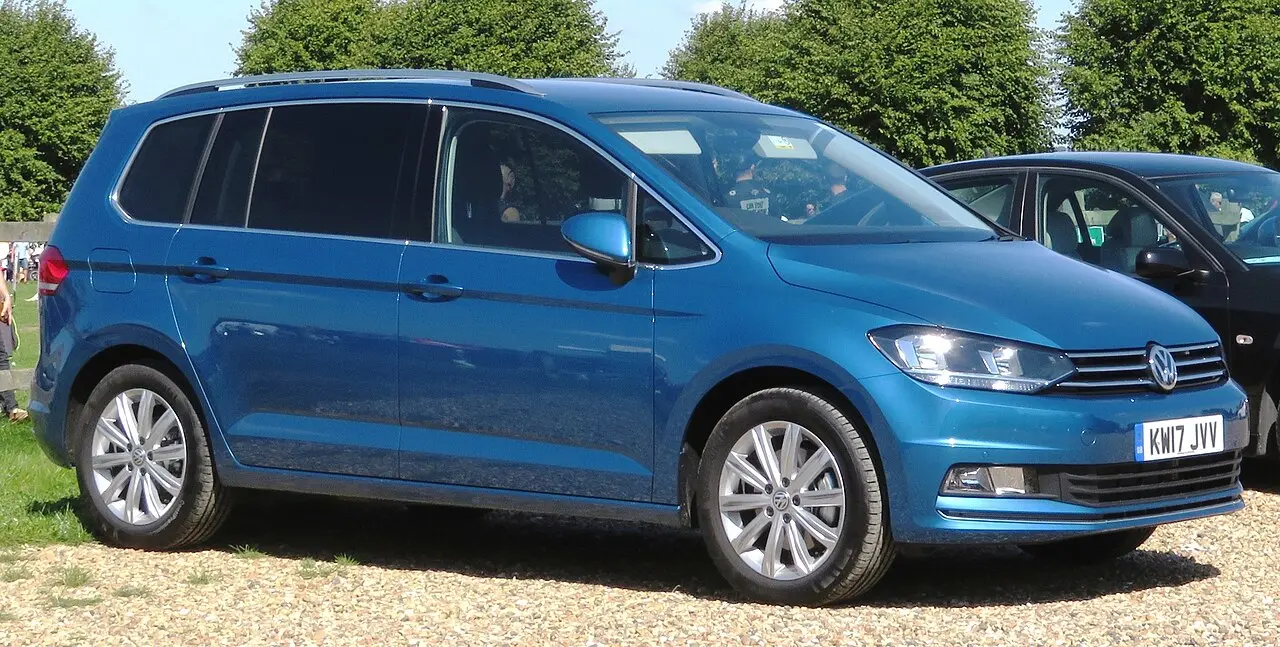
Volkswagen

Volkswagen Touran

Volkswagen Touran
Photo: Charles01 / Wikimedia Commons · CC BY-SA 4.0

The official data lists 315 versions of the Volkswagen Touran (2004–2026), in the European Union, the United Kingdom, and France. Each market publishes its own figures, measured on its own test procedure.

At a glance

Years in the data
2004–2026
Markets
European Union, United Kingdom, France
Engines
1.2 L to 2.0 L
Power
66 kW (90 PS) to 140 kW (190 PS)
Fuels
Petrol, Diesel, Natural gas, LPG
Lowest consumption (United Kingdom)
4.3 L/100 km (NEDC)
Lowest consumption (France)
4.5 L/100 km (NEDC)
Lowest consumption (European Union)
5.1 L/100 km (WLTP)
New registrations in the EU
2,011,749

What is the Volkswagen Touran?

The Touran is a compact MPV designed around family use and everyday practicality. Its roomy, adaptable cabin suits people who need space for passengers and luggage. Depending on configuration, the first generation was available with five or seven seats, and its individual rear seats could fold away to create more room.

The first Touran generation arrived in 2004 in the listed model years. The second generation brought a full redesign and Volkswagen’s MQB platform, updating the vehicle’s technical foundation while keeping its focus on flexible passenger space.

Touran generations

Touran I (2004–2015) established Volkswagen’s compact MPV. It received major updates during its run, with refreshed styling and interior changes. The first-generation range also included the CrossTouran, which added crossover-inspired exterior details.

Touran II (2016–today) brought a redesigned body and the MQB platform. Its fold-flat seating kept the Touran’s cabin adaptable for family journeys and carrying larger loads.

Engines, power and official consumption

EU figures list engines from 1.2 to 2.0 litres, with power from 66 kW (90 PS) to 165 kW (224 PS). Petrol and diesel appear in EU, UK and French figures; EU figures also include natural gas, LPG and other fuel categories. The UK power range is 66 kW (90 PS) to 125 kW (170 PS), while France lists 66 kW (90 PS) to 130 kW (177 PS).

The lowest listed EU consumption is 5.1 L/100 km on WLTP. The lowest UK figure is 4.3 L/100 km on NEDC, and the French figure is 4.5 L/100 km on NEDC. WLTP and NEDC are different European test procedures, so results from them are not directly equivalent.

Where was the Touran sold?

EU registration figures cover 2010–2025, UK figures cover 2004–2026, and French figures cover 2012–2026. EU registrations total 2,011,749 over that period.

Questions and answers

How many generations of Touran are listed?

Two: Touran I (2004–2015) and Touran II (2016–today).

What is the Touran’s lowest listed EU consumption?

5.1 L/100 km on the WLTP test.

What engine sizes are listed for the Touran in the EU?

From 1.2 to 2.0 litres.

Is the Touran a five-seat car?

The first generation was available with five or seven seats, depending on configuration.
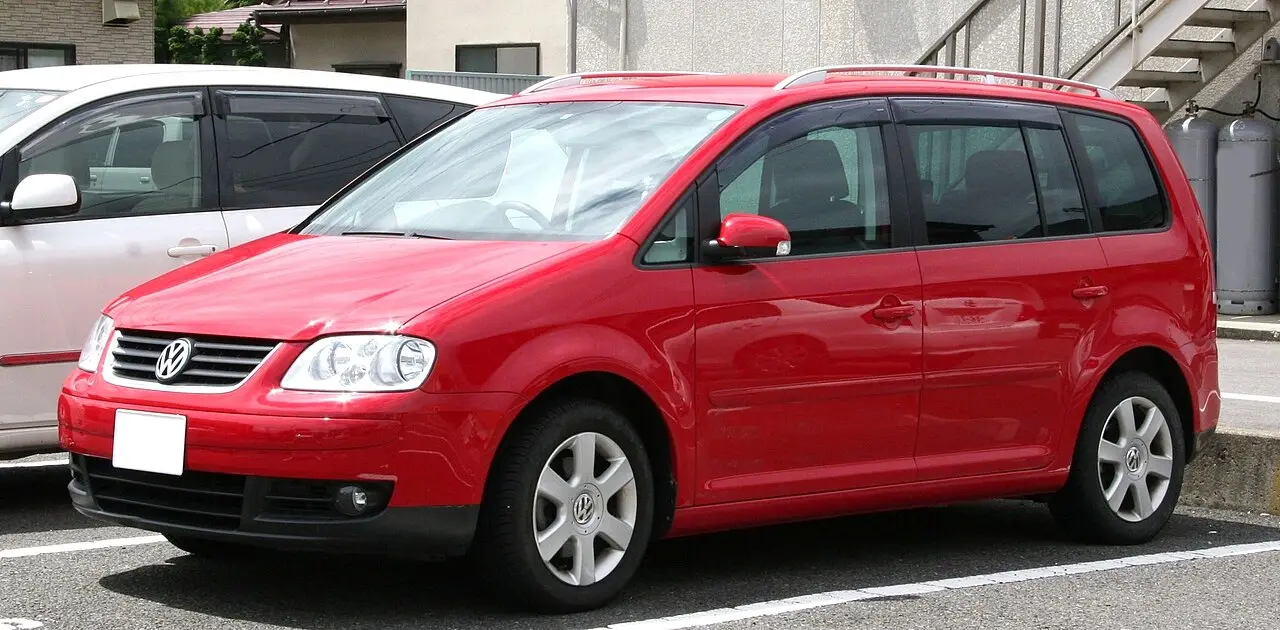
Touran I (2004–2015)

Volkswagen Touran I
Photo: TTTNIS / Wikimedia Commons · Public domain

Model codes: 1T · References: volkswagen-newsroom.com

Show all 203 versions

Touran II (since 2016)

Volkswagen Touran II
Photo: Charles01 / Wikimedia Commons · CC BY-SA 4.0

Model codes: 5T · References: en.wikipedia.org

European Union 78 versions

New cars registered in the EU (plus Norway and Iceland), from the European Environment Agency. Figures on the NEDC procedure until 2020 and on WLTP from 2021; versions are grouped by engine and power, with their number of registrations.

Years and versionEnginePowerFuelConsumption (combined)CO₂Electric rangeEU registrations
20251.5 L110 kW (150 PS)Petrol6.6 L/100 km WLTP149 g/km–13,044
20252.0 L110 kW (150 PS)Diesel5.5 L/100 km WLTP144 g/km–9,034
20252.0 L90 kW (122 PS)Diesel5.3 L/100 km WLTP139 g/km–1,008
20241.5 L110 kW (150 PS)Petrol6.6 L/100 km WLTP151 g/km–14,944
20242.0 L110 kW (150 PS)Diesel5.5 L/100 km WLTP145 g/km–13,254
20242.0 L90 kW (122 PS)Diesel5.3 L/100 km WLTP138 g/km–2,332
20231.5 L110 kW (150 PS)Petrol6.8 L/100 km WLTP152 g/km–13,430
20232.0 L110 kW (150 PS)Diesel5.4 L/100 km WLTP142 g/km–11,944
20232.0 L90 kW (122 PS)Diesel5.1 L/100 km WLTP135 g/km–3,376
20231.5 L67 kW (91 PS)Petrol6.6 L/100 km WLTP150 g/km–16
20221.5 L110 kW (150 PS)Petrol6.6 L/100 km WLTP151 g/km–9,562
20222.0 L110 kW (150 PS)Diesel5.3 L/100 km WLTP142 g/km–8,212
20222.0 L90 kW (122 PS)Diesel5.1 L/100 km WLTP135 g/km–2,587
20211.5 L110 kW (150 PS)Petrol6.5 L/100 km WLTP151 g/km–28,540
20212.0 L110 kW (150 PS)Diesel5.4 L/100 km WLTP142 g/km–17,638
20212.0 L90 kW (122 PS)Diesel5.1 L/100 km WLTP136 g/km–6,602
20212.0 L85 kW (116 PS)Diesel5.7 L/100 km WLTP148 g/km–1,524
20211.6 L77 kW (105 PS)Diesel–180 g/km–14
20201.5 L110 kW (150 PS)Petrol23.2 kWh/100 km NEDC128 g/km232 km41,328
20202.0 L110 kW (150 PS)Diesel–122 g/km–25,535
20202.0 L85 kW (116 PS)Diesel–122 g/km–21,940
2019–20201.0 L85 kW (116 PS)Petrol–128 g/km–8,300
20201.5 L85 kW (116 PS)Petrol–130 g/km–1,486
20202.0 L140 kW (190 PS)Diesel–125 g/km–454
20201.6 L85 kW (116 PS)Diesel–117 g/km–232
20202.0 L90 kW (122 PS)Diesel–122 g/km–218
20201.5 L96 kW (131 PS)Natural gas–194 g/km–16
2020––Diesel–116 g/km–14
20191.5 L110 kW (150 PS)Petrol–130 g/km–53,418
20192.0 L110 kW (150 PS)Diesel–127 g/km–36,912
20191.6 L85 kW (116 PS)Diesel–115 g/km–35,510
20192.0 L85 kW (116 PS)Diesel–124 g/km–5,732
2018–20191.8 L132 kW (179 PS)Petrol–139 g/km–4,444
20192.0 L140 kW (190 PS)Diesel–125 g/km–2,866
20191.4 L110 kW (150 PS)Petrol–132 g/km–250
20191.2 L81 kW (110 PS)Petrol–128 g/km–42
20191.5 L84 kW (114 PS)Petrol–196 g/km–32
20192.0 L90 kW (122 PS)Diesel–170 g/km–18
20192.0 L81 kW (110 PS)Diesel–131 g/km–12
20181.6 L85 kW (116 PS)Diesel–116 g/km–55,272
20181.4 L110 kW (150 PS)Petrol–130 g/km–48,602
20182.0 L110 kW (150 PS)Diesel–121 g/km–29,552
20181.2 L81 kW (110 PS)Petrol–129 g/km–14,910
20181.5 L110 kW (150 PS)Petrol–130 g/km–6,076
20182.0 L140 kW (190 PS)Diesel–123 g/km–4,280
20182.0 L81 kW (110 PS)Diesel–124 g/km–3,268
20171.6 L85 kW (116 PS)Diesel–116 g/km–57,454
20171.4 L110 kW (150 PS)Petrol–129 g/km–57,280
20172.0 L110 kW (150 PS)Diesel–120 g/km–54,198
20171.2 L81 kW (110 PS)Petrol–128 g/km–19,182
20172.0 L140 kW (190 PS)Diesel–124 g/km–8,800
20171.8 L132 kW (179 PS)Petrol–138 g/km–4,064
20172.0 L81 kW (110 PS)Diesel–123 g/km–3,488
20171.4 L165 kW (224 PS)Petrol–129 g/km–3,140
20171.6 L81 kW (110 PS)Other fuel–115 g/km–1,068
20172.0 L165 kW (224 PS)Diesel–121 g/km–854
20171.8 L198 kW (269 PS)Petrol–139 g/km–614
20172.0 L210 kW (286 PS)Diesel–123 g/km–214
20171.6 L128 kW (174 PS)Diesel–119 g/km–94
20171.2 L122 kW (166 PS)Petrol–128 g/km–86
20171.6 L81 kW (110 PS)Diesel–116 g/km–50
20171.6 L77 kW (105 PS)Diesel–125 g/km–26
20172.0 L103 kW (140 PS)Diesel–139 g/km–14
20162.0 L110 kW (150 PS)Diesel–121 g/km–70,818
20161.4 L110 kW (150 PS)Petrol–130 g/km–38,780
20161.6 L85 kW (116 PS)Diesel–118 g/km–21,242
20161.2 L81 kW (110 PS)Petrol–127 g/km–18,304
20162.0 L140 kW (190 PS)Diesel–123 g/km–6,722
20161.8 L132 kW (179 PS)Petrol–141 g/km–2,536
20162.0 L81 kW (110 PS)Diesel–125 g/km–1,770
20162.0 L103 kW (140 PS)Diesel–135 g/km–188
20161.6 L77 kW (105 PS)Diesel–126 g/km–176
20161.4 L110 kW (150 PS)Diesel–131 g/km–112
20161.4 L110 kW (150 PS)LPG–126 g/km–106
20161.4 L110 kW (150 PS)Natural gas–131 g/km–38
20161.2 L77 kW (105 PS)Petrol–148 g/km–30
20162.0 L110 kW (150 PS)Petrol–121 g/km–30
20161.4 L103 kW (140 PS)Petrol–160 g/km–14

United Kingdom 29 versions

New cars on sale in the UK, from the Vehicle Certification Agency. NEDC figures until 2018 and WLTP figures after; years are the editions a version appeared in.

Years and versionEnginePowerFuelGearboxConsumption (combined)CO₂
2025–2026Match 1.5 TSI 150 PS 6-Speed Manual1.5 L110 kW (150 PS)Petrol6-speed manual6.4 L/100 km WLTP145 g/km
2025–2026Match 1.5 TSI 150 PS 6-Speed Manual1.5 L110 kW (150 PS)Petrol6-speed manual6.5 L/100 km WLTP148 g/km
2025–2026Match 1.5 TSI 150 PS 7-Speed DSG1.5 L110 kW (150 PS)Petrol7-speed automatic6.5 L/100 km WLTP148 g/km
2025–2026Match 1.5 TSI 150 PS 7-Speed DSG1.5 L110 kW (150 PS)Petrol7-speed automatic6.6 L/100 km WLTP151 g/km
2025–2026R-Line 1.5 TSI 150 PS 7-Speed DSG1.5 L110 kW (150 PS)Petrol7-speed automatic6.7 L/100 km WLTP153 g/km
2025–2026R-Line 1.5 TSI 150 PS 7-Speed DSG1.5 L110 kW (150 PS)Petrol7-speed automatic7.0 L/100 km WLTP158 g/km
2025–2026SEL 1.5 TSI 150 PS 7-Speed DSG1.5 L110 kW (150 PS)Petrol7-speed automatic6.4 L/100 km WLTP146 g/km
2025–2026SEL 1.5 TSI 150 PS 7-Speed DSG1.5 L110 kW (150 PS)Petrol7-speed automatic6.7 L/100 km WLTP151 g/km
2017–20181.2 TSI 110PS Stop-Start S · 1.2 TSI 110PS Stop-Start SE · 1.2 TSI 110PS Stop-Start SE Family1.2 L81 kW (110 PS)Petrol6-speed manual5.5 L/100 km NEDC128 g/km
2016–20181.4 TSI 150PS 7speed DSG Stop-Start R-Line · 1.4 TSI 150PS 7speed DSG Stop-Start SEL1.4 L110 kW (150 PS)Petrol7-speed automatic5.5 L/100 km NEDC127 g/km
2016–20181.4 TSI 150PS Stop-Start R-Line · 1.4 TSI 150PS Stop-Start SEL1.4 L110 kW (150 PS)Petrol6-speed manual5.7 L/100 km NEDC133 g/km
20181.4 TSI 150PS 7speed DSG Stop-Start R-Line1.4 L110 kW (150 PS)Petrol7-speed automatic5.4 L/100 km NEDC126 g/km
20181.4 TSI 150PS Stop-Start R-Line1.4 L110 kW (150 PS)Petrol6-speed manual5.7 L/100 km NEDC132 g/km
2017–20181.6 TDI SCR 115PS 7speed DSG Stop-Start S · 1.6 TDI SCR 115PS 7speed DSG Stop-Start SE · 1.6 TDI SCR 115PS 7speed DSG Stop-Start SE Family1.6 L85 kW (115 PS)Diesel7-speed automatic4.3 L/100 km NEDC112 g/km
2017–20181.6 TDI SCR 115PS Stop-Start S · 1.6 TDI SCR 115PS Stop-Start SE · 1.6 TDI SCR 115PS Stop-Start SE Family1.6 L85 kW (115 PS)Diesel6-speed manual4.6 L/100 km NEDC119 g/km
20181.6 TDI SCR 115PS 7speed DSG Stop-Start SE1.6 L85 kW (115 PS)Diesel7-speed automatic4.3 L/100 km NEDC113 g/km
2017–20182.0 TDI 150PS Stop-Start R-Line · 2.0 TDI 150PS Stop-Start SEL2.0 L110 kW (150 PS)Diesel6-speed manual4.6 L/100 km NEDC120 g/km
2017–20182.0 TDI 150PS Stop-Start SE · 2.0 TDI 150PS Stop-Start SE Family2.0 L110 kW (150 PS)Diesel6-speed manual4.6 L/100 km NEDC119 g/km
20182.0 TDI 150PS Stop-Start R-Line2.0 L110 kW (150 PS)Diesel6-speed manual4.6 L/100 km NEDC120 g/km
20182.0 TDI 150PS 7speed DSG Stop-Start SE · 2.0 TDI 150PS 7speed DSG Stop-Start SE Family · 2.0 TDI 150PS 7speed DSG Stop-Start R-Line2.0 L110 kW (150 PS)Diesel7-speed automatic4.7 L/100 km NEDC121 g/km
20182.0 TDI 150PS DSG Stop-Start SEL2.0 L110 kW (150 PS)Diesel6-speed automatic4.7 L/100 km NEDC122 g/km
2017–20182.0 TDI 190PS DSG Stop-Start R-Line · 2.0 TDI 190PS DSG Stop-Start SEL2.0 L140 kW (190 PS)Diesel6-speed automatic4.8 L/100 km NEDC125 g/km
2016–20171.6 TDI SCR 110PS 7speed DSG Stop-Start S · 1.6 TDI SCR 110PS 7speed DSG Stop-Start SE · 1.6 TDI SCR 110PS 7speed DSG Stop-Start SE Family1.6 L81 kW (110 PS)Diesel7-speed automatic4.3 L/100 km NEDC111 g/km
2016–20171.6 TDI SCR 110PS Stop-Start S · 1.6 TDI SCR 110PS Stop-Start SE · 1.6 TDI SCR 110PS Stop-Start SE Family1.6 L81 kW (110 PS)Diesel6-speed manual4.4 L/100 km NEDC116 g/km
20172.0 TDI 150PS DSG Stop-Start R-Line · 2.0 TDI 150PS DSG Stop-Start SEL2.0 L110 kW (150 PS)Diesel6-speed automatic4.6 L/100 km NEDC120 g/km
20172.0 TDI 150PS DSG Stop-Start SE · 2.0 TDI 150PS DSG Stop-Start SE Family2.0 L110 kW (150 PS)Diesel6-speed automatic4.7 L/100 km NEDC121 g/km
20161.2 TSI 110PS Stop-Start S · 1.2 TSI 110PS Stop-Start SE · 1.2 TSI 110PS Stop-Start SE Family1.2 L81 kW (110 PS)Petrol6-speed manual5.4 L/100 km NEDC126 g/km
20162.0 TDI 150PS DSG BlueMotion Stop-Start SE Family2.0 L110 kW (150 PS)Diesel6-speed automatic4.8 L/100 km NEDC124 g/km
20162.0 TDI 150PS Stop-Start R-Line · 2.0 TDI 150PS Stop-Start SE · 2.0 TDI 150PS Stop-Start SE Family and 1 more trim2.0 L110 kW (150 PS)Diesel6-speed manual4.5 L/100 km NEDC118 g/km

France 5 versions

New cars on sale in France, from ADEME Car Labelling. NEDC figures until 2015, WLTP figures in the current catalogue.

Years and versionEnginePowerFuelGearboxConsumption (combined)CO₂
2026TOURAN 1.5 TSI (150ch) 7PL BVM6 pn de 16'' à 17''1.5 L110 kW (150 PS)Petrol6-speed manual6.2 L/100 km WLTP140 g/km
2026TOURAN 1.5 TSI (150ch) 5PL BVM6 pn de 16'' à 17''1.5 L110 kW (150 PS)Petrol6-speed manual6.2 L/100 km WLTP140 g/km
2026TOURAN 2.0 TDI (122ch) 5PL BVM6 pn de 16'' à 17''2.0 L90 kW (122 PS)Diesel6-speed manual4.7 L/100 km WLTP123 g/km
2026TOURAN 2.0 TDI (150ch) 7PL DSG7 pn de 16'' à 18''2.0 L110 kW (150 PS)Diesel7-speed automatic5.0 L/100 km WLTP132 g/km
2026TOURAN 2.0 TDI (150ch) 5PL DSG7 pn de 16'' à 18''2.0 L110 kW (150 PS)Diesel7-speed automatic5.0 L/100 km WLTP132 g/km

Official figures are measured on standard test procedures and differ between markets. Your consumption depends on how, where and in what conditions you drive.