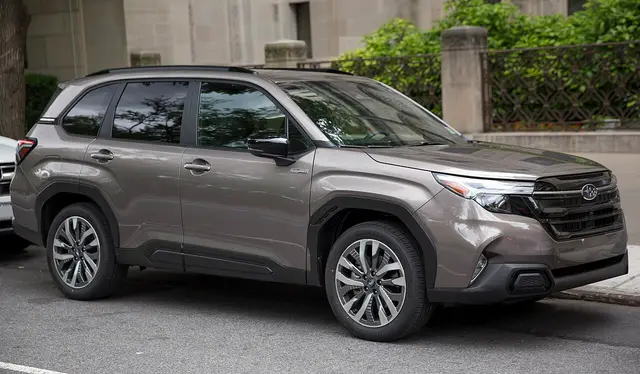
The official data lists 191 versions of the Ford Kuga (2008 - 2026), in the European Union, the United Kingdom, and France. Each market publishes its own figures, measured on its own test procedure.
The Kuga is Ford’s mid-size SUV for European buyers. Its higher-riding body offers an alternative to a hatchback or estate for drivers who prefer an SUV layout. Ford introduced the Kuga in Europe in 2008.
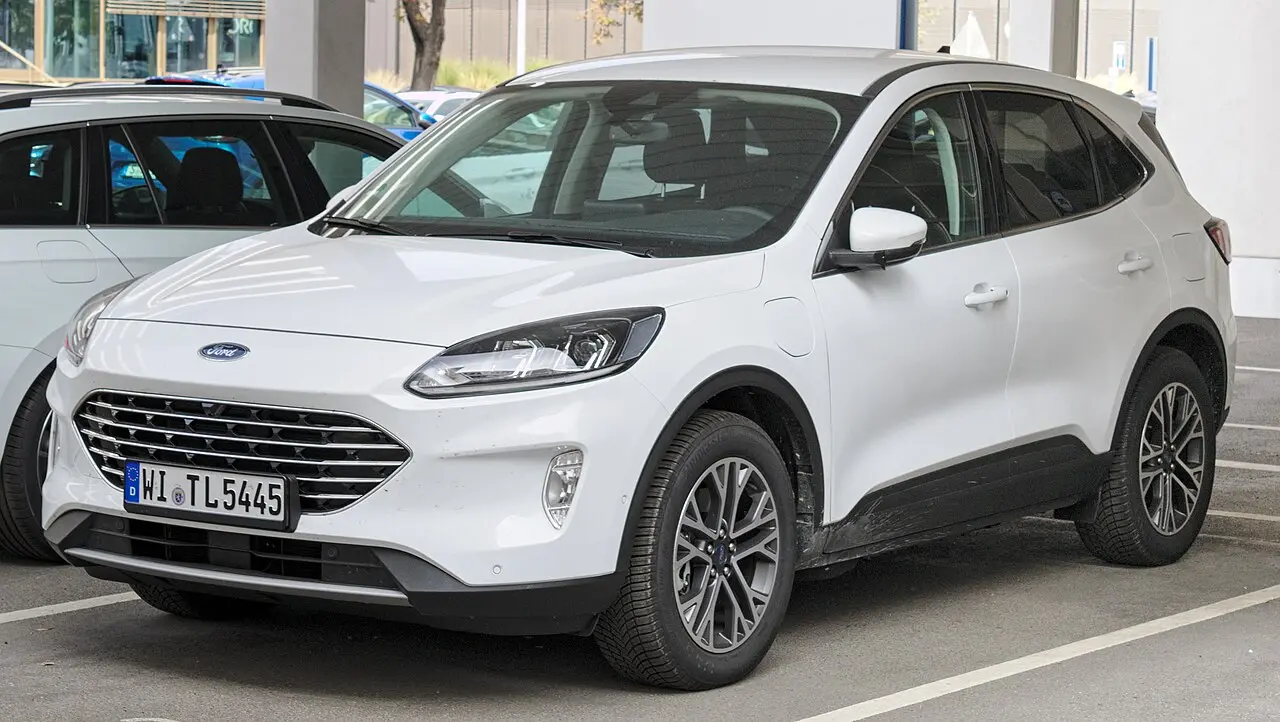
Successive generations brought new styling and a wider choice of powertrains. The third generation was the first Kuga built on Ford’s C2 vehicle architecture, also used by the Focus. Its powertrain choices include mild hybrid, full hybrid and plug-in hybrid, alongside petrol and diesel versions in the market listings.
Kuga generations
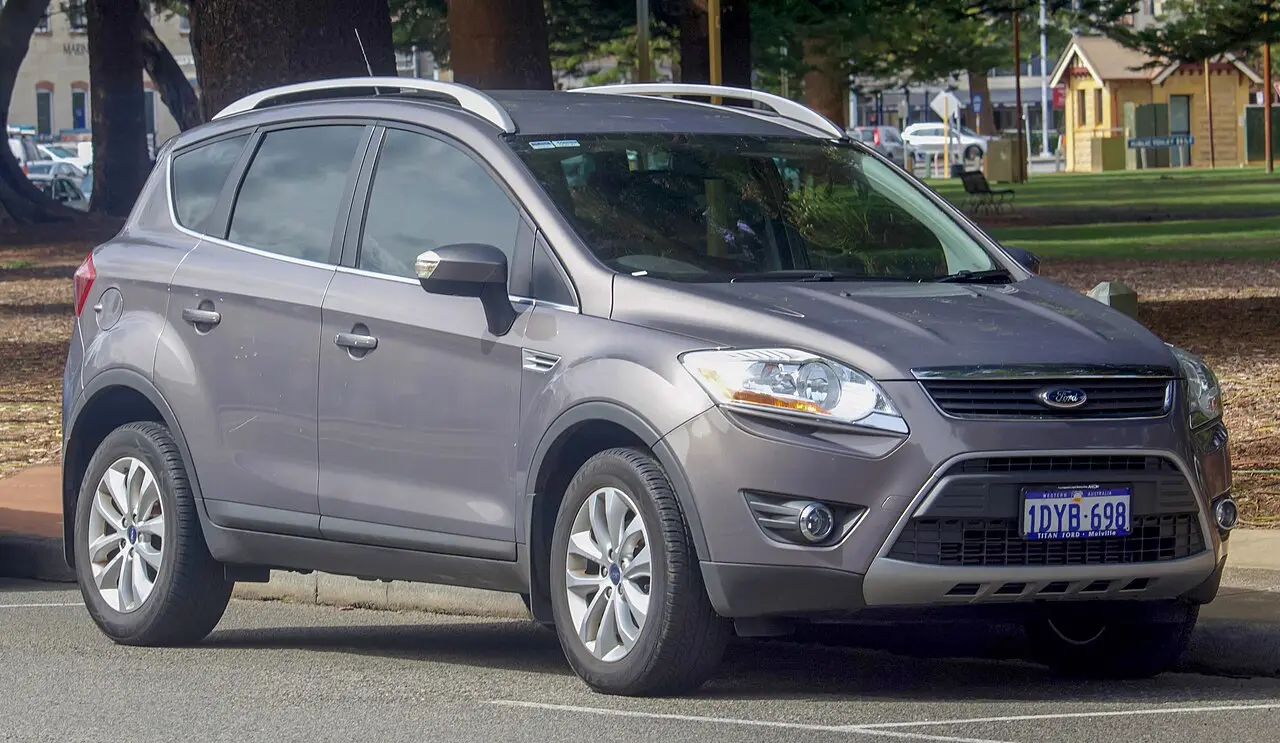
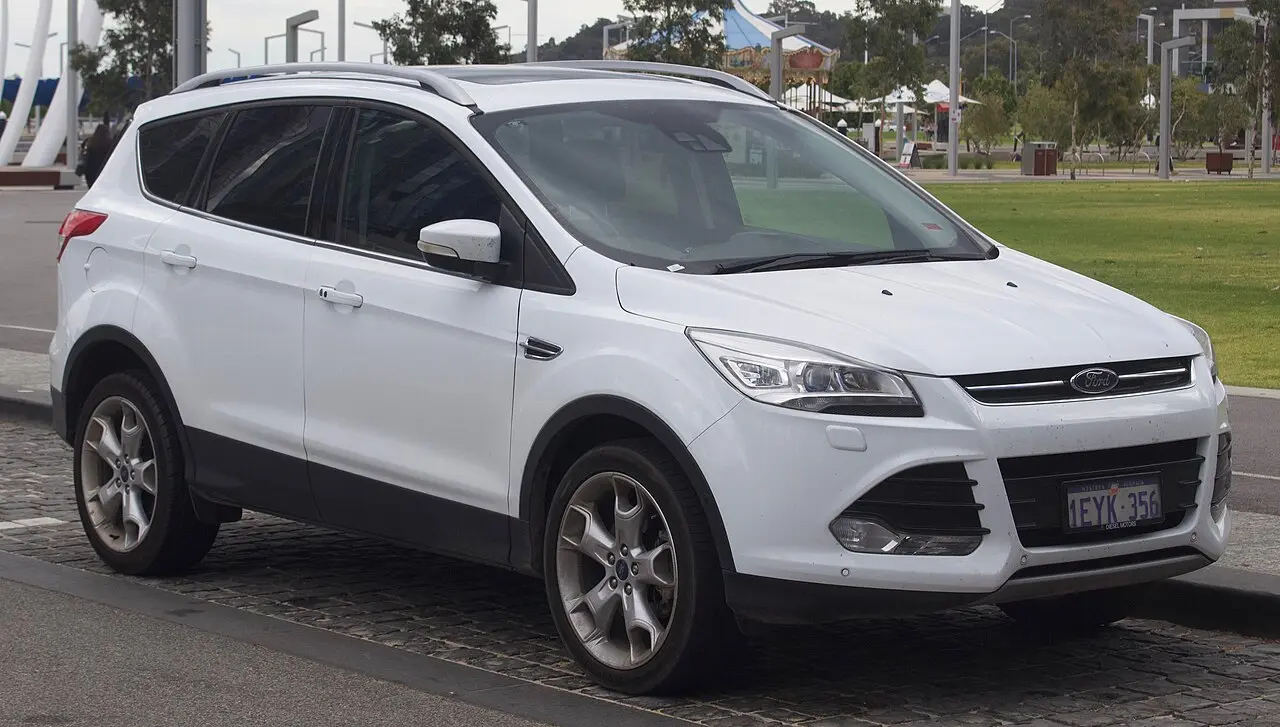
The Kuga I ran from 2008-2012, followed by Kuga II from 2013-2019. Kuga III is listed from 2020-today in the EU, UK and France. The third generation brought the Kuga onto the C2 platform and expanded its electrified powertrain choices.
The Kuga appears in EU registration figures from 2010-2025, UK figures from 2008-2024 and French figures from 2012-2026.
Engines, power and fuel consumption
Across EU listings, engines range from 1.5 L to 2.5 L and outputs from 85 kW (116 PS) to 178 kW (242 PS). UK versions cover 1.5 L to 2.5 L and reach 165 kW (224 PS); French listings show 2.5 L versions with outputs up to 147 kW (200 PS). Listed fuels include petrol, diesel, hybrid, plug-in hybrid and flex-fuel E85, with other fuels also appearing in EU listings.
The lowest listed EU consumption figure for petrol, diesel or hybrid versions is 4.6 L/100 km on WLTP. For plug-in hybrids, the EU weighted figure is 0.9 L/100 km WLTP, assuming some driving is electric. French listings show 4.7 L/100 km on NEDC and 0.9 L/100 km WLTP for plug-in hybrids. WLTP and NEDC use different procedures, and plug-in hybrid results are weighted to account for electric driving.
Where was the Kuga sold?
The Kuga appears in EU, UK and French listings. EU registration figures total 2,632,442 over 2010-2025.
Questions and answers
When did the Kuga III begin?
Kuga III is listed from 2020-today in the EU, UK and France.
What is the lowest listed Kuga plug-in hybrid figure?
The EU and French figure is 0.9 L/100 km on WLTP, a weighted result assuming some driving is electric.
What is the Kuga’s lowest listed non-plug-in consumption?
The EU figure is 4.6 L/100 km on WLTP for petrol, diesel or hybrid versions.
Which markets are included for the Kuga?
The listed markets are the European Union, the United Kingdom and France.
Model codes: C394 · Sold in: European Union, United Kingdom, and France · References: en.wikipedia.org, cars-data.com
At a glance: Length 4,440 - 4,450 mm · Kerb weight 1,473 - 1,572 kg · Top speed 182 - 210 km/h · MOT first-time pass at 13 years and older: 70.9% (UK average 69.2%) Specifications, reliability and all versions
Model codes: C520 · Sold in: European Union, United Kingdom, and France · References: en.wikipedia.org, elpais.com
At a glance: Length 4,520 - 4,550 mm · Kerb weight 1,479 - 1,586 kg · Top speed 180 - 200 km/h · MOT first-time pass at 6 - 8 years: 89.8% (UK average 86.4%) Specifications, reliability and all versions
At a glance: Length 4,620 - 4,750 mm · Kerb weight 1,464 - 1,759 kg · Top speed 195 - 200 km/h · MOT first-time pass at 3 years: 94.0% (UK average 92.2%) Specifications, reliability and all versions
Show all 98 versions
European Union 76 versions
New cars registered in the EU (plus Norway and Iceland), from the European Environment Agency. Figures on the NEDC procedure until 2020 and on WLTP from 2021; versions are grouped by engine and power, with their number of registrations.
Years and version
Engine
Power
Fuel
Consumption (combined)
CO₂
Electric range
EU registrations
2021 - 2025
2.5 L
112 kW (152 PS) (engine only)
Plug-in hybrid
1.0 - 5.0 L/100 km WLTP13.0 - 15.2 kWh/100 km WLTP
23 - 39 g/km
63 - 68 km
178,257
2024 - 2025
2.5 L
111 kW (151 PS) (engine only)
Plug-in hybrid
0.9 - 1.1 L/100 km WLTP15.9 - 16.4 kWh/100 km WLTP
21 - 27 g/km
68 - 69 km
46,619
2021 - 2025
1.5 L
111 kW (151 PS)
Petrol
6.2 - 6.6 L/100 km WLTP
146 - 152 g/km
-
41,375
2022 - 2025
2.5 L
112 kW (152 PS)
Hybrid
5.3 - 5.6 L/100 km WLTP
127 - 128 g/km
-
34,578
2024 - 2025
2.5 L
111 kW (151 PS)
Hybrid
5.5 L/100 km WLTP
126 - 127 g/km
-
33,790
2021 - 2025
2.5 L
112 kW (152 PS)
Flex fuel (E85)
5.5 - 7.2 L/100 km WLTP
120 - 126 g/km
-
23,179
2024 - 2025
2.5 L
111 kW (151 PS)
Flex fuel (E85)
5.4 L/100 km WLTP
124 g/km
-
17,620
2022 - 2025
2.0 L
88 kW (120 PS)
Diesel
5.7 - 5.8 L/100 km WLTP
151 g/km
-
14,067
2024 - 2025
1.5 L
137 kW (186 PS)
Petrol
6.8 - 6.9 L/100 km WLTP
156 g/km
-
9,121
2025
2.5 L
111 kW (151 PS)
Petrol
-
85 g/km
-
72
2021 - 2024
1.5 L
88 kW (120 PS)
Diesel
4.8 - 5.3 L/100 km WLTP
127 - 133 g/km
-
28,364
2021 - 2024
2.0 L
140 kW (190 PS)
Diesel
5.5 - 5.8 L/100 km WLTP
152 - 154 g/km
-
14,417
2021 - 2024
1.5 L
110 kW (150 PS)
Petrol
5.8 - 6.6 L/100 km WLTP
150 - 151 g/km
-
12,166
2021 - 2024
1.5 L
88 kW (120 PS)
Petrol
5.9 - 6.7 L/100 km WLTP
151 - 152 g/km
-
5,087
2022 - 2024
2.5 L
140 kW (190 PS)
Flex fuel (E85)
5.7 L/100 km WLTP
131 g/km
-
53
2021 - 2023
2.0 L
110 kW (150 PS)
Hybrid
4.6 - 4.9 L/100 km WLTP
129 - 132 g/km
-
8,186
2021 - 2023
2.0 L
110 kW (150 PS)
Diesel
5.1 - 5.8 L/100 km WLTP
143 - 151 g/km
-
3,125
2023
2.5 L
Not listed
Hybrid
5.6 L/100 km WLTP
129 g/km
-
239
2023
2.5 L
Not listed
Plug-in hybrid
1.0 L/100 km WLTP14.7 - 14.8 kWh/100 km WLTP
23 g/km
65 km
187
2023
2.5 L
110 kW (150 PS)
Hybrid
5.6 L/100 km WLTP
129 g/km
-
77
2023
2.5 L
110 kW (150 PS) (engine only)
Plug-in hybrid
1.0 L/100 km WLTP14.7 kWh/100 km WLTP
23 g/km
65 km
69
2023
2.0 L
Not listed
Diesel
5.8 L/100 km WLTP
151 g/km
-
55
2023
1.5 L
Not listed
Petrol
6.6 L/100 km WLTP
150 g/km
-
45
2023
2.5 L
-
Hybrid
5.6 L/100 km WLTP
129 g/km
-
40
2023
2.5 L
-
Plug-in hybrid
1.0 L/100 km WLTP14.7 kWh/100 km WLTP
23 g/km
65 km
37
2023
2.5 L
-
Hybrid
5.6 L/100 km WLTP
129 g/km
-
24
2023
2.5 L
-
Plug-in hybrid
1.0 L/100 km WLTP14.7 kWh/100 km WLTP
23 g/km
65 km
21
2023
1.5 L
-
Petrol
6.6 L/100 km WLTP
150 g/km
-
18
2023
1.5 L
Not listed
Diesel
4.9 L/100 km WLTP
128 g/km
-
18
2023
2.5 L
116 kW (158 PS)
Hybrid
5.7 L/100 km WLTP
130 g/km
-
18
2023
2.5 L
132 kW (179 PS)
Hybrid
5.6 L/100 km WLTP
128 g/km
-
18
2023
2.5 L
120 kW (163 PS) (engine only)
Plug-in hybrid
1.0 L/100 km WLTP14.7 kWh/100 km WLTP
23 g/km
65 km
17
2023
2.5 L
-
Hybrid
5.6 L/100 km WLTP
128 g/km
-
16
2023
2.5 L
-
Plug-in hybrid
1.0 L/100 km WLTP14.8 kWh/100 km WLTP
23 g/km
65 km
16
2023
2.5 L
-
Plug-in hybrid
1.0 L/100 km WLTP14.7 kWh/100 km WLTP
23 g/km
65 km
16
2023
2.5 L
-
Hybrid
5.7 L/100 km WLTP
130 g/km
-
15
2023
2.5 L
120 kW (163 PS)
Hybrid
5.6 L/100 km WLTP
128 g/km
-
14
2023
2.5 L
132 kW (179 PS) (engine only)
Plug-in hybrid
1.0 L/100 km WLTP14.8 kWh/100 km WLTP
23 g/km
65 km
13
2023
2.5 L
-
Plug-in hybrid
1.0 L/100 km WLTP14.7 kWh/100 km WLTP
23 g/km
65 km
12
2023
2.5 L
131 kW (178 PS)
Hybrid
5.7 L/100 km WLTP
131 g/km
-
12
2023
2.5 L
-
Hybrid
5.7 L/100 km WLTP
131 g/km
-
11
2023
2.5 L
-
Hybrid
5.6 L/100 km WLTP
129 g/km
-
11
2023
2.5 L
116 kW (158 PS) (engine only)
Plug-in hybrid
1.0 L/100 km WLTP14.7 kWh/100 km WLTP
23 g/km
65 km
11
2023
2.5 L
140 kW (190 PS)
Hybrid
5.7 L/100 km WLTP
130 g/km
-
11
2023
1.5 L
-
Petrol
6.6 L/100 km WLTP
150 g/km
-
10
2023
1.5 L
-
Diesel
4.8 L/100 km WLTP
125 g/km
-
10
2023
2.0 L
-
Diesel
5.8 L/100 km WLTP
150 g/km
-
10
2023
2.5 L
-
Plug-in hybrid
1.0 L/100 km WLTP14.7 kWh/100 km WLTP
23 g/km
65 km
10
2023
2.5 L
-
Hybrid
5.7 L/100 km WLTP
130 g/km
-
10
2023
2.5 L
-
Plug-in hybrid
1.0 L/100 km WLTP14.8 kWh/100 km WLTP
23 g/km
65 km
10
2022
1.5 L
88 kW (120 PS)
Diesel
5.0 L/100 km WLTP18.7 kWh/100 km WLTP
132 g/km
-
12,600
2022
2.5 L
112 kW (152 PS)
Petrol
16.8 kWh/100 km WLTP
123 g/km
-
191
2021
2.5 L
112 kW (152 PS)
Hybrid
5.5 L/100 km WLTP15.9 kWh/100 km WLTP
122 g/km
56 km
18,386
2021
2.5 L
112 kW (152 PS)
Petrol
5.6 L/100 km WLTP15.8 kWh/100 km WLTP
129 g/km
-
1,189
2021
2.5 L
140 kW (190 PS)
Flex fuel (E85)
-
131 g/km
-
16
2021
1.5 L
Not listed
Hybrid
5.7 L/100 km WLTP
155 g/km
-
14
2021
1.5 L
134 kW (182 PS)
Petrol
-
-
-
14
2021
2.0 L
-
Petrol
-
-
-
10
2020
2.5 L
112 kW (152 PS) (engine only)
Plug-in hybrid
9.1 kWh/100 km NEDC
26 g/km
62 km
43,432
2020
1.5 L
88 kW (120 PS)
Diesel
-
113 g/km
-
30,164
2020
1.5 L
111 kW (151 PS)
Petrol
-
128 g/km
-
25,106
2020
2.0 L
140 kW (190 PS)
Diesel
-
128 g/km
-
22,405
2020
2.0 L
110 kW (150 PS)
Hybrid
-
112 g/km
-
13,771
2020
1.5 L
110 kW (150 PS)
Petrol
-
128 g/km
-
4,196
2020
2.0 L
110 kW (150 PS)
Diesel
-
159 g/km
-
3,880
2020
1.5 L
110 kW (150 PS)
Petrol
-
161 g/km
-
3,410
2020
1.5 L
88 kW (120 PS)
Petrol
-
129 g/km
-
2,670
2020
2.0 L
132 kW (179 PS)
Diesel
-
161 g/km
-
1,158
2020
2.5 L
112 kW (152 PS)
Petrol
-
209 g/km
-
1,154
2020
2.0 L
110 kW (150 PS)
Diesel
-
112 g/km
-
1,097
2020
1.5 L
129 kW (175 PS)
Petrol
-
189 g/km
-
788
2020
2.0 L
88 kW (120 PS)
Diesel
-
150 g/km
-
684
2020
2.5 L
112 kW (152 PS)
Hybrid
-
120 g/km
-
632
2020
1.5 L
88 kW (120 PS)
Petrol
-
161 g/km
-
29
2020
1.0 L
Not listed
Petrol
-
125 g/km
-
10
2020
1.5 L
129 kW (175 PS)
Natural gas
-
145 g/km
-
10
United Kingdom 20 versions
New cars on sale in the UK, from the Vehicle Certification Agency. NEDC figures until 2018 and WLTP figures after; years are the editions a version appeared in.
Years and version
Engine
Power
Fuel
Gearbox
Consumption (combined)
CO₂
Electric range
2020 - 20241.5 EcoBoost
1.5 L
110 kW (150 PS)
Petrol
6-speed manual
6.5 - 7.2 L/100 km WLTP
147 - 164 g/km
-
2020 - 20241.5 EcoBlue
1.5 L
88 kW (120 PS)
Diesel
8-speed automatic
5.2 - 5.9 L/100 km WLTP
136 - 155 g/km
-
2020 - 20241.5 EcoBlue
1.5 L
88 kW (120 PS)
Diesel
6-speed manual
4.7 - 5.5 L/100 km WLTP
123 - 144 g/km
-
2020 - 20242.0 EcoBlue (mHEV)
2.0 L
110 kW (150 PS)
Hybrid
6-speed manual
4.8 - 5.5 L/100 km WLTP
127 - 144 g/km
-
2020 - 20242.0 EcoBlue
2.0 L
140 kW (190 PS)
Diesel
8-speed automatic
5.7 - 6.5 L/100 km WLTP
149 - 172 g/km
-
2020 - 20242.5 Duratec (FHEV)
2.5 L
112 kW (152 PS)
Hybrid
Continuously variable (CVT)
5.4 - 6.4 L/100 km WLTP
124 - 146 g/km
-
2022 - 20242.5 Duratec (FHEV)
2.5 L
147 kW (200 PS)
Hybrid
Continuously variable (CVT)
5.4 - 6.4 L/100 km WLTP
124 - 146 g/km
-
2020 - 20242.5 Duratec (PHEV)
2.5 L
165 kW (224 PS)
Plug-in hybrid
Continuously variable (CVT)
5.2 - 6.5 L/100 km WLTP9.2 - 20.7 kWh/100 km WLTP
119 - 148 g/km
56 km
20201.5 EcoBoost
1.5 L
88 kW (120 PS)
Petrol
6-speed manual
6.7 - 7.2 L/100 km WLTP
152 - 165 g/km
-
20201.5 EcoBoost
1.5 L
88 kW (120 PS)
Petrol
6-speed manual
7.6 - 8.1 L/100 km WLTP
173 - 183 g/km
-
20201.5 EcoBoost
1.5 L
110 kW (150 PS)
Petrol
6-speed automatic
9.0 - 10.0 L/100 km WLTP
205 - 228 g/km
-
20201.5 EcoBoost 4.063 FDR
1.5 L
110 kW (150 PS)
Petrol
6-speed manual
7.7 - 8.3 L/100 km WLTP
174 - 189 g/km
-
20201.5 EcoBoost 4.067 FDR
1.5 L
110 kW (150 PS)
Petrol
6-speed manual
7.6 - 8.1 L/100 km WLTP
173 - 183 g/km
-
20201.5 EcoBoost
1.5 L
129 kW (175 PS)
Petrol
6-speed automatic
9.6 - 10.0 L/100 km WLTP
219 - 228 g/km
-
20201.5 TDCi
1.5 L
88 kW (120 PS)
Diesel
6-speed manual
6.0 - 6.4 L/100 km WLTP
158 - 168 g/km
-
20202.0 TDCi
2.0 L
88 kW (120 PS)
Diesel
-
6.9 - 7.6 L/100 km WLTP
182 - 198 g/km
-
20202.0 TDCi
2.0 L
110 kW (150 PS)
Diesel
6-speed manual
6.4 - 7.7 L/100 km WLTP
167 - 200 g/km
-
20202.0 TDCi
2.0 L
110 kW (150 PS)
Diesel
-
7.0 - 7.6 L/100 km WLTP
184 - 198 g/km
-
20202.0 TDCi
2.0 L
132 kW (179 PS)
Diesel
6-speed manual
6.6 - 8.1 L/100 km WLTP
174 - 210 g/km
-
20202.0 TDCi
2.0 L
132 kW (179 PS)
Diesel
-
7.0 - 7.7 L/100 km WLTP
184 - 202 g/km
-
France 2 versions
New cars on sale in France, from ADEME Car Labelling. NEDC figures until 2015, WLTP figures in the current catalogue.
42 official safety recalls for the Ford Kuga from NHTSA (United States), DVSA (United Kingdom) and the EU Safety Gate, newest first. Recall repairs are normally free at the maker’s dealers.
Powertrain software may reduce power output2019 - 2020
Traffic sign recognition may switch unexpectedly2023 - 2026
Instrument panel wiring may be damaged2024 - 2026
Exhaust gas recirculation valve may fail2025
Glare-free high beams may behave erratically2025 - 2026
Official figures are measured on standard test procedures and differ between markets. Your consumption depends on how, where and in what conditions you drive.