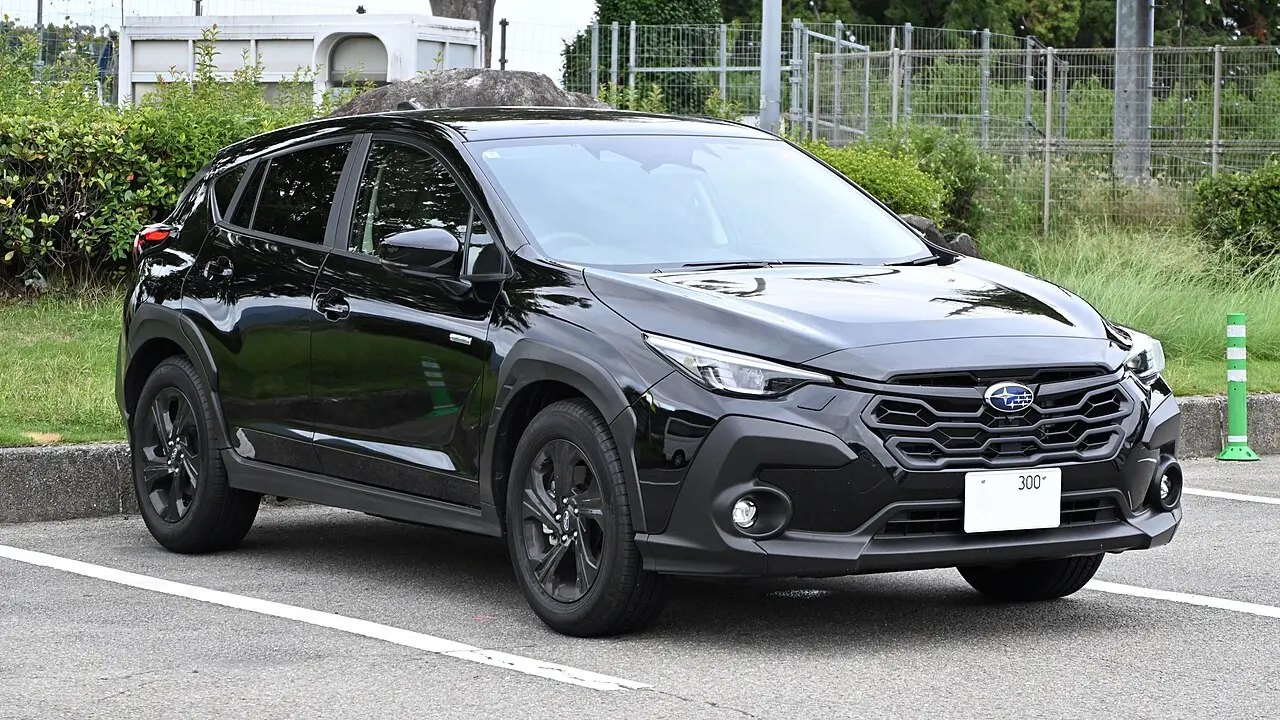
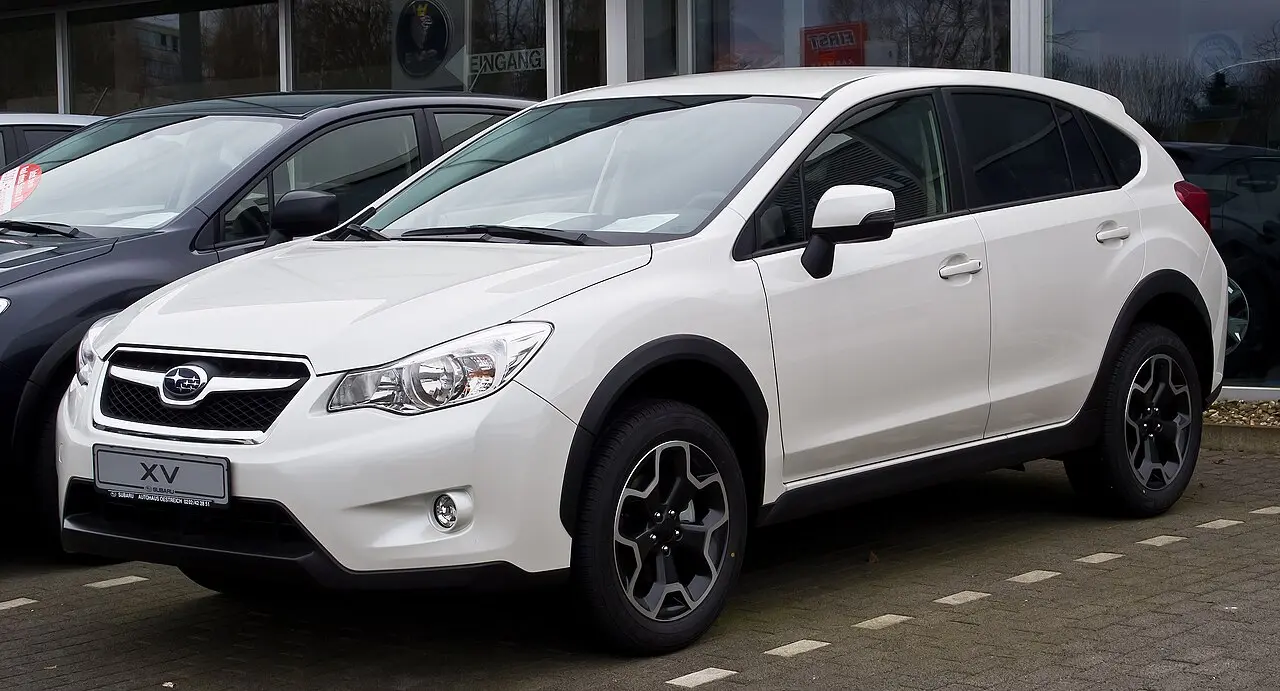
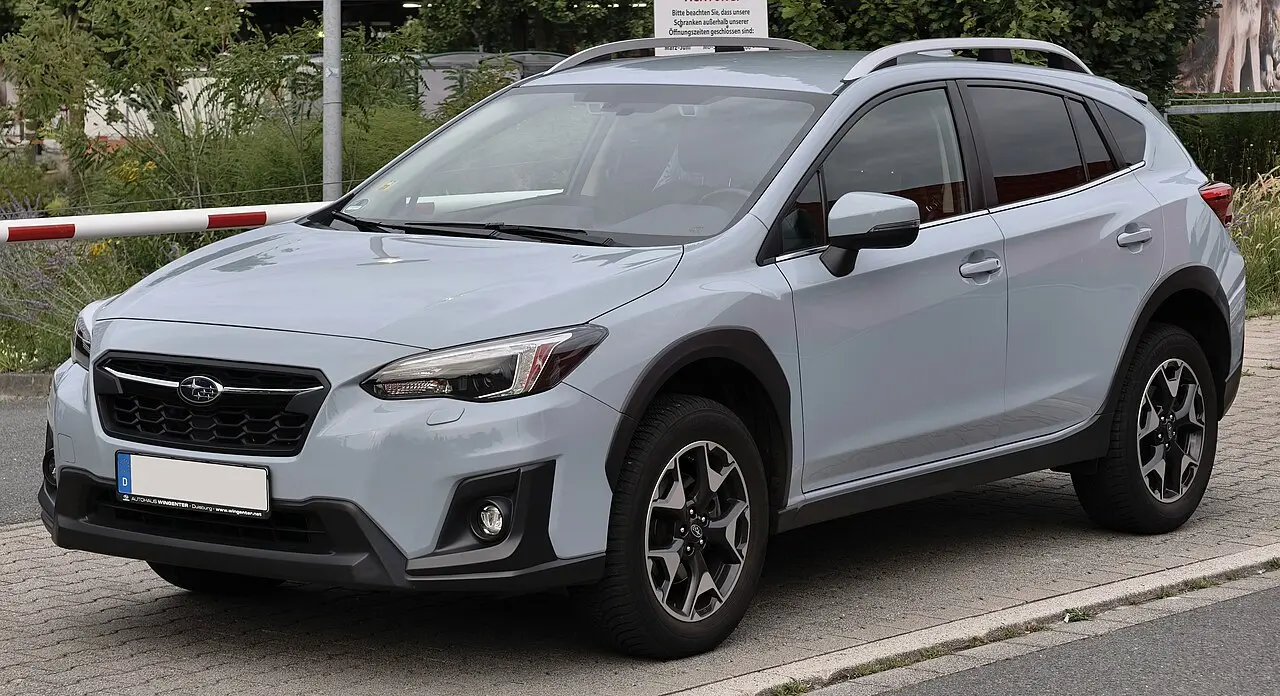
The official data lists 164 versions of the Subaru Crosstrek (2010–2027), in the European Union, the United Kingdom, France, the United States, and Canada. Each market publishes its own figures, measured on its own test procedure.
At a glance
Years in the data
2010–2027
Markets
European Union, United Kingdom, France, United States, Canada
Engines
1.6 L to 2.5 L
Power
80 kW (109 PS) to 165 kW (224 PS)
Fuels
Petrol, Diesel, Hybrid, Plug-in hybrid, LPG, Natural gas
Lowest consumption (United Kingdom)
5.4 L/100 km (NEDC)
Lowest consumption (France)
5.6 L/100 km (NEDC)
Lowest consumption (United States)
6.5 L/100 km (EPA)
Plug-in hybrid, weighted (United States)
6.7 L/100 km (EPA)
Plug-in hybrid, weighted (Canada)
6.7 L/100 km (5-cycle)
New registrations in the EU
169,714
What kind of car is the Subaru Crosstrek?
The Crosstrek is a compact crossover SUV with a raised stance and a practical hatchback shape. It suits everyday driving while offering the versatility of an SUV. In Subaru’s range it sits below the larger Forester. Earlier versions were called the Subaru XV in some markets; Crosstrek became the global name with the third generation.
The Crosstrek brings Subaru’s familiar Boxer engine and Symmetrical All-Wheel Drive layout to a smaller crossover. Its name and equipment have varied by market and generation.
Crosstrek generations
The first generation (GP) ran from 2012–2017, the second (GT) from 2017–2023, and the third (GU) from 2023 onward. The first two generations were also sold as the Subaru XV in some regions. With the third generation, Crosstrek became the global name.
Engines and power
Engine and fuel choices vary by market. EU models span 1.6 L to 2.0 L engines and 80 kW (109 PS) to 165 kW (224 PS). The UK range covers 1.6 L to 2.0 L and 84 kW (114 PS) to 136 kW (185 PS). US and Canadian versions include 2.0 L to 2.5 L engines. Petrol and hybrid versions appear in the listings, along with plug-in hybrids in the US and Canada.
How economical is the Subaru Crosstrek?
The lowest listed EU consumption is 7.1 L/100 km on WLTP for petrol, diesel and hybrid versions. The UK figure is 5.4 L/100 km on NEDC, and France lists 5.6 L/100 km on NEDC. The lowest US EPA figure is 6.5 L/100 km, with a best combined rating of 36 MPG. Canada’s lowest listed 5-cycle figure is also 6.5 L/100 km.
Plug-in hybrid figures are weighted estimates that assume part of the driving is electric: 6.7 L/100 km on EPA in the US and 6.7 L/100 km on Canada’s 5-cycle test. These procedures differ: Europe uses WLTP or NEDC, the US uses EPA testing, and Canada uses a 5-cycle procedure. Official EU registration figures total 169,714 for 2010–2025.
Where was the Crosstrek sold?
The Crosstrek has been sold in the EU, UK, France, the United States and Canada. Earlier versions used the Subaru XV name in some markets. Fuel availability varied by region: European listings include diesel, while US and Canadian listings include plug-in hybrid versions.
Questions and answers
Is the Subaru XV the same model as the Crosstrek?
Subaru used the XV name in some markets for earlier versions of the compact crossover now known as Crosstrek. The third generation made Crosstrek the global name.
How many Crosstrek generations are there?
Three: GP (2012–2017), GT (2017–2023) and GU (2023 onward).
What is the lowest listed Crosstrek consumption?
The lowest listed figure is 5.4 L/100 km on the UK NEDC test. EPA, WLTP and Canadian 5-cycle figures use different procedures.
Is there a Crosstrek plug-in hybrid?
Plug-in hybrid versions are listed in the US and Canada.
New cars registered in the EU (plus Norway and Iceland), from the European Environment Agency. Figures on the NEDC procedure until 2020 and on WLTP from 2021; versions are grouped by engine and power, with their number of registrations.
Years and version
Engine
Power
Fuel
Consumption (combined)
CO₂
EU registrations
2025
2.0 L
100 kW (136 PS)
Hybrid
7.7 L/100 km WLTP
174 g/km
4,152
2025
2.0 L
100 kW (136 PS)
Petrol
7.7 L/100 km WLTP
174 g/km
201
2025
2.0 L
100 kW (136 PS)
Plug-in hybrid
–
174 g/km
32
2025
1.6 L
84 kW (114 PS)
Petrol
8.0 L/100 km WLTP
180 g/km
30
2024
2.0 L
100 kW (136 PS)
Hybrid
7.7 L/100 km WLTP
174 g/km
4,081
2023–2024
2.0 L
110 kW (150 PS)
Hybrid
7.9 L/100 km WLTP
180 g/km
3,628
2024
1.6 L
84 kW (114 PS)
Petrol
8.0 L/100 km WLTP
180 g/km
385
2023
1.6 L
84 kW (114 PS)
Petrol
8.0 L/100 km WLTP
180 g/km
3,046
2023
2.0 L
100 kW (136 PS)
Hybrid
7.7 L/100 km WLTP
174 g/km
268
United Kingdom 3 versions
New cars on sale in the UK, from the Vehicle Certification Agency. NEDC figures until 2018 and WLTP figures after; years are the editions a version appeared in.
Years and version
Engine
Power
Fuel
Gearbox
Consumption (combined)
CO₂
2025–2026Touring · Limited
2.0 L
100 kW (136 PS)
Hybrid
Continuously variable (CVT)
7.7 L/100 km WLTP
174 g/km
2024Touring · Limited
2.0 L
136 kW (185 PS)
Hybrid
Continuously variable (CVT)
7.7 L/100 km WLTP
174 g/km
2023Touring · Limited
2.0 L
100 kW (136 PS)
Hybrid
Continuously variable (CVT)
7.7 L/100 km WLTP
174 g/km
United States 8 versions
Model years sold in the USA, from the EPA and the Department of Energy (fueleconomy.gov). MPG on the EPA test; litres per 100 km = 235.215 ÷ MPG.
Years and version
Engine
Fuel
Gearbox
Drive
Consumption (combined)
CO₂
2026–2027SIDI
2.5 L
Petrol
Continuously variable (CVT)
All-wheel drive
29 MPG (8.1 L/100 km) EPA
191 g/km
2026–2027SIDI
2.5 L
Petrol
Continuously variable (CVT)
All-wheel drive
26 MPG (9.0 L/100 km) EPA
209 g/km
2026SIDI; Hybrid
2.5 L
Hybrid
Continuously variable (CVT)
All-wheel drive
36 MPG (6.5 L/100 km) EPA
153 g/km
2024–2025SIDI
2.0 L
Petrol
Continuously variable (CVT)
All-wheel drive
29 MPG (8.1 L/100 km) EPA
186 g/km
2024–2025SIDI
2.5 L
Petrol
Continuously variable (CVT)
All-wheel drive
27 MPG (8.7 L/100 km) EPA
206 g/km
2025SIDI
2.5 L
Petrol
Continuously variable (CVT)
All-wheel drive
29 MPG (8.1 L/100 km) EPA
190 g/km
2024SIDI
2.5 L
Petrol
Continuously variable (CVT)
All-wheel drive
29 MPG (8.1 L/100 km) EPA
190 g/km
2023SIDI; PHEV
2.0 L
Plug-in hybrid
Continuously variable (CVT)
All-wheel drive
35 MPG (6.7 L/100 km) EPA
94 g/km
Canada 8 versions
Model years sold in Canada, from Natural Resources Canada fuel consumption ratings (5-cycle test).
Years and version
Engine
Fuel
Gearbox
Consumption (combined)
CO₂
2026Sport utility vehicle: Small
2.5 L
Petrol
Continuously variable (CVT)
8.1 L/100 km 5-cycle
191 g/km
2026Sport utility vehicle: Small
2.5 L
Petrol
Continuously variable (CVT)
8.9 L/100 km 5-cycle
210 g/km
2026Sport utility vehicle: Small
2.5 L
Petrol
Continuously variable (CVT)
6.5 L/100 km 5-cycle
153 g/km
2025Sport utility vehicle: Small
2.0 L
Petrol
Continuously variable (CVT)
8.0 L/100 km 5-cycle
188 g/km
2024–2025Sport utility vehicle: Small
2.5 L
Petrol
Continuously variable (CVT)
8.1 L/100 km 5-cycle
190 g/km
2024–2025Sport utility vehicle: Small
2.5 L
Petrol
Continuously variable (CVT)
8.8 L/100 km 5-cycle
206 g/km
2024Sport utility vehicle: Small
2.0 L
Petrol
Continuously variable (CVT)
8.0 L/100 km 5-cycle
188 g/km
2023Sport utility vehicle: Small
2.5 L
Petrol
Continuously variable (CVT)
8.0 L/100 km 5-cycle
187 g/km
Versions outside these generations
European Union 2 versions
New cars registered in the EU (plus Norway and Iceland), from the European Environment Agency. Figures on the NEDC procedure until 2020 and on WLTP from 2021; versions are grouped by engine and power, with their number of registrations.
Years and version
Engine
Power
Fuel
CO₂
EU registrations
2011–2012
2.0 L
110 kW (150 PS)
Diesel
152 g/km
70
2010
2.0 L
–
Diesel
152 g/km
16
Official figures are measured on standard test procedures and differ between markets. Your consumption depends on how, where and in what conditions you drive.