Volkswagen

Volkswagen Tiguan

Volkswagen Tiguan
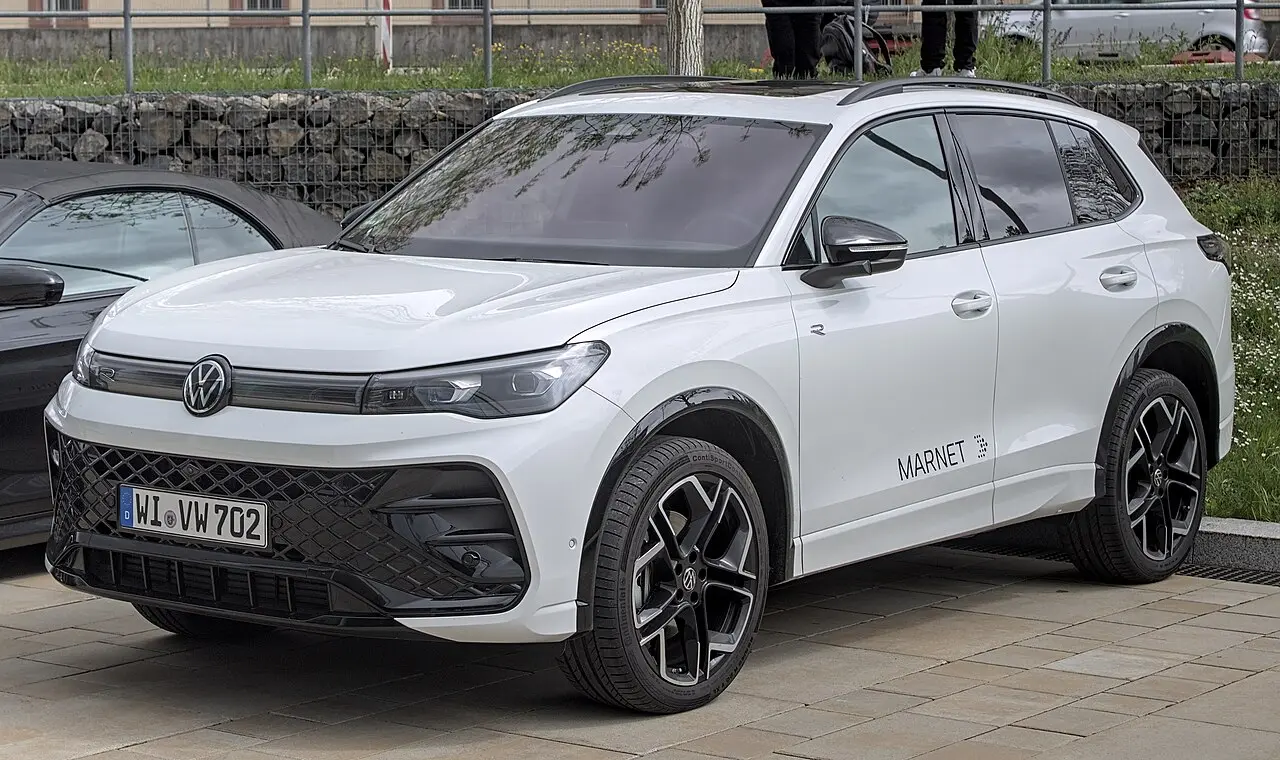
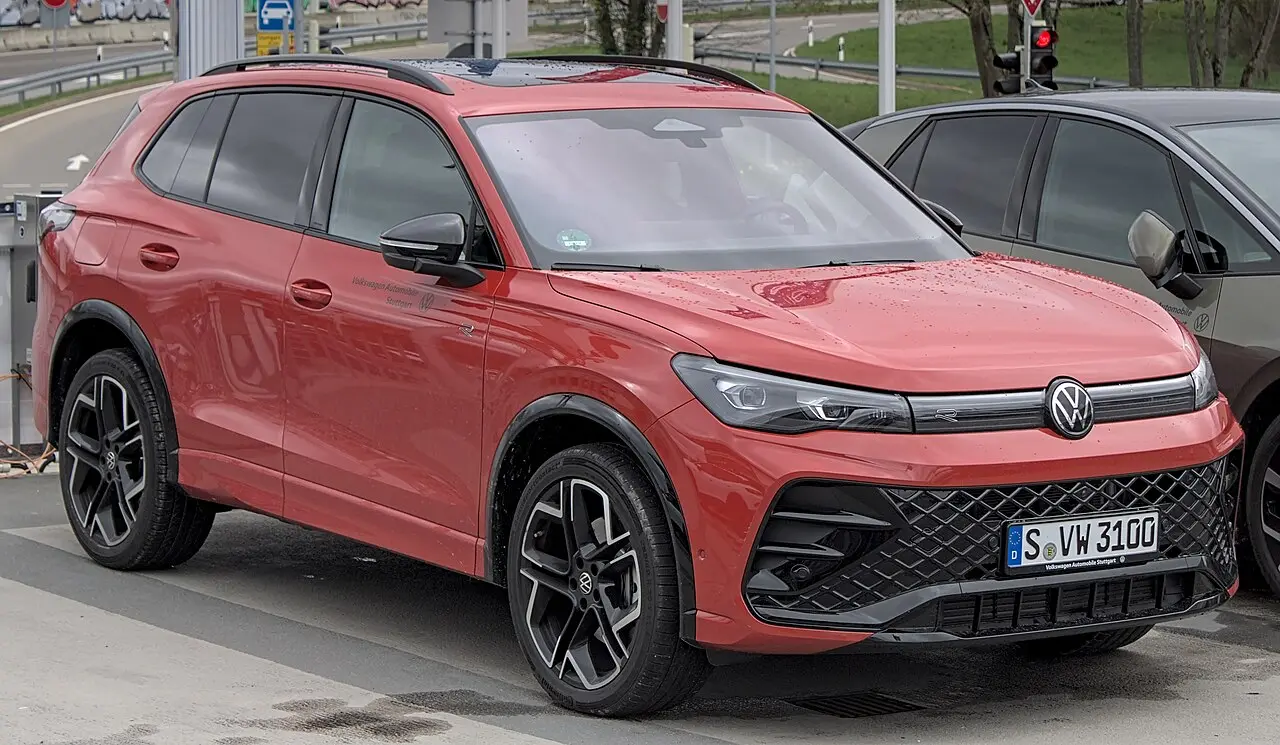
Photo: Alexander-93 / Wikimedia Commons · CC BY-SA 4.0

The official data lists 514 versions of the Volkswagen Tiguan (2009–2027), in the European Union, the United Kingdom, France, the United States, and Canada. Each market publishes its own figures, measured on its own test procedure.

At a glance

Years in the data
2009–2027
Markets
European Union, United Kingdom, France, United States, Canada
Engines
1.4 L to 2.0 L
Power
81 kW (110 PS) to 235 kW (320 PS)
Fuels
Diesel, Petrol, Plug-in hybrid, Hybrid, Electric, Flex fuel (E85)
Lowest consumption (United Kingdom)
4.7 L/100 km (NEDC)
Lowest consumption (European Union)
4.8 L/100 km (WLTP)
Lowest consumption (France)
5.3 L/100 km (NEDC)
Plug-in hybrid, weighted (European Union)
0.5 L/100 km (WLTP)
Plug-in hybrid, weighted (United Kingdom)
5.7 L/100 km (WLTP)
New registrations in the EU
4,420,452

What is the Volkswagen Tiguan?

The Tiguan is Volkswagen’s compact family SUV, positioned below the Touareg in the range. A longer Tiguan Allspace has also been offered, with an optional third row of seats for up to seven people.

Volkswagen launched the first Tiguan in 2007. The second generation moved to the MQB platform, while the third uses MQB evo and brings plug-in hybrid powertrains. The generations covered here are Tiguan I (2008–2017), Tiguan II (2016–2024 in Europe and the UK; 2018–2024 in the US and Canada), and Tiguan III (2024–today in Europe and the UK; 2025–today in the US and Canada).

Engines and power

In EU figures, Tiguan engines range from 1.4 L to 2.0 L, with outputs from 81 kW (110 PS) to 235 kW (320 PS). Recorded fuels include diesel, petrol, hybrid, plug-in hybrid, electric, flex-fuel E85 and other types. In the UK, engines also range from 1.4 L to 2.0 L, with outputs from 81 kW (110 PS) to 195 kW (265 PS).

France’s figures show outputs from 81 kW (110 PS) to 155 kW (211 PS), with petrol and diesel versions. US and Canadian figures list petrol versions with 2.0 L engines. Choices vary by market and generation.

How economical is the Volkswagen Tiguan?

The lowest stated EU consumption for petrol, diesel and hybrid versions is 4.8 L/100 km on WLTP. The lowest plug-in hybrid weighted figure is 0.5 L/100 km on WLTP. That calculation assumes some driving is electric, so it is not directly comparable with a conventional engine’s result. In the UK, the lowest stated figure for petrol, diesel and hybrid versions is 4.7 L/100 km on NEDC; the plug-in hybrid weighted figure is 5.7 L/100 km on WLTP.

France’s lowest stated figure is 5.3 L/100 km on NEDC. The US EPA rating reaches 29 MPG combined, with a lowest stated consumption of 8.1 L/100 km. In Canada, the lowest stated consumption is 8.5 L/100 km on the 5-cycle test. WLTP and NEDC procedures used in Europe differ from the EPA test in the US and the 5-cycle test in Canada, so results are best read within their own market.

Where was the Tiguan sold?

The Tiguan appears in official figures for the EU, UK, France, the US and Canada. EU registrations total 4,420,452 from 2010–2025. The UK figures cover 2009–2026, France 2012–2015, the US 2009–2027 and Canada 2009–2026. The US and Canadian figures list petrol versions, while European figures include diesel and plug-in hybrid options.

Questions and answers

When did the Volkswagen Tiguan first go on sale?

The Tiguan went on sale in 2007.

What are the Tiguan generations listed?

Tiguan I (2008–2017), Tiguan II (2016–2024 in Europe and the UK; 2018–2024 in the US and Canada), and Tiguan III (2024–today in Europe and the UK; 2025–today in the US and Canada).

Does the Tiguan have plug-in hybrid versions?

Yes. Plug-in hybrid versions appear in the EU and UK figures. Their weighted consumption ratings assume that some driving is electric.

What is the lowest stated US Tiguan consumption?

It is 8.1 L/100 km, with a best combined rating of 29 MPG under EPA procedures.
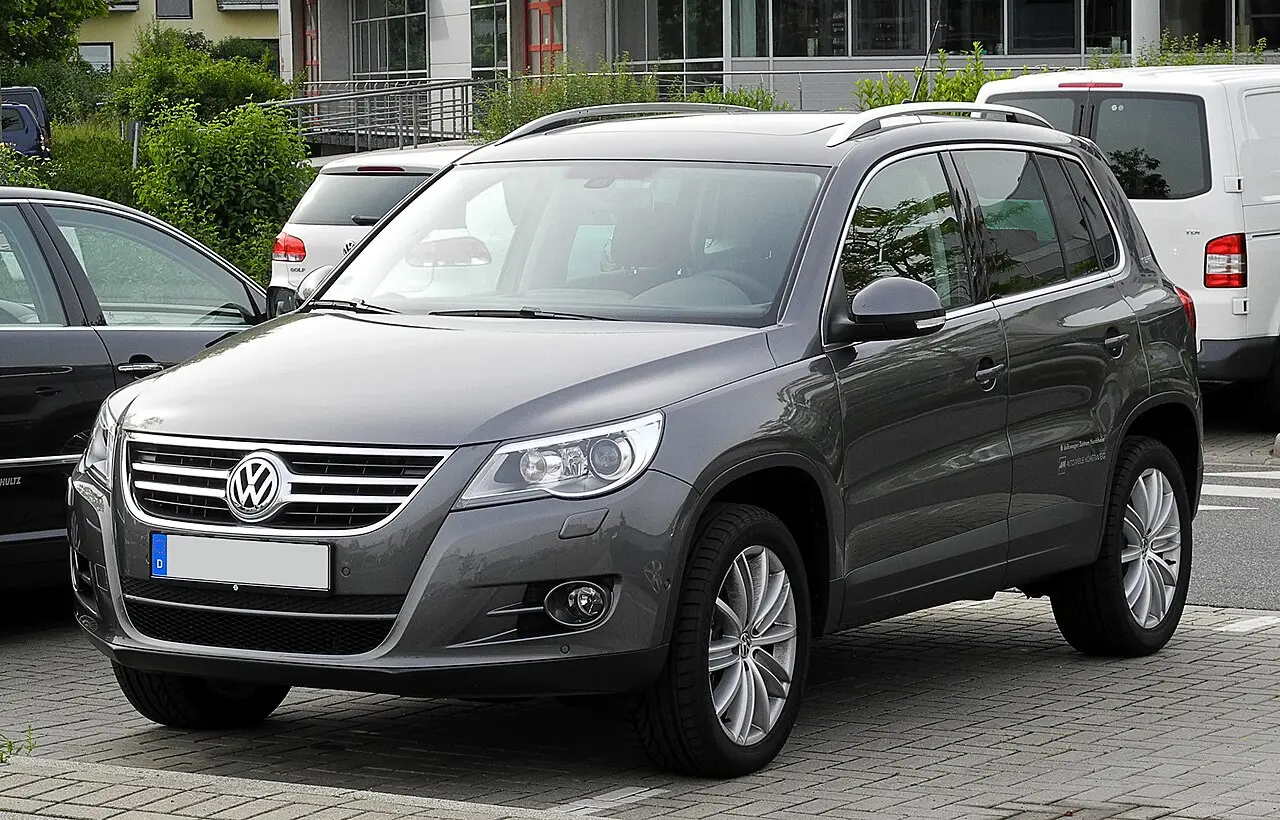
Tiguan I (2008–2017)

Volkswagen Tiguan I
Photo: M 93 / Wikimedia Commons · CC BY-SA 3.0 de

Model codes: 5N · References: en.wikipedia.org, volkswagen-newsroom.com

Show all 275 versions

Tiguan II (2016–2024)

Model codes: AD, BW · References: en.wikipedia.org, volkswagen-newsroom.com

Show all 259 versions

Tiguan II (2018–2024)

Model codes: AD, BW · Sold in: United States and Canada · References: en.wikipedia.org, volkswagen-newsroom.com

Show all 27 versions

Tiguan III (since 2024)

Volkswagen Tiguan III
Photo: Alexander-93 / Wikimedia Commons · CC BY-SA 4.0

Model codes: CT · Sold in: European Union, United Kingdom, and France · References: volkswagen-newsroom.com

Show all 63 versions

Tiguan III (since 2025)

Volkswagen Tiguan III
Photo: Alexander-93 / Wikimedia Commons · CC BY-SA 4.0

Model codes: CT · Sold in: United States and Canada · References: en.wikipedia.org

United States 8 versions

Model years sold in the USA, from the EPA and the Department of Energy (fueleconomy.gov). MPG on the EPA test; litres per 100 km = 235.215 ÷ MPG.

Years and versionEngineFuelGearboxDriveConsumption (combined)CO₂
2027SIDI2.0 LPetrol8-speed automaticAll-wheel drive26 MPG (9.0 L/100 km) EPA215 g/km
2027SIDI2.0 LPetrol8-speed automaticFront-wheel drive28 MPG (8.4 L/100 km) EPA197 g/km
2027SIDI2.0 LPetrol8-speed automaticFront-wheel drive29 MPG (8.1 L/100 km) EPA190 g/km
2027SIDI2.0 LPetrol8-speed automaticAll-wheel drive25 MPG (9.4 L/100 km) EPA222 g/km
2025–2026SIDI2.0 LPetrol8-speed automaticFront-wheel drive28 MPG (8.4 L/100 km) EPA199 g/km
2025–2026SIDI2.0 LPetrol8-speed automaticFront-wheel drive29 MPG (8.1 L/100 km) EPA191 g/km
2025–2026SIDI2.0 LPetrol8-speed automaticAll-wheel drive25 MPG (9.4 L/100 km) EPA218 g/km
2026SIDI2.0 LPetrol8-speed automaticAll-wheel drive25 MPG (9.4 L/100 km) EPA224 g/km

Canada 3 versions

Model years sold in Canada, from Natural Resources Canada fuel consumption ratings (5-cycle test).

Years and versionEngineFuelGearboxConsumption (combined)CO₂
2026Sport utility vehicle: Small2.0 LPetrol8-speed automatic8.5 L/100 km 5-cycle199 g/km
2026Sport utility vehicle: Small2.0 LPetrol8-speed automatic9.2 L/100 km 5-cycle215 g/km
2025Sport utility vehicle: Small2.0 LPetrol8-speed automatic9.3 L/100 km 5-cycle218 g/km

Official figures are measured on standard test procedures and differ between markets. Your consumption depends on how, where and in what conditions you drive.