What is the Infiniti QX70?
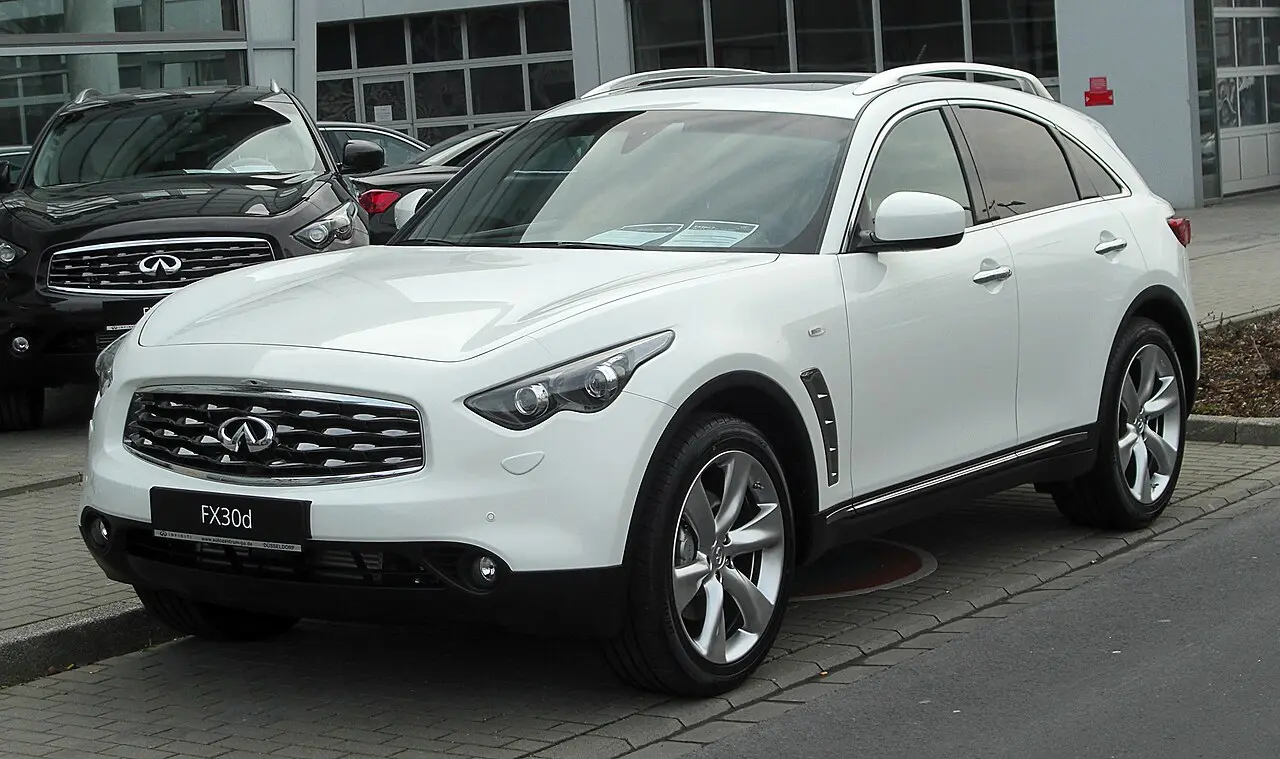
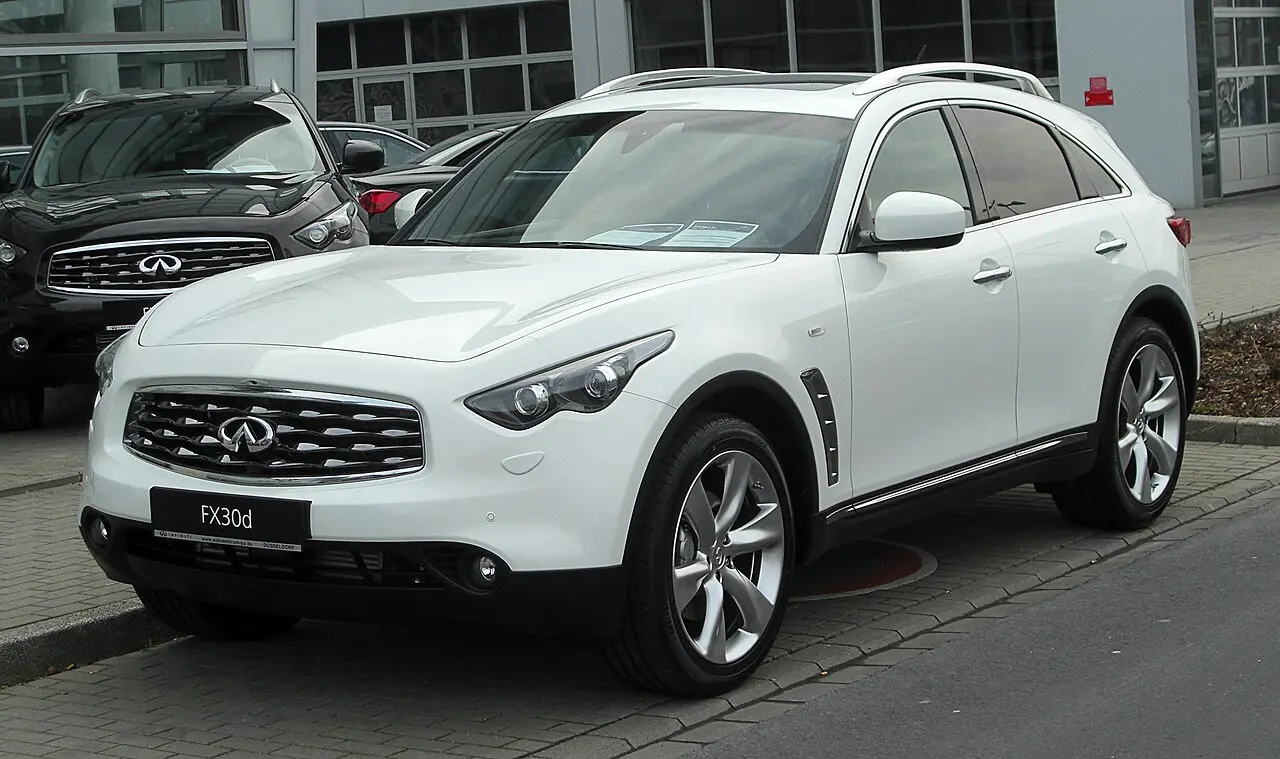
The Infiniti QX70 is a premium crossover SUV with a low roofline and a sporty, coupe-like shape. It carries forward the design approach of the FX, Infiniti’s earlier performance crossover. The QX70 name arrived as Infiniti reorganised its model names, using the Q designation for SUVs.
The S51 generation was sold in North America from 2013 to 2017, and in Europe, the UK and France from 2013 to 2019. Its sculpted body and sloping profile continued the FX’s distinctive design in Infiniti’s SUV range.
Engines and power
European versions ranged from 3.0 to 5.0 litres and included petrol and diesel engines. EU figures show power from 175 kW (238 PS) to 353 kW (480 PS); the French range tops out at 287 kW (390 PS). The 3.0-litre diesel rated at 175 kW (238 PS) was the most registered configuration in the EU, leading in 2014, 2015 and 2016.
In the US and Canada, the listed versions are petrol-powered, with engines from 3.7 to 5.0 litres. Engine choices differed by market.
How economical is the Infiniti QX70?
The lowest listed consumption in UK and French NEDC figures is 8.6 L/100 km. The US EPA rates its most economical version at 12.4 L/100 km, with a best combined result of 19 MPG; Canada’s lowest figure is 12.8 L/100 km on the 5-cycle test. Because each market uses its own test procedure, these results are best read separately.
The QX70 recorded 8,590 EU registrations from 2013 to 2019. US and Canadian figures span 2014-2017.
Questions and answers
What type of vehicle is the Infiniti QX70?
It is a premium crossover SUV with a low, coupe-like profile and a sporty design.
Which QX70 generation was sold?
The S51 generation was sold in North America from 2013 to 2017 and in Europe, the UK and France from 2013 to 2019.
Did the QX70 have a diesel engine?
Yes. European versions included a 3.0-litre diesel rated at 175 kW (238 PS). US and Canadian versions listed here are petrol-powered.
What is its lowest listed fuel consumption?
The lowest listed figure is 8.6 L/100 km in UK and French NEDC results. US EPA results show 12.4 L/100 km, and Canada’s 5-cycle result is 12.8 L/100 km.