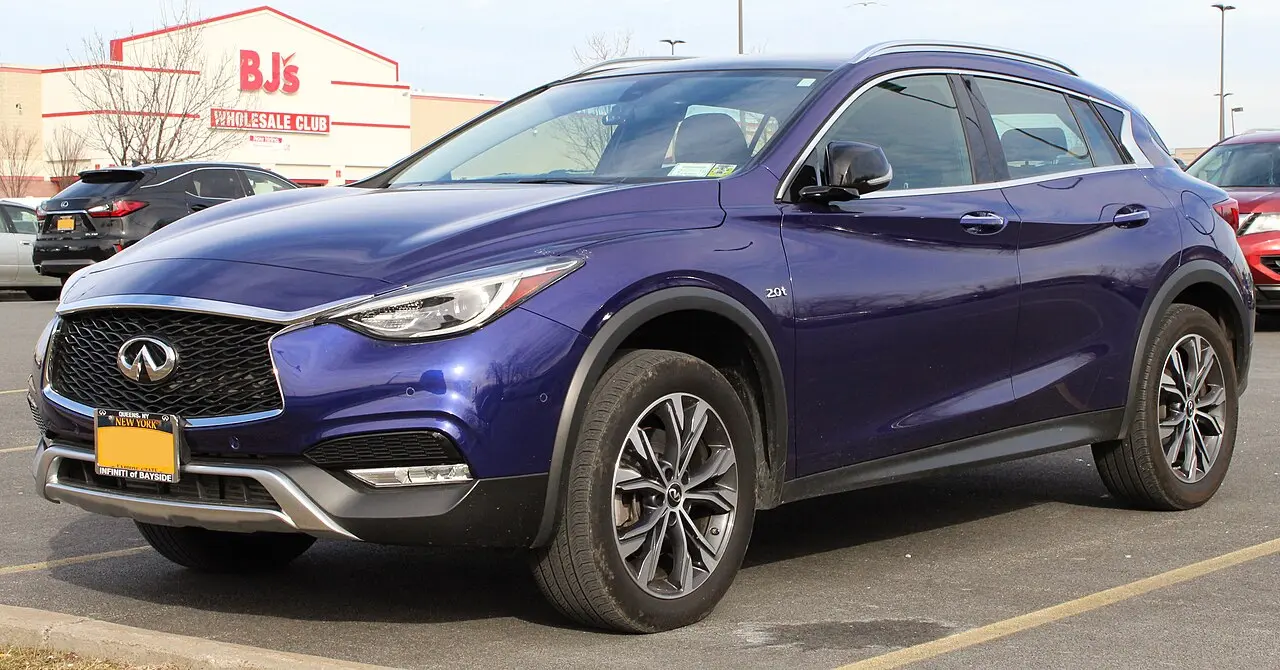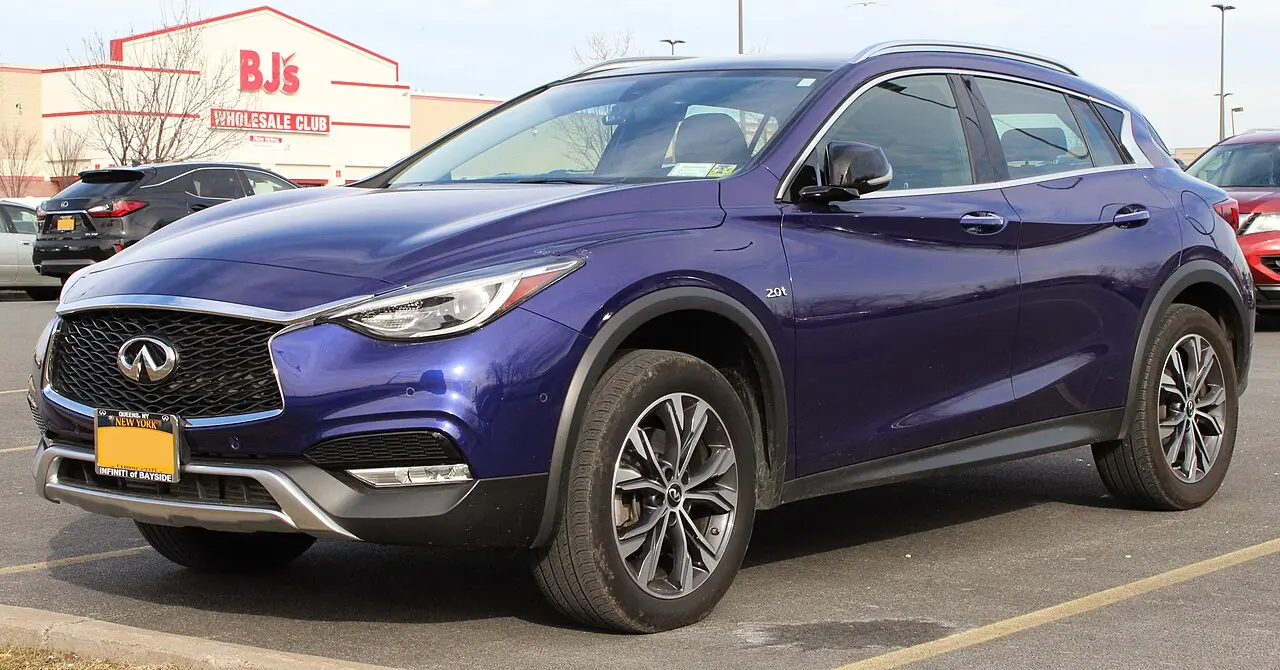
What is the Infiniti QX30?
The QX30 is a compact crossover with a raised stance and sculpted bodywork. It brought Infiniti’s design style to a smaller, more upright body than a conventional hatchback. The double-arch grille is a familiar feature of the brand’s design.
The QX30 belongs to the H15 generation. It appears in EU figures from 2016 to 2020, and in US and Canadian figures from 2017. As Nissan’s luxury marque, Infiniti used the QX30 to extend its range into the compact crossover segment.
Engines and power
EU registration figures show engines from 2.0 L to 2.1 L and power from 125 kW (170 PS) to 233 kW (317 PS). The figures include petrol, diesel and other fuel types. The 2.1 L diesel rated at 125 kW (170 PS) was the leading version among EU registrations in 2017 and 2018; another leading 2017 entry was classified as “other.”
US and Canadian versions had 2.0 L petrol engines. European versions included diesel as well as petrol.
How economical is the Infiniti QX30?
The lowest US figure is 8.7 L/100 km, with a best combined rating of 27 MPG under the EPA procedure. Canada’s lowest figure is 8.5 L/100 km on the 5-cycle test.
Test procedures differ by market: Europe uses WLTP and NEDC, the United States uses EPA, and Canada uses the 5-cycle procedure. Results from different procedures are not directly comparable.
Where was the QX30 sold?
EU registration figures span 2016 to 2020. US figures cover 2017 to 2019, while Canadian figures cover 2017 to 2018. The 2.1 L diesel rated at 125 kW (170 PS) was the leading version among EU registrations in 2017 and 2018.
Questions and answers
What type of car is the QX30?
It is a compact crossover with a raised stance and sculpted styling.
Which generation is the QX30?
It belongs to the H15 generation, appearing in EU figures from 2016 to 2020 and in US and Canadian figures from 2017.
Was the QX30 sold with a diesel engine?
Yes. EU registrations include a 2.1 L diesel rated at 125 kW (170 PS). US and Canadian versions had 2.0 L petrol engines.
How do US and Canadian consumption figures compare?
The lowest US figure is 8.7 L/100 km on the EPA test; Canada’s is 8.5 L/100 km on the 5-cycle test. The different procedures mean the figures are not directly comparable.