Infiniti

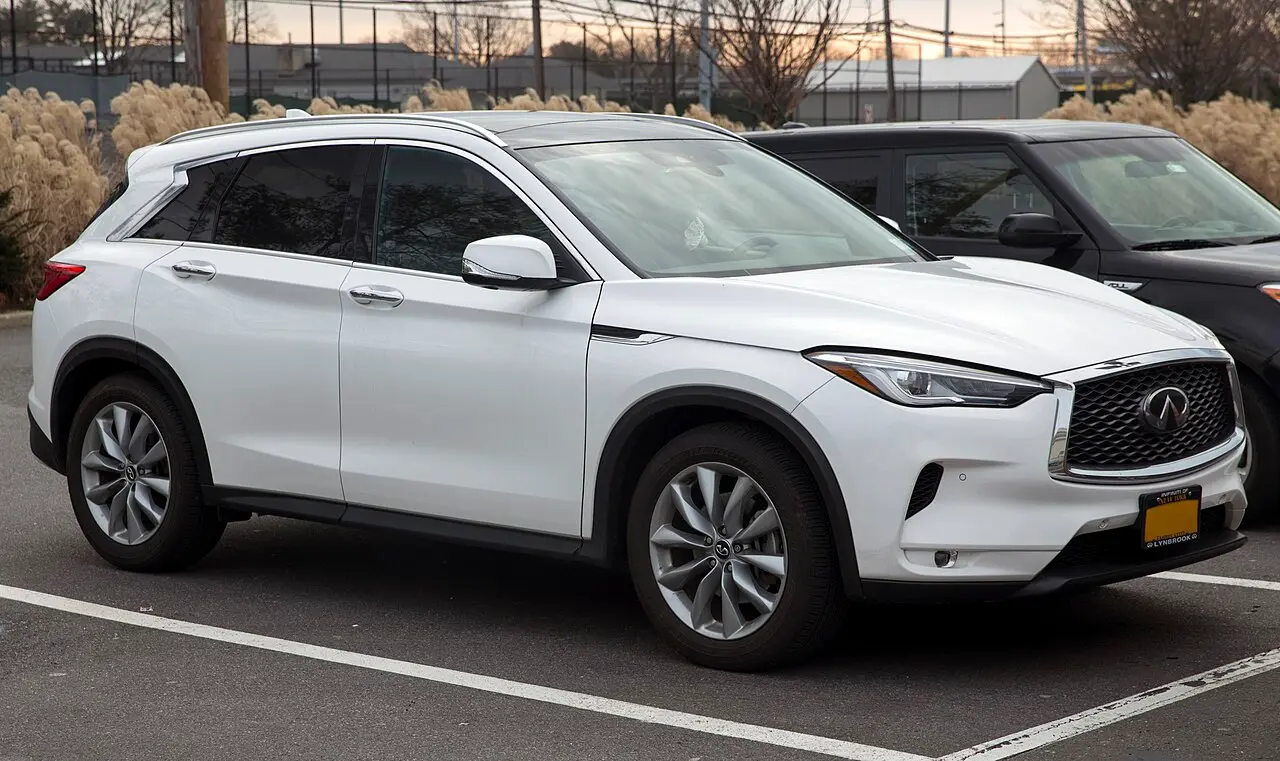
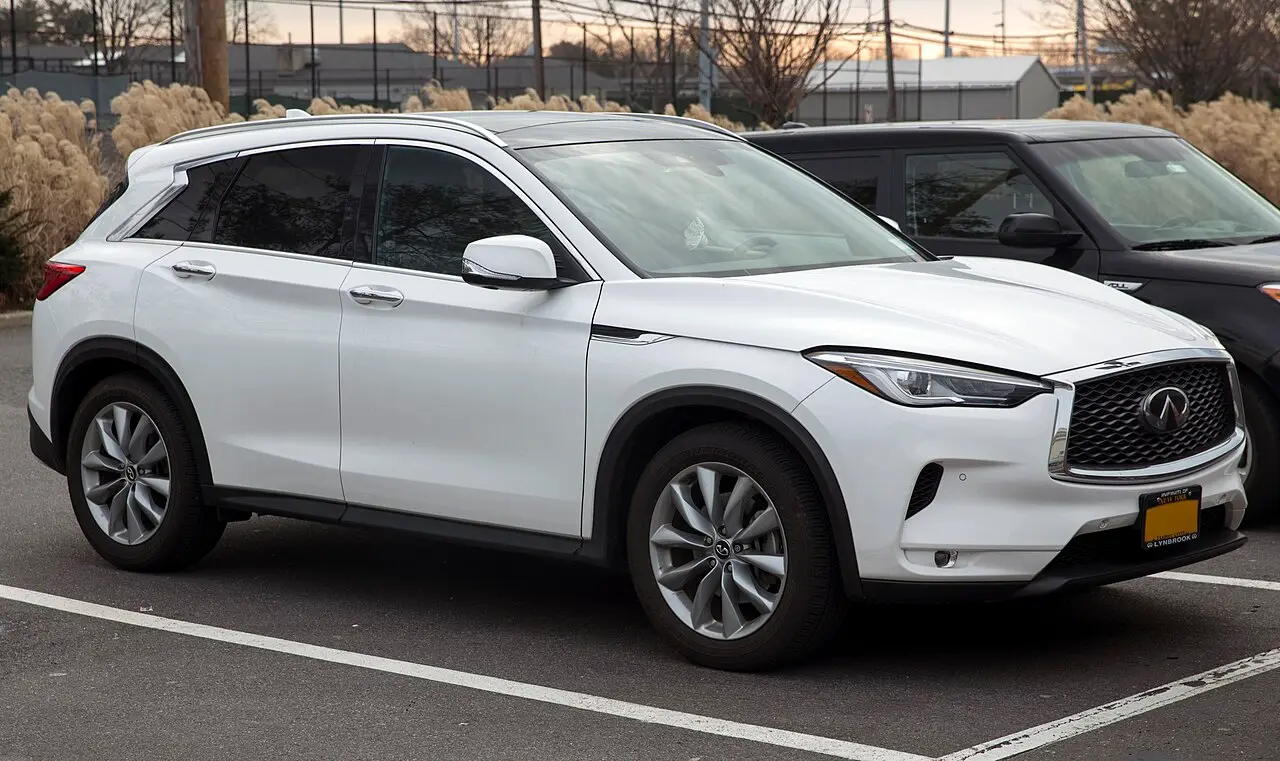
Infiniti QX50

Infiniti QX50
Photo: Mr.choppers / Wikimedia Commons · CC BY-SA 3.0

The official data lists 36 versions of the Infiniti QX50 (2014–2025), in the European Union, the United Kingdom, France, the United States, and Canada. Each market publishes its own figures, measured on its own test procedure.

At a glance

Years in the data
2014–2025
Markets
European Union, United Kingdom, France, United States, Canada
Engines
2.0 L to 3.7 L
Power
175 kW (238 PS) to 235 kW (320 PS)
Fuels
Diesel, Petrol
Lowest consumption (France)
8.5 L/100 km (NEDC)
Lowest consumption (United Kingdom)
8.5 L/100 km (NEDC)
Lowest consumption (United States)
8.7 L/100 km (EPA)
New registrations in the EU
744

What is the Infiniti QX50?

The Infiniti QX50 is a compact luxury crossover with a raised seating position and a more compact footprint than Infiniti’s larger SUVs. It carried forward the role of the EX when Infiniti adopted its Q and QX naming scheme. The second generation brought a more spacious layout and introduced the VC-Turbo engine, which can vary its compression ratio. Infiniti, Nissan’s luxury marque, launched in 1989.

Generations and engines

The first generation, J50, spans 2013–2017 in European sources and 2014–2017 in North American sources. It continued the compact crossover role of the EX. The second generation, J55, followed from 2018–2019 in the EU and 2019–2025 in the US and Canada. The redesigned model introduced the 2.0 L VC-Turbo four-cylinder in North America. European figures list a 3.0 L diesel producing 175 kW (238 PS), while the North American engine range spans 2.0 L to 3.7 L.

How economical is the Infiniti QX50?

UK and French NEDC figures give a lowest consumption of 8.5 L/100 km. The EPA’s lowest stated consumption is 8.7 L/100 km, alongside a best combined rating of 27 MPG. Canada’s NRCan 5-cycle low is 9 L/100 km. The figures use different procedures: NEDC in the European records, EPA testing in the US and the 5-cycle test in Canada.

Where was the QX50 sold?

The QX50 appears in EU registration figures from 2014 to 2019, with UK and French figures around the change from the EX name. US and Canadian listings cover 2014 to 2025. European versions included petrol and diesel; the listed North American versions were petrol.

Questions and answers

How many generations of QX50 are there?

The model spans two generations: J50, listed as 2013–2017 in Europe and 2014–2017 in North America, followed by J55, listed as 2018–2019 in the EU and 2019–2025 in the US and Canada.

What engines were available in the QX50?

The North American engine range spans 2.0 L to 3.7 L. European figures include a 3.0 L diesel producing 175 kW (238 PS).

What is the QX50’s lowest official consumption?

The lowest listed figure is 8.5 L/100 km on the UK and French NEDC test. The EPA low is 8.7 L/100 km and Canada’s NRCan 5-cycle low is 9 L/100 km.

Did the QX50 replace another Infiniti model?

Yes. The QX50 followed the EX, carrying its compact luxury crossover role into Infiniti’s QX naming scheme.
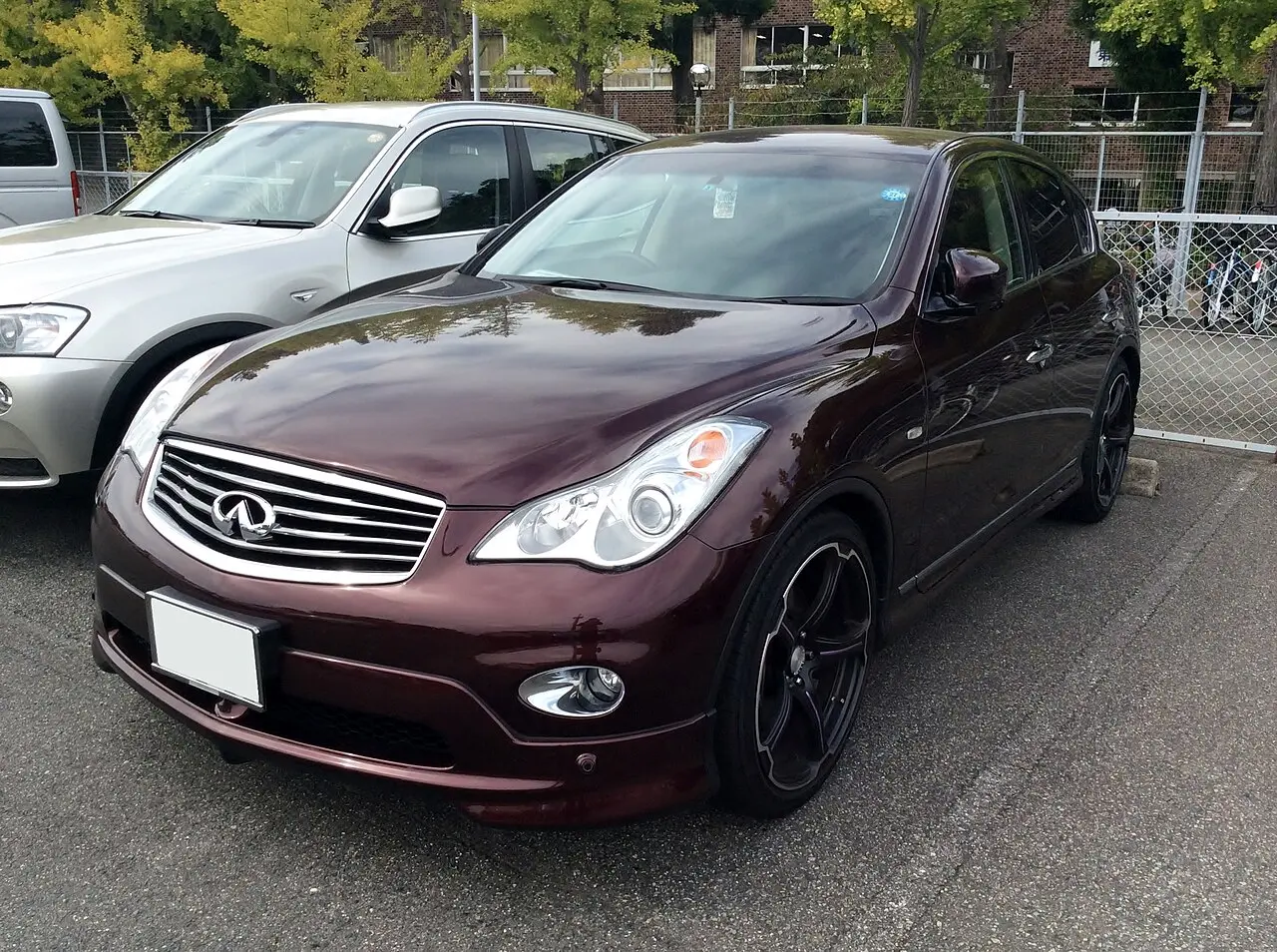
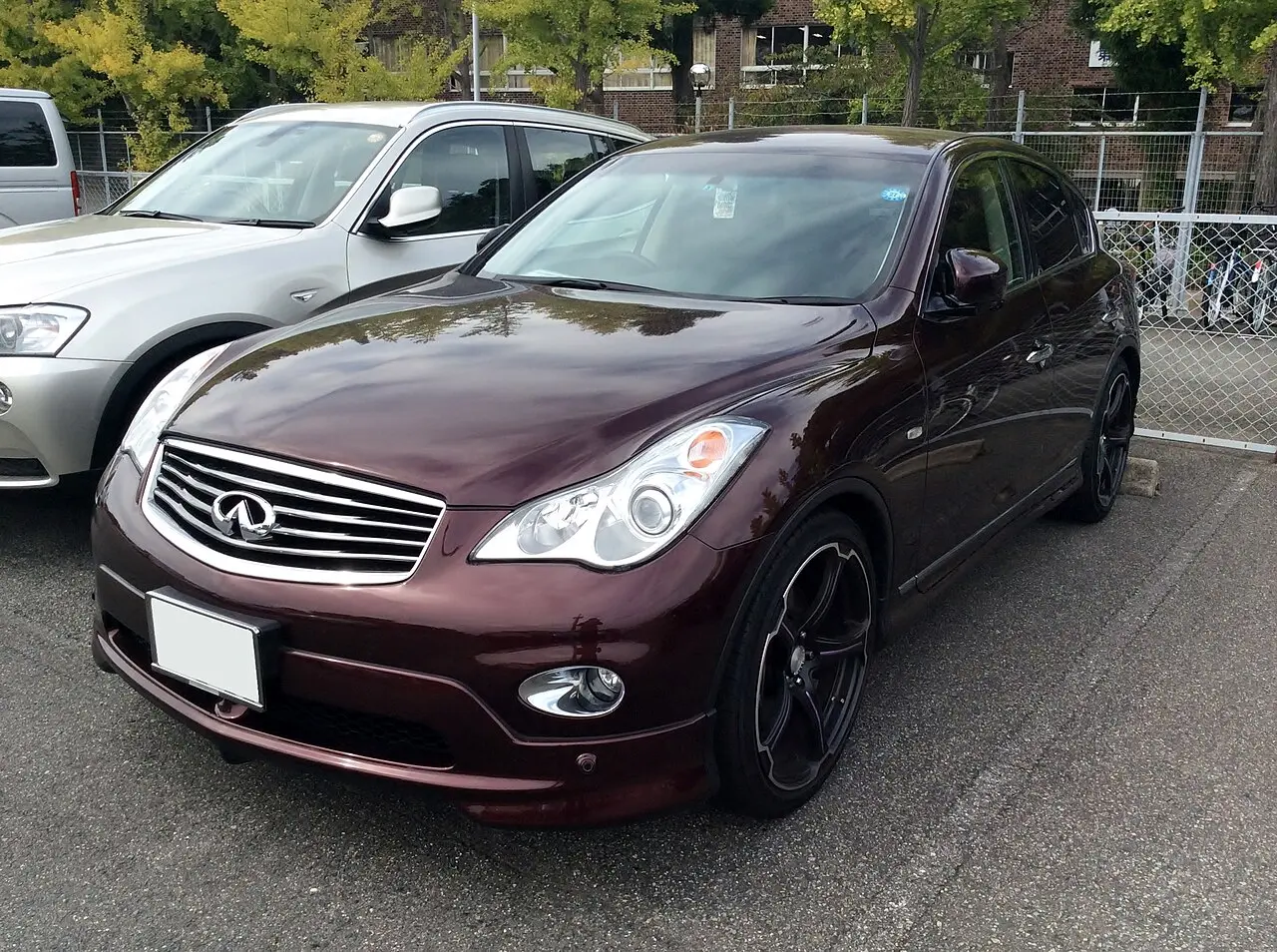
QX50 J50 (2013–2017)

Infiniti QX50 J50
Photo: Tokumeigakarinoaoshima / Wikimedia Commons · CC0

Model codes: J50 · Sold in: European Union, France, and United Kingdom · References: en.wikipedia.org, infinitiusa.com

Show all 11 versions

QX50 J50 (2014–2017)

Infiniti QX50 J50
Photo: Tokumeigakarinoaoshima / Wikimedia Commons · CC0

Model codes: J50 · Sold in: United States and Canada · References: infinitiusa.com, en.wikipedia.org

Show all 10 versions

QX50 second generation (2018–2019)

Infiniti QX50 second generation
Photo: Mr.choppers / Wikimedia Commons · CC BY-SA 3.0

Model codes: J55 · Sold in: European Union · References: infinitiusa.com, en.wikipedia.org

Show 1 version

QX50 second generation (2019–2025)

Infiniti QX50 second generation
Photo: Mr.choppers / Wikimedia Commons · CC BY-SA 3.0

Model codes: J55 · Sold in: United States and Canada · References: infinitiusa.com, en.wikipedia.org

United States 10 versions

Model years sold in the USA, from the EPA and the Department of Energy (fueleconomy.gov). MPG on the EPA test; litres per 100 km = 235.215 ÷ MPG.

Years and versionEngineFuelGearboxDriveConsumption (combined)CO₂
2023–2025SIDI & PFI2.0 LPetrolContinuously variable (CVT)Front-wheel drive26 MPG (9.0 L/100 km) EPA213 g/km
2023–2025SIDI & PFI2.0 LPetrolContinuously variable (CVT)All-wheel drive25 MPG (9.4 L/100 km) EPA222 g/km
2022SIDI & PFI2.0 LPetrolContinuously variable (CVT)All-wheel drive25 MPG (9.4 L/100 km) EPA227 g/km
2022SIDI & PFI2.0 LPetrolContinuously variable (CVT)Front-wheel drive26 MPG (9.0 L/100 km) EPA216 g/km
2021SIDI & PFI2.0 LPetrolContinuously variable (CVT)Front-wheel drive26 MPG (9.0 L/100 km) EPA217 g/km
2021SIDI & PFI2.0 LPetrolContinuously variable (CVT)All-wheel drive25 MPG (9.4 L/100 km) EPA228 g/km
2020SIDI & PFI2.0 LPetrolContinuously variable (CVT)Front-wheel drive26 MPG (9.0 L/100 km) EPA215 g/km
2020SIDI & PFI2.0 LPetrolContinuously variable (CVT)All-wheel drive25 MPG (9.4 L/100 km) EPA227 g/km
2019SIDI & PFI; VCR2.0 LPetrolContinuously variable (CVT)Front-wheel drive27 MPG (8.7 L/100 km) EPA209 g/km
2019SIDI & PFI; VCR2.0 LPetrolContinuously variable (CVT)All-wheel drive26 MPG (9.0 L/100 km) EPA211 g/km

Canada 4 versions

Model years sold in Canada, from Natural Resources Canada fuel consumption ratings (5-cycle test).

Years and versionEngineFuelGearboxConsumption (combined)CO₂
2022–2025Sport utility vehicle: Small2.0 LPetrolContinuously variable (CVT)9.7 L/100 km 5-cycle228 g/km
2021Sport utility vehicle: Small2.0 LPetrolContinuously variable (CVT)9.7 L/100 km 5-cycle229 g/km
2020Sport utility vehicle: Small2.0 LPetrolContinuously variable (CVT)9.7 L/100 km 5-cycle228 g/km
2019Sport utility vehicle: Small2.0 LPetrolContinuously variable (CVT)9.0 L/100 km 5-cycle211 g/km

Official figures are measured on standard test procedures and differ between markets. Your consumption depends on how, where and in what conditions you drive.