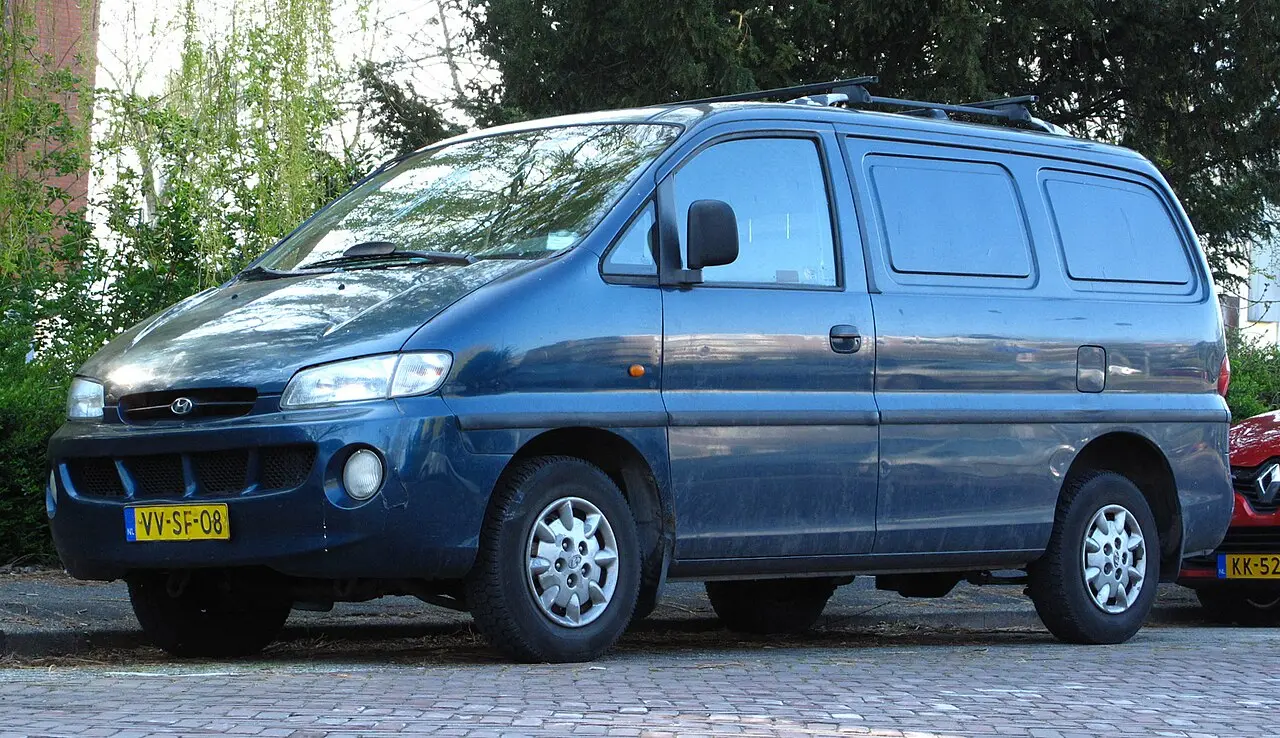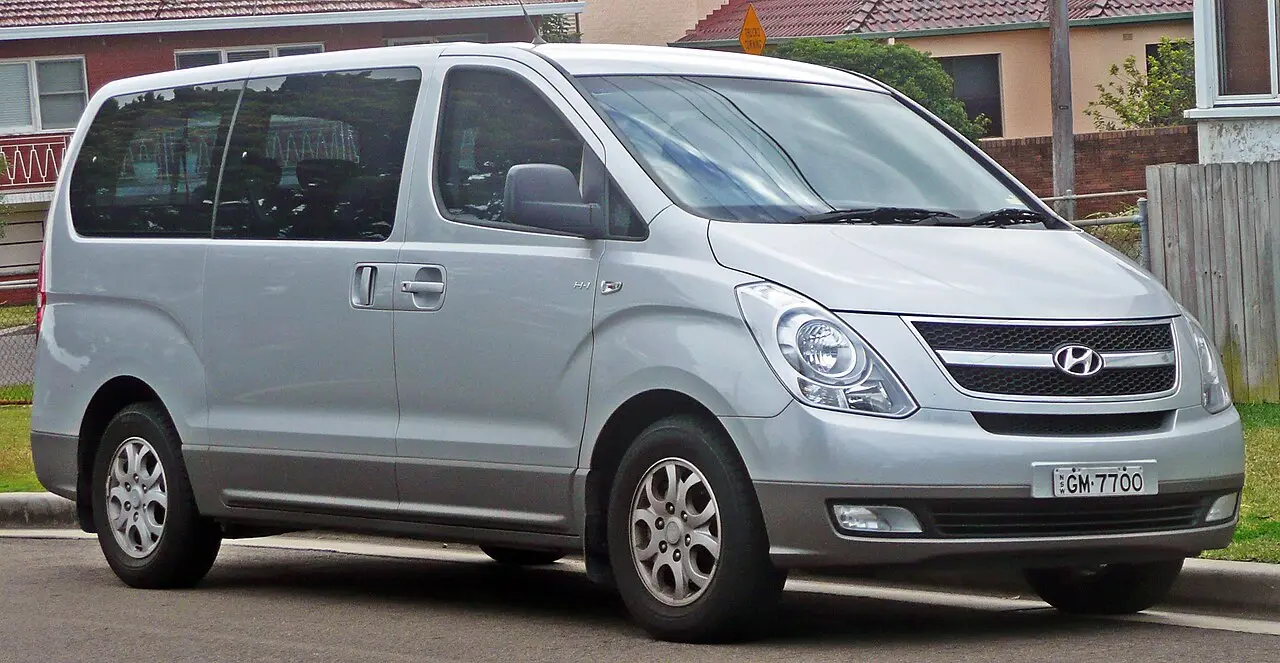
What is the Hyundai Starex?
The Hyundai Starex is a versatile van-based vehicle that has served both passengers and businesses. Hyundai offered it in several forms, including a family wagon, minibus, van, pickup, taxi and ambulance. That flexible layout made it useful for carrying people, goods or both.
In some markets, Hyundai used the H-1 name for the vehicle. Its range of body styles reflects a long-standing role in Hyundai’s light commercial and passenger vehicle line-up.
Generations and engines
Hyundai’s H-1 history identifies the model as also known as STAREX. The redesigned second-generation model, called GRAND STAREX, followed the original, continuing the vehicle’s role as a family wagon and offering several other body and service forms.
The Starex’s engines and power varied by version and market. The same was true of fuel consumption and CO₂ figures, which depend on the particular model and the test procedure used. European tests use WLTP or, for some older vehicles, NEDC; the USA uses EPA testing and Canada uses a five-cycle procedure. These methods differ, so results from different markets are not directly comparable.
Where was it sold?
Hyundai used the Starex name in its international range, while H-1 was another name for the vehicle in some markets. Its passenger and commercial forms served families, transport operators and businesses, with naming and availability varying by country.
Questions and answers
What kind of vehicle is the Hyundai Starex?
It is a versatile van-based vehicle offered in passenger and commercial forms, including family wagon, minibus and van configurations.
Is the Starex also called the H-1?
Yes. Hyundai identifies the H-1 as also known as STAREX.
Was the Starex only a passenger van?
No. Hyundai describes uses including minibus, van, pickup, taxi and ambulance.
Why do official fuel figures differ between countries?
Markets use different test procedures: WLTP or NEDC in Europe, EPA in the USA and a five-cycle procedure in Canada.