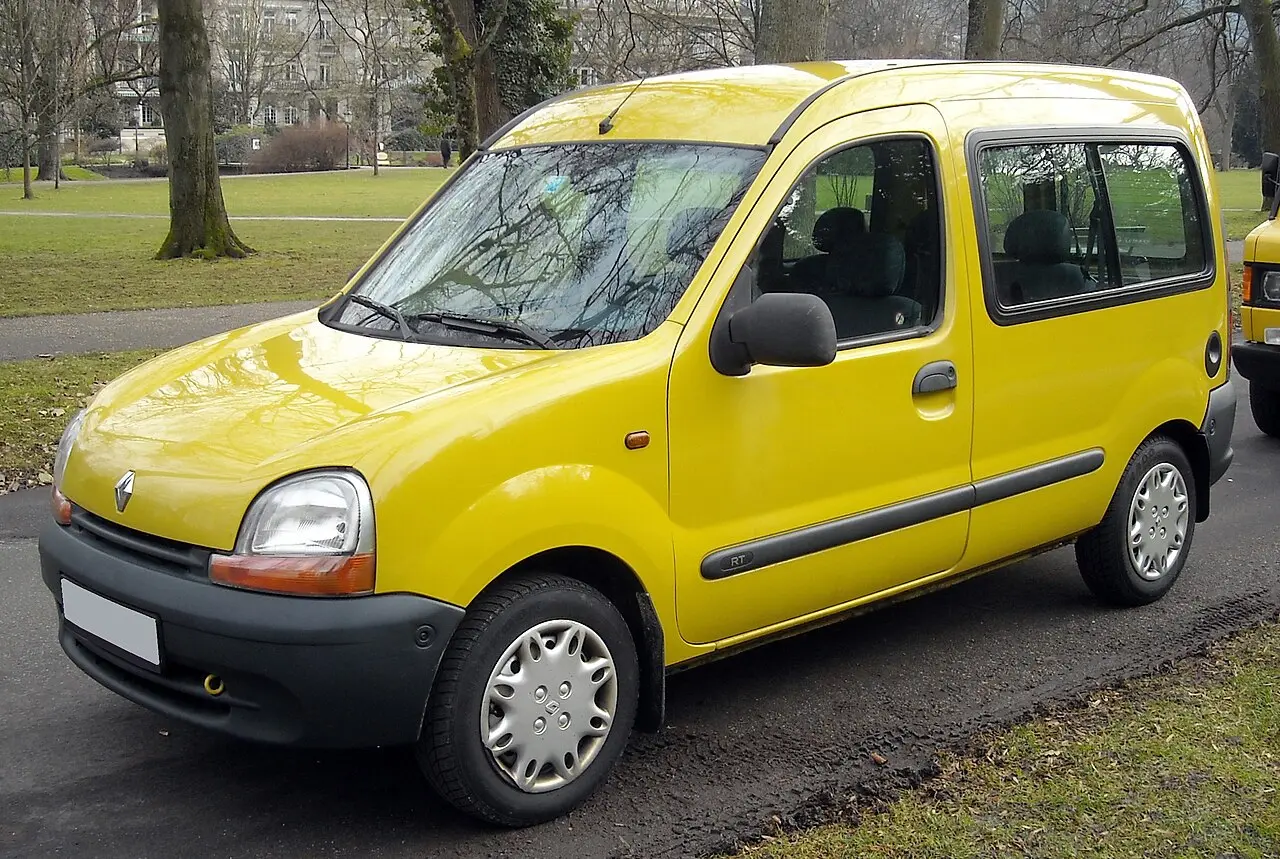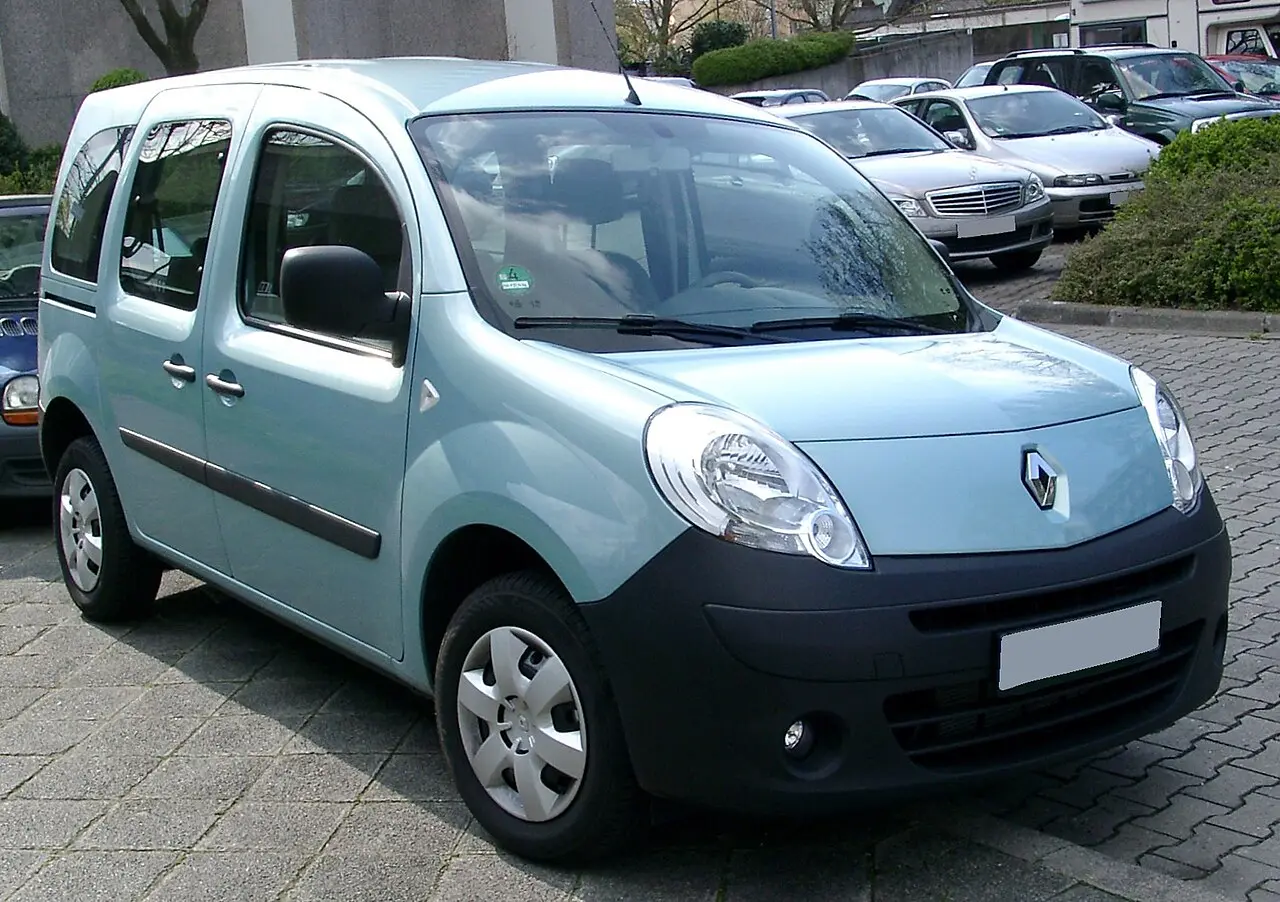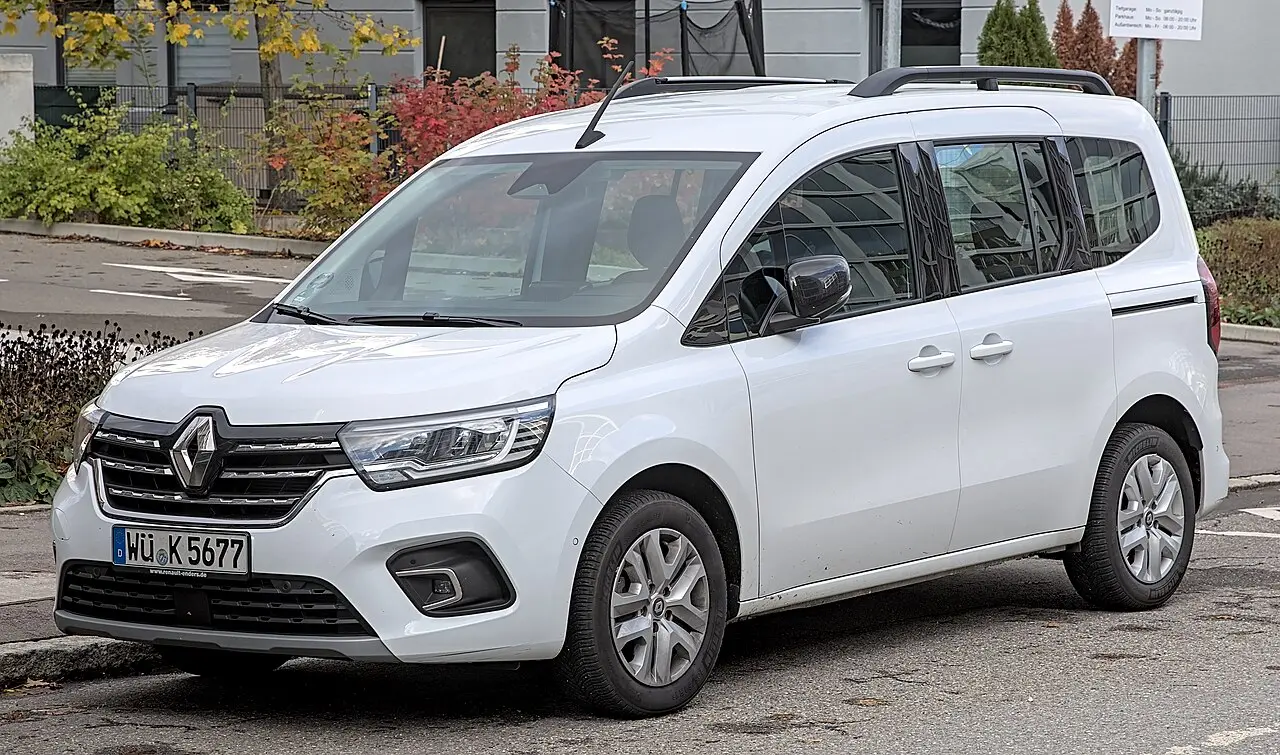
What is the Renault Kangoo?
The Kangoo is a small van that also serves as a roomy passenger vehicle. Renault launched it in 1997 with versions for both businesses and families. Its tall, practical shape and sliding side door helped establish the leisure-activity vehicle: a van-inspired vehicle suited to everyday family use as well as carrying cargo.
Kangoo generations
Kangoo I (K76) ran from 1997 to 2007. Kangoo II (KFK) followed from 2007 to 2021, and Kangoo III, also listed as KFK, began in 2021. Across the generations, the Kangoo has kept its focus on flexible space, with both passenger and cargo versions.
Engines and power
The engine and fuel mix varies by market and year. EU registrations include diesel, petrol, electric, other fuels, E85 flex fuel and LPG. Engine sizes range from 1.2 to 1.6 litres, with power from 51 kW (69 PS) to 99 kW (135 PS). UK figures for 2000–2010 include petrol and diesel engines from 1.1 to 1.9 litres. French figures include petrol, LPG, diesel and E85, with 1.3- to 1.5-litre engines producing 55 kW (75 PS) to 96 kW (131 PS).
How economical is the Renault Kangoo?
The lowest listed consumption is 4.9 L/100 km in EU figures under WLTP, 5.2 L/100 km in UK figures under NEDC and 4.3 L/100 km in French figures under NEDC. WLTP and NEDC are different European test procedures, so the results are not directly comparable. In the United States, the EPA uses its own procedure; Canada uses the 5-cycle test. EU registration figures span 2010–2025, UK figures cover 2000–2010 and French figures run from 2012 to 2026.
Questions and answers
When did the Renault Kangoo first go on sale?
The first generation began in 1997.
Which Kangoo generation began in 2021?
Kangoo III began in 2021.
What is the lowest listed Kangoo fuel consumption?
The lowest figure is 4.3 L/100 km in French ADEME figures under NEDC.