Volkswagen

Volkswagen Transporter

Volkswagen Transporter
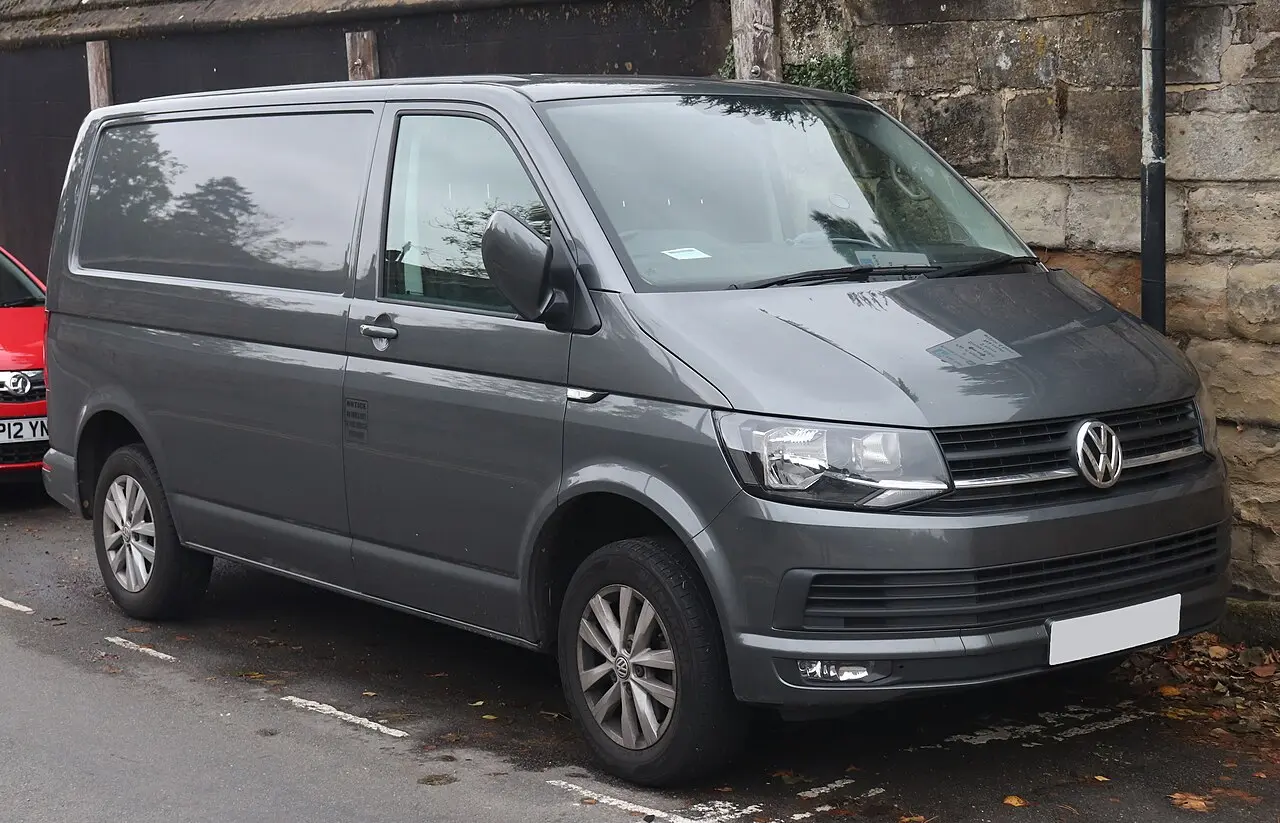
Photo: Vauxford / Wikimedia Commons · CC BY-SA 4.0

The official data lists 379 versions of the Volkswagen Transporter (1995–2025), in the European Union, the United Kingdom, France, and Canada. Each market publishes its own figures, measured on its own test procedure.

At a glance

Years in the data
1995–2025
Markets
European Union, United Kingdom, France, Canada
Engines
1.9 L to 2.5 L
Power
62 kW (84 PS) to 150 kW (204 PS)
Fuels
Diesel, Electric, Petrol, Plug-in hybrid, Natural gas
Lowest consumption (United Kingdom)
5.7 L/100 km (NEDC)
Lowest consumption (European Union)
6.6 L/100 km (WLTP)
Lowest consumption (France)
6.8 L/100 km (NEDC)
New registrations in the EU
502,662

What is the Volkswagen Transporter?

The Transporter is Volkswagen’s van, designed for carrying goods and people in a practical, adaptable cabin. It belongs to the maker’s long-running Bulli family, which includes work vans as well as passenger and leisure models.

The generations covered here are the T5, T6 and T6.1. The T5 ran from 2003 to 2015, the T6 from 2016 to 2019, and the T6.1 from 2020 to 2024.

Generations, engines and power

The T5 brought a fresh exterior design and a revised driver’s workplace. The T6 added updated engines, driver assistance and infotainment, along with a redesigned front end. The T6.1 brought a redesigned dashboard and further technology and connectivity updates.

In EU registration figures for 2010–2025, engine sizes range from 1.2 to 2.0 litres and power from 62 kW (84 PS) to 160 kW (218 PS). Listed fuels include diesel, petrol, electric, plug-in hybrid and natural gas. UK VCA figures for 2000–2018 show 1.9- to 2.5-litre engines and 62 kW (84 PS) to 150 kW (204 PS), with petrol and diesel versions. France’s ADEME figures for 2012–2014 list diesel versions from 62 kW (84 PS) to 132 kW (179 PS).

Fuel consumption and CO₂

The lowest listed EU consumption is 6.6 L/100 km on WLTP. The UK figure is 5.7 L/100 km on NEDC, France’s minimum is 6.8 L/100 km on NEDC, and Canada’s is 9.9 L/100 km on NRCan’s 5-cycle test. WLTP and NEDC are European procedures; Canada uses the 5-cycle method. Consumption results depend on the vehicle and test procedure.

Where was the Transporter sold?

EU registration figures for 2010–2025 total 502,662. The leading entries include 2.0-litre diesels rated at 110 kW (150 PS), among the top sellers in 2016, 2017 and 2019. UK VCA figures cover 2000–2018, France’s ADEME figures cover 2012–2014, and Canadian NRCan figures cover 1995–1997, with 2.4- to 2.5-litre petrol and diesel versions.

Questions and answers

What are the Transporter generations in this model’s history?

The generations are T5 (2003–2015), T6 (2016–2019) and T6.1 (2020–2024).

How much power does the Transporter offer?

EU figures for 2010–2025 range from 62 kW (84 PS) to 160 kW (218 PS). UK figures for 2000–2018 range from 62 kW (84 PS) to 150 kW (204 PS).

What is the lowest listed consumption?

The lowest listed figure is 5.7 L/100 km in the UK on NEDC. The EU minimum is 6.6 L/100 km on WLTP.

Which markets are represented?

The figures cover the European Union, the United Kingdom, France and Canada. European figures use WLTP or NEDC, while Canada uses the 5-cycle test.
Transporter T5 (2003–2015)

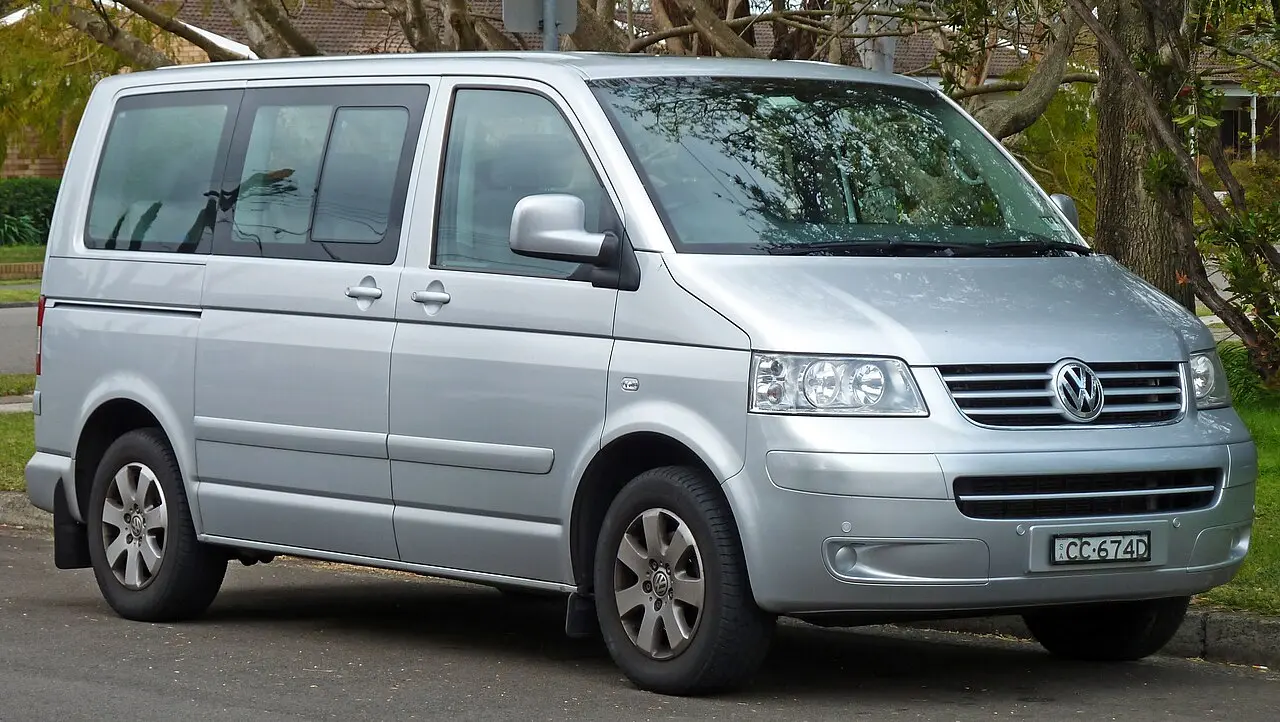
Volkswagen Transporter T5
Photo: OSX / Wikimedia Commons · Public domain

Model codes: 7H, 7E · References: en.wikipedia.org, volkswagen-vans.co.uk

Show all 224 versions

Transporter T6 (2016–2019)

Volkswagen Transporter T6
Photo: Vauxford / Wikimedia Commons · CC BY-SA 4.0

Model codes: SG · References: volkswagen-vans.co.uk

Show all 95 versions

Transporter T6.1 (2020–2024)

Model codes: SH · References: volkswagen-vans.co.uk, volkswagen-transportbilar.se

European Union 26 versions

New cars registered in the EU (plus Norway and Iceland), from the European Environment Agency. Figures on the NEDC procedure until 2020 and on WLTP from 2021; versions are grouped by engine and power, with their number of registrations.

Years and versionEnginePowerFuelConsumption (combined)CO₂EU registrations
20242.0 L110 kW (150 PS)Diesel7.6 L/100 km WLTP200 g/km11,858
20242.0 L81 kW (110 PS)Diesel7.2 L/100 km WLTP188 g/km3,374
20242.0 L150 kW (204 PS)Diesel8.2 L/100 km WLTP216 g/km826
20232.0 L110 kW (150 PS)Diesel7.7 L/100 km WLTP202 g/km9,334
20232.0 L81 kW (110 PS)Diesel7.2 L/100 km WLTP188 g/km2,874
20232.0 L150 kW (204 PS)Diesel8.3 L/100 km WLTP217 g/km1,191
20222.0 L110 kW (150 PS)Diesel7.3 L/100 km WLTP201 g/km8,624
20222.0 L81 kW (110 PS)Diesel6.6 L/100 km WLTP188 g/km2,969
20222.0 L150 kW (204 PS)Diesel8.0 L/100 km WLTP216 g/km1,073
2022Electric motor250 kW (340 PS)Electric–0 g/km17
20212.0 L110 kW (150 PS)Diesel7.5 L/100 km WLTP203 g/km19,226
20212.0 L81 kW (110 PS)Diesel7.1 L/100 km WLTP189 g/km9,508
20212.0 L150 kW (204 PS)Diesel7.9 L/100 km WLTP215 g/km1,623
20212.0 L146 kW (199 PS)Diesel8.2 L/100 km WLTP228 g/km282
2021Electric motor150 kW (204 PS)Electric–0 g/km40
20212.0 L75 kW (102 PS)Diesel–194 g/km20
20212.0 L150 kW (204 PS)Petrol–221 g/km18
20202.0 L110 kW (150 PS)Diesel–172 g/km21,974
20202.0 L81 kW (110 PS)Diesel–167 g/km7,683
20202.0 L146 kW (199 PS)Diesel–183 g/km2,415
20202.0 L75 kW (102 PS)Diesel–179 g/km1,007
20202.0 L85 kW (116 PS)Diesel–168 g/km589
20202.0 L84 kW (114 PS)Diesel–178 g/km70
20202.0 L150 kW (204 PS)Diesel–207 g/km62
2020Electric motor150 kW (204 PS)Electric–0 g/km10
20201.5 L–Petrol–127 g/km10

Versions outside these generations

European Union 9 versions

New cars registered in the EU (plus Norway and Iceland), from the European Environment Agency. Figures on the NEDC procedure until 2020 and on WLTP from 2021; versions are grouped by engine and power, with their number of registrations.

Years and versionEnginePowerFuelConsumption (combined)CO₂Electric rangeEU registrations
20252.0 L110 kW (150 PS)Diesel7.8 L/100 km WLTP205 g/km–1,283
20252.0 L81 kW (110 PS)Diesel7.4 L/100 km WLTP193 g/km–740
20252.0 L110 kW (150 PS)Diesel7.7 L/100 km WLTP202 g/km–660
20252.0 L81 kW (110 PS)Diesel7.2 L/100 km WLTP189 g/km–207
20252.0 L125 kW (170 PS)Diesel8.6 L/100 km WLTP225 g/km–155
20252.0 L150 kW (204 PS)Diesel8.4 L/100 km WLTP219 g/km–86
2025Electric motor100 kW (136 PS)Electric22.7 kWh/100 km WLTP0 g/km320 km63
2025Electric motor160 kW (218 PS)Electric24.3 kWh/100 km WLTP0 g/km306 km52
2025Electric motor85 kW (116 PS)Electric22.6 kWh/100 km WLTP0 g/km322 km13

United Kingdom 22 versions

New cars on sale in the UK, from the Vehicle Certification Agency. NEDC figures until 2018 and WLTP figures after; years are the editions a version appeared in.

Years and versionEnginePowerFuelGearboxConsumption (combined)CO₂
2001–20032.5 TDI (88 bhp)2.5 L66 kW (89 PS)Diesel5-speed manual8.1 L/100 km NEDC219 g/km
2001–20032.5 TDI (88 bhp)(High Roof Model)2.5 L66 kW (89 PS)Diesel5-speed manual8.5 L/100 km NEDC230 g/km
2001–20032.5 TDI (102 bhp)2.5 L76 kW (103 PS)Diesel4-speed automatic8.7 L/100 km NEDC235 g/km
2001–20032.5 TDI (102 bhp) (Unladen > 1735kg) · 2.5 TDI (102 bhp)2.5 L76 kW (103 PS)Diesel5-speed manual7.9 L/100 km NEDC213 g/km
2001–20032.5 TDI (102 bhp) (High Roof Model) · 2.5 TDI (102 bhp)(High Roof Model)2.5 L76 kW (103 PS)Diesel5-speed manual8.2 L/100 km NEDC221 g/km
2001–20032.5 TDI (102 bhp)(High Roof Model)2.5 L76 kW (103 PS)Diesel4-speed automatic9.1 L/100 km NEDC246 g/km
2001–20032.5P (114 bhp)2.5 L85 kW (116 PS)Petrol5-speed manual12.2 L/100 km NEDC293 g/km
2001–20032.5P (114 bhp)(High Roof Model)2.5 L85 kW (116 PS)Petrol5-speed manual12.5 L/100 km NEDC300 g/km
20011.9 TD (68 bhp)1.9 L51 kW (69 PS)Diesel5-speed manual8.1 L/100 km NEDC219 g/km
20011.9 TD (68 bhp)1.9 L51 kW (69 PS)Diesel5-speed manual8.3 L/100 km NEDC224 g/km
2000–200184 bhp · 2.0 P (84 bhp)2.0 L63 kW (85 PS)Petrol5-speed manual11.2 L/100 km NEDC269 g/km
20012.0 (84 bhp)2.0 L63 kW (85 PS)Petrol5-speed manual11.4 L/100 km NEDC274 g/km
20012.4 SD (75 bhp)(Motor Home)2.4 L56 kW (76 PS)Diesel5-speed manual9.4 L/100 km NEDC254 g/km
20012.5 TDI (102 bhp) (Unladen < 1735kg)2.5 L76 kW (103 PS)Diesel5-speed manual7.7 L/100 km NEDC208 g/km
2000–2001102 bhp TDI Syncro · 2.5 TDI (102 bhp)2.5 L76 kW (103 PS)Diesel–10.0 L/100 km NEDC270 g/km
20012.5 TDI (102 bhp) (High Roof Model) · 2.5 TDI (102 bhp)(High Roof Model)2.5 L76 kW (103 PS)Diesel–10.2 L/100 km NEDC275 g/km
20012.5P (114 bhp)(Motor Home)2.5 L85 kW (116 PS)Petrol4-speed automatic12.7 L/100 km NEDC305 g/km
20012.5P (114 bhp)(High Roof Model)2.5 L85 kW (116 PS)Petrol4-speed automatic13.5 L/100 km NEDC324 g/km
200068 bhpTD1.9 L–Diesel5-speed manual8.5 L/100 km NEDC230 g/km
200088 bhpTDI2.5 L–Diesel5-speed manual8.1 L/100 km NEDC219 g/km
2000102 bhpTDI2.5 L–Diesel4-speed automatic8.7 L/100 km NEDC235 g/km
2000102 bhpTDI2.5 L–Diesel5-speed manual7.9 L/100 km NEDC213 g/km

Canada 3 versions

Model years sold in Canada, from Natural Resources Canada fuel consumption ratings (5-cycle test).

Years and versionEngineFuelGearboxConsumption (combined)CO₂
1995–1997Van: Cargo2.4 LDiesel5-speed manual9.9 L/100 km 5-cycle267 g/km
1995–1996Van: Cargo2.5 LPetrol4-speed automatic14.6 L/100 km 5-cycle336 g/km
1995–1996Van: Cargo2.5 LPetrol5-speed manual14.5 L/100 km 5-cycle334 g/km

Official figures are measured on standard test procedures and differ between markets. Your consumption depends on how, where and in what conditions you drive.