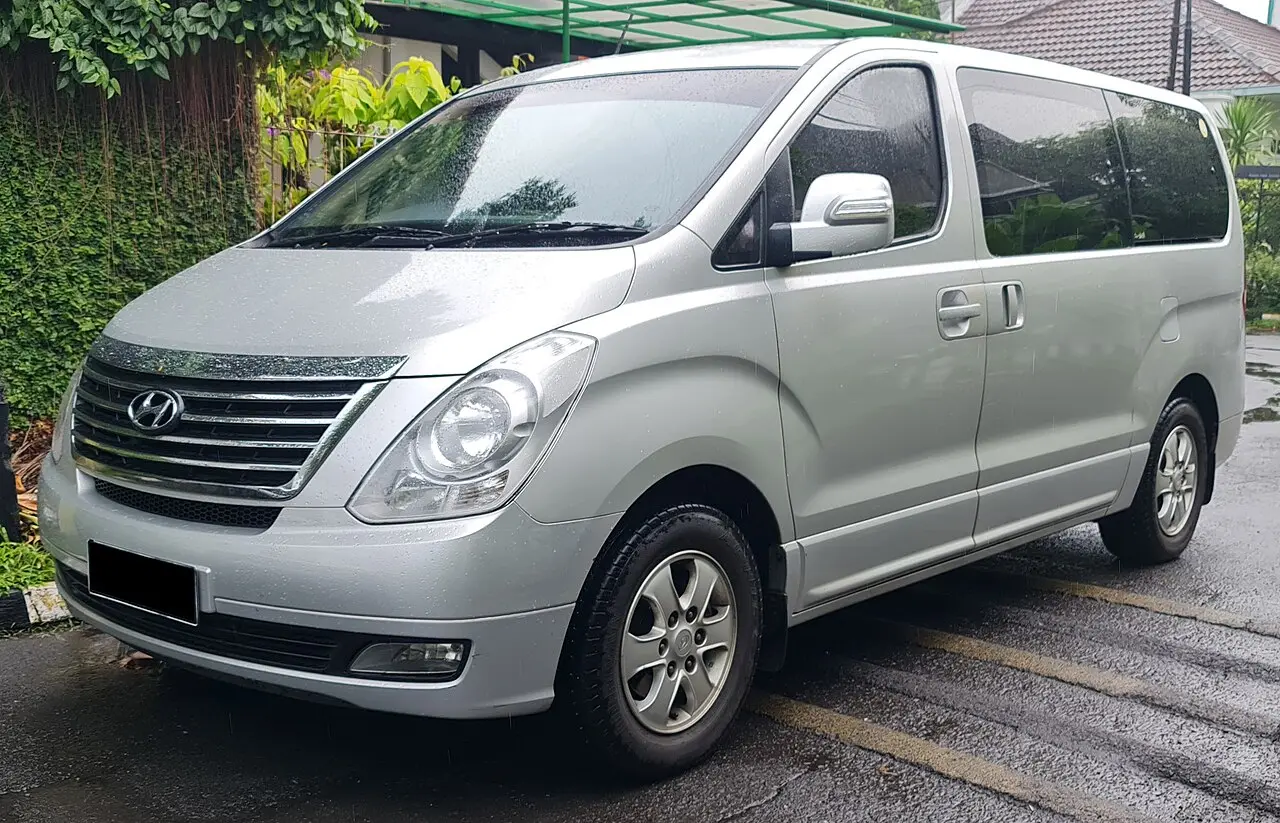
Hyundai

Hyundai H-1

Hyundai H-1
Photo: Alex Neman / Wikimedia Commons · CC BY-SA 4.0

The official data lists 37 versions of the Hyundai H-1 (2010–2021), in the European Union. Each market publishes its own figures, measured on its own test procedure.

At a glance

Years in the data
2010–2021
Markets
European Union
Engines
2.5 L
Power
81 kW (110 PS) to 125 kW (170 PS)
Fuels
Diesel
New registrations in the EU
41,315

What is the Hyundai H-1?

The H-1 is a Hyundai van offered in passenger and cargo forms. Its roomy layout suits carrying people or equipment, and its van proportions set it apart from Hyundai’s regular passenger cars.

The European H-1 covered here is the second generation, known by the TQ code. It has a straightforward van layout and a diesel powertrain. Hyundai has used related names for this van in other markets.

H-1 generations

The second-generation H-1, code TQ, ran from 2008 to 2021. EU registrations cover the model from 2010 to 2021.

The TQ generation continued the H-1’s role as a people-carrying or cargo van, with a spacious cabin and diesel power.

Engines and power

The EU lineup from 2010 to 2021 is diesel-only, with a 2.5-litre engine. Power ranges from 81 kW (110 PS) to 125 kW (170 PS). The 125 kW (170 PS) version appears among the leading EU registration entries.

Where was the H-1 sold?

The H-1 appears in EU registration figures from 2010 to 2021. The listed European versions use a 2.5-litre diesel engine, and belong to the second generation, TQ.

Questions and answers

What kind of vehicle is the Hyundai H-1?

It is a Hyundai van offered in passenger and cargo forms.

Which H-1 generation is listed in Europe?

The European H-1 is the second generation, code TQ, which ran from 2008 to 2021.

What engine does the European H-1 use in the listed figures?

The EU lineup lists a 2.5-litre diesel with power from 81 kW (110 PS) to 125 kW (170 PS).

H-1 second generation (2008–2021)

Hyundai H-1 second generation
Photo: Alex Neman / Wikimedia Commons · CC BY-SA 4.0

Model codes: TQ · Sold in: European Union · References: mobilverzeichnis.de, auto-motor-und-sport.de

European Union 37 versions

New cars registered in the EU (plus Norway and Iceland), from the European Environment Agency. Figures on the NEDC procedure until 2020 and on WLTP from 2021; versions are grouped by engine and power, with their number of registrations.

Years and versionEnginePowerFuelConsumption (combined)CO₂EU registrations
20212.5 L125 kW (170 PS)Diesel10.1 L/100 km WLTP265 g/km14
20202.5 L125 kW (170 PS)Diesel–244 g/km989
20202.5 L100 kW (136 PS)Diesel–222 g/km148
20202.5 L85 kW (116 PS)Diesel–222 g/km12
20192.5 L125 kW (170 PS)Diesel–241 g/km4,778
20192.5 L100 kW (136 PS)Diesel–222 g/km476
20192.5 L85 kW (116 PS)Diesel–220 g/km26
2017–20182.5 L125 kW (170 PS)Diesel–225 g/km7,688
20182.5 L100 kW (136 PS)Diesel–197 g/km272
20182.5 L85 kW (116 PS)Diesel–198 g/km100
20172.5 L100 kW (136 PS)Diesel–197 g/km528
20172.5 L85 kW (116 PS)Diesel–197 g/km54
20172.5 L188 kW (256 PS)Diesel–225 g/km20
20162.5 L125 kW (170 PS)Diesel–226 g/km4,148
20162.5 L100 kW (136 PS)Diesel–197 g/km608
20162.5 L85 kW (116 PS)Diesel–197 g/km26
20152.5 L125 kW (170 PS)Diesel–228 g/km1,300
20152.5 L100 kW (136 PS)Diesel–197 g/km400
20152.5 L85 kW (116 PS)Diesel–197 g/km42
20142.5 L125 kW (170 PS)Diesel–230 g/km1,006
20142.5 L100 kW (136 PS)Diesel–197 g/km580
20142.5 L85 kW (116 PS)Diesel–197 g/km120
20132.5 L125 kW (170 PS)Diesel–231 g/km1,601
20132.5 L100 kW (136 PS)Diesel–197 g/km546
20132.5 L85 kW (116 PS)Diesel–197 g/km136
2013––Diesel–200 g/km10
20122.5 L125 kW (170 PS)Diesel–231 g/km3,801
20122.5 L100 kW (136 PS)Diesel–196 g/km700
20122.5 L120 kW (163 PS)Diesel–225 g/km141
20122.5 L85 kW (116 PS)Diesel–199 g/km83
2012––Diesel–222 g/km12
20112.5 L125 kW (170 PS)Diesel–226 g/km4,044
20112.5 L100 kW (136 PS)Diesel–207 g/km772
20112.5 L120 kW (163 PS)Diesel–225 g/km330
20112.5 L81 kW (110 PS)Diesel–220 g/km236
20112.5 L85 kW (116 PS)Diesel–208 g/km138
20102.5 L–Diesel–224 g/km5,430

Official figures are measured on standard test procedures and differ between markets. Your consumption depends on how, where and in what conditions you drive.