Hyundai

Hyundai Accent

Hyundai Accent
Photo: Cutlass / Wikimedia Commons · CC0

The official data lists 116 versions of the Hyundai Accent (1995–2022), in the European Union, the United Kingdom, the United States, and Canada. Each market publishes its own figures, measured on its own test procedure.

At a glance

Years in the data
1995–2022
Markets
European Union, United Kingdom, United States, Canada
Engines
1.3 L to 1.6 L
Power
71 kW (97 PS)
Fuels
Petrol, Diesel
Lowest consumption (United Kingdom)
5.5 L/100 km (NEDC)
Lowest consumption (United States)
6.5 L/100 km (EPA)
Lowest consumption (Canada)
6.7 L/100 km (5-cycle)
New registrations in the EU
4,042

What is the Hyundai Accent?

The Accent is a small Hyundai car offered in sedan and hatchback forms in different markets. Hyundai introduced the name in the 1990s, and the model became one of its internationally adapted cars, with versions tailored to local markets.

The five generations are I (1995–1999), II (2000–2005), III (2006–2011), IV (2011–2017) and V (2018–2022). Body styles and availability varied by country, so the generation dates do not mean every version was sold in every market.

Engines and power

EU registrations from 2010 to 2011 include 1.4- to 1.6-litre petrol and diesel engines. The stated power is 71 kW (97 PS). The 1.4-litre petrol was the most registered configuration in 2010, followed by the 1.5-litre diesel.

UK versions listed from 2000 to 2009 had 1.3- to 1.6-litre petrol and diesel engines. US and Canadian versions had 1.5- to 1.6-litre petrol engines.

How economical is the Hyundai Accent?

The lowest stated UK consumption is 5.5 L/100 km on the NEDC test. In the US, the lowest is 6.5 L/100 km, with a best combined rating of 36 MPG, both on the EPA measure. Canada’s lowest stated figure is 6.7 L/100 km on the NRCan 5-cycle test. European NEDC, US EPA and Canadian 5-cycle results use different procedures, so they are not direct like-for-like comparisons.

Where was it sold?

The Accent appears in EU registration figures from 2010 to 2011, UK listings from 2000 to 2009, US listings from 1995 to 2022 and Canadian listings from 1995 to 2020. Its sales years varied by market.

Questions and answers

What are the Accent’s generation years?

I: 1995–1999; II: 2000–2005; III: 2006–2011; IV: 2011–2017; V: 2018–2022.

What is the lowest stated fuel consumption?

The UK figure is 5.5 L/100 km on NEDC; the US and Canadian figures use EPA and NRCan 5-cycle procedures respectively.

Was the Accent sold with diesel engines?

Yes. Diesel appears in the EU and UK listings; the US and Canadian listings specify petrol.
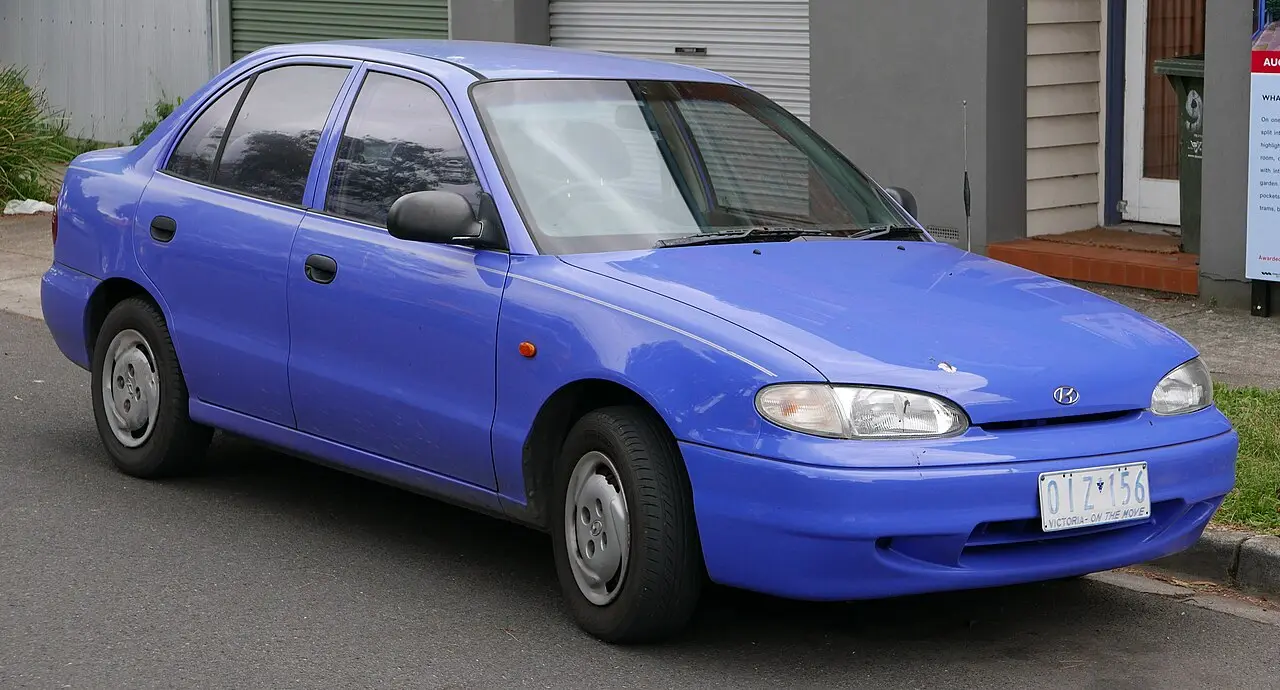
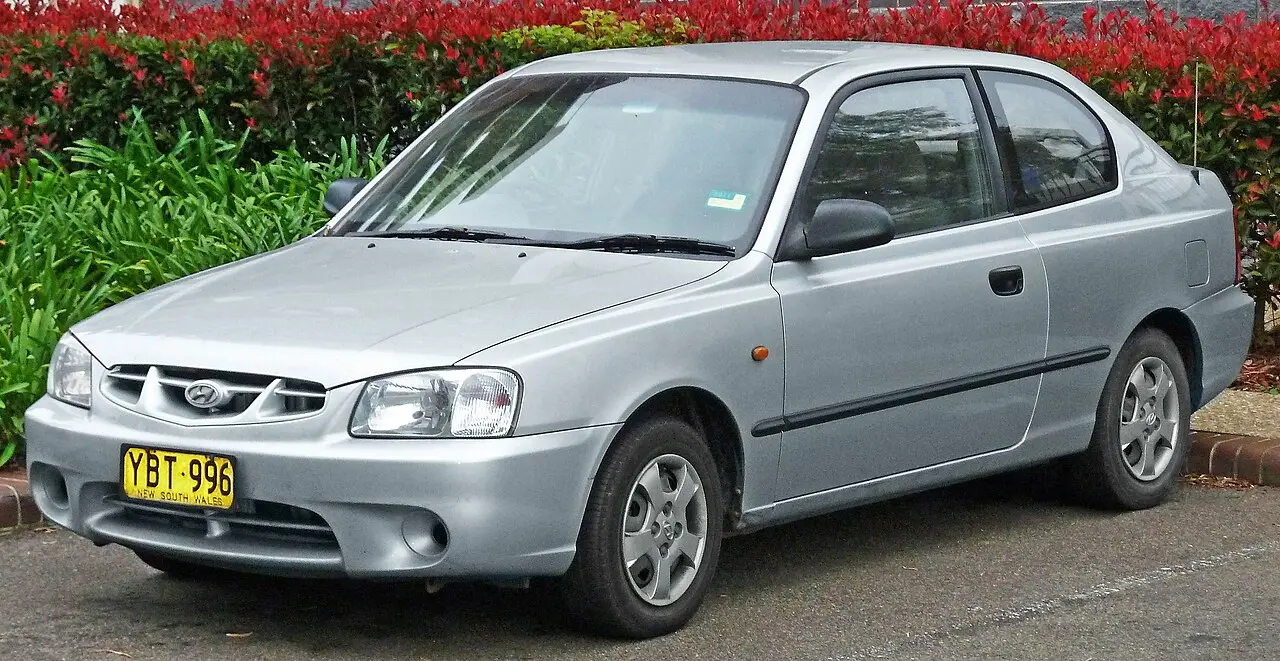
Accent I (1995–1999)

Hyundai Accent I
Photo: OSX / Wikimedia Commons · Public domain

Model codes: X3 · References: en.wikipedia.org

Show all 23 versions

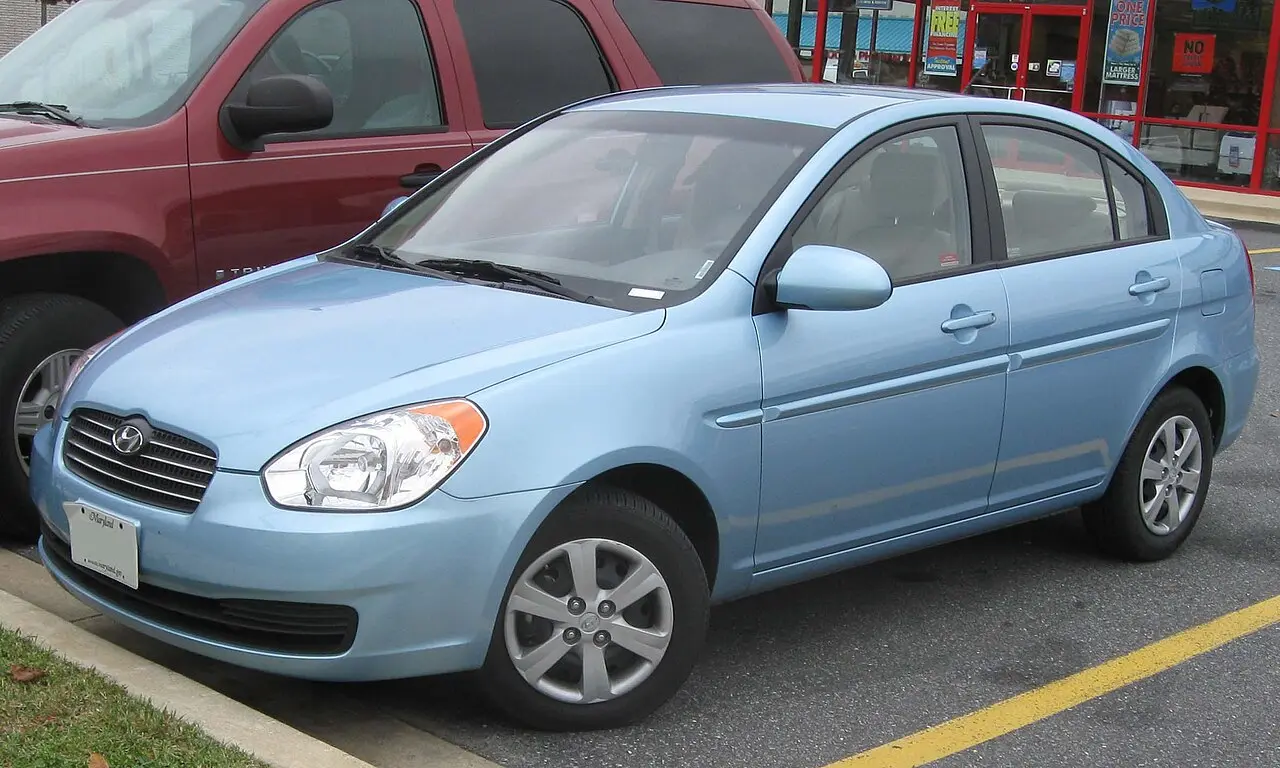
Accent II (2000–2005)

Hyundai Accent II
Photo: OSX / Wikimedia Commons · Public domain

Model codes: LC, LC2 · References: en.wikipedia.org

Show all 32 versions

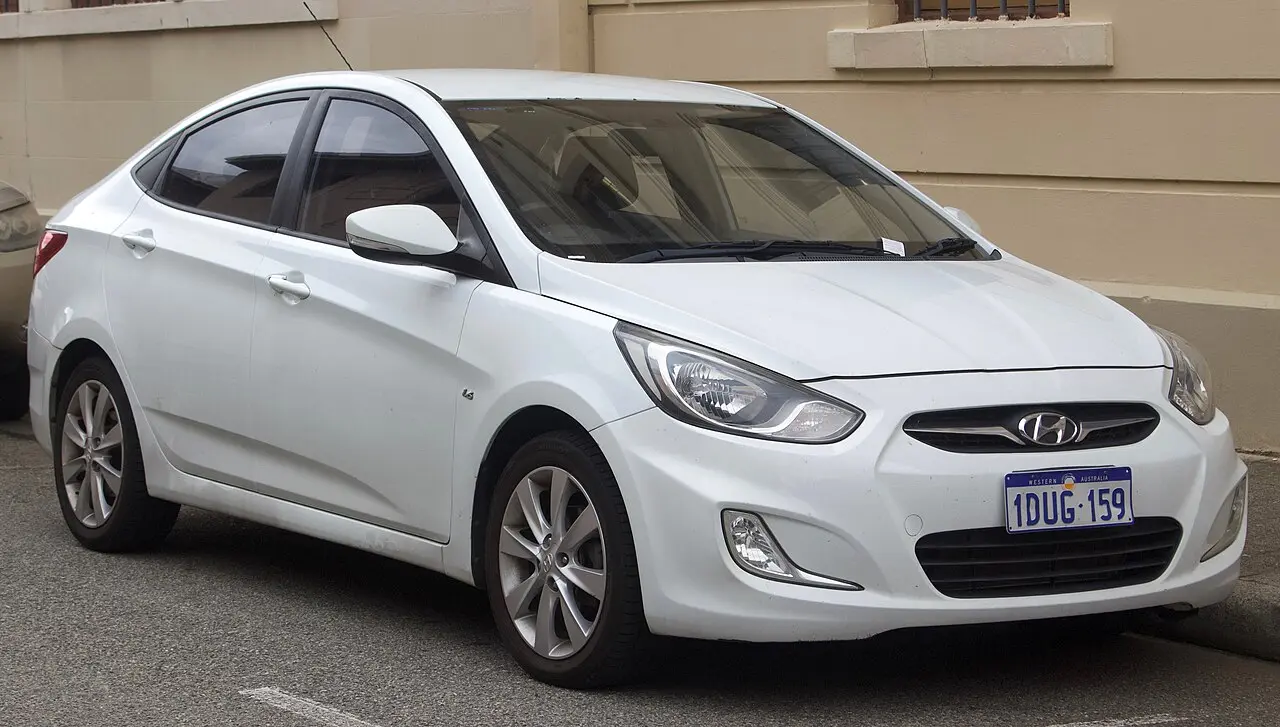
Accent III (2006–2011)

Hyundai Accent III
Photo: IFCAR / Wikimedia Commons · Public domain

Model codes: MC · References: en.wikipedia.org

Show all 31 versions

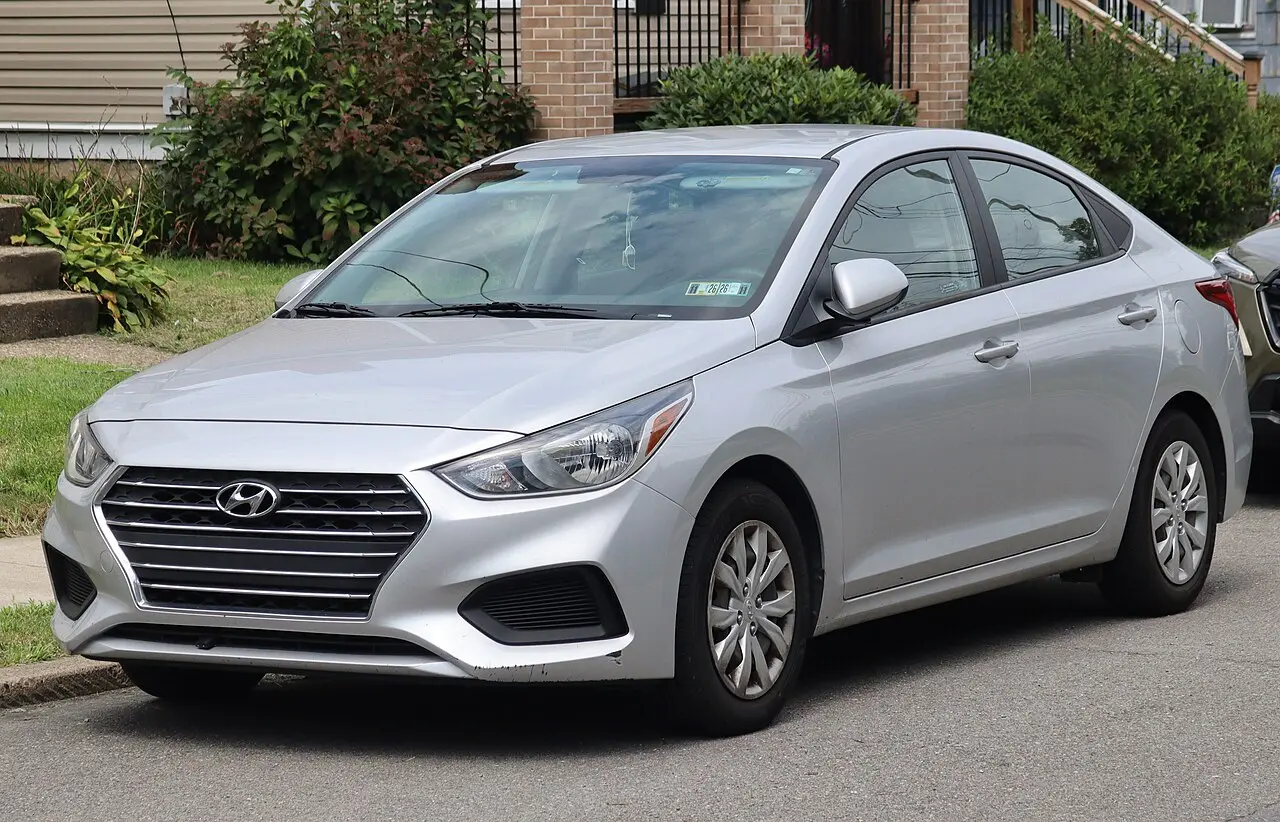
Accent IV (2011–2017)

Hyundai Accent IV
Photo: EurovisionNim / Wikimedia Commons · CC BY-SA 4.0

Model codes: RB, RC · References: en.wikipedia.org

Show all 27 versions

Accent V (2018–2022)

Hyundai Accent V
Photo: Cutlass / Wikimedia Commons · CC0

Model codes: HC, YC · Sold in: United States and Canada · References: en.wikipedia.org

United States 4 versions

Model years sold in the USA, from the EPA and the Department of Energy (fueleconomy.gov). MPG on the EPA test; litres per 100 km = 235.215 ÷ MPG.

Years and versionEngineFuelGearboxDriveConsumption (combined)CO₂
2020–20221.6 LPetrolContinuously variable (CVT)Front-wheel drive36 MPG (6.5 L/100 km) EPA154 g/km
2020–20211.6 LPetrol6-speed manualFront-wheel drive33 MPG (7.1 L/100 km) EPA170 g/km
2018–2019SIDI1.6 LPetrol6-speed automaticFront-wheel drive32 MPG (7.4 L/100 km) EPA172 g/km
2018–2019SIDI1.6 LPetrol6-speed manualFront-wheel drive31 MPG (7.6 L/100 km) EPA176 g/km

Canada 5 versions

Model years sold in Canada, from Natural Resources Canada fuel consumption ratings (5-cycle test).

Years and versionEngineFuelGearboxConsumption (combined)CO₂
2020Compact1.6 LPetrolContinuously variable (CVT)6.7 L/100 km 5-cycle160 g/km
2020Compact1.6 LPetrol6-speed manual7.0 L/100 km 5-cycle168 g/km
2018–2019Compact1.6 LPetrol6-speed manual7.3 L/100 km 5-cycle173 g/km
2019Compact1.6 LPetrol6-speed automatic7.3 L/100 km 5-cycle172 g/km
2018Compact1.6 LPetrol6-speed automatic7.4 L/100 km 5-cycle173 g/km

Official figures are measured on standard test procedures and differ between markets. Your consumption depends on how, where and in what conditions you drive.